Sep 18, 2015 | Book Reviews
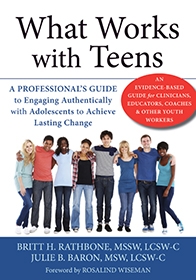 Working with adolescents is a challenge in any helping role. Teachers, counselors, volunteers and youth leaders all experience some of the same obstacles when working with this age group. “How do you communicate understanding to resistant teenagers? Do they respect me? Why are they always in a bad mood? Do they ever make eye contact? What are appropriate expectations for behavior?” In What Works with Teens, licensed social workers Britt Rathbone and Julie Baron address many concerns that face people working with adolescents by providing information on development as well as tangible ways to help build better relationships with young people.
Part 1 of the book, “Welcome to the World of Adolescence,” gives a succinct summary of adolescent development. Rathbone and Baron set the foundation of adolescent socio-emotional behavior by giving a brief overview of teens’ brain structure. Rathbone and Baron discuss neuroscience in a way that makes the information attainable and understandable to people of any profession, including those with limited background in this type of science. They then discuss the priorities of adolescents, their emotional needs, and stereotypes that adults may have about young people that cause barriers in their work and in connecting with adolescent clients. While detailing components of adolescence that adults may have forgotten, the writers also highlight many similarities that adults and teens have in the ways they think and the things they value. The authors state that everyone values respect and authenticity; the expression of those qualities may just look different in adults and teens.
In part 2 of the book, “Putting Skills to Work,” the authors discuss important qualities needed when building relationships with young people, while giving tangible ways to improve and to measure success in work with youth. The book discusses respect, authenticity, kindness, predictability, acceptance and change. In each chapter there are anecdotes of times when adolescents experienced as well as failed to experience these qualities in their relationship with adults. These stories help emphasize the importance of relationship in creating change within young people as well as provide a context for readers when thinking about their own work with youth.
Although not specifically written for counselors, What Works with Teens is a very useful resource for professional counselors in school, clinical mental health or college settings. The skills discussed in part 2 complement the strength-based approach that counselors take when working with others. What Works with Teens highlights the importance of building relationships with teens and empowering them to make their own change, much like counselors do in their work with others in any setting. This book aims not to teach adults on how to tell young people what to do, or what they should do, but rather is an aid to adults in building better alliances with adolescents. The qualities discussed in What Works with Teens are valuable in not only working with teens, but in any therapeutic relationship. The authors emphasize meeting all adolescents where they are, an approach that counselors often take with any client.
What Works with Teens is a comprehensive resource for any professional working with young people. Beginning with adolescent development, the authors outline how and why adolescents often behave and feel the way they do. The authors then proceed to discuss ways to help build positive relationships with youth, and how to incorporate teens into discussion of the relationship and ways to improve. An authentic and trusting relationship between youth and adults is essential to healthy growth and development. What Works with Teens gives adults attainable goals in building relationship with youth. Using these values to build a therapeutic alliance, adults will be better equipped to empower teens to take ownership of their own growth and development.
Rathbone, B. H., & Baron, J. B. (2015). What works with teens: A professional’s guide to engaging authentically with adolescents to achieve lasting change. Oakland, CA: New Harbinger.
Reviewed by: Hannah Kirby, NCC, Creative Counseling and Learning Solutions, Rowan County, NC.
The Professional Counselor
https://tpcwordpress.azurewebsites.net/
Aug 18, 2015 | Book Reviews
With a recent surge in empirical support for mind–body approaches, many counselors are hungry for tools to assist them in learning to effectively use mindfulness and yoga for self-care and in clinical practice. Catherine P. Cook-Cottone offers just such a tool with her well-researched book, Mindfulness and Yoga for Self-Regulation.
The book is organized into four carefully developed sections. The author begins by weaving a conceptual framework from current literature, anecdotal experience, and both Hindu and Buddhist teachings. The primary focus is on self-regulation and dysregulation in the context of mental health as well as mindfulness and yogic philosophy. For example, the author describes how her conceptualization of embodied self-regulation differs from more traditional approaches. She identifies the risks associated with dysregulation and the corresponding mental health issues. She distills the major tenets guiding mindfulness and yogic philosophy into twelve principles termed “embodied practices” for living, and discusses the application of these practices in clinical settings.
In part two, “The Mindful Self,” Cook-Cottone elaborates on the clinical relevance of the philosophy of mindfulness. She provides information about formal and informal mindfulness practice in the context of counselor self-care and applications in clinical practice. The structure of part three mirrors part two, with an emphasis on yoga. The author presents the foundation of yogic philosophy and guidelines and tips for formal and informal practice, as well as information about creating a practice, including finding yoga teachers, different styles of yoga and possible risks involved. In the fourth and final part of the book, topics such as treatment protocols, contradictions and self-care are addressed. Cook-Cottone concludes the book by addressing mindful self-care as a self-regulating practice.
Although there is a wealth of information presented in this primer, there are also some areas that may be ripe for further exploration. For instance, there is little information provided about the use of specific yoga asanas (poses). However, to address this, the author provides a rationale for this choice and points the reader to excellent resources for learning poses and sequences (e.g., teachers, books, Web sites). Also, though cultural context is provided throughout the text, cultural sensitivity is not the focus of this book. It would be useful for future publications to offer a more in depth look at multicultural issues related to integrating mindfulness and yoga in clinical practice. Though it is not possible to cover everything in just one book, there are many areas that are thoughtfully addressed in this primer.
The in-depth attention that is given to each topic makes this book a robust resource for counselors. The author provides a host of strategies and resources to use both during and between sessions, including tips, cautions, worksheets, meditation scripts, assessment tools, and suggested open-ended questions for intervention and assessment. For example, when describing the philosophy of mindfulness, the author not only outlines concepts of the Eightfold Path, but also provides links to clinical practice, including questions for clients such as, “What does the phrase ‘pain is inevitable, suffering is optional’ mean to you?” She also includes case studies and instructional stories to help the reader understand key points and how these concepts translate into clinical practice.
Cook-Cottone suggests that utilizing mindfulness and yoga in clinical practice requires counselor commitment to personal practice, acceptance of clients on their unique path, and development of mindfulness and yoga-informed clinical knowledge and skills. This book is a rich resource to guide counselors toward that end.
Cook-Cottone, C. P. (2015). Mindfulness and yoga for self-regulation: A primer for mental health professionals. New York, NY: Springer.
Reviewed by: Jamie E. Crockett, NCC, Wake Forest University
The Professional Counselor
https://tpcwordpress.azurewebsites.net
Aug 5, 2015 | Book Reviews
In Community Mental Health: Challenges for the 21st Century, Jessica Rosenberg and Samuel Rosenberg provide a comprehensive overview of the most up-to-date research on best practices in community mental health in today’s culture and political climate. The quality of information that this book provides is strengthened by the unique contributions of experts from numerous mental health-focused disciplines, including social work, psychiatry, psychology, nursing, public health and law. Infused into each chapter is an emphasis on the importance of addressing the stigma associated with mental health concerns and promoting a recovery philosophy that empowers individuals to pursue lives that go beyond simply resigning themselves to living unresponsively with mental illness.
Community Mental Health is a 320-page book that covers a range of topics and unfolds into six major sections. In Part One, chapter authors describe how stigma impacts persons with mental health issues in general and how being a part of a marginalized group often compounds that stigma. The authors then describe a recovery philosophy that emphasizes mental health treatment founded on hope, respect and humane treatment. Part Two of the text focuses on emerging trends in mental health care, including work with veterans returning from active combat and developments in forensic mental health. In Part Three, community mental health is approached from a developmental perspective, with authors examining work carried out with children and adolescents, families, and an elderly population that is increasing due to the aging Baby Boomer generation. Part Four explores considerations related to counseling diverse populations, ranging from the historical and present racism experienced by African Americans, to ways of providing mental health services that account for differing cultural perspectives. In Part Five, chapter authors describe up-to-date best practices for working in community settings with varying populations, including assertive community treatment and treatments for adults experiencing both mental and substance use disorders. Finally, Part Six analyzes the circumstances that influence how public policy and the changing landscape of our society impact community mental health.
Community Mental Health possesses many strengths. Each chapter concludes with discussion questions, learning assignments, suggested readings and Internet resources that facilitate continued conversation about and exploration of each chapter’s respective theme, making this book especially valuable for use in a dialogical setting. The text carries a message for students and professionals alike—advocacy remains an essential component of the activity of mental health practitioners. It also serves as a compelling reminder of how much of counseling work necessitates addressing the stigma of mental health, both with clients and within the society in which clients live.
A potential limitation of Community Mental Health is that, because the book addresses a number of different topics and populations, it does not always provide great detail about the evidence-based treatment practices cited. The text also does not always provide its reader with case studies to further describe how community-based treatments work in actual application with clients. Although one merit of the book is providing a strong overview of each of the different topics presented, readers who desire more in-depth information may need to seek out further resources. However, the chapter authors address this issue by suggesting both additional readings and Internet resources.
Community Mental Health: Challenges for the 21st Century is a valuable resource for current and future mental health professionals, policy makers and advocates, and represents an important resource for those engaged in increasing the effectiveness and humaneness of mental health service provision.
Rosenberg, J., & Rosenberg, S. (Eds.). (2013). Community mental health: Challenges for the 21st century. New York, NY: Routledge.
Reviewed by: Adam Miller, graduate student, Florida State University, Tallahassee, FL.
The Professional Counselor
https://tpcwordpress.azurewebsites.net/
Aug 3, 2015 | Book Reviews
 The monograph Clinical Supervision of Career Development Practitioners provides a helpful synopsis of supervision theories and strategies to use when working with career counseling practitioners. Authors Judith M. Hoppin and Jane Goodman outline the importance of supervision with career practitioners, the credentials needed to become a supervisor and useful guidelines for supervision practice.
The monograph begins by discussing the value of supervision in career counseling practice and the credentials associated with career practitioners and supervisors. After overviewing credentials, Hoppin and Goodman address supervision theories and strategies broadly before presenting techniques specific to working with career practitioners. The authors discuss the skills that promote successful supervisor–practitioner relationships and the role of supervisors throughout the supervision process. The book then details alternative methods for providing supervision, including group, peer and distance supervision, in addition to or instead of traditional one-on-one supervision. The authors conclude by presenting information about legal and ethical issues and suggestions for giving and receiving evaluative feedback.
The brevity of the book makes it a convenient resource for novice supervisors who wish to review their understanding of basic supervisory principles. Prospective supervisors taking coursework to pursue supervisory licensure, especially those who wish to work with career practitioners, could benefit from using the monograph as a supplement to other class materials. Additionally, students and less experienced career practitioners and licensed professional counselors may all see value in reading the text to understand the purpose and process of supervision.
Hoppin and Goodman succeed at presenting a concise overview of career counseling and supervisory credentials, supervision strategies, and ethical and legal issues. They detail credentials for career practitioners, career coaches and supervisors in an easy-to-follow format. The authors also outline strategies and resources to use in supervision with career counseling practitioners. Activities such as the “Take Action” diagram and the “Role Boundary Analysis Chart” are valuable for work with career practitioners who must understand and balance their focus between clients’ career and personal concerns. Inclusion of templates for disclosure statements, informed consent agreements, supervisor notes and evaluations serve as practical resources for novice supervisors. In addition, the monograph delivers a helpful overview of the ethical and legal issues that career practitioners and supervisors may encounter and the National Career Development Association’s ethical guidelines for handling such situations. The examples of hypothetical scenarios can help career counseling supervisors and practitioners understand the complexity of legal and ethical obligations in everyday practice. By providing a brief overview of supervisory credentials, strategies and ethical guidelines, the book serves as a convenient and useful text for neophyte supervisors and practitioners.
Although the text offers a succinct and readable summation of supervision generally and some examples of particular strategies for work with career practitioners, limitations exist. The book mainly addresses supervision theories, strategies, types and evaluative processes that align broadly with supervision of any counseling practitioner rather than specifically with career counseling practitioners. Presenting additional strategies and theories specific to working with career practitioners would be important to include in future publications. Additionally, the text seems to target novice supervisors who are working with students or less experienced practitioners. Adding strategies for more experienced supervisors as well as for supervisors who work with experienced career practitioners should be future considerations.
Clinical Supervision of Career Development Practitioners is a practical and recommended resource for neophyte supervisors who wish to gain a broad overview of supervision theory, techniques and strategies.
Reviewed by: Elizabeth Walker, NCC, High Point University, High Point, NC.
Hoppin, J. M., & Goodman, J. (2014). Clinical supervision of career development practitioners: Practical strategies. Broken Arrow, OK: National Career Development Association.
The Professional Counselor
https://tpcwordpress.azurewebsites.net/
Aug 3, 2015 | Book Reviews
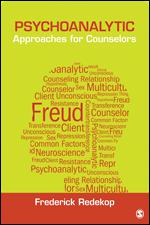 Psychoanalytic Approaches for Counselors is a contemporary look at the work of Sigmund Freud, with the goal of recognizing its historical and cultural context and identifying its value for the 21st century. Redekop begins the book’s introduction by writing, “I am not interested in converting anyone to Freudianism or glorifying Freud as a genius. As the title of this book suggests, my aim is to make psychoanalysis . . . useful for counselors and counselors-in-training.” Redekop acknowledges that many people think of Freud mainly as a cold, distant therapist who chalked all human experience up to sexual and aggressive urges and spent his professional life creating scandalous theories like the Oedipus complex. Redekop paints a more nuanced portrait of Sigmund Freud that also includes elements of warmth, energy, compassion and common sense, and explores valuable Freudian insights that the modern counselor may have overlooked.
Redekop offers a great deal of detailed information in Psychoanalytic Approaches for Counselors. He begins with an introduction, providing context for the practices of counseling and psychoanalysis and how they overlap. Chapter 1 provides a brief history of “the talking cure,” including catharsis, hypnotism and the first psychoanalytic patient, who was in fact not a patient of Freud’s at all. Chapters 2 and 3 provide a comprehensive yet accessible overview of psychoanalytic theory, from the id, ego and superego to therapy as a corrective experience. Perhaps one of the most valuable aspects of Psychoanalytic Approaches for Counselors is Chapter 4, which situates the genesis of psychoanalysis in the racist, sexist and sexually repressive context of Europe in the late 19th and early 20th centuries. It is crucial for a student of any theory to be aware of the cultural context that produced it, and Redekop provides that information around Freudianism. Chapter 5 is a detailed and compelling case illustration of modern psychoanalytic work with a client, and the final chapter offers concluding thoughts on Freud’s contemporary relevance.
Psychoanalytic Approaches for Counselors has a number of significant strengths in addition to those already described. The writing style is quite accessible; the text reads more like an enjoyable nonfiction book than a textbook. The author includes frequent vignettes from his own clinical experience, which beautifully illustrate his points. In addition, the chapter-long case study is particularly valuable in demonstrating the contemporary relevance of psychoanalytic theory and practice. However, in addition to these positive aspects, the book also has some limitations. The author makes a few sweeping statements that deserve closer scrutiny, such as his suggestion that eye movement desensitization reprogramming (EMDR) may be merely the latest evolution of hypnotism, and that its success may result mostly from the influence of practitioners’ belief in its strength. Another limitation is the use of some outdated sources; in the section on sexual trauma, Redekop offers the results of a 21-year-old study as context. Although these aspects of the book are somewhat lacking, Psychoanalytic Approaches for Counselors is still a very worthwhile text for counselors and other mental health practitioners to ponder.
Psychoanalytic Approaches for Counselors makes a strong case for the continued relevance of components of psychoanalytic theory. Redekop notes that Freud cared a great deal about his patients and their relationship with him, elements that counselors today refer to as unconditional positive regard and the therapeutic alliance. Taking a fresh look at Freud is a worthwhile endeavor for counselors, who may be surprised at what they find.
Redekop, F. (2015). Psychoanalytic approaches for counselors. Thousand Oaks, CA: Sage.
Reviewed by: Carie McElveen, NCC, the National Board for Certified Counselors, Greensboro, NC.
The Professional Counselor
https://tpcwordpress.azurewebsites.net/
Jul 17, 2015 | Book Reviews
 Premature Termination in Psychotherapy is an accessible resource for novice and experienced counselors alike who are interested in learning potential causes for and strategies to prevent premature client termination. This text does a wonderful job creating a foundation supported by research, while providing examples and vignettes to bring that research out of the theoretical and into practical application. The book is structured in three sections that build on each other to offer the reader a sequence that is easily understood. The first section focuses on understanding premature termination in psychotherapy, the second section includes strategies for reducing premature termination, and the final section suggests areas for further study.
Part one includes the first two chapters of the book and clearly outlines the challenges for clients, clinicians and organizations that result from premature termination. The first chapter describes the problematic effects of having multiple operational definitions for client dropout and presents evidence on which definitions are empirically reliable. In the same section, Swift and Greenberg list the pros and cons for each operationalization, and with research present their recommendation for the most reliable operational definition. The authors take an extensive look at the definitions used to describe dropout through an examination of multiple studies, ensuring that the reader grasps the discrepancies in the field and has a frame of reference for the remainder of the book. Once the definitions are flushed out, this section addresses the most common reasons for dropout as supported by research.
The second chapter includes the bulk of the empirical justification for the text. This chapter might be daunting for clinicians or students who are not familiar with complex statistical models. Swift and Greenberg explain the previous studies associated with dropout, and stress the importance of an operationalized definition for continuity of research. The authors completed their own meta-analysis in 2012 on premature client termination, examining which clients were terminating most frequently, what type of clinician they were seeing, and what setting termination was occurring in. The chapter allows the reader to make an informed decision on the most relevant strategies for his or her clientele. The incorporation of a large-scale meta-analysis conducted by the authors increases the strength of the recommendations provided later in the text.
Part two includes chapters 3 through 10 and examines strategies for reducing premature termination. The chapters are consistently well structured and make the material accessible, especially given the multifaceted subject matter. Each chapter begins with a definition and description of the terms; then Swift and Greenberg present the empirical research supporting the strategy they are introducing, and next they describe how to put the strategy into practice. Each chapter ends with two clinical examples in the form of vignettes. The chapters include strategies for instilling hope, building the therapeutic relationship and incorporating client preferences into treatment, among others. These strategies are useful for novice and experienced clinicians alike and are all well grounded in research. The consistency in the text’s structure makes it easy for the reader to navigate and reference specific aspects of a chapter if necessary.
The final section of the book includes the conclusion and recommendations for future research. In this chapter the authors reiterate the important information presented in each of the previous chapters, including a short synopsis of each of the eight strategies presented. I found it especially useful to be able to see the strategies listed together; this arrangement allows the reader to focus on the part of the book that is directly applicable to clinical practice. Swift and Greenberg end with recommendations for further research, which support the notion that there is still more to be done.
Premature client termination is a problem for both beginning and experienced clinicians. The objective of this book is to offer an understanding of why it happens and when it happens most frequently, as well as provide strategies supported by empirical data that meaningfully reduce the incidence of premature termination. This objective is certainly attained in a clear, concise and empirically supported style that is for the most part accessible to any level of counselor.
Swift, J. K., & Greenberg, R. P. (2014). Premature termination in psychotherapy: Strategies for engaging clients and improving outcomes. Washington, DC: American Psychological Association.
Reviewed by: Charmayne R. Adams, graduate student, Wake Forest University, Winston-Salem, NC.
The Professional Counselor
https://tpcwordpress.azurewebsites.net/