Sara E. Ellison, Jill M. Meyer, Julia Whisenhunt, and Jessica Meléndez Tyler received the 2025 Outstanding Scholar Award for Quantitative or Qualitative Research for their article, “Unraveling Overcontrolled and Undercontrolled Nonsuicidal Self-Injury: A Grounded Theory.”
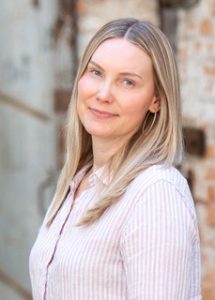 Sara E. Ellison, (she/her), PhD, NCC, ACS, LPC, is a part-time faculty member at the University of West Georgia and a clinical mental health counselor in private practice. Dr. Ellison has experience working in inpatient and outpatient settings and has specialized clinical training in IFS, EMDR, RO DBT, and working with trans and gender-diverse clients. Her scholarly work has appeared in The Professional Counselor, Teaching and Supervision in Counseling, and the Journal of Counselor Preparation and Supervision. Her research interests include trauma and resilience, nonsuicidal self-injury, disorders of overcontrol, and social justice in supervision.
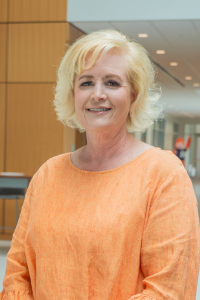 Jill Meyer (she/her), PhD, LCPC, CRC, is a Professor and Director of Counselor Education & Forensic Rehabilitation at Auburn University, specializing in Rehabilitation Counseling. Previously, Dr. Meyer worked at the University of Missouri, Missouri Institute of Mental Health research division as research faculty and as the Grants Administrator. Prior to that she worked for a large nonprofit community rehabilitation agency as the Director of Vocational Evaluation and eventually as the Vice President of Community-based VR Services. In addition to being Director of Counselor Education, Dr. Meyer currently oversees the RSA-funded grants, including the Vocational Evaluation Forensic Certificate (VEFC) program, which is piloting the integration of AI into rehabilitation counseling curriculum. Dr. Meyer is also Co-Director of The DIRECT Lab – Disability, Identity, Rehabilitation Education, Counseling & Technology. The DIRECT Lab is a collaborative group that conducts research on disability identity, rehabilitation counseling and related technology. More specifically, the lab examines various factors influencing vocational constructs, independent living, career development, and quality of life among individuals with disabilities, particularly focusing on investigating the intersectionality of disability identity and other cultural identities, psychosocial adaptation to disability, disability biases, emerging adulthood and disability, employment and the use of technology (e.g., AI in counselor education) in rehabilitation counseling education and practice.
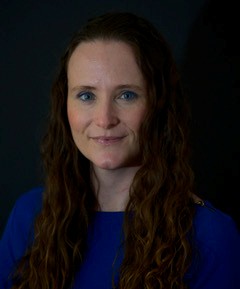 Julia Whisenhunt (she/her), PhD, NCC, LPC, CPCS, is a Professor of Counselor Education and Assistant Department Chair at the University of West Georgia. She holds licensure as a Professional Counselor (Georgia), and she is also a National Certified Counselor and a Certified Professional Counseling Supervisor (Georgia). Dr. Whisenhunt has instructed psychology and counseling courses since 2004. She is trained as an Applied Suicide Intervention Skills Training facilitator and is a Disaster Mental Health Volunteer. She specializes in the areas of suicide, self-injury, and crisis intervention. Dr. Whisenhunt coauthored the Crisis Intervention Ethics Casebook, which was published by the American Counseling Association, and the 9th edition of Crisis Intervention Strategies, which was published by Cengage. She remains active in her professional field through membership and service to various professional organizations such as Chi Sigma Iota Counseling Academic and Professional Honor Society International, the Association for Assessment and Research in Counseling, the Association for Counselor Education and Supervision, the Association for Humanistic Counseling, and the Southern Association for Counselor Education and Supervision. Most recently, Dr. Whisenhunt served as the Chi Sigma Iota International President (2024–2025) and was elected in 2026 as a Director-at-Large for the American Counseling Association.
 Jessica Meléndez Tyler (she/her), PhD, NCC, BC-TMH, LPC-S, is Associate Professor of the Practice and Program Director of the Human Development Counseling program at Vanderbilt University. Her clinical, teaching, and scholarly work focuses on individuals at risk, trauma, grief, perfectionism, relational resilience, and counselor development. A practicing clinician and Applied Suicide Intervention Skills Training (ASIST) trainer, Dr. Tyler’s scholarship has appeared in the Journal of Counseling & Development, The Professional Counselor, OMEGA – Journal of Death and Dying, and Teaching and Supervision in Counseling. Her work bridges clinical practice and community education, with an emphasis on resilience-informed, relational approaches to mental health, risk prevention, and counselor training.
Read more about the TPC scholarship awards here.