Oct 15, 2015 | Video Reviews
 Psychotherapy.net continues to expand its library with additional videos and materials. In reviewing their streaming video on Evidence-Based Treatment Planning for Disruptive Child and Adolescent Behavior, I found the video to be comprehensive and informative. Drs. Timothy Bruce and Arthur Jongsma first focus on explaining the various definitions of behavioral disorders and their related literature. The focus of the video is on the disruptive behavior of the oppositional and conduct type. The viewer is also reminded that many disruptive behaviors can be included in a variety of disorders such as ADHD and ODD. Dr. Bruce then discusses a brief history of the movement to solidify empirically supported treatments (ESTs). One strong goal of the video, which is done well, is to “demonstrat[e] how a treatment plan can be empirically informed by incorporating goals, objectives, and treatment interventions that are consistent with evidence-based practices.” The first half of the hour-long video is dedicated to the education of counselors, and includes citing additional resources and literature that have had an impact on our understanding of counseling regarding disruptive behaviors. The authors also discuss the appropriate use of role modeling, school–counselor–parent interactions, and conflict management techniques. This comprehensive review of resources is given in combination with slide graphics, which highlight the main points to help the viewer gain a strong understanding of the material.
There are a number of clips that model how a counselor would work with parents, as well as with a teenage male, and which highlight how situations can be de-escalated while dealing with the negative behaviors in a positive manner. Techniques are first processed between the counselors and then role modeled through counseling sessions, either with the parents or the child. Following the role modeling sessions the counselors revisit the learning objectives for the section and discuss how they were illustrated through the role modeling. While some of the role-plays seem a little bit scripted, the material is presented in a realistic fashion so that the viewer can see a strong example of how theory, techniques, and practice combine to help clients make positive changes.
The program is well produced with a smooth flow between instruction and demonstration. It is in a video format that is visually clear with good sound, which is appropriate for viewing by an individual or for use with an entire class. One strength of the program is that the video is presented with a complete script, with the added capability of clicking on a word in the script and starting the video at the correlating spot. This capability allows for easy review and navigation throughout the video.
Overall, I would recommend this video as an introduction for beginning counselors-in-training or for professionals who want to review their understanding in this area. Online education has learned that hour-long videos are not the best for comprehension, yet with the Psychotherapy.net system a person can easily return to view the material in smaller sections. The use of these videos as a learning tool is strongly recommended and technology has now allowed us to access these materials easily and at a time of our choosing.
John Wiley & Sons, Inc. (Producer). (2011). Evidence-Based
Treatment Planning for Disruptive Child and Adolescent Behavior. (Available in video streaming fromhttps://www.psychotherapy.net/video/evidence-based-treatment-planning-child-behavior-problems)
Available in streaming format as part of video subscription at www.psychotherapy.net/subscriptions.
Reviewed by: Dr. Matthew Mims, NCC, University of Nebraska at Kearney.
The Professional Counselor
https://tpcwordpress.azurewebsites.net/
Oct 1, 2015 | Book Reviews
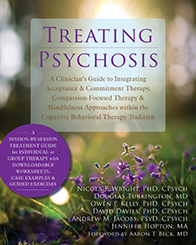 In Treating Psychosis: A Clinician’s Guide to Integrating Acceptance and Commitment Therapy, Compassion-Focused Therapy and Mindfulness Approaches within the Cognitive Behavioral Therapy Tradition, Nicola P. Wright et al. offer valuable knowledge and concrete, practical application of theory, interventions and strategies for clinicians looking to augment their work with individuals who experience psychosis. The authors do an excellent job of laying a foundation that explains how psychosis can cause problems for individuals suffering from it, while concurrently maintaining a compassionate stance.
The book is divided into nine modules that build upon one another sequentially and address different components of the counseling process, including initial conceptualization and group implementation, the therapeutic relationship, assessment, treatment planning, emotion regulation and resilience, treating distressing thoughts and voices, and recovery maintenance. Throughout the modules, Wright et al. include clinical examples and exercises to help the reader apply the text to clinical practice. The book also has an abundant appendix of forms that counselors can utilize in every stage of work with clients, from initial screening and assessment to more in-depth work after initial rapport occurs, such as emotion identification, core beliefs, coping strategies and voice management, in order to help clients minimize distress. Additionally, the authors provide a thorough collection of resources and further reading for clinicians to supplement their expertise and practice.
The authors are concise and craft a comprehensive strategy for working clinically with this population in only 159 pages. The text is approachable and conversational and the subject matter is explained with person-centered compassion and sensitivity. The interventions recommended are easy to apply and simple in their explanation. The overarching philosophy promoted by the authors is an intent focus on understanding clients’ experiences with voices and distressing thoughts. With this better understanding, clinicians can empower clients to establish more control in their lives using a blend of cognitive-behavioral, compassion-focused, mindfulness, and acceptance and commitment techniques—including commanding voices, bringing beliefs more in line with personal values, and ultimately establishing a more positive relationship with thoughts and voices—in order to enhance emotional regulation, build resilience, and increase overall congruence to decrease distress for clients experiencing psychosis.
The main limitation associated with the book is the breadth of approaches that the authors attempt to include in their comprehensive approach. While the blending of the four separate approaches of acceptance and commitment therapy, compassion-focused therapy, mindfulness, and cognitive-behavioral therapy is ambitious and often successful, at times the overarching strategy comes across as piecemeal and may benefit from a more fully integrated perspective. For example, while the authors utilize a variety of interventions from each of the approaches under the cognitive-behavioral umbrella, at times the integration of these four strategies does not feel fully realized. However, in terms of applying the information in everyday practice, the book is practical and easily applicable.
Treating Psychosis is a useful resource for counselors who work regularly with a clientele experiencing psychosis that interferes with everyday life. The book offers straightforward strategies, interventions and perspectives for decreasing distress around invasive voices and thoughts.
Wright, N. P., Turkington, D., Kelly, O. P., Davies, D., Jacobs, A. M., & Hopton, J. (2014). Treating psychosis: A clinician’s guide to integrating acceptance & commitment therapy, compassion-focused therapy & mindfulness approaches within the cognitive behavioral therapy tradition. Oakland, CA: New Harbinger.
Reviewed by: Allison Jeanne Agresti, NCC, McLeod Addictive Disease Center, Marion, NC.
The Professional Counselor
https://tpcwordpress.azurewebsites.net/
Sep 18, 2015 | Book Reviews
 Working with adolescents is a challenge in any helping role. Teachers, counselors, volunteers and youth leaders all experience some of the same obstacles when working with this age group. “How do you communicate understanding to resistant teenagers? Do they respect me? Why are they always in a bad mood? Do they ever make eye contact? What are appropriate expectations for behavior?” In What Works with Teens, licensed social workers Britt Rathbone and Julie Baron address many concerns that face people working with adolescents by providing information on development as well as tangible ways to help build better relationships with young people.
Part 1 of the book, “Welcome to the World of Adolescence,” gives a succinct summary of adolescent development. Rathbone and Baron set the foundation of adolescent socio-emotional behavior by giving a brief overview of teens’ brain structure. Rathbone and Baron discuss neuroscience in a way that makes the information attainable and understandable to people of any profession, including those with limited background in this type of science. They then discuss the priorities of adolescents, their emotional needs, and stereotypes that adults may have about young people that cause barriers in their work and in connecting with adolescent clients. While detailing components of adolescence that adults may have forgotten, the writers also highlight many similarities that adults and teens have in the ways they think and the things they value. The authors state that everyone values respect and authenticity; the expression of those qualities may just look different in adults and teens.
In part 2 of the book, “Putting Skills to Work,” the authors discuss important qualities needed when building relationships with young people, while giving tangible ways to improve and to measure success in work with youth. The book discusses respect, authenticity, kindness, predictability, acceptance and change. In each chapter there are anecdotes of times when adolescents experienced as well as failed to experience these qualities in their relationship with adults. These stories help emphasize the importance of relationship in creating change within young people as well as provide a context for readers when thinking about their own work with youth.
Although not specifically written for counselors, What Works with Teens is a very useful resource for professional counselors in school, clinical mental health or college settings. The skills discussed in part 2 complement the strength-based approach that counselors take when working with others. What Works with Teens highlights the importance of building relationships with teens and empowering them to make their own change, much like counselors do in their work with others in any setting. This book aims not to teach adults on how to tell young people what to do, or what they should do, but rather is an aid to adults in building better alliances with adolescents. The qualities discussed in What Works with Teens are valuable in not only working with teens, but in any therapeutic relationship. The authors emphasize meeting all adolescents where they are, an approach that counselors often take with any client.
What Works with Teens is a comprehensive resource for any professional working with young people. Beginning with adolescent development, the authors outline how and why adolescents often behave and feel the way they do. The authors then proceed to discuss ways to help build positive relationships with youth, and how to incorporate teens into discussion of the relationship and ways to improve. An authentic and trusting relationship between youth and adults is essential to healthy growth and development. What Works with Teens gives adults attainable goals in building relationship with youth. Using these values to build a therapeutic alliance, adults will be better equipped to empower teens to take ownership of their own growth and development.
Rathbone, B. H., & Baron, J. B. (2015). What works with teens: A professional’s guide to engaging authentically with adolescents to achieve lasting change. Oakland, CA: New Harbinger.
Reviewed by: Hannah Kirby, NCC, Creative Counseling and Learning Solutions, Rowan County, NC.
The Professional Counselor
https://tpcwordpress.azurewebsites.net/
Aug 18, 2015 | Book Reviews

With a recent surge in empirical support for mind–body approaches, many counselors are hungry for tools to assist them in learning to effectively use mindfulness and yoga for self-care and in clinical practice. Catherine P. Cook-Cottone offers just such a tool with her well-researched book, Mindfulness and Yoga for Self-Regulation.
The book is organized into four carefully developed sections. The author begins by weaving a conceptual framework from current literature, anecdotal experience, and both Hindu and Buddhist teachings. The primary focus is on self-regulation and dysregulation in the context of mental health as well as mindfulness and yogic philosophy. For example, the author describes how her conceptualization of embodied self-regulation differs from more traditional approaches. She identifies the risks associated with dysregulation and the corresponding mental health issues. She distills the major tenets guiding mindfulness and yogic philosophy into twelve principles termed “embodied practices” for living, and discusses the application of these practices in clinical settings.
In part two, “The Mindful Self,” Cook-Cottone elaborates on the clinical relevance of the philosophy of mindfulness. She provides information about formal and informal mindfulness practice in the context of counselor self-care and applications in clinical practice. The structure of part three mirrors part two, with an emphasis on yoga. The author presents the foundation of yogic philosophy and guidelines and tips for formal and informal practice, as well as information about creating a practice, including finding yoga teachers, different styles of yoga and possible risks involved. In the fourth and final part of the book, topics such as treatment protocols, contradictions and self-care are addressed. Cook-Cottone concludes the book by addressing mindful self-care as a self-regulating practice.
Although there is a wealth of information presented in this primer, there are also some areas that may be ripe for further exploration. For instance, there is little information provided about the use of specific yoga asanas (poses). However, to address this, the author provides a rationale for this choice and points the reader to excellent resources for learning poses and sequences (e.g., teachers, books, Web sites). Also, though cultural context is provided throughout the text, cultural sensitivity is not the focus of this book. It would be useful for future publications to offer a more in depth look at multicultural issues related to integrating mindfulness and yoga in clinical practice. Though it is not possible to cover everything in just one book, there are many areas that are thoughtfully addressed in this primer.
The in-depth attention that is given to each topic makes this book a robust resource for counselors. The author provides a host of strategies and resources to use both during and between sessions, including tips, cautions, worksheets, meditation scripts, assessment tools, and suggested open-ended questions for intervention and assessment. For example, when describing the philosophy of mindfulness, the author not only outlines concepts of the Eightfold Path, but also provides links to clinical practice, including questions for clients such as, “What does the phrase ‘pain is inevitable, suffering is optional’ mean to you?” She also includes case studies and instructional stories to help the reader understand key points and how these concepts translate into clinical practice.
Cook-Cottone suggests that utilizing mindfulness and yoga in clinical practice requires counselor commitment to personal practice, acceptance of clients on their unique path, and development of mindfulness and yoga-informed clinical knowledge and skills. This book is a rich resource to guide counselors toward that end.
Cook-Cottone, C. P. (2015). Mindfulness and yoga for self-regulation: A primer for mental health professionals. New York, NY: Springer.
Reviewed by: Jamie E. Crockett, NCC, Wake Forest University
The Professional Counselor
https://tpcwordpress.azurewebsites.net
Aug 14, 2015 | Video Reviews
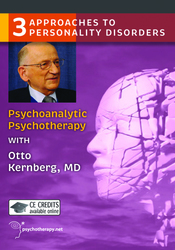 This video presents a close exploration of three psychotherapy sessions between Dr. Otto Kernberg and a mock client with a personality disorder, with commentary and exploration of important issues facilitated by Victor Yalom. The premise and definition of personality disorders is established to set the tone for the psychotherapist’s focus toward the client’s motivations, distortions in close relationships and view of the self within those relationships through an approach called Transference-Focused Therapy.
The video explores the projections that are driven by such clients’ recurrent fears of being traumatized and provides a clear picture of the manner in which those with identity diffusion struggle to hold a balanced perspective. In these cases, emotion overwhelms them, creating the split view of the self or others as either completely idealized or utterly negative. Focusing on the interpersonal experience of the here and now, the conscious meanings are illuminated through an intensive approach to exploring the interpersonal experience through structural interviewing. The interview, as Victor Yalom points out, moves from a traditional interview toward examination of the interpersonal exchange between the client and the therapist.
The interview process exemplifies an exploration of symptoms, personality, and normal or diffused identity, then reality testing to draw out the fullness of the interaction transference and exploration. Dr. Kernberg illuminates the concept of identity diffusion. Continued discrepancy exploration uncovers the client’s levels of paranoia, suspicion, anger and controlling behavior as this video presents a client who seeks to protect himself from fear of further discomfort or rejection. By interpreting the client’s difficulty with reality openly, a counselor can determine the level of reality acceptance versus the presence of paranoia toward others. The video later demonstrates how to move the interview toward exploring how the client may begin to understand the transference between client and counselor.
The video provides effective commentary by Dr. Kernberg and a continued dialog between Victor Yalom and Dr. Kernberg throughout the mock sessions to emphasize his focus and methods. Dr. Kernberg is respectful, honest and direct with his client while also pointing to the discrepancies he experiences. The video moves through three sessions to show the client’s further exploration of his areas of denial along with his progress toward integrating his inner concept of self.
One limitation of the video is that the first session is lengthy and the second is quite short, which may leave the learner wondering how to structure typical 50-minute sessions with these clients. There are times when the diagnosis is unclear as to whether the client is showing borderline personality disorder or being a borderline patient, which can be confusing to those learning to diagnose clients. Reference to the DSM-5 would be helpful to clarify the diagnosis and the symptoms displayed by the client.
Strengths of this video include the demonstration of continuing assessment if the client presents a new issue, such as potential substance abuse, while maintaining the continued focus on transference. Dr. Kernberg is artful in exemplifying an approach that remains open and honest but neutral in tone, whether the client feels willing to share more information or seeks to control the topic or shift the focus from the most important areas of assessment or counseling. By appealing to the trustful part of the client’s personality, Dr. Kernberg skillfully shows how to draw out this side of the client in order to help gain commitment to the treatment process. The potential for overcoming the problem of distrust and suspicion is modeled to show therapists how to appeal to the part of the client that does trust in order to create more balance in personal responses toward others.
Finally, this video reminds counselors of ways to engage in the therapeutic process through a grounded response to clients, trained awareness of client unconscious projections, and their own well-developed self-awareness in order to manage counter-transference. This video successfully explores the issues vital to understanding the therapeutic relationship through a psychodynamic and psychoanalytic process that helps clients to reconcile polarities by achieving a more integrated view of others. With a video scrolling script format that is easy to understand and follow, counselors can learn effective methods for addressing challenging client issues.
Psychotherapy.net (Producer). (2013). Psychoanalytic psychotherapy with Otto Kernberg, MD. (Available in DVD and video streaming from http://www.psychotherapy.net/video/psychoanalytic-psychotherapy-otto-kernberg)
Available in DVD and streaming format as part of video subscription at www.psychotherapy.net/subscriptions.
Reviewed by: Adele Logan O’Keefe, Walden University, Minneapolis, MN.
The Professional Counselor
https://tpcwordpress.azurewebsites.net/