Dec 2, 2014 | Article, Volume 4 - Issue 5
Traci P. Collins
School counselors are a well-positioned resource to reach the significant number of children and adolescents with mental health problems. In this special school counseling issue of The Professional Counselor, some articles focus on systemic, top-down advocacy efforts as the point of intervention for addressing child and adolescent mental health. Other articles investigate improving child and adolescent mental health through a localized, ground-level approach by developing school counselors’ competency areas and specific school counseling interventions. Article topics include school counselors’ professional identity, training, self-efficacy, supervision, burnout, career competencies and cultural competencies, as well as how to measure the impact of school counselors’ interventions. The author discusses the importance of school counselors’ role within schools, and hindrances to school counselors’ ability to perform their role as counselors.
Keywords: school counselors, professional identity, role, competencies
A significant number of children and adolescents experience mental health problems in the United States. Between 13% and 20% of children experience a mental disorder in a given year (Centers for Disease Control and Prevention, 2013). Because school counselors have access to these students with mental illness in our nation’s school systems, they are a well-positioned resource. School counselors improve the mental health of children and adolescents, thereby improving the students’ overall functioning, personal/social development, career development and educational success. Students need mental health services; however, confusion exists as to how to utilize their most easily operationalized resource—school counselors (Gysbers & Henderson, 2006).
Overview of the Special Issue
In order to improve child and adolescent mental health and the efficiency of mental health services, the function of school counselors within the school system must be examined. I am pleased to introduce this special issue of The Professional Counselor focusing on school counseling. The collection of articles combines systemic, theoretical explorations with assessments of school counselor preparation and competencies. Some articles focus on the point of intervention (i.e., place for needed improvement and change) as systemic, top-down advocacy efforts. Other articles cover school counselor training, self-efficacy, supervision, and burnout versus career sustainability. A few articles in this special issue investigate improving child and adolescent mental health through a localized, ground-level approach by developing school counselors’ competency areas and specific school counseling interventions.
School Counselor Professional Identity
Over the last 100 years, school counseling has evolved from vocational guidance to the current concept of comprehensive school counseling. The first article in this special issue provides a historical perspective, describing the progression of school counselor professional identity (Cinotti, 2014). Cinotti (2014) discusses the conflicting professional identities (educator and counselor) that school counselors have experienced for the last century and the effects of role ambiguity concerning the utilization of school counselors and the assignment of duties. School counselors receive conflicting obligations and messages from counselor educators, school administrators and other stakeholders. However, research has found that among usual school counselor duties, direct counseling services are the most unique role of school counselors (Astramovich, Hoskins, Gutierrez, & Bartlett, 2014). Counseling services are often underutilized.
Bardhoshi, Schweinle, and Duncan (2014) explore school counselor professional identity on a more practical level by examining the impact of school-specific factors on school counselor burnout. The authors describe a mixed-methods study that expands on previous research indicating that role conflict is related to burnout in school counselors (Wilkerson & Bellini, 2006) and examine organizational factors such as student caseload. Bardhoshi et al. include a telling statement from a study participant who shared, “When we are allowed to focus on the social and emotional needs of the whole child, we are best positioned to clear away the barriers to academic achievement” (p. 434). These authors emphasize the importance of comprehensive training in school counselor programs and counselor educator advocacy efforts.
In a third article involving school counselor professional identity, Duncan, Brown-Rice, and Bardhoshi (2014) describe the ways that inadequate supervision for school counselors contributes further to disordered professional identity development and insufficient support for school counselors. Appropriate clinical supervision provides professional identity development, proficiency in ethics and improved clinical abilities. However, school counselors often receive only administrative supervision conducted by noncounselors, and rural school counselors face additional challenges in seeking clinical supervision (Duncan, Brown-Rice, & Bardhoshi, 2014).
School Counselor Training
In 2012, the American School Counselor Association (ASCA) published the third edition of The ASCA National Model: A Framework for School Counseling Programs, which contains the following four elements for comprehensive school counseling programs: foundation, delivery system, management and accountability. In this special issue, Martin and Carey (2014) describe their examination of the National Model and subsequent development of a logic model for use in evaluating the success of the National Model. They suggest that future research could examine the outputs and outcomes outlined in their logic model before and after implementation of the National Model. Assessing school counselor preparation and student change provides insight into the effectiveness of the current guidelines for school counselor training.
After completing their graduate program, school counselors must apply knowledge associated with professional identity, ethical practice and sound counseling interventions. Schiele, Weist, Youngstrom, Stephan, and Lever (2014) present their research on counselor self-efficacy and performance when working with students in schools, focusing on the impact of counselor self-efficacy on the quality of counseling services and knowledge of evidence-based practices. Relatedly, Schiele et al. found that counselor self-efficacy plays an important role in the effective assessment and treatment of students’ mental health needs.
Career Counseling Competencies. Morgan, Greenwaldt, and Gosselin (2014) studied school counselor perceptions of competency in career counseling, also comparing Council for Accreditation of Counseling and Related Educational Programs (CACREP) counselor preparation versus non-CACREP preparation. Their participants, practicing school counselors, consistently shared feelings of incompetence and inadequacy in their ability to provide sound career development programming to their students. The results of this study indicate that feelings of unpreparedness upon leaving graduate school, along with feelings of incompetency, significantly impact school counselors’ ability to address the needs of their students.
Cultural Competencies. Several articles in this special school counseling issue examine school counseling interventions or approaches for working with diverse populations. A 2010 Department of Defense report revealed that approximately 1.85 million children have at least one parent serving in the U.S. military (see Ruff & Keim, 2014). In this issue, Cole (2014) provides a guide for working with children from military culture. Culturally competent school counselors must be knowledgeable about the unique complexities of this population, along with other culturally distinctive populations. Van Velsor and Thakore-Dunlap (2014) describe working with South Asian immigrant adolescents in a group counseling format. Additionally, Shi, Liu, and Leuwerke (2014) offer insights into Chinese culture in their study examining students’ perceptions of school counselors in Beijing.
While the aforementioned articles discuss students from certain cultural groups, this special issue of The Professional Counselor also provides an article about a specific population of U.S. students—those in need of anger management. Although anger is a common emotion experienced by both females and males (Karreman & Bekker, 2012), Burt and Butler (2011) noted that most anger management groups are gender biased, focusing excessively on adolescent males. In this special issue, Burt (2014) describes his investigation of gender differences in anger expression and anger control in adolescent middle school students, providing a foundation for practical applications and future research.
Concluding Comments
School counselors are well positioned within the school system to provide short-term clinical-based interventions to improve child and adolescent mental health. Proper identification, evaluation, and treatment of child and adolescent mental illness contribute to students’ well-being, productivity and success in various areas of their lives (National Institute of Mental Health, 1999), including academic success. With student academic achievement receiving national attention, school counselors have been challenged to provide interventions that contribute to increased student achievement (ASCA, 2005). Villares et al. (2014) continue this initiative by establishing the validity of an assessment tool that can be used to measure the impact of school counselor-led interventions on student achievement. Outcome research can be useful in responding to the systemic concerns regarding school counselor professional identity and role within the schools. When counselors stay true to their roots—as counselors first and educators second—they are in the most useful position to improve student achievement by first fighting the war on student mental health.
Ninety years ago, Myers (1924) warned about interferences that would prevent the “real work of a counselor” from occurring (p. 141). This 90-year-old forecast echoes today, as contemporary school counselors need support in receiving robust training and preparation in professional identity and competencies, resolving administrative and systemic issues, and obtaining efficient supervision to guide the course of the counseling profession in the school system.
References
American School Counselor Association. (2005). The ASCA national model: A framework for school counseling programs (2nd ed.). Alexandria, VA: Author.
American School Counselor Association. (2012). The ASCA national model: A framework for school counseling programs (3rd ed.). Alexandria, VA: Author.
Astramovich, R. L., Hoskins, W. J., Gutierrez, A. P., & Bartlett, K. A. (2014). Identifying role diffusion in school counseling. The Professional Counselor, 3, 175–184. doi:10.15241/rla.3.3.175
Bardhoshi, G., Schweinle, A., & Duncan, K. (2014). Understanding the impact of school factors on school counselor burnout: A mixed-methods study. The Professional Counselor, 4, 426–443. doi:10.15241/gb.4.5.426
Burt, I. (2014). Identifying gender differences in male and female anger among an adolescent population. The Professional Counselor, 4, 531–540.doi:10.15241/ib.4.5.531
Burt, I., & Butler, S. K. (2011). Capoeira as a clinical intervention: Addressing adolescent aggression with Brazilian martial arts. Journal of Multicultural Counseling and Development, 39, 48–57. doi:10.1002/j.2161-1912.2011.tb00139.x
Centers for Disease Control and Prevention. (2013). Mental health surveillance among children—United States, 2005–2011. Morbidity and Mortality Weekly Report, 62(2), 1–35. http://www.cdc.gov/mmwr/preview/mmwrhtml/su6202a1.htm?s_cid=su6202a1_w
Cinotti, D. (2014). Competing professional identity models in school counseling: A historical perspective and commentary. The Professional Counselor, 4, 417–425. doi:10.15241/dc.4.5.417
Cole, R. F. (2014). Understanding military culture: A guide for professional school counselors. The Professional Counselor, 4, 497–504. doi:10.15241/rfc.4.5.497
Duncan, K., Brown-Rice, K., & Bardhoshi, G. (2014). Perceptions of the importance and utilization of clinical supervision among certified rural school counselors. The Professional Counselor, 4, 444–454. doi:10.15241/kd.4.5.444
Gysbers, N. C., & Henderson, P. (2006). Developing & managing your school guidance and counseling program (4th ed.). Alexandria, VA: American Counseling Association.
Karreman, A., & Bekker, M. H. J. (2012). Feeling angry and acting angry: Different effects of autonomy-connectedness in boys and girls. Journal of Adolescence, 35, 407–415. doi:10.1016/j.adolescence.2011.07.016
Martin, I., & Carey, J. (2014). Development of a logic model to guide evaluations of the ASCA national model for school counseling programs. The Professional Counselor, 4, 455–466. doi:10.15241/im.4.5.455
Morgan, L. W., Greenwaldt, M. E., & Gosselin, K. P. (2014). School counselors’ perceptions of competency in career counseling. The Professional Counselor, 4, 481–496. doi:10.15241/lwm.4.5.481
Myers, G. E. (1924). A critical review of present developments in vocational guidance with special reference to future prospects. The Vocational Guidance Magazine, 2, 139–142. doi:10.1002/j.2164-5884.1924.tb00721.x
National Institute of Mental Health. (1999). Facts on children’s mental health in America. Retrieved from http://www.nami.org/Template.cfm?Section=federal_and_state_policy_legislation&template=/ContentManagement/ContentDisplay.cfm&ContentID=43804
Ruff, S. B., & Keim, M. A. (2014). Revolving doors: The impact of multiple school transitions on military children. The Professional Counselor, 4, 103–113. doi:10.15241/sbr.4.2.103
Schiele, B. E., Weist, M. D., Youngstrom, E. A., Stephan, S. H., & Lever, N. A. (2014). Counseling self-efficacy, quality of services and knowledge of evidence-based practices in school mental health. The Professional Counselor, 4, 467–480. doi:10.15241/bes.4.5.467
Shi, Q., Liu, X., & Leuwerke, W. (2014). Students’ perceptions of school counselors: An investigation of two high schools in Beijing, China. The Professional Counselor, 4, 519–530. doi:10.15241/qs.4.5.519
Van Velsor, P., & Thakore-Dunlap, U. (2014). Group counseling with South Asian immigrant high school girls: Reflections and commentary of a group facilitator. The Professional Counselor, 4, 505–518. doi:10.15241/pvv.4.5.505
Villares, E., Colvin, K., Carey, J., Webb, L., Brigman, G., & Harrington, K. (2014). The convergent and divergent validity of the Student Engagement in School Success Skills Survey. The Professional Counselor, 4, 541–553. doi:10.15241/ev.4.5.541
Wilkerson, K., & Bellini, J. (2006). Intrapersonal and organizational factors associated with burnout among school counselors. Journal of Counseling & Development, 84, 440–450. doi:10.1002/j.1556-6678.2006.tb00428.x
Traci P. Collins, NCC, is the Managing Editor of The Professional Counselor and a doctoral student at North Carolina State University. Correspondence can be addressed to: Traci P. Collins, The Professional Counselor, National Board for Certified Counselors, 3 Terrace Way, Greensboro, NC 27403-3660, tcollins@nbcc.org.
Dec 2, 2014 | Article, Volume 4 - Issue 5
Daniel Cinotti
Recent research has focused on the discrepancy between school counselors’ preferred roles and their actual functions. Reasons for this discrepancy range from administrators’ misperceptions of the role of the school counselor to the slow adoption of comprehensive school counseling approaches such as the American School Counselor Association’s National Model. A look at counseling history reveals that competing professional identity models within the profession have inhibited the standardization of school counseling practice and supervision. School counselors are counseling professionals working within an educational setting, and therefore they receive messages about their role as both counselor and educator. The present article includes a discussion of the consequences of these competing and often conflicting messages, as well as a description of three strategies to combat the role stress associated with this ongoing debate.
Keywords: school counseling, counseling history, professional identity, supervision, educational setting
The profession of school counseling has existed for more than 100 years, and throughout that time, competing professional identity constructs have impacted the roles, responsibilities and supervision of school counselors. Since the inception of school counseling, when it was known as vocational guidance, confusion has existed on how best to use and manage the resource that is the school counselor (Gysbers & Henderson, 2006; Pope, 2009). Although the focus of the profession has changed from vocational guidance to the current concept of comprehensive school counseling, problems surrounding the use and supervision of school counselors persist. Today, although the profession has identified a National Model (American School Counselor Association [ASCA], 2012) that provides an example of a comprehensive programmatic approach, many practicing school counselors and administrators continue to work with outdated service models and reactive approaches (Hatch & Chen-Hayes, 2008; Lambie & Williamson, 2004). A look at the historical roots of school counseling provides insight into the lasting problems for school counselor utilization and supervision.
Historical Context of School Counselor Practice
At the outset of the school counseling profession, the role of vocational guidance slowly became recognized as an integral ingredient in effective vocational placement and training. With the creation of the National Vocational Guidance Association in 1913, and the proliferation of vocational guidance programs in cities such as Boston and New York, the profession rapidly expanded (Gysbers & Henderson, 2006). Concerns over the lack of standardized duties, centralized supervision and evaluation of services soon followed. As Myers (1924) pointed out in a historic article titled “A Critical Review of Present Developments in Vocational Guidance with Special Reference to Future Prospects,” vocational guidance was quickly being recognized as “a specialized educational function requiring special natural qualifications and special training” (p. 139, emphasis in original). However, vocational guidance was mostly being performed by teachers in addition to their other duties, with very few schools hiring specialized personnel. Although Myers (1924) and others expressed concerns over the lack of training and supervision, educators and administrators were slow to recognize the consequences of asking teachers to perform such vital duties in addition to their teaching responsibilities without proper training and extra compensation. Additionally, districts in which specific individuals were hired as vocational guidance professionals soon overloaded these professionals with administrative and clerical duties, which inhibited their effectiveness. Myers (1924) highlighted the situation as follows:
Another tendency dangerous to the cause of vocational guidance is the tendency to load the vocational counselor with so many duties foreign to the office that little real counseling can be done. . . . If well chosen he [or she] has administrative ability. It is perfectly natural, therefore, for the principal to assign one administrative duty after another to the counselor until he [or she] becomes practically assistant principal, with little time for the real work of a counselor. In order to prevent this tendency from crippling seriously the vocational guidance program it is important that the counselor shall be well trained, that the principal shall understand more clearly what counseling involves, and that there shall be efficient supervision from a central office. (p. 141)
In 1913, Jesse B. Davis introduced a vocational guidance curriculum to be infused into English classes in middle and high schools, an idea which he presented at the first national conference on vocational guidance in Grand Rapids, Michigan (Pope, 2009). It was summarily rejected by his colleagues, who would not embrace the idea of a guidance curriculum within the classroom. Slowly, however, as the profession grew and Davis and others gained respect and notoriety throughout the country, his “Grand Rapids Plan” gained support. Though Davis did not expect it, his model sparked debate between those who envisioned the expansion of counselor responsibilities and those who wished to maintain counselors’ primary duty as vocational guidance professionals (Gysbers & Henderson, 2006). Ultimately, the heart of this debate was the role of vocational guidance as a supplemental service to the learning in the classroom or a distinctive set of services with a different goal than simply educating students. Although no definitive answer was agreed upon at the time, the realization that academic factors influence career choice and vice versa has helped to move the profession from a systemic approach of strictly vocational guidance to a comprehensive approach in which career, academic and personal/social development are all addressed (ASCA, 2003). The disagreement over Davis’s Grand Rapids Plan launched a debate between competing professional identity models that continues in the profession to this day.
Competing Professional Identity Models: Educator or Counselor?
Even during the time of vocational guidance in which the counseling profession’s singular purpose was to prepare students for the world of work, disagreement over the best way to perform this duty existed. As the profession began to define itself during the 1930s and ’40s, school administrators heavily determined the professional responsibilities of the school counselor (Gysbers & Henderson, 2006). When the profession expanded to include personal adjustment counseling as a reaction to the growing popularity of psychology, administrators reacted by expanding vocational guidance to include a more educational focus. During the 1950s, school counselors were placed under the umbrella term pupil personnel services along with the school psychologist, social worker, nurse or health officer, and attendance officer. Although the primary role of the school counselor throughout the ’60s and ’70s was to provide counseling services, concerns over the perception of the profession existed. As a result of the lack of defined school counselor roles and responsibilities, the position was still seen as an ancillary support service to teachers and administrators. It was therefore extremely easy for administrators to continue to add to the counselor’s responsibilities as they saw fit (Lambie & Williamson, 2004), aligning school counselor duties with their own identity as educators.
The 1970s brought about the beginning of school counseling as a comprehensive, developmental program. Some within the profession attempted to create comprehensive approaches, which included goals and objectives, activities or interventions to address them, planning and implementation strategies, and evaluative measures. It was the first time that school counseling was defined in terms of developmentally appropriate, measurable student outcomes (Gysbers & Henderson, 2006). However, environmental and economic factors slowed the adoption of this new concept. The 1970s were a decade of decreasing student enrollment and budgetary reductions, which led to cutbacks in counselor positions (Lambie & Williamson, 2004). As a result, counselors began to take on more administrative duties either out of necessity or a desire to become more visible and increase the perception of the school counselor position as necessary. During this time, many of the counseling duties of the position were lost among other responsibilities more aligned with those of an educator.
In 1983, the National Commission of Excellence in Education published “A Nation at Risk,” a report examining the quality of education in the United States (Lambie & Williamson, 2004). Among its initiatives, the report jump-started the testing and accountability movement in education. Standardized testing coordination duties were almost immediately assigned to the counselor. In fact, over the course of the past century in the profession of school counseling, the list of counselor duties and responsibilities has steadily grown to include administrative duties such as scheduling, record keeping and test coordination. With the ever-growing and expanding role of the counselor, and in an attempt to articulate the appropriate responsibilities of the counselor, the concept of comprehensive school counseling programming, which was established in the late 1970s, grew in popularity during the ’80s and ’90s (Gysbers & Henderson, 2006; Mitchell & Gysbers, 1978). As time passed, programs became increasingly articulated and workable, and an emphasis on accountability and evaluation of practice emerged (Gysbers & Henderson, 2001).
Comprehensive School Counseling Programs
What separates comprehensive school counseling from traditional guidance models is a focus on the program and not the position (Gysbers & Henderson, 2006). The pupil personnel services models of the ’60s and ’70s listed the types of services offered but lacked an articulated, systemic approach, and therefore allowed for the constant assignment of other duties to school counselors. The concept of comprehensive programming was created in response to this problem (Gysbers & Henderson, 2006).
As early as 1990, Gysbers offered five foundational premises on which comprehensive school counseling is based. First, school counseling is a program and includes characteristics of other programs in education, including standards, activities and interventions that help students reach these standards; professionally certificated personnel; management of materials and resources; and accountability measures. Second, school counseling programs are developmental and comprehensive. They are developmental in that the activities and interventions are designed to facilitate student growth in the three areas of student development: academic, personal/social and career development (ASCA, 2003). They are comprehensive in that they provide a wide range of services to meet the needs of all students, not just those with the most need. The third premise is that school counseling programs utilize a team approach. Although professional school counselors are the heart of a comprehensive program, Mitchell and Gysbers (1978) established that the entire school staff must be committed and involved in order for the program to successfully take root. The fourth premise is that school counseling programs are developed through a process of systematic planning, designing, implementing and evaluating (Gysbers & Henderson, 2006). This process has been described in different ways but often using the same or similar terminology (Dollarhide & Saginak, 2008). Lastly, the fifth premise offered by Gysbers and Henderson (2006) is that comprehensive school counseling programs have established leadership. A growing message in the school counseling literature is the need for school counselors to provide leadership and advocacy for systemic change (Curry & DeVoss, 2009; McMahon, Mason, & Paisley, 2009; Sink, 2009). Without the knowledge and expertise of school counseling leaders, comprehensive programs will not take hold.
The ASCA National Model
Only within the past decade has the school counseling profession as a whole embraced the concept of comprehensive programs (Dollarhide & Saginak, 2008), a movement which was spurred by ASCA’s creation of a National Model (ASCA, 2003). In 2001, ASCA created the first iteration of its National Model; intended as a change agent, it is a framework for states, districts and counseling departments toward the creation of comprehensive developmental school counseling programs. The ASCA National Model contains four elements, or quadrants, for creating and maintaining effective comprehensive programs (ASCA, 2012). The quadrants are the tools school counselors utilize to address the academic, personal/social and career needs of their students. The first, Foundation, is the philosophy and mission upon which the program is built. The second, Delivery System, consists of the proactive and responsive services included in the program. These services can be focused individually, in small groups or school-wide, and are delivered from—or are at least influenced by—the program’s Foundation and mission statement. The third quadrant, Management, is organization and utilization of resources. Because a comprehensive program uses data to drive its Delivery System, the fourth quadrant is Accountability, which incorporates results-based data and intervention outcomes to create short- and long-term goals for the program (ASCA, 2012; Dollarhide & Saginak, 2008).
The National Model is the most widely accepted conceptualization of a comprehensive school counseling program (Burnham, Dahir, Stone, & Hooper, 2008). It resulted from a movement toward comprehensive programs born out of school counselors’ need to clarify their roles and responsibilities. Beginning with the Education Trust’s (2009) Transforming School Counseling Initiative and continuing with the creation of National Standards for Student Academic, Career and Personal/Social Development, the National Model has been built upon the concepts of social advocacy, leadership, collaboration and systemic change, which are slowly but profoundly shaping the profession (Burnham et al., 2008; Campbell & Dahir, 1997; Dollarhide & Saginak, 2008). Since the release of the National Model, however, the movement toward comprehensive school counseling programs has remained slow (Hatch & Chen-Hayes, 2008). Such slow growth inhibits school counselors from standardizing or professionalizing their roles and responsibilities (Dollarhide & Saginak, 2008).
Consequences of Competing Professional Identity Models
Lambie and Williamson (2004) stated that “based on this historical narrative, school counseling roles have been vast and ever-changing, making it understandable that many school counselors struggle with role ambiguity and incongruence while feeling overwhelmed” (p. 127). While the addition of many responsibilities has been a result of the natural expansion of the profession from vocational guidance to guidance and counseling to comprehensive school counseling, the influence of administrators has directly led to the assignment of inappropriate duties. From the outset of the profession, an essential question has involved these two competing identity models: Should school counselors be acting as educators or counselors?
The historically relevant and often opposing sets of expectations for school counselors come from both counselor educators during training and school administrators (such as principals) upon entering the profession. There is evidence to suggest that school counselors are not practicing as the profession indicates, both in terms of the ASCA National Model and the Education Trust’s Transforming School Counseling Initiative (Clemens, Milsom, & Cashwell, 2009; Hatch & Chen-Hayes, 2008; Scarborough & Culbreth, 2008). Therefore, a common source of role conflict and role ambiguity is the school administrators’ perceptions of the school counselor function, a concern that Myers (1924) established and Lambie and Williamson (2004) reiterated. The concern that school counselors are being used as quasi-administrators instead of counseling professionals continues to persist.
According to ASCA (2012), school counselors are responsible for activities that foster the academic, career and personal/social development of students. The primary role of the school counselor, therefore, is direct service and contact with students. Among the activities ASCA (2012) listed as appropriate for school counselors are individual student academic planning, direct counseling for students with personal/social issues impacting success, interpreting data and student records, collaborating with teachers and administrators, and advocating for students when necessary. Among the activities listed as inappropriate are the following: registration and scheduling; coordinating and administering standardized tests; performing disciplinary actions; covering classes, hallways, and cafeterias; clerical record keeping; and data entry. In terms of role conflict, when faced with a task, school counselors often wish to respond in a manner that is congruent with their counselor identity, but are told to apply another professional identity—namely that of educator. For example, when a school counselor is asked to provide services to a student who has bullied, while also informing the student that he or she has been suspended from school for that behavior, the counselor may experience role conflict. Role ambiguity occurs when some of the duties listed as inappropriate are included as part of the counselor’s responsibilities. For example, if a school counselor is asked to coordinate and proctor state standardized aptitude tests, the counselor experiences role ambiguity, as this duty is noncounseling-related, yet requires a significant time commitment (Culbreth, Scarborough, Banks-Johnson, & Solomon, 2005; Olk & Friedlander, 1992). These examples are but two of many possible scenarios in which the conflicting messages from competing professional identity orientations contribute to role stress for practicing school counselors.
Strategies for Addressing Competing Models
Within the recent literature on school counseling, many articles highlight the differences between school counselors’ preferred practice models and actual functioning (Burnham & Jackson, 2000; Culbreth et al., 2005; Lieberman, 2004; Scarborough & Culbreth, 2008), as well as between administrators’ view of the role of the school counselor and models of best practice within the profession (Clemens et al., 2009; Kirchner & Setchfield, 2005; Zalaquett & Chatters, 2012). However, these discrepancies were identified virtually from the outset of the profession (Ginn, 1924; Myers, 1924) and can be attributed in large part to the different orientations encountered by counseling professionals working in educational settings. Despite the concept of comprehensive school counseling and the creation of a National Model delineating appropriate roles and responsibilities, the reality is that school counselors utilize different service models depending on the region, state, district and even school in which they work. From a historical perspective, it is clear that administrators often impose their identity as educators on school counselors through the assignment of noncounseling duties. However, it is also clear that school counselors themselves have been unsuccessful in advocating for the use of current best practices. Ironically, strategies to prevent counselors from becoming quasi-administrators were identified as early as 1924.
Myers (1924) not only identified the risk for counselors to be overloaded with administrative duties, but also listed three strategies that could be used to combat this possibility. First, he suggested that “counselor[s] shall be well trained” (p. 141). This suggestion is especially important for counselor educators, who are responsible for training future counselors and acting as gatekeepers to the profession. In addition to relevant theories, techniques and practices in individual and group counseling and assessment, it is clear that school counselors-in-training also need enhanced knowledge and skill in advocacy. In order to achieve these goals, critical thought is necessary regarding school counselors’ handling of the role stress created by competing professional identity models. Emphasizing the importance of maintaining a strong relationship with administrators also is critical, as history has suggested. Furthermore, comfort and enthusiasm in gathering and using data to provide evidence of effectiveness are essential skills. In short, in addition to preparing knowledgeable and skilled counselors, counselor educators are charged with preparing leaders and advocates; they should approach their work with school counselors-in-training with this intention.
Myers’ (1924) next suggestion was that “principal[s] shall understand more clearly what counseling involves” (p. 141). As the literature suggests, school counselors and administrators share responsibility because of the inherent difference in their orientations. For administrators and others who supervise school counselors, it is important to understand that the training and professional identity of a school counselor is different from that of an educator, and that counselors are trained to address not only academic issues, but career and personal/social issues as well. Without this understanding, it is easy to impose inappropriate models of supervision and noncounseling-related activities on the counselor. It is necessary for practicing counselors to develop a strong sense of professional identity beginning in their training program. For some counselors, it is difficult to differentiate appropriate from inappropriate roles and responsibilities. This process is complicated for the many counselors who are former teachers and have been trained as both educators and counselors. However, it is essential to be able to articulate to administrators and other stakeholders the role of the counselor in maximizing student success. Practicing school counselors should portray themselves as counseling experts with the ability to create and maintain a developmentally appropriate and comprehensive program of services as defined by Gysbers and Henderson (2006). Knowledge of the ASCA National Model and other relevant state models aids in the practicing counselors’ ability to position themselves as counseling professionals and to articulate their appropriate roles as such.
Myers’ (1924) final suggestion was that “there shall be efficient supervision from a central office” (p. 141). Supervision can be provided by building administrators, district directors of school counseling or even experienced colleagues. Practicing school counselors can receive three distinct types of supervision: administrative, program and clinical. Administrative supervision is likely to occur, as it is provided by an assigned individual—usually a principal, vice principal or other administrator (Lambie & Sias, 2009). Program supervision, because it is related to comprehensive school counseling, is often present only if the district, school or counseling department adopts a comprehensive, programmatic approach (Dollarhide & Saginak, 2008). Clinical supervision is perhaps the rarest of the three (Somody, Henderson, Cook, & Zambrano, 2008), and the most necessary, because it impacts counseling knowledge and skills, and decreases the risk of unethical practice (Bernard & Goodyear, 2009; Lambie & Sias, 2009).
As Dollarhide and Saginak (2008) described, school counselors are likely encountering evaluation of practice, but rarely participating in what could be considered clinical supervision. Evidence as to why school counselors do not receive as much clinical supervision as they do administrative supervision mostly surrounds the perceptions of principals, vice principals and district-level administrators that school counselors’ roles are primarily focused on academic advising, scheduling and other noncounseling activities (Herlihy, Gray, & McCollum, 2002; Kirchner & Setchfield, 2005). However, research indicates that a significant number of practicing counselors feel as though they have no need for clinical supervision. In a national survey, Page, Pietrzak, and Sutton (2001) found that 57% of school counselors wanted to receive supervision in the future and 10% wanted to continue receiving clinical supervision; however, 33% of school counselors believed that they had “no need for supervision” (p. 146).
One reason that school counselors may not desire or see a need for supervision is the memory of previously dissatisfying experiences. Most school counselors receive a majority of their supervision from noncounseling staff such as principals (Lambie & Sias, 2009), and yet the majority of school counselors consistently point to a desire for more clinical supervision to enhance their skills and assist them with taking appropriate action with students (Page et al., 2001; Roberts & Borders, 1994; Sutton & Page, 1994). Additionally, the majority of school counselors in Page et al.’s (2001) study preferred counselor-trained supervisors, a fact that corroborated the findings of earlier studies (Roberts & Borders, 1994). When one couples this information with the idea that many principals are attempting to use existing models of teacher supervision to supervise school counselors (Lambie & Williamson, 2004), it is clear that many school counselors may be receiving inappropriate and generally dissatisfying supervision from administrators.
Conclusion
Practicing school counselors are faced with the challenge of identifying and maintaining a professional identity while receiving conflicting messages from counselor educators, administrators and other stakeholders. Counselor educators are not only responsible for addressing future counselors’ knowledge, skills and personal awareness; they are also responsible for developing counselor trainees’ professional identities. School counselors-in-training should be aware of the possible ambiguous messages and responsibilities that await them upon entering the profession. An important skill often forgotten is advocacy; counselor educators can assist future professionals in developing skills that will assist them in educating their colleagues and administrative supervisors. One example of an important change for which current and future professionals should advocate is more clinical supervision addressing counseling skills and ethical practice. A counselor-trained supervisor, such as a director of school counseling services or an experienced colleague, can provide more appropriate and satisfying supervision because of his or her knowledge of the unique demands of the work counselors do.
A look back at the history of the counseling profession reveals that the struggle over a clear professional identity has inhibited the profession almost since its inception. Perhaps a solution to this problem can be gleaned from the words of those researchers present at the beginning of the debate. Myers (1924) provided three suggestions for combating the role stress brought on by competing professional identities within the profession. Counseling professionals should begin there when considering the essential question at the heart of this debate: Are school counselors acting as counselors or educators?
Conflict of Interest and Funding Disclosure
The author reported no conflict of
interest or funding contributions for
the development of this manuscript.
References
American School Counselor Association. (2003). The American School Counseling Association National Model: A framework for school counseling programs. Alexandria, VA: Author.
American School Counselor Association. (2012). The American School Counseling Association National Model: A framework for school counseling programs. Alexandria, VA: Author.
Bernard, J. M., & Goodyear, R. K. (2009). Fundamentals of clinical supervision (4th ed.). Saddle River, NJ: Pearson Education.
Burnham, J. J., Dahir, C. A., Stone, C. B., & Hooper, L. M. (2008). The development and exploration of the psychometric properties of the assessment of school counselor needs for professional development survey. Research in the Schools, 15, 51–63.
Burnham, J. J., & Jackson, C. M. (2000). School counselor roles: Discrepancies between actual practice and existing models. Professional School Counseling, 4, 41–49.
Campbell, C. A., & Dahir, C. A. (1997). Sharing the vision: The national standards for school counseling programs. Alexandria, VA: American School Counselor Association.
Clemens, E. V., Milsom, A., & Cashwell, C. S. (2009). Using leader-member exchange theory to examine principal-school counselor relationships, school counselors’ roles, job satisfaction, and turnover intentions. Professional School Counseling, 13, 75–85.
Culbreth, J. R., Scarborough, J. L., Banks-Johnson, A., & Solomon, S. (2005). Role stress among practicing school counselors. Counselor Education & Supervision, 45, 58–71. doi:10.1002/j.1556-6978.2005.tb00130.x
Curry, J. R., & DeVoss, J. A. (2009). Introduction to special issue: The school counselor as leader. Professional School Counseling, 13, 64–67.
Dollarhide, C. T., & Saginak, K. A. (2008). Comprehensive school counseling programs: K–12 delivery systems in action. Boston: Pearson Education, Inc.
Education Trust. (2009). The new vision for school counseling. Retrieved from http://www.edtrust.org/dc/tsc/vision
Ginn, S. J. (1924). Vocational guidance in Boston public schools. The Vocational Guidance Magazine, 3, 3–7. doi:10.1002/j.2164-5884.1924.tb00202.x
Gysbers, N. C. (1990). Comprehensive guidance programs that work. Ann Arbor, MI: ERIC Counseling and Personnel Services Clearinghouse.
Gysbers, N. C., & Henderson, P. (2001). Comprehensive guidance and counseling programs: A rich history and a bright future. Professional School Counseling, 4, 246–256.
Gysbers, N. C., & Henderson, P. (2006). Developing & managing your school guidance and counseling program (4th ed.). Alexandria, VA: American Counseling Association.
Hatch, T., & Chen-Hayes, S. F. (2008). School counselor beliefs about ASCA National Model school counseling program components using the SCPCS. Professional School Counseling, 12, 34–42.
Herlihy, B., Gray, N., & McCollum, V. (2002). Legal and ethical issues in school counselor supervision. Professional School Counseling, 6, 55–60.
Kirchner, G. L., & Setchfield, M. S. (2005). School counselors’ and school principals’ perceptions of the school counselor’s role. Education, 126, 10–16.
Lambie, G. W., & Sias, S. M. (2009). An integrative psychological developmental model of supervision for professional school counselors-in-training. Journal of Counseling & Development, 87, 349–356. doi:10.1002/j.1556-6678.2009.tb00116.x
Lambie, G. W., & Williamson, L. L. (2004). The challenge to change from guidance counseling to professional school counseling: A historical proposition. Professional School Counseling, 8, 124–131.
Lieberman, A. (2004). Confusion regarding school counselor functions: School leadership impacts role clarity. Education, 124, 552–558.
McMahon, H. G., Mason, E. C. M., & Paisley, P. O. (2009). School counselor educators as educational leaders promoting systemic change. Professional School Counseling, 13, 116–124. doi:10.5330/PSC.n.2010-13.116
Mitchell, A. M., & Gysbers, N. C. (1978). Comprehensive school counseling programs. In The status of guidance and counseling in the nation’s schools (pp. 23–39). Washington, DC: American Personnel and Guidance Association.
Myers, G. E. (1924). A critical review of present developments in vocational guidance with special reference to future prospects. The Vocational Guidance Magazine, 2, 139–142. doi:10.1002/j.2164-5884.1924.tb00721.x
Olk, M. E., & Friedlander, M. L. (1992). Trainees’ experiences of role conflict and role ambiguity in supervisory relationships. Journal of Counseling Psychology, 39, 389–397. doi:10.1037/0022-0167.39.3.389
Page, B. J., Pietrzak, D. R., & Sutton, J. M., Jr. (2001). National survey of school counselor supervision. Counselor Education & Supervision, 41, 142–150. doi:10.1002/j.1556-6978.2001.tb01278.x
Pope, M. (2009). Jesse Buttrick Davis (1871–1955): Pioneer of vocational guidance in the schools. The Career Development Quarterly, 57, 248–258. doi:10.1002/j.2161-0045.2009.tb00110.x
Roberts, E. B., & Borders, L. D. (1994). Supervision of school counselors: Administrative, program, and counseling. School Counselor, 41, 149–157.
Scarborough, J. L., & Culbreth, J. R. (2008). Examining discrepancies between actual and preferred practice of school counselors. Journal of Counseling & Development, 86, 446–459. doi:10.1002/j.1556-6678.2008.tb00533.x
Sink, C. A. (2009). School counselors as accountability leaders: Another call for action. Professional School Counseling, 13, 68–74.
Somody, C., Henderson, P., Cook, K., & Zambrano, E. (2008). A working system of school counselor supervision. Professional School Counseling, 12, 22–33.
Sutton, J. M., Jr., & Page, B. J. (1994). Post-degree clinical supervision of school counselors. School Counselor, 42, 32–40.
Zalaquett, C. P., & Chatters, S. J. (2012). Middle school principals’ perceptions of middle school counselors’ roles and functions. American Secondary Education, 40, 89–103.
Daniel Cinotti is an assistant professor at the New York Institute of Technology. Correspondence can be addressed to Daniel Cinotti, Department of School Counseling, NYIT, 1855 Broadway, New York, NY 10023-7692, dcinotti@nyit.edu.
Dec 2, 2014 | Article, Volume 4 - Issue 5
Gerta Bardhoshi, Amy Schweinle, Kelly Duncan
This mixed-methods study investigated the relationship between burnout and performing noncounseling duties among a national sample of professional school counselors, while identifying school factors that could attenuate this relationship. Results of regression analyses indicate that performing noncounseling duties significantly predicted burnout (e.g., exhaustion, negative work environment and deterioration in personal life), and that school factors such as caseload, Adequate Yearly Progress status and level of principal support significantly added to the prediction of burnout over and above noncounseling duties. Moderation tests revealed that Adequate Yearly Progress and caseload moderated the effect of noncounseling duties as related to several burnout dimensions. Participants related their burnout experience to emotional exhaustion, reduced effectiveness, performing noncounseling duties, job dissatisfaction and other school factors. Participants conceptualized noncounseling duties in terms of adverse effects and as a reality of the job, while also reframing them within the context of being a school counselor.
Keywords: burnout, noncounseling duties, professional school counselors, mixed methods, job dissatisfaction
Although the term burnout was first coined by Freudenberger (1974) to describe a clinical syndrome encompassing symptoms of job-related stress, it is generally accepted that the work of Maslach and colleagues has served as the foundation of the empirical study of burnout as a psychological phenomenon. Maslach, Schaufeli, and Leiter (2001) defined burnout as a prolonged exposure to chronic emotional and interpersonal stressors on the job. The primary focus of burnout studies remains within the occupational sector of human services and education, where empathy demands are high and the emotional challenges of working intensively with other people in either a caregiving or teaching role are considerable (Maslach et al., 2001). Burnout is defined by three core dimensions: emotional exhaustion, depersonalization and reduced personal accomplishment (Maslach & Jackson, 1981).
Emotional exhaustion is a key aspect of the burnout syndrome. It is the most obvious manifestation of the syndrome (Maslach et al., 2001) and a reaction to increasing job demands that produce a sense of overload and exhaust one’s capacity to maintain involvement with clients (Lee & Ashforth, 1996). Feeling unable to respond to the needs of the client, one experiences purposeful emotional and cognitive distancing from one’s work. This effort to establish distance between oneself and the client is defined as depersonalization. Reduced personal accomplishment describes the eroded sense of effectiveness that burned-out individuals experience (Maslach et al., 2001).
According to the job demands–resources model, one of the most cited models in burnout literature, burnout occurs in two phases: first, extreme job demands lead to sustained effort and eventually exhaustion; second, a lack of resources to deal with those demands further leads to withdrawal and eventual disengagement from work (Demerouti, Nachreiner, Bakker, & Schaufeli, 2001). Professional school counseling is a profession in which emotional empathy is a requirement, and the qualitative and quantitative job demands are high. Stressors linked to burnout (e.g., high workload, negative work environment) have effects that may persist even after exposure to the stressor has ended, leading to negative impact on daily well-being (Repetti, 1993). In those jobs in which high demands exist simultaneously with limited job resources, both exhaustion and disengagement are evident (Bakker, Demerouti, & Euwema, 2005; Demerouti et al., 2001). With organizational factors accounting for the greatest degree of variance in burnout studies (Lee & Ashforth, 1996), robustly exploring factors unique to the profession of school counseling is a key to understanding the phenomenon of burnout in school counselors.
Variables Related to Burnout in School Counselors
School counseling literature has repeatedly drawn attention to organizational variables that are problematic for the profession and might provide insight into the burnout phenomenon. School counselors face rising job demands (Cunningham & Sandhu, 2000; Gysbers, Lapan, & Blair, 1999; Herr, 2001) that are often difficult to balance (Bryant & Constantine, 2006), leading them to feel overwhelmed in their work environment (Kendrick, Chandler, & Hatcher, 1994; Kolodinsky, Draves, Schroder, Lindsey, and Zlatev, 2009; Lambie & Williamson, 2004), and to lack the time to provide direct services to students (Gysbers & Henderson, 2000). In addition to job overload, school counselors also are expected to perform a high number of conflicting job responsibilities, leading to role conflict (Coll & Freeman, 1997).
Role conflict is indeed related to burnout in school counselors (Wilkerson & Bellini, 2006). Paperwork and other noncounseling duties interfere with the roles of school counselors and are a source of job stress and dissatisfaction (Burnham & Jackson, 2000; Kolodinsky et al., 2009). Authors have pointed out that school counselors who perform noncounseling duties labeled as inappropriate rate them as highly demanding (McCarthy et al., 2010), experience less satisfaction with and commitment to their jobs (Baggerly & Osborn, 2006), and cite these duties as a source of stress and role conflict (Kendrick et al., 1994).
Another factor implicated in school counselor overload is a large caseload (Sears & Navin, 1983). The American School Counselor Association (ASCA) recommends a 250:1 ratio of students to counselors; however, the national average of students per counselor is closer to 471 (ASCA, 2014). High counselor-to-student ratios further decrease the already limited time school counselors have available for providing direct counseling services to students (Astramovich & Holden, 2002). Feldstein (2000) reported that larger caseloads correlate with higher burnout in school counselors, a finding also echoed in Gunduz’s (2012) study of school counselors in Turkey.
School counseling today continues to be affected by initiatives and educational reforms (Herr, 2001), with school counselors facing the expectation of involvement in both educational and mental health initiatives (Paisley & McMahon, 2001). A current example includes the No Child Left Behind (NCLB) mandate, passed in 2002, which emphasizes required testing for all students, as well as increased accountability for school staff, including school counselors, to track student progress (Erford, 2011). Despite school counselors being an essential part of the school achievement team, they were not included in the NCLB reform movement (Thompson, 2012). The consequences of not meeting annual NCLB progress targets, termed Adequate Yearly Progress (AYP), have been implicated in increased stress for school staff and have negatively impacted school climates (Paisley & McMahon, 2001; Thompson & Crank, 2010), potentially important factors to explore in relation to school counselor burnout.
A few studies also have drawn attention to the organizational support received from colleagues and supervisors in the work environment and the potential moderating effects of this variable on burnout. Perceived organizational support refers to employees’ perception of their value to the organization, as well as the support available to help them perform their work and deal effectively with stressful situations (Rhoades & Eisenberger, 2002). Bakker et al. (2005) found that, among other factors, a high-quality relationship with one’s supervisor provided a buffering effect on the impact of work overload on emotional exhaustion. Similarly, school counselors who perceive their own value to the organization as high seem to experience lower levels of job-related stress and greater levels of job satisfaction (Rayle, 2006). Lambie (2002) identified organizational support as the greatest influence on school counselor burnout levels in all three dimensions: emotional exhaustion, depersonalization and personal accomplishment. Yildrim (2008) reported significant negative relationships between principal support and burnout in school counselors, while Wilkerson and Bellini (2006) further asserted that working relationships with school principals make a difference in school counselor burnout.
Purpose of the Study
The purpose of this study was to examine the relationship between burnout among professional school counselors, as measured by the Counselor Burnout Inventory (CBI; Lee et al., 2007), and the assignment of noncounseling duties, as measured by the School Counselor Activity Rating Scale (SCARS; Scarborough, 2005), while also identifying other organizational factors in schools that could attenuate this relationship. We aimed to obtain different but complementary data on the same topics and included open-ended qualitative questions in the online survey in order to expand on quantitative results with qualitative data and gain a more nuanced understanding of burnout (Creswell & Plano Clark, 2011). Connides (1983) concluded that this combined qualitative and quantitative analysis approach is efficient for gathering baseline data from large numbers of respondents, resulting in a broader understanding of participants and phenomena. Research questions included the following:
What is the relationship between noncounseling duties, as measured by all three subscales of the SCARS (Fair Share, Clerical and Administrative), and burnout, as measured by each of the five subscales of the CBI (Exhaustion, Incompetence, Negative Work Environment, Devaluing Client and Deterioration in Personal Life) among professional school counselors surveyed?
Do other school factors—specifically caseload, principal support and meeting AYP—also affect burnout, above and beyond noncounselor duties?
Can other school factors attenuate the effect of assignment of noncounselor duties on burnout?
What is the individual, unique and subjective meaning that participants ascribe to their experience of burnout and performing noncounseling duties in a school setting?
Method
Participants and Procedure
After obtaining institutional board approval, we created a randomized list of 1,000 school counselors who belonged to ASCA. The survey method followed a multiple-contact procedure suggested by Dillman (2007) regarding Internet surveys; a criterion sampling procedure embedded in the first page of the online survey ensured that all participants who progressed to the survey met the following criteria: (a) certified as a school counselor in their practicing state, and (b) working in elementary, middle and/or high school. Of the 286 counselors who responded to an e-mail survey invitation, 252 provided complete responses on the CBI, resulting in a 26% response rate (sample sizes for the specific tests may vary as a function of missing data for individual variables).
Some states offer a K–12 certification for school counselors. School counselors with this certification typically work in small schools and their assignment is the whole K–12 population; or, in the case in which counselors work in a school with multiple school counselors, their assignment might be a mix of grades from K–12. Participants in this study included school counselors with a wide range of grade-level assignment: 36.5% were K–12 school counselors, 32.9% were high school counselors, 19% were elementary school counselors and 11.5% were middle school counselors. The majority of the school counselors (41.7%) reported a rural work location, with the remaining 31% being suburban and 27.8% urban. Public school counselors made up the majority of the sample (75% public vs. 18.3% private). The sample also included charter schools (6%) and a tribal school (.4%). Although 36.5% of the participants reported caseloads of up to 250, the majority of the participants reported caseloads over the recommended ASCA numbers of 250 (32.9% had caseloads of 251–400; 30.6% had caseloads of 400+). The majority of school counselors (56%) indicated that their school had made AYP for the most recent school year, with 24.6 % indicating that their school had not made AYP, and 19.4% identifying AYP as not applicable for their particular school. School counselors’ responses also ranged in how supported they felt by their school principal—from very much so (42.9%), to quite a bit (23%), moderately (18.7%), a little bit (12.3%) and not at all (3.2%).
Women made up the majority of the sample (82.1% vs. 17.9% men). In terms of race and ethnicity, the majority identified as White (78.6%), with the next largest groups being Black and Hispanic (both 7.9%). The majority of school counselors (49.2%) selected the 0–5 range for their years of experience, with the following categories (6–10 and 11+) almost equally distributed (25% and 25.8%, respectively).
Instruments
Counselor Burnout Inventory. The CBI is a 20-item instrument designed to measure burnout in professional counselors (Lee et al., 2007). It is divided into five subscales: Exhaustion (e.g., “I feel exhausted due to my job as a counselor”), Incompetence (e.g., “I feel frustrated by my effectiveness as a counselor”), Negative Work Environment (e.g., “I feel negative energy from my supervisor”), Devaluing Client (e.g., “I am not interested in my clients and their problems”) and Deterioration in Personal Life (e.g., “I feel I have poor boundaries between work and my personal life”). Participants rate items on a five-point Likert-type scale ranging from 1 = never true, to 5 = always true. Scores for each of the individual subscales may range from 4–20, with total scores ranging from 20–100.
Lee et al. (2007; 2010) examined the initial validity and reliability of the CBI with two samples of counselors from a variety of specialties, including professional school counselors. Construct validity for the CBI was assessed by utilizing an exploratory factor analysis, which resulted in a five-factor solution that accounted for 66.97% of the total variance, with all goodness of fit indices also supporting an adequate fit to the data. Reported internal consistency for all five subscales by Lee et al. (2007) included alpha coefficient scores of .94 for the overall scale and .80 for Exhaustion, .81 for Incompetence, .83 for Negative Work Environment, .83 for Devaluing Client and .84 for Deterioration in Personal Life subscales. Test-retest reliability of the CBI across all five subscales was .81, indicating good reliability of this instrument over time. In the present study, Cronbach’s alpha coefficients of scores for the CBI were .92, well within the reported range of .88–.94.
School Counselor Activity Rating Scale. The SCARS was designed to assess the frequency with which school counselors actually perform certain activities, as well as the frequency with which they would prefer to perform those activities (Scarborough, 2005; Scarborough & Culbreth, 2008). Utilizing a verbal frequency scale (ranging from 1 = rarely do this activity, to 5 = routinely do this activity), school counselors rate their actual and preferred performance of a wide range of intervention activities (e.g., counsel students regarding personal problems, coordinate and maintain a comprehensive school counseling program) as well as other noncounseling activities. Only the Other Duties scale of the SCARS was used for this study. Participants rated their actual performance of 10 activities that fall into three subscales: Clerical (e.g., “schedule students for classes”), with scores ranging from 3–15; Fair Share (e.g., “coordinate the standardized testing program”), with scores ranging from 5–15; and Administrative (e.g., “substitute teach and/or cover for teachers at your school”), with scores ranging from 2–10.
Scarborough (2005) examined the initial validity and reliability of the SCARS with a random sample of 300 school counselors, demonstrating content and construct validity for the SCARS subscales. A separate analysis on the 10 items reflecting Other School Counseling Activities supported three factors in which noncounseling activities can be categorized: Clerical, Fair Share and Administrative. Scarborough (2005) also demonstrated convergent and discriminant construct validity. Reported Cronbach’s alphas were .84 for the Clerical subscale, .53 for the Fair Share subscale, and .43 for the Administrative subscale. Despite some subscale low reliability scores, the researchers were unable to locate any other instrument measuring noncounseling duties with published psychometric data. In the current study, the Cronbach’s alpha for the Other Duties Subscale scale was an adequate .69 and within the reported range of .43–.84.
Demographic Information. Demographic information collected included gender, ethnicity, highest degree earned, number of years as a practicing school counselor, grade-level assignment, location of school, type of school, total numbers of students in school, caseload number, total number of school counselors in school, percentage of minority students, percentage of students receiving free or reduced-price lunch, whether the school made AYP, and perceived level of support from school principals.
Qualitative Questions. Three open-ended questions were included in the online survey to allow participants latitude in their responses (Marshall & Rossman, 1999). These questions included the following: What does burnout mean to you as a school counselor?, What does performing noncounseling duties in a school setting mean to you? and What other information would you like to add that has not been addressed in this survey?
Data Entry and Analysis
Data were imported from SurveyMonkey to Statistical Package for the Social Sciences (SPSS) version 18 and examined prior to analysis. A concurrent triangulation mixed-methods design was utilized with the qualitative and quantitative data analyzed separately but integrated in the interpretation of the findings; quantitative and qualitative findings were combined into a “coherent whole” (Creswell & Plano Clark, 2011, p. 214). It was hypothesized that among professional school counselors surveyed, a model containing all three of the SCARS subscales measuring noncounseling duties (Fair Share, Clerical and Administrative) would significantly predict three subscales of the CBI (Exhaustion, Negative Work Environment and Deterioration in Personal Life). In order to test this hypothesis, we conducted five separate linear, multiple-regression analyses of assignment of noncounselor duties (Clerical, Fair Share and Administrative, as measured by the SCARS) on each of the measures of burnout (Exhaustion, Incompetence, Negative Work Environment, Devaluing Clients and Deterioration in Personal Life, as measured by the CBI). We predicted that noncounselor duties would significantly predict exhaustion, negative work environment and deterioration in personal life. (Those participants who said AYP was not applicable to them were removed from this and future analyses.)
We also questioned whether school factors that could tap into job demands and resources (e.g., caseload, meeting AYP and lack of principal support) were predictive of burnout, over and above noncounselor duties. Caseload was coded as 0–250, 251–400, and over 400. Therefore, we dummy-coded this variable with the ASCA-recommended load of 0–250 as the reference group. We conducted hierarchical regressions, assessing the increase in prediction of burnout by other factors from the models with only noncounselor duties. To test the possibility that other school factors (e.g., meeting AYP, caseload, principal support) may increase or lessen (i.e., moderate) the effects of noncounseling duties on burnout, we ran a series of moderation tests (see Baron & Kenny, 1986) to arrive at a model for each measure of burnout including only the meaningful moderators. To create moderation terms, we centered the measures of noncounselor duties and other school factors about their means, and then multiplied (other school factors × noncounselor duties). For each measure of burnout, we used hierarchical regression to determine if the moderators significantly added to the prediction, over and above the main effects. We tested the addition of each moderator to the main effects model. Because this resulted in 60 tests, only the significant tests are reported in the results.
Analysis of the qualitative data was guided by a grounded theory approach, which allows the researcher to inductively move from a simple to a more nuanced understanding of a phenomenon through the identification and formulation of words, concepts and categories within the text (Corbin & Strauss, 2008). Although not used to build a theory, this methodology allows for the utilization of frequency, meanings and relationships of words, concepts or categories to make meaningful inferences regarding the participants’ words (Silverman, 1999).
The first author coded qualitative responses line-by-line using etic or substantive codes, which were informed by school counseling and burnout literature. The first author then used a second level of coding: emic codes that emerged from the data, which are open codes using the participant’s own words to identify any emergent codes that departed from or supplemented burnout and school counseling literature. A constant comparative method, which compares coded segments of text with similar and different segments, was utilized to further refine the analysis. Axial codes were then used to conceptually categorize codes in order to capture larger emergent themes (Corbin & Strauss, 2008; Lincoln & Guba, 1985).
When using qualitative methodology, researchers must be transparent as they become instruments of investigation. The first author is in her second year as a counselor educator, and was prompted to study the topic after working closely with school counselors who displayed many of the symptoms of burnout. The third author is in her 11th year as a counselor educator and has been involved in the field of school counseling for over 25 years. In addition to utilizing a subjectivity memo to guard against bias (Marshall & Rossman, 1999), we enhanced trustworthiness by having the third author audit the first author’s entire process and documents. A review of verbatim responses to determine adequate categorization of codes and themes derived by the first author provided a reliability check, and led to appropriate adjustments made by consensus. Response frequencies are included to present particularly influential codes (Driscoll, Appiah-Yeboah, Salib, & Rupert, 2007).
Results
Assignment of Noncounselor Duties and Burnout
The results of the regression analysis (see Table 1) supported the hypothesis that among professional school counselors surveyed, a model containing all three of the SCARS subscales measuring noncounseling duties (Fair Share, Clerical and Administrative) would significantly predict three subscales of the CBI (Exhaustion, Negative Work Environment and Deterioration in Personal Life). That is, noncounselor duties significantly predicted exhaustion, negative work environment and deterioration in personal life. More specifically, assignment of clerical duties was an important predictor for all three burnout subscales, and administrative duties were important for predicting negative work environment.
Table 1
Results of Regression Analyses of Noncounselor Duties Predicting Each Burnout Subscale
|
Burnout measure (DV)
|
|
|
|
|
Exhaustion
|
Incompetence
|
Negative work environment
|
Devaluing client
|
Deterioration in personal life
|
|
M
|
SD
|
| R2 |
0.11*** |
0.02 |
0.06** |
0.01 |
0.08*** |
|
|
|
| MSE |
13.99 |
9.10 |
16.26 |
2.80 |
11.00 |
|
|
|
|
|
|
|
|
|
|
|
|
| b clerical |
0.27*** |
0.08 |
0.13† |
0.09 |
0.25*** |
|
9.90 |
4.22 |
| b fair share |
0.11 |
0.02 |
–0.02 |
–0.10 |
0.02 |
|
16.26 |
4.33 |
| b administrative |
0.07 |
0.11 |
0.20 ** |
–0.01 |
0.11 |
|
4.54 |
1.90 |
|
|
|
|
|
|
|
|
|
| M |
11.96 |
9.02 |
10.16 |
5.22 |
8.50 |
|
|
|
| SD |
3.95 |
3.03 |
4.13 |
1.68 |
3.44 |
|
|
|
Note. N = 212.
*p < .05; **p < .01; ***p < .001; †p < .06.
Qualitative responses from participants answering the question, What does performing noncounseling duties mean to you? also echoed these results. Many participants responded to this qualitative question by listing a variety of noncounseling duties they performed at their school, which were fair share, administrative or clerical in nature. The most frequently cited noncounseling duties were testing (46), lunch duty (38), substitute teaching (31), discipline (23), scheduling (19), special education services (15) and bus duty (15). Many school counselors also described noncounseling duties as those that do not fall in the direct services category (16), or are not recommended by ASCA (10).
A major theme that emerged from the qualitative responses was that school counselors viewed performing noncounseling duties as having adverse personal and professional effects, including feeling exhausted and burned out (21), detracting from their job (36), serving as a source of stress and frustration (13), being a waste of time and resources (8) and resulting in making them feel less valued (8). One school counselor described performing noncounseling duties as follows:
It means that these activities and responsibilities are taking away from my time with students. When I am pushing papers, coordinating everything under the sun and mandated to serve on multiple committees, I rarely have time to design the classroom guidance lessons I’d like to do and I rarely have time to adequately research/prepare for my individual counseling sessions. I often feel like I am “putting out little fires” with students, staff, and parents.
Another major theme that emerged from the responses was that performing noncounseling duties was accepted as a reality of the job. Although many school counselors viewed noncounseling duties as tasks that could or should be done by other school professionals (19), or as resulting from role ambiguity (13), many cited that they simply had to be done (28). One school counselor stated, “It inevitably leads to the question of who will do the duty if we were not to. Resources are limited in many school districts these days.” Another added, “Counselors have always taken on or have been given other school assignments, it usually depends on the site administrator who often shares their overwhelming work load.” Yet another school counselor said, “It is somewhat expected because administration is not aware of all that we do, and the immediate demands are constantly arising.”
A final major theme emerging from school counselor responses regarding noncounseling duties was that many school counselors positively reframed some noncounseling duties within the context of their job, with many of them viewing them as fair share duties (17), as part of being on the school team (16) and even opportunities that positively affect their job (23). As one school counselor stated, “Obviously it would be ideal to be doing counseling all the time but I also feel that as a member of the team, supporting other team members in doing things that are not necessarily counseling related is also part of the job.”
Another counselor added the following:
It is difficult to define noncounseling duties in a school setting because every opportunity to be with students is an opportunity to build relationships that can be beneficial to the counseling relationship. In the same way, working with adults in the school community on committees for example can be the vehicle for forming positive professional relationships. In my school, I also teach classes for teachers and parents which increases my “counselor visibility” and has greatly enhanced my school practice. Some counselors would find teaching and serving on committees to be “noncounseling” but I find them to be “door opening.”
It appears that many school counselors view duties that allow them to interact with children and other school professionals positively, even if those duties may fit the noncounseling category.
Other School Factors and Burnout
To determine whether school factors that could tap into job demands and resources (e.g., caseload, meeting AYP and lack of principal support) were predictive of burnout, in addition to noncounselor duties, we conducted hierarchical regressions. We assessed the increase in prediction of burnout by other factors from the models with only noncounselor duties. For all but one measure of burnout (devaluing clients), caseload, AYP and principal support significantly added to the prediction of burnout over and above that accounted for by assignment of noncounseling duties. This was especially true for negative work environment. In all cases, principal support negatively predicted burnout (see Table 2).
A major qualitative theme was that individuals related their experience of burnout to organizational factors specific to their school. School factors cited as defining burnout included lack of time (36), budgetary constraints (13), lack of resources (8), lack of organizational support (8), lack of authority (4) and a negative school environment (4). One participant’s words seemed to encapsulate this theme when describing the experience of burnout: “When you feel you have too many responsibilities and not enough time or resources. When you feel overwhelmed by the amount of work. Feeling of longing to do some other job due to stress, difficulty coping with demands, paperwork, lack of support, lack of input, or other long-term difficulties on the job.”
Table 2
Results of Hierarchical Regression of Noncounselor Duties and Other School Factors Predicting Burnout
|
Burnout Measure
|
|
Exhaustion
|
Incompetence
|
Negative work environment
|
Devaluing client
|
Deterioration in personal life
|
| Δ R2 |
0.09*** |
0.07** |
0.43*** |
0.03 |
0.08*** |
|
|
|
|
|
|
| Full model |
|
|
|
|
|
| R2 |
0.21*** |
0.09** |
0.49*** |
0.04 |
0.17*** |
| MSE |
12.73 |
8.68 |
8.82 |
2.84 |
10.12 |
|
|
|
|
|
|
| b clerical |
0.27*** |
0.05 |
0.05 |
0.05 |
0.22* |
| b fair share |
0.12 |
0.07 |
0.09 |
–0.06 |
0.06 |
| b administrative |
0.10 |
0.10 |
0.15* |
–0.05 |
0.11 |
| b caseload (ASCA vs 251+) |
0.11 |
0.09 |
0.14* |
–0.01 |
0.09 |
| b caseload (ASCA vs. 400+) |
0.17* |
0.03 |
0.05 |
–0.06 |
0.00 |
| b AYP |
0.12 |
0.05 |
0.10 |
0.02 |
0.16* |
| b principal support |
–0.17** |
–0.23** |
–0.62*** |
–0.17* |
–-0.20** |
|
|
|
|
|
|
Note. Hierarchical regressions adding other school factors (caseload, AYP, and principal support) to the model with noncounselor duties. N = 206.
*p < .05, **p < .01, ***p < .001.
Qualitative findings, although not AYP-specific or constituting major themes, indicated that some counselors felt stress regarding the call for data and accountability measures present in today’s school systems. One counselor described the situation as follows:
I think that the fact that ASCA has swallowed the NCLB “data-all-the-time” Kool Aid, adds to my stress tremendously. It encourages counselors to become quasi-administrators and data-collectors instead of doing the job that is encapsulated by our title: COUNSEL [sic] individuals and groups of kids in a school setting. When we are allowed to focus on the social and emotional needs of the whole child, we are best positioned to clear away the barriers to academic achievement. Our effect on test scores is indirect. Thus, it is a red herring to go chasing after “data” that proves we belong in a school.
Another participant stated, “The biggest drain and waste of time has to be, without a doubt, testing, testing, testing!”
Although principal support was not a major theme in the qualitative results, participants discussed principal support when referring to a lack of organizational support and a negative work environment in their schools. Another participant’s words seemed to echo the importance of supervisor support when discussing his or her own experience of burnout: “Stress from too much work and less resources. Supervisors becoming less supportive and more disciplinary. School is not a fun place to learn. So much for positive behavior supports.”
Effects of Other School Factors on Noncounseling Duties and Burnout
To determine whether other school factors, like meeting AYP, caseload and principal support may increase or lessen (i.e., moderate) the effects of noncounseling duties on burnout, we ran a series of moderation tests (see Baron & Kenny, 1986) to arrive at a model for each measure of burnout including only the meaningful moderators. It appears that meeting AYP and caseload can moderate the effect of noncounselor duties as they relate to exhaustion. Caseload also can moderate the effects on noncounselor duties as they relate to incompetence, devaluing clients and deterioration in personal life. However, even though adding the moderation of the SCARS Fair Share Activities (SFSA) by caseload increased the prediction of devaluing clients, the whole model was still not significant (R2 = .04). Therefore, we will not discuss this measure of burnout further; the remaining moderations, as indicated in Table 3, will be discussed in turn.
Table 3
Moderation Tests
|
Burnout measure
|
| ΔR2 |
Exhaustion
|
Incompetence
|
Negative work environment
|
Devaluing client
|
Deterioration in personal life
|
| SFSA*AYP |
.01** |
|
|
|
|
| SAA*AYP |
.01* |
|
|
|
|
| SCA*caseload1 |
.03*** |
|
|
.02*** |
.02*** |
| SFSA*caseload1 |
.01** |
.02*** |
|
.01** |
|
Note. Values in the table represent the change in R2 as a function of adding each moderator, in turn, to the main effects model (i.e., full model in Table 2). Only significant values are reported. 1Caseload was dummy coded, so two moderation terms were actually created—one for each dummy code. The ΔR2 values result from adding both terms. N = 206.
*p < .05; **p < .01; ***p < .001.
Exhaustion: Adequate Yearly Progress × noncounselor duties. Whether or not a school made AYP moderated the effect of assignment of both fair share and administrative duties. Assignment of these duties related to increased exhaustion among counselors at schools that made AYP (SFSA, r[152] = .27, p < .001; SCARS Administrative Activities (SAA), r[155] = .18, p = .026), but not at schools that did not make AYP (SFSA, r[64] = .01, p = .92; SAA, r[67] = .07, p = .56). As revealed in Figure 1, exhaustion remained high among those at schools that did not make AYP, regardless of fair share and administrative duties. However, at schools that did make AYP, exhaustion was lower when assignment of fair share and administrative duties was lower.
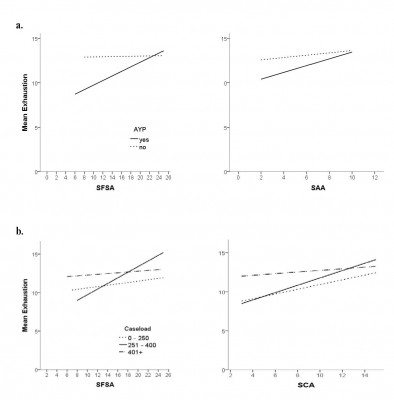
Figure 1. Mean predicted values of exhaustion as predicted by noncounselor duties as a function of (a) meeting AYP and (b) caseload.
Exhaustion seemed to be central in how school counselors related their experience of burnout. The overwhelming majority of school counselors qualitatively described the meaning of burnout in terminology and symptoms congruent with emotional exhaustion. Participants described burnout in terms of feeling tired (27), overwhelmed (27), stressed (27), exhausted (23), lacking energy (22), becoming emotionally drained (16), and unable to cope and respond to daily demands (10). One participant characterized burnout as “reaching the bottom of psychological energy,” while another one added that burnout is “being unable to complete my duties of caring for and assisting my students because I am exhausted, stressed, or completely overwhelmed.”
Exhaustion: Caseload × noncounselor duties. Assignment of clerical and fair share noncounseling duties differentially predicted exhaustion depending on caseload. Interestingly, the greatest variability and strongest relationships were at large caseloads (from 251–400; SCARS Clerical Activities (SCA), r[74] = .50, p < .001; SFSA, r[73] = .39, p < .001). In both cases, the lowest levels of exhaustion were seen for those with the fewest noncounseling duties.
Similar variability was seen at the ASCA-recommended level of moderate caseloads (fewer than 250) for assignment of clerical, but not fair share, duties related to exhaustion (SCA, r[75] = .34, p = .003; SFSA, r[70] = .10, p = .38). For counselors with the highest caseloads (greater than 400), assignment of clerical and fair share duties was not significantly or meaningfully related to exhaustion (SCA, r[68] = .11, p = .37; SFSA, r[67] = .05, p = .66). At the highest caseloads, exhaustion remained high regardless of fair share or clerical noncounselor duties. At a large caseload (and moderate caseloads as pertaining to clerical duties), exhaustion was lowest at the fewest noncounseling duties. It should be noted that for school counselors with caseloads at the ASCA-recommended levels (fewer than 250), exhaustion levels did not meaningfully increase even if fair share or clerical duties increased. Even though some school counselors defined burnout in terms of caseloads, this was not a major qualitative finding. One participant stated, when discussing caseload, “I am asked to provide critical services to 400 students and yet I make the same salary as teachers who are only responsible for educating one quarter of the students on my case load.”
Incompetence: Caseload × noncounselor duties. Assignment of fair share duties differentially related to incompetence as a function of caseload. It was only at a large caseload (251–400) that fair share duties predicted incompetence (r[72] = .24, p = .04). At moderate (0–250; r[71] = –.07, p = .57) and extra-large caseloads (more than 400; r[66] = .12, p = .33), assignment of fair share duties did not significantly or meaningfully relate to incompetence. As depicted in Figure 2, the lowest levels of incompetence are reported for those with moderate or large caseloads at low levels of fair share duties. For those at larger caseloads, though, incompetence increases as fair share duties increase, indicating that the assignment of fair share duties with the existence of large caseloads is related to school counselor self-reported incompetence levels. For those with small caseloads, levels of incompetence remain steady.
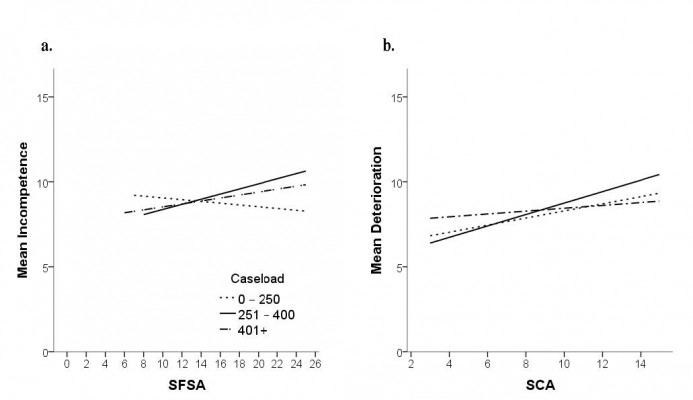
Figure 2. Mean predicted values of (a) incompetence as predicted by SFSA and (b) deterioration in personal life as predicted by SCA, both as a function of caseload.
Qualitative results indicated that reduced effectiveness also was a major common theme. Participants cited feeling that they were not effective (60) and no longer made a difference (12) as descriptors of burnout. One participant stated, “It means that I am no longer helpful to my students. I feel like I’m extremely tired and over-worked and consequently my effectiveness as a school counselor is negatively impacted.” Yet another participant described burnout as “being overwhelmed by so many duties and responsibilities over an extended amount of time. The result in turn is being a less focused, determined, dedicated, effective school counselor.”
Deterioration in personal life: Caseload × noncounselor duties. Assignment of clerical duties related differently to deterioration in personal life depending on caseload. At an extra- large caseload (more than 400), the relationship between clerical duties and deterioration was not significant (r[68] = .11, p = .37). However, the relationship was positive at moderate (0–250; r[75] = .25, p = .03) and large caseloads (251–400; r[74] = .38, p < .001). As depicted in Figure 2, at moderate and large caseloads, deterioration in personal life starts out low with low levels of clerical duties, but increases as caseload increases. However, for those with the highest caseloads, deterioration in personal life remains steady.
Although not a major theme, qualitative results indicated that some participants discussed burnout in terms of a spillover effect (22), with symptoms experienced beyond the workplace and in school counselors’ personal lives. One participant described burnout as “work becoming overwhelming enough that it is negatively affecting other parts of your life and dreading work every day because you do not think you can deal with anything else.”
Additional qualitative findings. Job dissatisfaction, a factor not examined quantitatively, was a major additional theme that emerged from the participants’ discussion of their experience of burnout. Several participants discussed burnout as simply going through the motions at work (9) and having difficulty continuing to do the job (18). One participant defined burnout as “no longer enjoying the job. Counting the days. Waiting for the weekend. Thinking about retirement too much. Rather not go to work.” Another participant discussed burnout as “waking up and not wanting to go to work . . . or being at work and just going through the motions. Dreaming of jobs where you don’t deal with emotions or hardships!”
Discussion
In sum, the quantitative results suggest that the assignment of noncounselor duties positively predicts burnout—especially exhaustion, negative work environment and deterioration in personal life (and incompetence to a lesser extent). Qualitative results echo these findings, as participants discussed their experience of burnout in terms of emotional exhaustion, reduced effectiveness, performance of noncounseling duties and being tied to organizational factors in their school setting. Another major qualitative theme emerging from the participants’ experience of burnout is job dissatisfaction. School counseling literature has noted that demands placed upon school counselors are rising (Cunningham & Sandhu, 2000; Gysbers et al., 1999; Herr, 2001), that many feel stressed and overwhelmed with the numerous job demands that have been placed on them (Kendrick et al., 1994; Lambie & Williamson, 2004; Wilkerson & Bellini, 2006), and that performing inappropriate duties is linked to job dissatisfaction (Baggerly & Osborn, 2006). However, the results of this study surpass current literature by providing support for the assignment of noncounseling duties as a predictor of burnout in school counselors.
More specifically, the results indicate that the assignment of clerical duties predicts exhaustion and deterioration in personal life, while the assignment of administrative duties predicts negative work environment. These results are supported by the qualitative findings: while the majority of school counselors surveyed viewed the assignment of noncounseling duties as having adverse personal and professional effects, or resignedly accepted them as a reality of the job, some counselors also reframed noncounseling duties within the context of their job, distinguishing fair share duties and suggesting that performing the latter was part of being a team, and even an opportunity to better perform their job.
Quantitative results, however, indicate that the assignment of fair share duties for school counselors who already have large or extra-large caseloads is related to increased feelings of incompetence in their jobs. Reduced effectiveness is also a major qualitative theme that emerged when participants discussed their experience of burnout. It appears that despite qualitative results supporting some counselors’ positive view of performing fair share duties, quantitative results also point out that fair share duties have negative effects for counselors with large caseloads, or for those working in a school that has not met AYP. This finding indicates that clerical and administrative duties may be potential areas for intervention and advocacy for school counselors. Furthermore, school counselors may benefit from taking into account particular school factors when evaluating the effect of fair share duties on burnout.
Results indicate that support from the school principal can reduce burnout, as a unique predictor and not as it interacts with noncounselor duties. This finding is congruent with Lee (2008), who reported that level of perceived support from the school principal was a significant predictor of emotional exhaustion, a dimension of burnout, among school counselors. Although not a major theme, participants also linked principal support to their personal meaning of burnout, as some related it to a lack of organizational support and a negative work environment in their schools.
The results of moderation analyses suggest that meeting AYP can be a buffer against burnout as a result of fair share and administrative duties when those duties are low. Similarly, for school counselors working in a school that did not meet AYP, emotional exhaustion remains high, regardless of performing fair share or administrative duties. Schools that do not meet AYP are subject to interventions that can eventually lead to the replacement of staff, including school counselors, a stressor that is potentially more threatening than performing a low level of noncounseling duties. Although not a major qualitative theme, participants discussed budgetary constraints and accountability standards as stressors in their work environment. Although the consequences of not meeting AYP have been implicated in increased stress for school staff and in negative impacts on school climate (Paisley & McMahon, 2001; Thompson & Crank, 2010), no other studies to date have examined the relationship between meeting AYP, performing noncounseling duties and experiencing school counselor burnout.
Similarly, a low or moderate caseload can be a buffer against exhaustion related to fair share and clerical duties, but only when those duties are lower. At higher levels of noncounselor duties, even meeting AYP or having a lower caseload does not buffer against exhaustion. These findings seem consistent with previous research exploring school counselor demands: although caseload size was rated by participants as demanding, it was secondary to paperwork requirements, a duty that fits the noncounseling duties category (McCarthy et al., 2010). These results also are supported by the qualitative findings: while performing noncounseling duties is a major theme related to the experience of burnout, caseload does not feature prominently. However, the distinction in caseload numbers, based on ASCA recommendations, seems to be a meaningful one; if number of caseloads is at or below the recommended 250, levels of emotional exhaustion do not increase even if noncounseling duties are high. Caseloads that exceed the 400 threshold increase emotional exhaustion regardless of noncounseling duties. It seems that counselors operating at those very high caseloads are experiencing exhaustion from the sheer number of students they must serve, regardless of performing noncounseling duties.
Implications for Practice: School Counselors and Counselor Educators
It is evident from this study that school counselors face many organizational challenges that may make them vulnerable to experiencing the negative effects of burnout. Supervisors may be the first to notice stressed-out counselors and be privy to feelings and concerns related to those challenges (Lee at al., 2010). In a school setting, principals can have extensive influence on determining the role of the school counselors with whom they work (Amatea & Clark, 2005; Dollarhide, Smith, & Lemberger, 2007). Research suggests that when compared to school counselors, principals seem to underestimate the time that school counselors spend on clerical and administrative noncounseling duties, and place more importance on the performance of other noncounseling duties such as record keeping, coordinating the standardized testing program and scheduling (Finkelstein, 2009). As few graduate programs in administration include courses in school counseling, school principals may receive little training or education regarding the appropriate role of the school counselor and the nature of the comprehensive school counseling program, making school counselor advocacy even more imperative (Dollarhide et al., 2007; Fitch, Newby, Ballestero, & Marshall, 2001). It appears that administrators may especially benefit from a discussion regarding the school counselor’s role (Amatea & Clark, 2005), and that facilitating an increased awareness of school counselor burnout may result in interventions dedicated to preventing and ameliorating burnout (Lee et al., 2010).
Counselor educators also are responsible for advocating for the profession and promoting best practices for school counselors. They are uniquely positioned to expose future school counselors to quality training and resources. Indeed, adequate training can reduce role stress for school counselors (Culbreth, Scarborough, Banks-Johnson, & Solomon, 2005). Membership in professional organizations can serve as an important resource for beginning school counselors, as it can reduce the likelihood of becoming isolated and encourage practices according to professional standards (Baker & Gerler, 2004). Resources such as self-assessment tools that can be shared with principals to identify gaps in perceptions and priorities, and strategies for promoting collaboration and preventing burnout, are all available through professional organizations and publications. Equipping school counselors with knowledge, resources and strategies to optimize effectiveness early in their careers may better prepare them for the challenges inherent in their profession.
Limitations and Suggestions for Future Studies
Certain limitations in this study may have affected the reported outcomes. First, utilizing a volunteer sample of school counselors who were exclusively members of ASCA poses a limit to generalizability. Despite use of a nationwide sample, responses cannot be generalized to school counselors who may not belong to ASCA. It also is possible that school counselors experiencing the most severe form of burnout may be underrepresented in this study, as those active in professional organizations may be less likely to experience high levels of burnout. As all data gathered in this study utilized self-reports, school counselors experiencing high levels of burnout may have opted out due to the uncomfortable nature of the topic.
Second, the addition of the open-ended questions to the quantitative questionnaire did not result in an extensive qualitative data set or the opportunity for additional follow-up discussion, providing only specific qualitative data from one point in time. However, the method of employing written responses to open-ended questions to gain broad information on sensitive topics (such as occupational burnout) has merit in this study (Friborg & Rosenvinge, 2013; Montero-Marín et al., 2013) and can be successfully utilized to triangulate or converge quantitative data (Hanson, Creswell, Plano Clark, Petska, & Creswell, 2005).
Replicating the results of this study with a random sample of school counselors who are practicing nationwide but are not exclusively ASCA members may increase the representativeness of the sample. Multi-informant, multi-method data would be useful in further examining burnout and the assignment of noncounseling duties and enhancing validity. Future studies utilizing a mixed-methods approach could incorporate semistructured interviews to collect more in-depth qualitative responses and enrich school counseling literature on burnout.
References
Amatea, E. S., & Clark, M. A. (2005). Changing schools, changing counselors: A qualitative study of school administrators’ conceptions of the school counselor role. Professional School Counseling, 9, 16–27.
American School Counselor Association. (2014). Careers/Roles. Retrieved from http://www.schoolcounselor.org/school-counselors-members/careers-roles
Astramovich, R. L., & Holden, J. M. (2002). Attitudes of American School Counselor Association members toward utilizing paraprofessionals in school counseling. Professional School Counseling, 5, 203–210.
Baggerly, J., & Osborn, D. (2006). School counselors’ career satisfaction and commitment: Correlates and predictors. Professional School Counseling, 9, 197–205.
Baker, S. B., & Gerler, E. R. (Eds.). (2004). School counseling for the twenty-first century (4th ed.). Upper Saddle River, NJ: Pearson Education.
Bakker, A. B., Demerouti, E., & Euwema, M. C. (2005). Job resources buffer the impact of job demands on burnout. Journal of Occupational Health Psychology, 10, 170–180. doi:10.1037/1076-8998.10.2.170
Baron, R. M., & Kenny, D. A. (1986). The moderator-mediator variable distinction in social psychological research: Conceptual, strategic, and statistical considerations. Journal of Personality and Social Psychology, 51, 1173–1182. doi:10.1037/0022-3514.51.6.1173
Bryant, R. M., & Constantine, M. G. (2006). Multiple role balance, job satisfaction, and life satisfaction in women school counselors. Professional School Counseling, 9, 265–271.
Burnham, J. J., & Jackson, C. M. (2000). School counselor roles: Discrepancies between actual
practice and existing models. Professional School Counseling, 4, 41–49.
Coll, K. M., & Freeman, B. (1997). Role conflict among elementary school counselors: A
national comparison with middle and secondary school counselors. Elementary School
Guidance and Counseling, 31, 251–261.
Connides, I. (1983). Integrating qualitative and quantitative methods in survey research on aging: An assessment. Qualitative Sociology, 6, 334–352. doi:10.1007/BF00986684
Corbin, J., & Strauss, A. (2008). Basics of qualitative research: Techniques and procedures for developing grounded theory (3rd ed.). Thousand Oaks, CA: Sage.
Creswell, J. W., & Plano Clark, V. L. (2011). Designing and conducting mixed methods research (2nd ed.). Thousand Oaks, CA: Sage.
Culbreth, J., Scarborough, J., Banks-Johnson, A., & Solomon, S. (2005). Role stress among practicing school counselors. Counselor Education and Supervision, 45, 58–71. doi:10.1002/j.1556-6978.2005.tb00130.x
Cunningham, N. J., & Sandhu, D. S. (2000). A comprehensive approach to school–community violence prevention. Professional School Counseling, 4, 126–133
Demerouti, E., Nachreiner, F., Bakker, A. B., & Schaufeli, W. B. (2001). The job demands–resources model of burnout. Journal of Applied Psychology, 86, 499–512. doi:10.1037/0021-9010.86.3.499
Dillman, D. A. (2007). Mail and internet surveys: The tailored design method (2nd ed.). Hoboken, NJ: Wiley & Sons.
Dollarhide, C. T., Smith, A. T., & Lemberger, M. E. (2007). Critical incidents in the development of supportive principals: Facilitating school counselor–principal relationships. Professional School Counseling, 10, 360–369.
Driscoll, D. L., Appiah-Yeboah, A., Salib, P., & Rupert, D. J. (2007). Merging qualitative and quantitative data in mixed methods research: How to and why not. Ecological and Environmental Anthropology, 3, 19–28.
Erford, B. T. (2011). Transforming the school counseling profession (3rd ed.). Upper Saddle River, NJ: Pearson.
Feldstein, S. B. (2000). The relationship between supervision and burnout in school counselors (Unpublished doctoral dissertation). Duquesne University, Pittsburg, PA.
Finkelstein, D. (2009). A closer look at the principal–counselor relationship: A survey of principals and counselors. New York, NY: National Office for School Counselor Advocacy, American School Counselor Association, and National Association of Secondary School Principals. Retrieved from http://www.schoolcounselor.org/asca/media/asca/home/CloserLook.pdf
Fitch, T., Newby, E., Ballestero, B., & Marshall, J. L. (2001). Future school administrators’ perceptions of the school counselor’s role. Counselor Education & Supervision, 41(2), 89–99. doi:10.1002/j.1556-6978.2001.tb01273.x
Freudenberger, H. J. (1974). Staff burn-out. Journal of Social Issues, 30, 159–165. doi:10.1111/j.1540-4560.1974.tb00706.x
Friborg, O., & Rosenvinge, J. H. (2013). A comparison of open-ended and closed questions in the prediction of mental health. Quality & Quantity, 47, 1397–1411. doi:10.1007/s11135-011-9597-8
Gunduz, B. (2012). Self-efficacy and burnout in professional school counselors. Educational Sciences: Theory and Practice, 12, 1761–1767.
Gysbers, N. C., & Henderson, P. (2000). Developing and managing your school guidance program (3rded.). Alexandria, VA: American Counseling Association.
Gysbers, N. C., Lapan, R. T., & Blair, M. (1999). Closing in on the statewide implementation of a comprehensive guidance program model. Professional School Counseling, 2, 357–366.
Hanson, W. E., Creswell, J. W., Plano Clark, V. L., Petska, K. S., & Creswell, J. D. (2005). Mixed methods research designs in counseling psychology. Journal of Counseling Psychology, 52, 224–235. doi:10.1037/0022-0167.52.2.224
Herr, E. L. (2001). The impact of national policies, economics, and school reform on comprehensive guidance programs. Professional School Counseling, 4, 236–245.
Kendrick, R., Chandler, J., & Hatcher, W. (1994). Job demands, stressors, and the school counselor. The School Counselor, 41, 365–369.
Kolodinsky, P., Draves, P., Schroder, V., Lindsey, C., & Zlatev, M. (2009). Reported levels of satisfaction and frustration by Arizona school counselors: A desire for greater connections with students in a data-driven era. Professional School Counseling, 12, 193–199. doi:10.5330/PSC.n.2010-12.193
Lambie, G. W. (2002). The contribution of ego development level to degree of burnout in school counselors. Dissertation Abstracts International, 63, 508.
Lambie, G. W., & Williamson, L. L. (2004). The challenge to change from guidance counseling to professional school counseling: A historical proposition. Professional School Counseling, 8, 124–131.
Lee, R. T., & Ashforth, B. E. (1996). A meta-analytic examination of the correlates of the three dimensions of job burnout. Journal of Applied Psychology, 81, 123–133. doi:10.1037/0021-9010.81.2.123
Lee, R. V. (2008). Burnout among professional school counselors. (Doctoral dissertation). Retrieved from ProQuest. (AAT 304683311)
Lee, S. M., Baker, C. R., Cho, S. H., Heckathorn, D. E., Holland, M. W., Newgent, R. A., . . . Yu, K. (2007). Development and initial psychometrics of the counselor burnout inventory. Measurement and Evaluation in Counseling & Development, 40, 142–154.
Lee, S. M., Cho, S. H., Kissinger, D., & Ogle, N. T. (2010). A typology of burnout in professional counselors. Journal of Counseling & Development, 88, 131–138. doi:10.1002/j.1556-6678.2010.tb00001.x
Lincoln, Y. S., & Guba, E. G. (1985). Naturalistic inquiry. Newbury Park, CA: Sage.
Marshall, C., & Rossman, G. B. (1999). Designing qualitative research (3rd ed.). Thousand Oaks, CA: Sage.
Maslach, C., & Jackson, S. E. (1981). The measurement of experienced burnout. Journal of Organizational Behavior, 2, 99–113. doi:10.1002/job.4030020205
Maslach, C., Schaufeli, W. B., & Leiter, M. P. (2001). Job burnout. In S. T. Fiske, D. L. Schacter, & C. Zahn-Waxler (Eds.), Annual Review of Psychology, 52, 397–422. doi:10.1146/annurev.psych.52.1.397
McCarthy, C., Van Horn Kerne, V., Calfa, N. A., Lambert, R. G., & Guzman, M. (2010). An exploration of school counselors’ demands and resources: Relationship to stress, biographic, and caseload characteristics. Professional School Counseling, 13, 146–158.
Montero-Marín, J., Prado-Abril, J., Carrasco, J. M., Asensio-Martínez, Á., Gascón, S., & García-Campayo, J. (2013). Causes of discomfort in the academic workplace and their associations with the different burnout types: A mixed-methodology study. BMC Public Health, 13, 1240. doi:10.1186/1471-2458-13-1240.
Paisley, P. O., & McMahon, H. G. (2001). School counseling for the 21st century: Challenges and opportunities. Professional School Counseling, 5, 106–116.
Rayle, A. D. (2006). Do school counselors matter? Mattering as a moderator between job stress and job satisfaction. Professional School Counseling, 9, 206–215.
Repetti, R. L. (1993). The effects of workload and social environment at work on health. In L. Goldberger & S. Breznitz (Eds.), Handbook of stress: Theoretical and clinical aspects (pp. 368–385). New York, NY: Free Press.
Rhoades, L., & Eisenberger, R. (2002). Perceived organizational support: A review of the literature. Journal of Applied Psychology, 87, 698–714. doi:10.1037/0021-9010.87.4.698
Scarborough, J. L. (2005). The School Counselor Activity Rating Scale: An instrument for gathering process data. Professional School Counseling, 8, 274–283.
Scarborough, J. L., & Culbreth, J. R. (2008). Examining discrepancies between actual and preferred practice of school counselors. Journal of Counseling & Development, 86, 446–459. doi:10.1002/j.1556-6678.2008.tb00533.x
Sears, S. J., & Navin, S. L. (1983). Stressors in school counseling. Education, 103, 333–337.
Silverman, D. (1999). Interpreting qualitative data. London, England: Sage.
Thompson, M. J., & Crank, J. N. (2010). An evaluation of factors that impact positive school climate for school psychologists in a time of conflicting educational mandates. Retrieved from ERIC database. (ED507929)
Thompson, R. A. (2012). Professional school counseling: Best practices for working in the schools (3rd ed.). New York, NY: Taylor & Francis.
Wilkerson, K., & Bellini, J. (2006). Intrapersonal and organizational factors associated with burnout among school counselors. Journal of Counseling & Development, 84, 440–450. doi:10.1002/j.1556-6678.2006.tb00428.x
Yildrim, I. (2008). Relationship between burnout, sources of social support and sociodemographic variables. Social Behavior and Personality, 36, 603–616. doi:10.2224/sbp.2008.36.5.603
Gerta Bardhoshi, NCC, is an assistant professor at the University of South Dakota. Amy Schweinle and Kelly Duncan are associate professors at the University of South Dakota. Correspondence can be addressed to Gerta Bardhoshi, Division of Counseling and Psychology in Education, 414 E. Clark Street, Vermillion, SD 57069, gerta.bardhoshi@usd.edu.
Dec 2, 2014 | Article, Volume 4 - Issue 5
Kelly Duncan, Kathleen Brown-Rice, Gerta Bardhoshi
This study explored rural school counselors’ perceptions of clinical supervision. School counselors working in rural communities commonly encounter issues that challenge their ability to provide competent counseling services to the students they serve. School counselors serving in these areas are often the only rural mental health provider in their community, and they may lack access to other professionals to meet supervision needs. Participants’ (n = 118) current experiences and future needs were investigated concurrently with supervision training and delivery methods most desired. The majority of school counselors in the study reported that they perceive clinical supervision as an important element in their continued personal and professional growth. However, these school counselors reported not receiving supervision at an individual, group or peer level. The need for the supervision is apparent; however, access to supervision in rural areas is limited. Implications for school counselors and recommendations for future research are discussed.
Keywords: rural school counselors, clinical supervision, supervision training, personal and professional growth, rural mental health
With increasing regularity, school counselors are finding themselves on the front lines of using clinical counseling skills to address issues their students bring to school (Teich, Robinson, & Weist, 2007; Walley, Grothaus, & Craigen, 2009). Despite an increase in the mental health needs of school-aged children (Perfect & Morris, 2011), limited mental health services are a reality in rural areas (Bain, Rueda, Mata-Villarreal, & Mundy, 2011). Although there is not a clear definition of the term rural, the U.S. Census Bureau (2010) has characterized urban areas as those with 50,000 or more people, and urban clusters as those communities with a population of 2,500–49,999. School counselors working in rural communities commonly encounter issues that challenge their ability to provide competent counseling services to students (Cates, Gunderson, & Keim, 2012). In fact, school counselors serving in rural areas are often the only mental health provider in their community, and they may lack access to other professionals to meet supervision needs (Bardhoshi & Duncan, 2009).With mental health needs in rural areas being greater than the resources available, and rural school counselors indicating a need for more mental health training and resources to close this gap (Bain et al., 2011), meeting the professional needs of rural school counselors becomes imperative.
Bradley and Ladany (2010) described the competent school counselor as a skilled clinician able to identify and meet the unique needs of the students he or she serves. They further asserted that rural areas provide unique demands for the school counselor, who is often expected to provide a wide range of services to a diverse population. Despite recommendations that professional counselors obtain supervision throughout their careers, traditional face-to-face supervision meetings are not always feasible and rural counselors may not have direct access to a supervisor, even though they have a desire for one (Luke, Ellis, & Bernard, 2011;Tyson, Pérusse, & Stone, 2008). Although there is a need for trained professional supervisors, supervision in rural areas is difficult to obtain for many counselors because of the distance between professionals, which creates geographic isolation (Wood, Miller, & Hargrove, 2005).
There are a number of challenges to receiving quality supervision. Rural school counselors encounter isolation, lack of time and money, a lack of specialists, and decreased personal interaction (McMahon & Simons, 2004). All of these characteristics of working in a rural setting make supervision and consultation, which are essential in the development of a professional identity, difficult to obtain (McMahon & Simons, 2004).
Clinical supervision is designed to aid the professional counselor in enhancing professional skill and ethical competency (Bradley & Ladany, 2010). A clinical supervisor in the schools must be a professional who is not only competent in the realm of school counseling functions, but also in supervision practices (Gysbers & Henderson, 2000). The supervision element of school counseling is further complicated as there often is a need for different types of supervision. There is need for both administrative and clinical supervision for practicing school counselors (Bradley & Ladany, 2010), and at times these different types of supervision may conflict with one another. Administrative supervision focuses on policies and procedures governing the school community, and this form of supervision in a school setting is most often performed by a school administrator who may not have a counseling background (Henderson & Gysbers, 1998). In comparison, clinical supervision is an intervention that a senior member of the profession delivers to a junior member in order to enhance professional abilities and monitor the counseling services offered (Bernard & Goodyear, 2009). This reality of school counseling supervision would suggest that those providing clinical supervision need to not only be certified as school counselors in order to qualify as senior members of the profession, but also have supervision training in order to effectively carry out supervision interventions.
For school counselors, supervision is a direct venue for providing or receiving support and feedback (Lambie, 2007). Both peer consultation and supervision are related to lower levels of stress in school counselors (Culbreth, Scarborough, Banks-Johnson, & Solomon, 2005). There is evidence that obtaining clinical supervision is indeed beneficial to school counselors, with research pointing to professional and personal gains, including enhanced counseling skills, sense of professionalism, support and job comfort (Agnew, Vaught, Getz, & Fortune, 2000). There also are a number of studies examining the protective utility of clinical supervision regarding school counselor burnout. Prevention of burnout is an important issue for rural school counselors who report feelings of frustration as they struggle to provide as much counseling as possible to their students (Bain et al., 2011).
When assessing the effect of clinical supervision on burnout, Feldstein (2000) reported that clinical supervision had a positive effect on reducing levels of emotional exhaustion and burnout in school counselors. In a recent study, Moyer (2011) reported that the amount of clinical supervision received was a significant predictor of overall burnout in school counselors (as well as the dimensions of incompetence, negative work environment and devaluing clients). These findings support the notion that clinical supervision may serve as an important protective factor against burnout for school counselors, and even ameliorate burnout levels once manifested. A similar recommendation was provided by Lambie (2007), who identified clinical supervision as an essential resource that can be utilized to overcome school counselor burnout.
Even though administrative supervision generally is available to school counselors, clinical supervision usually is not (Herlihy, Gray, & McCollum, 2002). Page, Pietrzak, and Sutton (2001) reported in their national survey (n = 267) that only 13% of school counselors were receiving individual clinical supervision and only 10% were receiving group clinical supervision, despite a desire to obtain supervision. A study examining rural school principals’ perceptions of school counselors’ role noted that approximately 12% of all respondents deemed professional development of little importance for school counselors (Bardhoshi & Duncan, 2009). Consequently, clinical supervision may not be supported in rural settings, as time spent in supervision may be seen as time taken away from understaffed schools.
Clinical supervision is best delivered by a counselor who is not only trained in supervision but who is also familiar with K–12 school settings (Bradley & Ladany, 2010). Despite school counselors’ desire to obtain more clinical supervision once working in a school setting, many face a challenge in obtaining such supervision. Peterson and Deuschle (2006) also discussed hesitation from school counselors to be supervisors, which could result from discomfort with the requirements of site supervision, or a feeling of being poorly trained in supervision. Supervision is, however, an important part of developing the professional and ethical decision-making skills that benefit clients and their stakeholders (Lambie, Ieva, Mullen, & Hayes, 2011). Due to these needs, developing trained school counselor supervisors is a vigorous step in meeting the supervision needs of school counselor trainees and practicing professionals (Page et al., 2001).
The purpose of the current study was twofold. The first purpose was to assess the current perceptions of certified school counselors serving in rural settings (RCSCs) regarding their clinical supervision experience and needs. The second purpose was to compare and contrast the current data with empirical data obtained 9 years ago in this same state from RCSCs, in order to examine whether the supervision needs of counselors in rural settings has changed. Specifically, the study was designed to answer the following research questions: (a) What are RCSC perceptions of the importance of individual, group and peer supervision? (b) What are participants’ current experiences with individual, group and peer supervision? (c) What are participants’ perceptions of their future need for clinical supervision? (d) If the training were available to equip a participant with the theory and skills to provide clinical supervision, how would respondents rate the importance of this training and by what means would participants prefer to receive this training? (e) How do current RCSC experiences and perceptions of individual, group and peer clinical supervision compare to the findings in a 2003 study of RCSCs?
In this study, RCSC refers to an individual certified by a state department of education working in a school in a state where the majority of school districts have fewer than 1,000 students. The terms certified and licensed are interchangeable. Clinical supervision is defined as an intensive, interpersonal focused relationship, usually performed one-to-one or in a small group, in which the supervisor facilitates the counselor(s) learning to apply a wider variety of assessment and counseling methods to increasingly complex cases (Bradley & Ladany, 2010). A clinical supervisor refers to a certified school counselor, licensed mental health professional counselor, social worker or psychologist who has at least 5 years’ experience in the field. Administrative supervision is defined as an ongoing process in which the supervisor oversees staff as well as the planning, implementation and evaluation of individuals and programs (Henderson & Gysbers, 1998).
Method
Participants
The target population for this study included all certified school counselors (CSCs) in a Midwestern state who were employed in a public or private school setting during the school year 2011–2012. Recruitment of participants was conducted by obtaining a list of all CSCs from the state’s Department of Education. All individuals who were identified as meeting these criteria received an e-mail. The e-mail directed participants to an online survey titled The 2012 School Counselor Survey. The number of CSCs provided by the Department of Education was 476. A total of 127 CSCs responded to the invitation to take part in this study, all of whom met the criteria for employment in a rural setting, resulting in a response rate of 27%. Respondents with missing or invalid data (n = 9, less than 7%) were eliminated via listwise deletion, leaving a total number of 118 participants in this study. Listwise deletion entails eliminating participants with missing data on any of the variables and is the appropriate method for removal of missing data due to this study’s sufficient sample size (Sterner, 2011).
Of the 118 participants (91 women, 27 men), 110 identified their cultural/racial background as Caucasian, five identified as Native American and three identified as Multiracial. Thirty-four participants stated their age as 25–35 years, 31 as 36–45 years, 30 as 46–55 years and 23 as 56 years or older. The majority of the respondents identified as married (n = 96), 15 as single and seven as having a life partner or being in a committed relationship. Twelve of the participants stated that they had 2 or fewer years of experience as school counselors, 18 had 3–5 years, 25 had 6–10 years, 42 had 11–20 years, 19 had 21–30 years and two stated that they had 40 or more years of experience. Regarding licenses and certifications held, 109 of the participants stated that they were South Dakota CSCs, 36 were National Certified Counselors, 12 were Licensed Professional Counselors, two held the Licensed Professional Counselor–Mental Health designation and one participant identified as a National Certified School Counselor.
Regarding the number of schools under participants’ direct responsibility, 86 indicated that they had one school, 21 had two schools, five had three schools, four had four schools and two had five schools. Five participants stated that they were responsible for direct counseling services for 100 or fewer students, 14 for 101–200 students, 22 for 201–300 students, 29 for 301–400 students, 18 for 401–500 students, 14 for 501–600 students, 10 for 601–700 students and six for 701 or more students. Twenty-one stated that there were no other school counselors in their school district, 15 stated that there was one other school counselor, 17 stated that there were two others, 13 stated that there were three to five, 29 stated that there were six to 11, seven stated that there were 12–18, six stated that there were 20–25, four stated that there were 45–50, five stated that there were 52–56 and one stated that there were 60 other school counselors in the participant’s district. Regarding the number of other school counselors working with them in the same building, 58 respondents stated that there were no other counselors, five stated that there was another part-time counselor, 29 stated that there was one other full-time counselor, 11 stated that there were two, four stated that there were three, five stated that there were four and six participants stated that there were five other counselors in their building.
Instrumentation
Participants completed a modified version of the school counselor survey used by Page et al. (2001) in their national survey of school counselor supervision. The modifications included additional questions related to participants’ perceptions of the usefulness of receiving supervision and supervision training via distance methods. Distance methods included the statewide video conferencing system, teleconference and e-mail. The Statistical Package for Social Sciences (SPSS) software (version 19.0) was utilized to screen the data, gather descriptive data and analyze the data, as well as to determine frequencies and percentages for the demographic variables. To answer the research questions, data were analyzed by creating tables using SPSS to determine frequencies, averages and percentages. For research questions 1, 2 and 3, a Fisher’s Exact Test (a variant of the chi-square test for independence for small sample sizes) with an alpha level of .05 was used to determine whether there was a relationship between a participant’s age, years of experience, number of schools under the participant’s direct responsibility, number of students for whom the participant had to provide counseling services, the presence of other CSCs in the building and district, and the participant’s responses.
Results
Importance of Supervision
Participants ranked the importance of individual clinical supervision based on a 6-point Likert scale (1 = not important to 6 = extremely important). When the participants’ indications of the top three options were combined, 79% (n = 93) rated the importance of obtaining clinical supervision as important, very important or extremely important, leaving 21% (n = 25) of participants who reported it being somewhat important, minimally important or not important. When asked about the importance of obtaining administrative supervision, 72% (n = 85) rated it as important, very important or extremely important, leaving 28% (n = 33) who reported it being somewhat important, minimally important or not important.
Cross-tabulation tables were conducted for each of the following variables: (a) age, (b) years of experience as a school counselor, (c) number of schools for which the counselor is responsible, (d) number of students for whom the counselor is responsible, (e) other school counselors in the district and (f) other school counselors in the building. A Fisher’s Exact Test with an alpha level of .05 was used to determine whether there was a relationship between these variables and participants’ perceptions of the importance of individual clinical and administrative supervision. These analyses determined that there was no significant relationship between these variables (age, p = .641; years of experience, p = .597; number of schools for which counselor is responsible, p = .516; number of students for whom counselor is responsible, p = .228; other school counselors in district, p = .319; other school counselors in building, p = .382).
Current Experiences with Supervision
When participants described the current supervision they were receiving, 94% (n = 111) stated that they were receiving no individual clinical supervision, and 6% (n = 7) stated that they were receiving individual clinical supervision. Of the participants receiving this type of supervision, one received supervision once a week, three received supervision once a month and three received supervision less than once a month. Ninety-one percent (n = 108) stated that they were not engaging in group supervision and 8% (n = 10) stated that they were, with seven of these respondents stating that they participated in group supervision once a month and three stating that they participated less than once a month. When asked to describe their clinical supervisor, seven stated that the supervisor was a guidance director, two stated that he or she was another school counselor and one stated that he or she was a psychologist.
Of the 14% (n = 17) of respondents who stated that they were receiving individual and/or group supervision, 11 reported that their school system was incurring the cost for supervision, four stated that they were shouldering all the cost themselves and two stated that they and their school system were paying the cost together. Eighty-eight percent (n = 104) indicated that their school district did not provide release time for them to attend supervision; the remaining 12% (n = 14) did receive release time. Eighty-two percent (n = 97) reported that they were not engaging in peer supervision, and 18% (n = 21) were obtaining peer supervision. Of the respondents receiving peer supervision, ten stated that it occurred once a week, one stated that it was every other week, eight stated that it was once a month, and two stated that it was less than once a month. Regarding administrative supervision, 81% (n = 97) stated that they were engaging in it; 19% (n = 21) were not. Sixty-four participants stated that their administrative supervision was conducted by a principal, seven stated that it was a vice principal, seven stated that it was another school counselor, five reported that it was a superintendent, five stated that it was a guidance director, five that stated it was a director of a specific program area (e.g., special education, student services) and three stated that their administrative supervision was conducted by a vice superintendent.
Cross-tabulation tables were conducted for each of the following variables: (a) age, (b) years of experience as a school counselor, (c) number of schools for which the counselor is responsible, (d) number of students for whom the counselor is responsible, (e) other school counselors in the district and (f) other school counselors in the building. A Fisher’s Exact Test with an alpha level of .05 was used to determine whether there was a relationship between these variables and participants’ current experiences with individual and/or group clinical supervision and/or peer supervision. The results indicated that there was a relationship between receiving group supervision and the number of other school counselors in participants’ district (p = .010), and a relationship between participants’ age and current participation in peer supervision (p = .017). All other analyses for these variables determined no significant relationship.
Future Need for Clinical Supervision
Participants ranked their need for future clinical supervision based on a 6-point Likert scale (1 = not important to 6 = extremely important). When the participants’ indications of the top three options were combined, 54% (n = 64) rated the importance of receiving clinical supervision in the future as important, very important or extremely important, leaving 46% (n = 54) who reported it being somewhat important, minimally important or not important. When respondents were asked whom they considered the most desirable person to be their clinical supervisor, 64% (n = 75) indicated another school counselor with specific training in supervision. Eighteen percent stated that the best supervisor would be a professor in counselor education, 6% indicated a mental health counselor, 6% specified a school psychologist, 5% indicated a psychologist, 2% identified a psychiatrist and 1% specified a social worker with a master’s degree.
Cross-tabulation tables were created for each of the independent variables: (a) cultural/racial background, (b) age, (c) years of experience as a school counselor, d) licensure/certification status, e) number of schools for which the counselor is responsible, f) number of students for whom the counselor is responsible, g) other school counselors in the district and h) other school counselors in the building. A Fisher’s Exact Test with an alpha level of .05 was used to determine whether there was a relationship between these variables and participants’ perceptions of their future need for clinical supervision. The results indicated that there was a relationship between participants’ age and their perception of their need for future clinical supervision (p = .016). All other analyses for these variables determined no significant relationship.
Future Training and Education Needs
When asked about the level of perceived importance of training and education regarding supervision theory and clinical supervision skills, when those were provided, participants ranked importance on a 6-point Likert scale (1 = not important to 6 = extremely important). After the participants’ indications of the top three options were combined, 67% (n = 79) rated the importance of receiving future clinical supervision training as important, very important or extremely important, leaving 33% (n = 39) who reported it being somewhat important, minimally important or not important. Of the 118 participants, the majority (n = 90) had access to the state’s video conferencing system. Fifty-three of the participants stated that they had access to Skype or another real-time communication system; therefore, over half of the participants (n = 65) stated that they did not have access. Fifty-three percent (n = 62) of the participants rated receiving supervision training via face-to-face workshop or conference as either very important or extremely important, whereas 32% (n = 27) rated receiving future clinical supervision training via video conferencing or teleconference as very important or extremely important.
Regarding the type of supervision training they wished to receive, 81% (n = 96) of the participants characterized training on developing specific supervision skills and techniques as important, very important or extremely important. When asked about wanting training to be able to assist supervisees in developing a respectful outlook on individual differences, 71% (n = 84) of the participants noted this type of training as either important, very important or extremely important. Regarding developing supervisees’ clinical skill set for counseling others of a different age, ethnicity, race, religion or sexual orientation, 75% (n = 89) of the participants ranked this type of training as either important, very important or extremely important. Seventy-seven percent (n = 91) of the participants ranked the development of supervision skills to assist supervisees in developing independence and self-directedness as important, very important or extremely important.
Comparing 2012 and 2003 Findings
In 2003 the first author completed a study of 267 RCSCs who took the 2003 School Counselor Survey (Duncan, 2003). Nearly 67% of the 2003 participants rated individual clinical supervision as important, very or extremely important; however, 91% stated that they were not receiving individual clinical supervision, and 92% stated they were not receiving group clinical supervision. In the current study, conducted 9 years later, we note an increase in the importance that school counselors place on receiving clinical supervision, but similar low rates of actually receiving clinical supervision. Specifically, in the current study, 79% of participants rated receiving clinical supervision as important, very important or extremely important; however, 94% stated that they were not receiving individual clinical supervision, and 91% stated they were not receiving group clinical supervision. Those receiving group supervision appear to work in settings where they are not the only counselor in their school.
Limitations
This study has three main limitations. First, the sample was obtained from an e-mail list of certified school counselors in one Midwestern state. The ability to generalize the findings to other states may be limited—especially to states that do not have a similar rural nature. Future research that examines all RCSCs would be beneficial. The second limitation of this study is that those who chose to participate may have answered the survey questions differently than members of the population who did not agree to participate might have answered them. The third limitation is due to the survey being a self-report measure, as the participants may have given answers that they believed to be socially desirable. In spite of being informed in advance that their responses would remain anonymous, the participants still may have answered in a way that did not portray their true feelings or knowledge.
Discussion
The results of this study indicate that the large majority of school counselors surveyed (79%) perceive clinical supervision as important. This number is in stark contrast to the actual number of school counselors receiving supervision, with the overwhelming majority of the participants stating that they are not receiving any individual or group supervision (94% and 91%, respectively). Although these findings confirm the results of previous studies conducted with school counselors that point to a clinical supervision deficit (Borders & Usher, 1992; Page et al., 2001; Roberts & Borders, 1994; Shanks-Pruett, 1991), the extremely low clinical supervision rates from the current study also may be tapping into challenges specific to rural school counselors. It is possible that many practicing rural school counselors have not engaged in supervision since their university training program and feel unequipped to answer questions about its nature or importance, which could potentially have larger implications regarding these counselors’ clinical skill application. Similarly, Spence, Wilson, Kavanagh, Strong, and Worrall (2001) noted that lack of skill application contributed to counselors’ difficulty in obtaining supervision. Compared to results obtained from a 2003 study with this population, although school counselors increasingly perceive clinical supervision as important (79% vs. 67% in the 2003 study), rates of obtaining clinical supervision have not changed substantially in almost 10 years. This may indicate that challenges for rural school counselors persist and that they may be at a disadvantage regarding their clinical skills and professional development.
Even for those few school counselors who reported receiving individual or group clinical supervision, current supervision practices are far from ideal. Of the seven participants who reported currently receiving supervision, four reported receiving it only once a month or less, and over 88% of participants shared that their school will not provide release time for them to pursue supervision. This may imply that school administrators do not understand the importance of clinical supervision. Herlihy et al. (2002) pointed out the erroneous perception that school counselors do not have the same need for clinical supervision as their mental health counterparts as a factor that impedes clinical supervision for school counselors. The possibility also exists that even though school counselors in this study see the need for clinical supervision, they may not be advocating for it. Rural school counselors may have to consider ways to receive clinical supervision in a manner that does not take time away from their duties or occurs outside school time. Although this may place additional strain on school counselors, forgoing clinical supervision altogether may have negative implications for their personal and professional well-being. Crutchfield and Borders (1997) warned that school counselors who do not receive supervisory support may find themselves dealing with increased stress and may feel overworked, burned out and isolated; and the literature clearly points out the benefits of clinical supervision for school counselors, including increased feelings of support, job satisfaction, enhanced skill development and competencies, and greater accountability (Herlihy et al., 2002; Lambie, 2007).
Although the majority of participants (81%) reported receiving administrative supervision, this form of supervision is conducted by noncounselors. This result supports other literature indicating that school counselors typically receive administrative supervision (Herlihy et al., 2002; Page et al., 2001). However, administrative supervision conducted by school personnel who are not trained in counselor supervision or the professional school counselor’s role does not assist school counselors in enhancing clinical skills and does not meet their professional development needs.
More than half of the participants (54%) said that they can see a need for clinical supervision in their future, an increase from 47% in 2003, and the majority of participants would want to receive this clinical supervision from another school counselor. Of extreme importance, is the fact that there is no supervision training in most master’s-level school counseling preparation programs. The majority of school counseling practitioners who might be asked to supervise others (colleagues or counselors-in-training) do not have specialized training to provide this service. Even though 45% of respondents had supervised interns, 85% shared that they had no formal training. Over 67% of school counselors surveyed reported that they desired supervision training, with over half (53%) stating that they would prefer a face-to-face approach. Participants identified the following areas as ones in which they wanted training: gaining specific supervision skills (81%), acquiring skills to assist supervisees in developing individual skills and self-direction (77%), learning how to develop their supervisees’ skills (75%) and developing respect for individual differences (71%).
Implications for School Counselors
Use of technology for supervision delivery is still a relatively new concept for some professionals. Even though the American Counseling Association clearly states in its Code of Ethics (American Counseling Association, 2014) that reviewing supervisee practice, in addition to live observation, can occur through the use of technology, most school counselors have not had an opportunity to utilize technology as an avenue to gain supervision. Technological advances have made supervision delivery more available, and the use of these technologies may ultimately save individuals travel time and money. While the majority of respondents share a preference for supervision in a face-to-face format, school counselors may become more comfortable with electronic formats as they utilize them more often or with further training.
Counselor educators and supervision trainers will need to use creative methods when scheduling supervision training for professional school counselors. Weekend workshops, intensive summer courses and cooperative in-service programs might be used to provide supervision training. Collaborative efforts between university counselor training programs and state school counselor professional organizations could further orchestrate these opportunities. Counselor educators also might advocate to the Counsel for Accreditation of Counseling and Related Education Programs that supervision training be required in master’s-level school counselor training programs. School counselors desiring supervision may need assistance in advocating for these services. Research indicates that engaging school principals in counseling education can result in a deeper understanding and collaboration between the school counselor and the principal (Shoffner & Williamson, 2000). It is essential to help administrators understand the benefits of clinical supervision and make a case for the provision of opportunities for professional development and clinical supervision for rural school counselors, especially as these opportunities may positively impact burnout incidence.
Recommendations for Future Research
The results of this study provide potential directions for future research. Given the limited literature on clinical supervision for rural school counselors, it is important to fully examine any potential factors that may help conceptualize this phenomenon. Following up with a qualitative study would expand on the quantitative findings and provide a richer context for some of the results discussed. This might help identify additional factors of importance specific to rural school counselors.
Replicating the results of the current study with a random sample of rural school counselors who are practicing nationwide might increase the representativeness of the sample. Utilizing a sampling of rural school counselors who are practicing in only one state presents inherent limitations, as the results discussed may be specific to geographic location and may not apply to rural school counselors in other states.
Conclusion
The majority of school counselors in both the 2003 and 2012 studies reported that they perceive clinical supervision as an important element in their continued personal and professional growth. However, these same groups reported that they are not receiving supervision at an individual, group or peer level. The need for the supervision is apparent, but the access to supervision is limited.
This situation calls for collaborative and coordinated action from counselor educators and leaders in the field. Creation of supervision training opportunities for practicing school counselors is warranted. Methods such as the utilization of technology to allow access to supervision for school counselors, especially for those in remote rural areas, are also important elements in the creation of an effective and efficient statewide supervision plan.
Buy-in from school administrators, school officials at the state level, school boards and counselor educators will be an important aspect of the origination of a statewide system. The need for supervision for rural school counselors is supported through these survey results. It will be imperative to create methods for continued evaluation of a statewide supervision plan to show how the ultimate consumers—the students—are benefitting from school counselors who are receiving supervision.
Conflict of Interest and Funding Disclosure
The authors reported no conflict of
interest or funding contributions for
the development of this manuscript.
References
Agnew, T., Vaught, C. C., Getz, H. G., & Fortune, J. (2000). Peer group clinical supervision program fosters confidence and professionalism. Professional School Counseling, 4, 6–12.
American Counseling Association. (2014). 2014 code of ethics. Alexandria, VA: Author.
Bain, S. F., Rueda, B., Mata-Villarreal, J., & Mundy, M.-A. (2011). Assessing mental health needs of rural schools in South Texas: Counselors’ perspectives. Research in Higher Education Journal, 14, 1–11.
Bardhoshi, G., & Duncan, K. (2009). Rural school principals’ perceptions of the school counselor’s role. The Rural Educator, 30(3), 16–24.
Bernard, J. M., & Goodyear, R. K. (2009). Fundamentals of clinical supervision (4th ed.). Boston, MA: Pearson Education.
Borders, L. D., & Usher, C. H. (1992). Post-degree supervision: Existing and preferred practices. Journal of Counseling & Development, 70, 594–599. doi:10.1002/j.1556-6676.1992.tb01667.x
Bradley, L. J., & Ladany, N. (Eds.). (2010). Counselor supervision (4th ed.) Philadelphia, PA: Brunner-Routledge.
Cates, K. A., Gunderson, C., & Keim, M. A. (2012). The ethical frontier: Ethical considerations for frontier counselors. The Professional Counselor, 2, 22–32.
Crutchfield, L. B., & Borders, L. D. (1997). Impact of two clinical peer supervision models on practicing school counselors. Journal of Counseling & Development, 75, 219–230. doi:10.1002/j.1556-6676.1997.tb02336.x
Culbreth, J. R., Scarborough, J. L., Banks-Johnson, A., & Solomon, S. (2005). Role stress among practicing school counselors. Counselor Education and Supervision, 45, 58–71. doi:10.1002/j.1556-6978.2005.tb00130.x
Duncan, K. (2003). Perceptions of the importance and utilization of clinical supervision among certified South Dakota school counselors (Doctoral dissertation). Available from Dissertation Abstracts International. (UMI No. 3100582)
Feldstein, S. B. (2000). The relationship between supervision and burnout in school counselors (Unpublished doctoral dissertation). Duquesne University, Pittsburgh, PA.
Gysbers, N. C., & Henderson, P. (2000). Developing and managing your school guidance program (3rd ed.). Alexandria, VA: American Counseling Association.
Henderson, P., & Gysbers, N. C. (1998). Leading and managing your school guidance program staff: A manual for school administrators and directors of guidance. Alexandria, VA: American Counseling Association.
Herlihy, B., Gray, N., & McCollum, V. (2002). Legal and ethical issues in school counselor supervision. Professional School Counseling, 6, 55–60.
Lambie, G. W. (2007). The contribution of ego development level to burnout in school counselors: Implications for professional school counseling. Journal of Counseling & Development, 85, 82–88. doi:10.1002/j.1556-6678.2007.tb00447.x
Lambie, G. W., Ieva, K. P., Mullen, P. R., & Hayes, B. G. (2011). Ego development, ethical decision-making, and ethical and legal knowledge in school counselors. Journal of Adult Development, 18, 50–59. doi:10.1007/s10804-010-9105-8
Luke, M., Ellis, M. V., & Bernard, J. M. (2011). School counselor supervisors’ perceptions of the discrimination model of supervision. Counselor Education and Supervision, 50, 328–343. doi:10.1002/j.1556-6978.2011.tb01919.x
McMahon, M., & Simons, R. (2004). Supervision training for professional counselors: An exploratory study. Counselor Education and Supervision, 43, 301–309. doi:10.1002/j.1556-6978.2004.tb01854.x
Moyer, M. (2011). Effects of non-guidance activities, supervision, and student-to-counselor ratios on school counselor burnout. Journal of School Counseling, 9(5), 1–31.
Page, B. J., Pietrzak, D. R., & Sutton, J. M., Jr. (2001). National survey of school counselor supervision. Counselor Education and Supervision, 41, 142–150. doi:10.1002/j.1556-6978.2001.tb01278.x
Perfect, M. M., & Morris, R. J. (2011). Delivering school-based mental health services by school psychologists: Education, training, and ethical issues. Psychology in the Schools, 48, 1049–1063. doi:10.1002/pits.20612
Peterson, J. S., & Deuschle, C. (2006). A model for supervising school counseling students without teaching experience. Counselor Education and Supervision, 45, 267–281. doi:10.1002/j.1556-6978.2006.tb00003.x
Roberts, E. B., & Borders, L. D. (1994). Supervision of school counselors: Administrative, program and counseling. The School Counselor, 41, 149–157.
Shanks-Pruett, K. (1991). A study of Tennessee public school counselors’ perceptions about school counseling supervision. Dissertation Abstracts International, 53(03), 683A.
Shoffner, M. F., & Williamson, R. D. (2000). Engaging preservice school counselors and principals in dialogue and collaboration. Counselor Education and Supervision, 40, 128–140. doi:10.1002/j.1556-6978.2000.tb01244.x
Spence, S. H., Wilson, J., Kavanagh, D. J., Strong, J., & Worrall, L. (2001). Clinical supervision in four mental health professions: A review of the evidence. Behavior Change, 18, 135–155. doi:10.1375/bech.18.3.135
Sterner, W. R. (2011). What is missing in counseling research? Reporting missing data. Journal of Counseling & Development, 89, 56–62. doi:10.1002/j.1556-6678.2011.tb00060.x
Teich, J. L., Robinson, G., & Weist, M. D. (2007). What kinds of mental health services do public schools in the United States provide? Advances in School Mental Health Promotion, Inaugural Issue, 13–22.
Tyson, L. E., Pérusse, R., & Stone, C. B. (2008). Providing culturally responsive supervision. In L. E. Tyson, J. R. Culbreth, & J. A. Harrington (Eds.), Critical incidents in clinical supervision: Addictions, community, and school counseling (pp. 191–197). Alexandria, VA: American Counseling Association.
U.S. Census Bureau. (2010). 2010 Census urban and rural classification and urban area criteria. Retrieved from http://www.census.gov/geo/reference/ua/urban-rural-2010.html
Walley, C., Grothaus, T., & Craigen, L. (2009). Confusion, crisis, and opportunity: Professional school counselors’ role in responding to student mental health issues. Journal of School Counseling, 7(36), 1–25.
Wood, J. A. V., Miller, T. W., & Hargrove, D. S. (2005). Clinical supervision in rural settings: A telehealth model. Professional Psychology: Research and Practice, 36, 173–179. doi:10.1037/0735-7028.36.2.173
Kelly Duncan, NCC, is an associate professor at the University of South Dakota. Kathleen Brown-Rice, NCC, and Gerta Bardhoshi, NCC, are assistant professors at the University of South Dakota. Correspondence can be addressed to Kelly Duncan, Division of Counseling and Psychology in Education, The University of South Dakota, 414 E. Clark Street, Vermillion, SD 57069, Kelly.Duncan@usd.edu.
Dec 2, 2014 | Article, Volume 4 - Issue 5
Ian Martin, John Carey
A logic model was developed based on an analysis of the 2012 American School Counselor Association (ASCA) National Model in order to provide direction for program evaluation initiatives. The logic model identified three outcomes (increased student achievement/gap reduction, increased school counseling program resources, and systemic change and school improvement), seven outputs (student change, parent involvement, teacher competence, school policies and processes, competence of the school counselors, improvements in the school counseling program, and administrator support), six major clusters of activities (direct services, indirect services, school counselor personnel evaluation, program management processes, program evaluation processes and program advocacy) and two inputs (foundational elements and program resources). The identification of these logic model components and linkages among these components was used to identify a number of necessary and important evaluation studies of the ASCA National Model.
Keywords: ASCA National Model, school counseling, logic model, program evaluation, evaluation studies
Since its initial publication in 2003, The ASCA National Model: A Framework for School Counseling Programs has had a dramatic impact on the practice of school counseling (American School Counselor Association [ASCA], 2003). Many states have revised their model of school counseling to make it consistent with this model (Martin, Carey, & DeCoster, 2009), and many schools across the country have implemented 3the ASCA National Model. The ASCA Web site, for example, currently lists over 400 schools from 33 states that have won a Recognized ASCA Model Program (RAMP) award since 2003 as recognition for exemplary implementation of the model (ASCA, 2013).
While the ASCA National Model has had a profound impact on the practice of school counseling, very few studies have been published that evaluate the model itself. Evaluation is necessary to determine if the implementation of the model results in the model’s anticipated benefits and to determine how the model can be improved. The key studies typically cited (see ASCA, 2005) as supporting the effectiveness of the ASCA National Model (e.g., Lapan, Gysbers, & Petroski, 2001; Lapan, Gysbers, & Sun, 1997) were actually conducted before the model was developed and were designed as evaluations of Comprehensive Developmental Guidance, which is an important precursor and component of the ASCA National Model, but not the model itself.
Two recent statewide evaluations of school counseling programs focused on the relationships between the level of implementation of the ASCA National Model and student outcomes. In a statewide evaluation of school counseling programs in Nebraska, Carey, Harrington, Martin, and Hoffman (2012) found that the extent to which a school counseling program had a well-implemented, differentiated delivery system consistent with practices advocated by the ASCA National Model was associated with lower suspension rates, lower discipline incident rates, higher attendance rates, higher math proficiency and higher reading proficiency. These results suggest that model implementation is associated with increased student engagement, fewer disciplinary problems and higher student achievement. In a similar statewide evaluation study in Utah, Carey, Harrington, Martin, and Stevens (2012) found that the extent to which the school counseling program had a programmatic orientation, similar to that advocated in the ASCA National Model, was associated with both higher average ACT scores and a higher number of students taking the ACT. This suggests that model implementation is associated with both increased achievement and a broadening of student interest in college. While these studies suggest that benefits to students are associated with the implementation of the ASCA National Model, additional evaluations are necessary that use stronger (e.g., quasi-experimental and longitudinal) designs and investigate specific components of the model in order to determine their effectiveness or how they can be improved.
There are several possible reasons why the ASCA National Model has not been evaluated extensively. The school counseling field as a whole has struggled with general evaluation issues. For example, questions have been raised regarding the effectiveness of practitioner training in evaluation (Astramovich, Coker, & Hoskins, 2005; Heppner, Kivlighan, & Wampold, 1999; Sexton, Whiston, Bleuer, & Walz, 1997; Trevisan, 2000); practitioners have cited lack of time, evaluation resources and administrative support as major barriers to evaluation (Loesch, 2001; Lusky & Hayes, 2001); and some practitioners have feared that poor evaluation results may negatively impact their program credibility (Isaacs, 2003; Schmidt, 1995). Another contributing factor is that while the importance of evaluation is stressed in the literature, few actual examples of program evaluations and program evaluation results have been published (Astramovich & Coker, 2007; Martin & Carey, 2012; Martin et al., 2009; Trevisan, 2002).
In addition, there are several features of the ASCA National Model that make evaluations difficult. First, the model is complex, containing many components grouped into four interrelated, functional subsystems referred to as the foundation, delivery system, management system and accountability system. Second, ASCA created the National Model by combining elements of existing models that were developed by different individuals and groups. For example, the principle influences of the model (ASCA, 2012) are cited as Gysbers and Henderson (2000), Johnson and Johnson (2001) and Myrick (2003). Furthermore, principles and concepts derived from important movements such as the Transforming School Counseling Initiative (Martin, 2002) and evidence-based school counseling (Dimmitt, Carey, & Hatch, 2007) also were incorporated into the model during its development. While these preexisting models and movements share some common features, they differ in important ways. Elements of these approaches were combined and incorporated into the ASCA National Model without a full integration of their philosophical and theoretical perspectives and principles. Consequently, the ASCA National Model does not reflect a single cohesive approach to program organization and management. Instead, it reflects a collection of presumably effective principles and practices that have been applied in school counseling programs. Third, instruments for measuring important aspects of model implementation are lacking (Clemens, Carey, & Harrington, 2010). Fourth, the theory of action of the ASCA National Model has not been fully explicated, so it is difficult to determine what specific benefits are intended to result from the implementation of specific elements of the model. For example, it is not entirely clear how changing the performance evaluation of counselors is related to the desired benefits of the model.
In this article, the authors present the results of their work in developing a logic model for the ASCA National Model. Logic modeling is a systematic approach to enabling high-quality program evaluation through processes designed to result in pictorial representations of the theory of action of a program (Frechtling, 2007). Logic modeling surfaces and summarizes the explicit and implicit logic of how a program operates to produce its desired benefits and results. By applying logic modeling to an analysis of the ASCA National Model, the authors intended to fully explicate the relationships between structures and activities advocated by the model and their anticipated benefits so that these relationships can be tested in future evaluations of the model.
The purpose of this study, therefore, was to develop a useful logic model that describes the workings of the ASCA National Model in order to promote its evaluation. More specifically, the purpose was to mine the logic elements, program outcomes and implicit (unstated) assumptions about the relationships between program elements and outcomes. In developing this logic model, the authors followed the processes suggested by the W. K. Kellogg Foundation (2004) and Frechtling (2007). Several different frameworks exist for logic models, but the authors elected to use Frechtling’s framework because it focuses specifically on promoting evaluation of an existing program (as opposed to other possible uses such as program planning). This framework identifies the relationships among program inputs, activities, outputs and outcomes. Inputs refer to the resources needed to deliver the program as intended. Activities refer to the actual program components that are expected to be related to a desired outcome. Outputs refer to the immediate products or results of activities that can be observed as evidence that the activity was actually completed. Outcomes refer to the desired benefits of the program that are expected to occur as a consequence of program activities. The authors’ logic model development was guided by four questions:
What are the essential desired outcomes of the ASCA National Model?
What are the essential activities of the ASCA National Model and how do these activities relate to its outputs?
What are the essential outputs of the ASCA National Model and how do these outputs relate to its desired outcomes?
What are the essential inputs of the ASCA National Model and how do these inputs relate to its activities?
Methods
All analyses in this study were based on the latest edition of the ASCA National Model (ASCA, 2012). In these analyses, every attempt was made to base inferences on the actual language of the model. In some instances (for example, when it was unclear which outputs were expected to be related to a given activity) the professional literature about the ASCA National Model was consulted.
Because the authors intended to develop a logic model from an existing program blueprint (rather than designing a new program), they began, according to recommended procedures (W. K. Kellogg Foundation, 2004), by first identifying outcomes and then working backward to identify activities, then outputs associated with activities and finally, inputs.
Identification of Outcomes
The authors independently reviewed the ASCA National Model (2012) and identified all elements in the model. The two authors’ lists of elements (e.g., vision statement, annual agreement with school leaders, indirect service delivery and curriculum results reports) were merged to create a common list of elements. The authors then independently created a series of if, then statements for each element of the model that traced the logical connections explicitly stated in the model (or in rare instances, stated in the professional literature about the model) between the element and a program outcome. In this way, both the desired outcomes of the ASCA National Model and the desired logical linkages between elements and outcomes were identified.
During this process, some ASCA National Model elements were included in the same logic sequence because they were causally related to each other. For example, both the vision statement and the mission statement were included in the same logic sequence because a strong vision statement was described as a necessary prerequisite for the development of a strong mission statement. Some ASCA National Model elements also were included in more than one logical sequence when it was clear that two different outcomes were intended to occur related to the same element. For example, it was evident that closing-the-gap reports were intended to result in intervention improvements, leading to better student outcomes and also to apprising key stakeholders of school counseling program results, in order to increase support and resources for the program.
Identification of Activities
Frechtling (2007) noted that the choice of the right amount of complexity in portraying the activities in a logic model is a critically important factor in a model’s utility. If activities are portrayed in their most differentiated form, the model can be too complex to be useful. If activities are portrayed in their most compact form, the model can lack enough detail to guide evaluation. Therefore, in the present study, the authors decided to construct several different logic models with different sets of activities that ranged from including all the previously identified ASCA National Model elements as activities to including only the four sections of the ASCA National Model (i.e., foundation, management system, delivery system and accountability system) as activities. As neither of the two extreme options proved to be feasible, the authors began clustering ASCA National Model elements and developed six activities, each of which represented a cluster of program elements.
Identification of Outputs Related to Activities
Outputs are the observable immediate products or deliverables of the logic model’s inputs and activities (Frechtling, 2007). After the authors identified an appropriate level for representing model activities, they generated the same level of program outputs. Reexamining the logic sequences, clustering products of identified activities and then creating general output categories from the clustered products accomplished this task. For example, the activity known as direct services contained several ASCA National Model products, such as the curriculum results report, the small-group results report and the closing-the-gap results report (among others), and the resulting output was finally categorized as student change. Ultimately, seven logic model outputs were identified through this process to help describe the outputs created by ASCA National Model activities.
Identifying the Connections Between Outputs and Outcomes
Creating connections between model outputs and outcomes was accomplished by linking the original logic sequences to determine how the ASCA National Model would conceive of outputs as being linked to outcomes. Returning to the above example, the output known as student change, which included such products as results reports, was connected to the outcome known as student achievement and gap reduction in several logic sequences. At the conclusion of this process, each output had straightforward links to one or multiple proposed model outcomes. Not only was this process useful in identifying links between outputs and outcomes, but it also functioned as an opportunity to test the output categories for conceptual clarity.
Identification of Inputs and Connections Between Inputs and Activities
The authors reviewed the ASCA National Model to determine which inputs were necessary to include in the logic model. They identified two essential types of inputs: foundational elements (conceptual underpinnings described in the foundation section of the ASCA National Model) and program resources (described throughout the ASCA National Model). The authors determined that these two types of inputs were necessary for the effective operation of all six activities.
Identifying Other Connections Within the Logic Model
After the inputs, activities, outputs, outcomes and the connections between these levels were mapped, the authors again reviewed the logic sequences and the ASCA National Model to determine if any additional linkages needed to be included in the logic model (see Frechtling, 2007). They evaluated the need for within-level linkages (e.g., between two activities) and feedback loops (i.e., where a subsequent component influences the nature of preceding components). The authors determined that two within-level and one recursive linkage were needed.
Results
Outcomes
A total of 65 logic sequences were identified for the ASCA National Model sections: foundation (n = 7), management system (n = 30), delivery system (n = 7) and accountability system (n = 21). Table 1 contains sample logic sequences.
Table 1
Examples of Logic Sequences Relating ASCA National Model Elements to Outcomes
|
National Model
Section
|
Logic Sequence
|
|
|
|
|
| Foundation |
a. If counselors go through the process of creating a set of shared beliefs, then they will establish a level of mutual understanding.b. If counselors establish a level of mutual understanding, then they will be more successful in developing a shared vision for the program.c. If counselors develop a shared vision for the program, then they can develop an effective vision statement.d. If counselors create a vision statement, then they will have the clarity of purpose that is needed to develop a mission statement.e. If counselors create a mission statement, then the program will be more focused.f. If the program is better focused, counselors will create a set of program goals, which will enable counselors to specify how the attainment of the goals should be measured.
g. If counselors specify how the attainment of goals should be measured, then effective program evaluation will be conducted.
h. If effective program evaluation is conducted, then the program will be continuously improved.
i. If the program will be continuously improved, then improved student achievement will result. |
| Management System |
a. If school counselors create annual agreements with the leader in charge of the school, then the goals and activities of the counseling program will be more aligned with the goals of the school.b. If the goals and activities of the counseling program are more aligned with the goals of the school, then school leaders will recognize the value of the school counseling program.c. If school leaders recognize the value of the school counseling program, then they will commit resources to support the program. |
| Delivery System |
a. If school counselors engage in indirect services (e.g., consultation and advocacy), then school policies and processes will improve.b. If school policies and processes improve, then teachers will develop more competency, and systemic change and school improvement will occur. |
| Accountability System |
a. If counselors complete curriculum results reports, then they will have the information they need to demonstrate the effectiveness of developmental and preventative curricular activities.b. If counselors have the information they need to demonstrate the effectiveness of developmental and preventative curricular activities, then they can communicate their impact to school leaders.c. If school leaders are aware of the impact of developmental and preventative curricular activities, then they will recognize their value.d. If school leaders recognize the value of developmental and preventative curricular activities, then they will commit resources to support them. |
Forty of these logic sequences terminated with an outcome related to increased student achievement or (relatedly) to a reduction in the achievement gap. Twenty-two sequences terminated with an outcome related to an increase in program resources. Only three sequences terminated with an outcome related to systemic change in the school. From this analysis, the authors concluded that the primary desired outcomes of the ASCA National Model are increased student achievement/gap reduction and increased school counseling program resources. They also concluded that systemic change and school improvement is another desired outcome of the ASCA National Model.
Activities
Based on a clustering of ASCA National Model elements identified previously, six activities were developed for the logic model. These activities included the following: direct services, indirect services, school counselor personnel evaluation, program management processes, program evaluation processes and program advocacy processes. Each of these activities represents a cluster of elements within the ASCA National Model. For example, the activity known as direct services includes the school counseling core curriculum, individual student planning and responsive services. Consequently, the direct services activity represents the spectrum of services that would be delivered to students in an ASCA National Model school counseling program.
Activities Related to Outputs
Based on the clustering of the ASCA National Model products or deliverables around the related logic model activities, seven outputs were identified. These outputs included the following: student change, parent involvement, teacher competence, school policies and processes, school counselor competence, school counseling program improvements, and administrator support. The outputs represent all of the ASCA National Model products generated by model activities and help to collect evidence and determine to what degree an activity was successfully accomplished. In essence, for evaluation purposes, these outputs represent the intermediate outcomes (Dimmitt et al., 2007) of an ASCA National Model program. Activities should result in measurable changes in outputs, which in turn should result in measurable changes in outcomes. For example, the output known as student change reflects student changes such as increased academic motivation, increased problem-solving skills, enhanced emotional regulation and better interpersonal problem-solving skills; these changes lead to the longer-term outcome of student achievement and gap reduction.
Connections Between Outputs and Outcomes
Connecting the seven ASCA National Model outputs to its outcomes strengthens the logic model by identifying the hypothesized relationships between the more immediate changes that result from school counseling program activities (i.e., outputs) and the more distal changes that result from the operation of the program (i.e., outcomes). As described earlier, two primary outcomes (student achievement and gap reduction and increased program resources) and one secondary outcome (systemic change and school improvement) were identified within the ASCA National Model. Three of the seven outputs (student change, parent involvement and administrator support) were connected to only one outcome. Three other outputs (teacher competence, school policies and processes, and school counselor competence) were connected to two outcomes. One output (administrator support) was connected to all three outcomes. Interpreting these linkages is useful in understanding the implicit theory of change of the ASCA National Model and consequently in designing appropriate evaluation studies. The authors’ logic model, for example, indicates that student changes (related to both direct and indirect services of an ASCA National Model program) are expected to result in measurable increases in student achievement and a reduction in the achievement gap.
It also is helpful to scan backward in the logic model to identify how changes in outcomes are expected to occur. For example, student achievement and gap reduction is linked to six model outputs (student change, parent involvement, teacher competence, school policies and processes, school counselor competence, and school counseling program improvements). Student achievement and gap reduction is multiply determined and is the major focus of the ASCA National Model. Increased program resources are connected to three model outputs (school counselor competence, school counseling program improvements and administrator support). Systemic change and school improvement also can be connected to three outputs (teacher competence, school policies and processes, and school counseling program improvements).
Inputs and Connections Between Inputs and Activities
Based on an analysis of the ASCA National Model, two inputs were identified for inclusion in the logic model: foundational elements (which include the elements in the ASCA National Model’s foundation section considered important for program planning and operation) and program resources (which include elements essential for effective program implementation such as counselor caseload, counselor expertise, counselor professional development support, counselor time-use and program budget). Both of these inputs were identified as being important in the delivery of all six activities.
Additional Connections Within the Logic Model
Based on a final review of the logical sequences and another review of the ASCA National Model, three additional linkages were added to the authors’ logic model. The first linkage was a unidirectional arrow leading from management processes to program evaluation in the activities column. This arrow was intended to represent the tight connection between management processes and evaluation activities that is evident in the ASCA National Model. Relatedly, a unidirectional arrow leading from the school counseling program evaluation activity to the program advocacy activity was added. This arrow was intended to represent the many instances of the ASCA National Model suggesting that program evaluation activities should be used to generate essential information for program advocacy. The final additional link was a recursive arrow leading from the increased program resources outcome to the program resources input. This linkage was intended to represent the ASCA National Model’s concept that investment of additional resources resulting from successful implementation and operation of an ASCA National Model program will result in even higher levels of program effectiveness and eventually even better outcomes.
The Logic Model
Figure 1 contains the final logic model for the ASCA National Model for School Counseling Programs. Logic models portray the implicit theory of change underlying a program and consequently facilitate the evaluation of the program (Frechtling, 2007). Overall, the theory of change for an ASCA national program could be described as follows: If school counselors use the foundational elements of the ASCA National Model and have sufficient program resources, they will be able to develop and implement a comprehensive program characterized by activities related to direct services, indirect services, school counselor personnel evaluation, management processes, program evaluation and (relatedly) program advocacy. If these activities are put in place, several outputs will be observed, including the following: student changes in academic behavior, increased parent involvement, increases in teacher competence in working with students, better school policies and processes, increased competence of the school counselors themselves, demonstrable improvements in the school counseling program, and increased administrator support for the school counseling program. If these outputs occur, then the following outcomes should result: increased student achievement and a related reduction in the achievement gap, notable systemic improvement in the school in which the program is being implemented, and increased program support and resources. If these additional resources are reinvested in the school counseling program, the effectiveness of the program will increase.
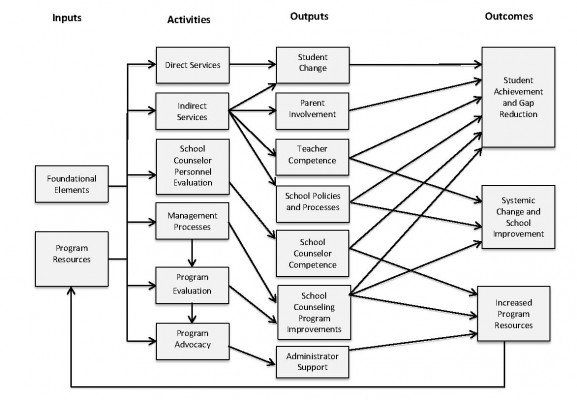
Figure 1. Logic Model for ASCA National Model for School Counseling Programs
Discussion
Logic models can be used for a number of purposes including the following: enhancing communication among program team members, managing the program, documenting how the program is intended to operate and developing an approach to evaluation and related evaluation questions (Frechtling, 2007). The present study was conducted in order to develop a logic model for ASCA National Model programs so that these programs could be more readily evaluated, and based on the results of these evaluations, the ASCA National Model could then be improved.
Evaluations can focus on the question of whether or not a program or components of a program actually result in intended changes. At the most global level, an evaluation can focus on discovering the extent to which the program as a whole achieves its desired outcomes. At a more detailed level, an evaluation can focus on discovering the extent to which the components (i.e., activities) of the program achieve their desired outputs (with the assumption that achievement of the outputs is a necessary precursor to achievement of the outcomes).
In both types of evaluations, it is important to use a design that allows some form of comparison. In the simplest case, it would be possible to compare outputs and outcomes before and after implementation of the ASCA National Model. In more complex cases, it would be possible to compare outputs and outcomes of programs that have implemented the ASCA National Model with programs that have not. In these cases, it is essential to control for the confounding effects of extraneous variables (e.g., the affluence of students in the school) by the use of matching or covariates. If the level of implementation of the ASCA National Model program as a whole can be measured, it is even possible to use multivariate correlation approaches to examine whether the level of implementation of the program is related to desired outcomes while simultaneously controlling statistically for potential confounding variables. These same correlational procedures can be used to examine the relationships between the more discrete activities of the program and their corresponding outputs.
At the most global level, it is important to evaluate the extent to which the implementation of the ASCA National Model results in the following: increases in student achievement (and associated reductions in the achievement gap), measurable systemic change and school improvements, and increases in resources for the school counseling program. At present, there is some evidence that implementation of the ASCA National Model is related to achievement gains (Carey, Harrington, Martin, & Hoffman, 2012; Carey, Harrington, Martin, & Stevens, 2012). No evaluations to date have examined whether ASCA National Model implementation results in systemic change and school improvement or in an increase in program resources.
It also is important to evaluate the extent to which specific program activities achieve their desired outputs. Table 2 contains a list of sample evaluation questions for each activity. Within these questions, evaluation is focused on whether or not components of the program result in overall benefits. No evaluation study to date has evaluated the impact of ASCA National Model implementation on these factors.
Table 2
Sample Evaluation Questions for ASCA National Model Activities
|
Activities
|
Evaluation Questions
|
|
|
|
|
| Direct Services |
Does organizing and delivering school counseling direct services in accordance with ASCA National Model principles result in an increase in important aspects of students’ school behavior that are related to academic achievement? |
| Indirect Services |
Does organizing and delivering school counseling indirect services in accordance with ASCA National Model principles result in an increase in parent involvement? |
| Does organizing and delivering school counseling indirect services in accordance with ASCA National Model principles result in an increase in teachers’ abilities to work effectively with students? |
| Does organizing and delivering school counseling indirect services in accordance with ASCA National Model principles result in improvements in school policies and procedures that support student achievement? |
| School Counselor Personnel Evaluation |
Does the implementation of personnel and processes recommended by the ASCA National Model result in increases in the professional competence of school counselors? |
| Management Processes |
Does the implementation of the management processes recommended by the ASCA National Model result in demonstrable improvements in the school counseling program? |
| Program Evaluation |
Does the implementation of program evaluation processes recommended by the ASCA National Model result in demonstrable improvements in the school counseling program? |
| Program Advocacy |
Does the implementation of the program advocacy practices recommended by the ASCA National Model result in increases in administrator support for the program? |
In addition to examining program-related change, it is important to evaluate whether a basic assumption of the ASCA National Model bears out in reality. The major assumption is that school counselors who use the foundational elements of the ASCA National Model (e.g., vision statement, mission statement) and have access to typical levels of program resources can develop and implement all the activities associated with an ASCA National Model program (e.g., direct services, indirect services, school counselor personnel evaluation, management processes, program evaluation and program advocacy). Qualitative evaluations of the relationships between inputs and quality of the activities are necessary to determine what levels of inputs are necessary for full implementation. While full evaluation studies of this type have yet to be undertaken, Martin and Carey (2012) have recently reported the results of a two-state qualitative comparison of how statewide capacity-building activities to promote school counselors’ competence in evaluation were used to promote the widespread implementation of ASCA National Model school counseling programs. More studies of this type that focus on the relationships between a broader range of program inputs and school counselors’ ability to fully implement ASCA National Model program activities are needed.
Limitations and Future Directions
Constructing a logic model retrospectively is inherently challenging and complex. This is especially true when the program for which the logic model is being created was not initially developed with reference to an explicit, coherent theory of action. In the present study, the authors approached the work systematically and are confident that others following similar procedures would generate similar results. With that said, a limitation of this work is that the logic model was created based on the authors’ analyses of the written description of the ASCA National Model (2012) and literature surrounding the ASCA National Model. Engaging individuals who were involved in the development and implementation of the ASCA National Model in dialogue might have resulted in a richer logic model with even more utility in directing evaluation of the ASCA National Model. As a follow-up to the present study, the authors intend to continue this inquiry by asking key individuals involved with the ASCA National Model to evaluate the present logic model and to suggest revisions and extensions. Even given this limitation, the current study has potential immediate implications for improving practice that go beyond its role in providing focus and direction for ASCA National Model evaluation.
A potentially fertile testing ground for the implementation of the logic model is present within the RAMP Award process. As aforementioned, RAMP awards are given to exemplary schools that have successfully implemented the ASCA National Model. Currently, schools provide evidence (data) and create narratives regarding how they have successfully met RAMP criteria. Twelve independent rubrics are scored and totaled to determine whether a school receives a RAMP Award. At least two contributions of the logic model for improving the RAMP process seem feasible. First, practitioners can use the logic model to help construct narratives that better articulate how ASCA National Model activities/outputs relate to model outcomes. Second, the logic model may also help improve the RAMP process by highlighting clearer links between activities, outputs and outcomes. In future revisions of the RAMP process, more attention could be paid to the documentation of benefits achieved by the program in terms of both outputs (i.e., the immediate measurable positive consequences of program activities) and outcomes (i.e., the longer-term positive consequences of program operation). In this vein, the authors hope that the logic model developed in this study will help to improve the RAMP process for both practitioners and RAMP evaluators.
Retrospective logic models map a program as it is. In that sense, they are very useful in directing the evaluation of existing programs. Prospective logic models are used to design new programs. Using logic models in program design (or redesign) has some distinct advantages. “Logic models help identify the factors that will impact your program and enable you to anticipate the data and resources you will need to achieve success” (W. K. Kellogg Foundation, 2004, p. 65). When programs are planned with the use of a logic model, greater opportunities exist to explore foundational theories of change, to explore issues or problems addressed by the program, to surface community needs and assets related to the program, to consider desired program results, to identify influential program factors (e.g., barriers or supports), to consider program strategies (e.g., best practices), and to elucidate program assumptions (e.g., the beliefs behind how and why the strategies will work; W. K. Kellogg Foundation, 2004). The authors hope that logic modeling will be incorporated prospectively into the next revision process of the ASCA National Model. Basing future editions of the ASCA National Model on a logic model that comprehensively describes its theory of action should result in a more elegant ASCA National Model with a clearer articulation between its components and its desired results. Such a model would be easier to articulate, implement and evaluate. The authors hope that the development of a retrospective logic model in the present study will facilitate the prospective use of a logic model in subsequent ASCA National Model revisions. The present logic model provides a map of the current state of the ASCA National Model. It is a good starting point for reconsidering such questions as how the model should operate, whether the outcomes are the right outcomes, whether the activities are sufficient and comprehensive enough to lead to the desired outcomes, and whether the available program resources are sufficient to support implementation of program activities.
Conflict of Interest and Funding Disclosure
The authors reported no conflict of
interest or funding contributions for
the development of this manuscript.
References
American School Counselor Association. (2003). The ASCA national model: A framework for school counseling programs. Alexandria, VA: Author.
American School Counselor Association. (2005). The ASCA national model: A framework for school counseling programs. (2nd ed.). Alexandria, VA: Author.
American School Counselor Association. (2012). The ASCA national model: A framework for school counseling programs (3rd ed.). Alexandria, VA: Author.
American School Counselor Association. (2013). Past RAMP Recipients. Retrieved from http://www.ascanationalmodel.org/learn-about-ramp/past-ramp-recipients
Astramovich, R. L., & Coker, J. K. (2007). Program evaluation: The accountability bridge model for counselors. Journal of Counseling & Development, 85, 162–172. doi:10.1002/j.1556-6678.2007.tb00459.x
Astramovich, R. L., Coker, J. K., & Hoskins, W. J. (2005). Training school counselors in program evaluation. Professional School Counseling, 9, 49–54.
Carey, J., Harrington, K., Martin, I., & Hoffman, D. (2012). A statewide evaluation of the outcomes of ASCA National Model school counseling programs in rural and suburban Nebraska high schools. Professional School Counseling, 16, 100–107.
Carey, J. C., Harrington, K., Martin, I., & Stevens, D. (2012). A statewide evaluation of the outcomes of the implementation of ASCA National Model school counseling programs in high schools in Utah. Professional School Counseling, 16, 89–99.
Clemens, E. V., Carey, J. C., & Harrington, K. M. (2010). The school counseling program implementation survey: Initial instrument development and exploratory factor analysis. Professional School Counseling, 14, 125–134.
Dimmitt, C., Carey, J. C., & Hatch, T. A. (2007). Evidence-based school counseling: Making a difference with data-driven practices. New York, NY: Corwin Press.
Frechtling, J. A. (2007). Logic modeling methods in program evaluation. New York, NY: Wiley & Sons.
Gysbers, N. C., & Henderson, P. (2000). Developing and managing your school guidance program (3rd ed.). Alexandria, VA: American Counseling Association.
Heppner, P. P., Kivlighan, D. M., Jr., & Wampold, B. E. (1999). Research design in counseling (2nd ed.). Belmont, CA: Wadsworth.
Isaacs, M. L. (2003). Data-driven decision making: The engine of accountability. Professional School Counseling, 6, 288–295.
Johnson, C. D., & Johnson, S. K. (2001). Results-based student support programs: Leadership academy workbook. San Juan Capistrano, CA: Professional Update.
Lapan, R. T., Gysbers, N. C., & Petroski, G. F. (2001). Helping seventh graders be safe and successful: A statewide study of the impact of comprehensive guidance and counseling programs. Journal of Counseling & Development, 79, 320–330. doi:10.1002/j.1556-6676.2001.tb01977.x
Lapan, R. T., Gysbers, N. C., & Sun, Y. (1997). The impact of more fully implemented guidance programs on the school experiences of high school students: A statewide evaluation study. Journal of Counseling & Development, 75, 292–302. doi:10.1002/j.1556-6676.1997.tb02344.x
Loesch, L. C. (2001). Counseling program evaluation: Inside and outside the box. In D. C. Locke, J. E. Myers, & E. L. Herr (Eds.), The handbook of counseling (pp. 513–525). Thousand Oaks, CA: Sage.
Lusky, M. B., & Hayes, R. L. (2001). Collaborative consultation and program evaluation. Journal of Counseling & Development, 79, 26–38. doi:10.1002/j.1556-6676.2001.tb01940.x
Martin, I., & Carey, J. C. (2012). Evaluation capacity within state-level school counseling programs: A cross-case analysis. Professional School Counseling, 15, 132–143.
Martin, I., Carey, J. C., & DeCoster, K. (2009). A national study of the current status of state school counseling models. Professional School Counseling, 12, 378–386.
Martin, P. J. (2002). Transforming school counseling: A national perspective. Theory Into Practice, 41, 148–153. doi:10.1207/s15430421tip4103_2
Myrick, R. D. (2003). Developmental guidance and counseling: A practical approach (4th ed.). Minneapolis, MN: Educational Media Corporation.
Schmidt, J. J. (1995). Assessing school counseling programs through external interviews. School Counselor, 43, 114–123.
Sexton, T. L., Whiston, S. C., Bleuer, J. C., & Walz, G. R. (1997). Integrating outcome research into counseling practice and training. Alexandria, VA: American Counseling Association.
Trevisan, M. S. (2000). The status of program evaluation expectations in state school counselor certification requirements. American Journal of Evaluation, 21, 81–94. doi:10.1177/109821400002100107
Trevisan, M. S. (2002). Evaluation capacity in K-12 school counseling programs. American Journal of Evaluation, 23, 291–305. doi:10.1016/S1098-2140(02)00207-2
W. K. Kellogg Foundation. (2004). Logic model development guide. Battle Creek, MI: Author.
Ian Martin is an assistant professor at the University of San Diego. John Carey is a professor at the University of Massachusetts, Amherst, and the Director of the Ronald H. Fredrickson Center for School Counseling Outcome Research and Evaluation. Correspondence can be addressed to: Ian Martin, 5998 Alcala Park, San Diego, CA 92110, imartin@sandiego.edu.