Feb 28, 2014 | Book Reviews
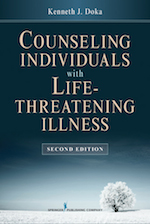 The counselor’s role when working with an individual with a life-threatening illness is not always straightforward. Counselors sometimes do not know or fully understand how to work with these clients, as treatment is frequently exclusively biological and often ignores psychological, social and spiritual factors. However, Doka stresses the importance of interdisciplinary teams using the biopsychosocial-spiritual model in the treatment of individuals with life-threatening illness. In his book, Doka clearly outlines and demystifies the role of counselors who are working with these individuals and their families.
The second edition of Counseling Individuals with Life-Threatening Illness includes updated information, such as models of concurrent care and counseling families throughout life-threatening illness and during the grieving process. Following a brief introduction, Doka begins Chapter 2 by discussing historical perspectives on dying and illness, and then explores early and contemporary contributions on dying. Doka follows with a chapter on the seven sensitivities of effective professional caregivers: sensitivity to the whole person, pain and discomfort, communication, autonomy, needs, cultural differences and treatment goals (Chapter 3). He thoroughly depicts each of these sensitivities, and then describes the specific skills counselors need in order to work effectively with families and individuals impacted by life-threatening illness (Chapter 4). In this chapter, Doka includes a discussion on sensitivity to various age groups, populations and generational cohorts, as life-threatening illness impacts individuals in various phases of the life cycle in vastly different ways. This segment includes information on working with children, adolescents, older adults and individuals with intellectual disabilities. Chapter 5 describes possible responses to life-threatening illness, including physical, cognitive, emotional, behavioral and spiritual responses. Doka outlines the role counselors have in assisting clients with recognizing how they are impacted in each of these areas when responding to the crisis of illness. For counselors who desire to strengthen their understanding of the illness experience, Chapter 6 provides a discussion on the numerous factors that may influence the client’s experience of illness.
Chapters 7–11 recommend ways to effectively work with clients in each phase of illness: “The Prediagnostic Phase: Understanding the Road Before,” “Counseling Clients Through the Crisis of Diagnosis,” “Counseling Clients in the Chronic Phase of Illness,” “Counseling Clients in Recovery,” and “Counseling Clients in the Terminal Phase.” Doka gives a great deal of attention to assisting the client with expressing his or her feelings and fears, as well as preserving and redefining relationships with family members, friends, and caregivers. Chapter 12 explores ways to counsel families throughout each phase of a life-threatening illness, including how to continue to work with these individuals following the death of their loved one.
Counseling Individuals with Life-Threatening Illness provides a practical guide for counselors who work with clients and families impacted by life-threatening illness. The language and content are appropriate for undergraduate and graduate courses, as well as workshops and trainings for professionals. Doka integrates examples from his own personal work with clients, which makes the application of concepts and theories presented in this book easy to comprehend. Doka also includes an appendix with discussion questions, role-playing scenarios, and case studies that may be used for workshops, trainings, or activities in a classroom setting. As the healthcare system continues to evolve, Counseling Individuals with Life-Threatening Illness is a valuable resource for counselors as they find themselves working on interdisciplinary teams with individuals and families impacted by life-threatening illness.
Doka, K. J. (2014). Counseling individuals with life-threatening illness (2nd ed.). New York, NY: Springer.
Reviewed by: Rebecca G. Cowan, NCC, Eastern Virginia Medical School, Portsmouth, VA.
The Professional Counselor
HOME PAGE
Dec 18, 2013 | Book Reviews
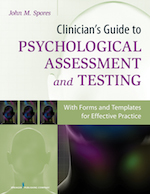 Written in a clear, concise and strategically delineated manner, The Clinician’s Guide to Psychological Assessment and Testing: With Forms and Templates for Effective Practice is written for people seeking a better understanding of various psychological tests and how those tests can inform professional practice. The author of this book, Dr. John Spores, clearly meets his stated purpose, to provide practicing clinical or counseling psychologists with a reference volume to inform their testing practice. I would note, however, that this volume can also help professionals from the fields of counseling, psychology, social work, and other related fields understand more fully how standardized psychological testing can inform their clinical work.
In order to do this, Dr. Spores has divided his book into three parts. The first section reviews the process of psychological assessment and standardized testing. In the introductory chapter, he makes a clear and convincing case for the use of standardized psychological testing as a way to augment and sometimes even surpass clinical interviews. Most helpful is his delineation of how the process of testing should be done and what events need to happen for the process to be done correctly. The author is also an attorney, and this comes out in the straightforward and step-wise manner in which he describes this process.
In the first section, the reader is introduced to one of the most useful aspects of this book. The author has provided numerous forms and templates for each of the processes for psychological testing. It should be noted that the author’s in-text references to the provided forms and templates are extremely helpful. For example, when the author writes about how referral sources make a referral for testing, he provides an excellent example at the end of the chapter of a “Psychological Test Referral Form.” This is consistent throughout the book. When the author references a form or report of some type, he provides an example of that form or report at the end of the chapter. This gives readers a concrete example, something they can immediately reference to understand the ideas and concepts discussed in this guide. This invaluable resource is also available in electronic format on the publisher’s Web site.
The author continues to inform the reader in section two with concrete examples of the standardized tests used in psychological testing. Divided into subsections, the section provides the reader with information about widely known and utilized tests in the following areas: (1) intelligence tests; (2) achievement tests; (3) neuropsychological tests; (4) symptom rating scales; (5) self-report clinical and personality inventories; (6) examiner-administered personality tests; and (7) adaptive behavior tests. To help clinicians even better understand the process of selecting and administering these types of tests, each subsection has four parts: a description of the construct being measured; the diagnostic reasons for conducting such a test; insurance billing and coverage issues; and examples of common tests used to measure the described construct. The author is clear that the example tests he lists are those that he likes to use for measuring a described construct, and he gives compelling reasons why he believes that they are appropriate choices.
In the final section, section three, the author provides specific case examples of children, adolescents and adults for whom standardized tests have served as a means of identifying areas of clinical concerns. These vital case examples demonstrate how the testing process can work to a clinician’s advantage in providing the best care for clients.
The only caveat to this book is that Dr. Spores assumes that the reader is trained in diagnostic interviewing, psychometrics, and administering and scoring the tests presented and discussed in this book. Accordingly, those readers who are not familiar with the common standardized tests presented in this book (e.g., Wechsler tests, Minnesota Multiphasic Personality Inventory, Rorschach) may find themselves at a disadvantage. Dr. Spores does acknowledge his assumption in the Introduction, and those readers who are not familiar with these tests may benefit from some additional reading and training before attempting to utilize this guide.
Overall, this is an excellent guide to the use and administration of psychological tests. It provides straightforward directions and instructions on how to utilize testing in such a way as to better inform clinical practice. I could see this book as a mainstay on any counselor’s bookshelf, especially those who are seeking a way to utilize standardized testing in their practice.
Spores, J. M. (2013). Clinician’s guide to psychological assessment and testing: With forms and templates for effective practice. New York, NY: Springer.
Reviewed by: Joseph P. Jordan, North Carolina Physicians Health Program and North Carolina Veterinary Health Program, Raleigh, NC.
The Professional Counselor Journal
HOME PAGE
Oct 21, 2013 | TPC Outstanding Scholar
Lisa Camposano
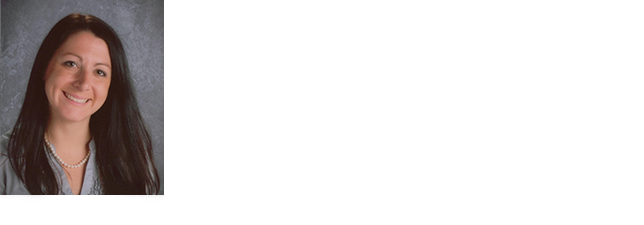
In 2011, the National Board for Certified Counselors, Inc. and Affiliates (NBCC) published the first volume of TPC. At the behest of TPC’s publisher, Dr. Thomas Clawson, the TPC Outstanding Scholar Award was created to recognize the most outstanding article of the year.
After the close of the first volume, the editorial board committee studied the journal articles and selected the top several fitting the following criteria: elite scholarly style, innovative and inventive material, and the utmost relevance to the counseling profession. The first volume included exceptional material covering a variety of relevant topics, which made it challenging to distinguish one article as outstanding among the collected works. After careful consideration, the 2011 TPC Outstanding Article Award went to Lisa Camposano for her article “Silent Suffering: Children with Selective Mutism” in volume 1, issue 1.
Ms. Camposano’s article brings attention to the lack of research on selective mutism and concerns of misdiagnosis, and provides implications for counselors by covering common disorder-related issues and sound treatment approaches. Ms. Camposano first encountered selective mutism while teaching a few years ago. After she was informed that she would have a student with selective mutism, Ms. Camposano began to research the disorder so that she could provide the student with the support needed for optimum learning and development. During her research, she noticed that many of the available resources did not include implications for teachers or counselors. As she notes in her article, selective mutism came to the public’s attention after the Virginia Tech massacre, when it was revealed that the gunman, Seung-Hui Cho, had been diagnosed with the disorder. However, the lack of consideration within the professional counseling community became apparent as she continued her research into interventions for her student.
After Ms. Camposano began graduate school for school counseling at The College of New Jersey, she continued to research selective mutism using a counseling professional framework. That experience led to a deeper appreciation for research and an increased motivation to fulfill the essential role and responsibility of a counselor to contribute to the research literature that ultimately fuels evidence-based practices. Ms. Camposano now plans to focus on other school counseling topics and advocate for clients by increasing accessibility to community resources. Regardless of the counseling specialty area, she will continue to make her voice heard in the counseling profession.
Oct 21, 2013 | TPC Outstanding Scholar
Lisa Camposano
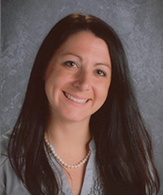 In 2011, the National Board for Certified Counselors, Inc. and Affiliates (NBCC) published the first volume of TPC. At the behest of TPC’s publisher, Dr. Thomas Clawson, the TPC Outstanding Scholar Award was created to recognize the most outstanding article of the year.
After the close of the first volume, the editorial board committee studied the journal articles and selected the top several fitting the following criteria: elite scholarly style, innovative and inventive material, and the utmost relevance to the counseling profession. The first volume included exceptional material covering a variety of relevant topics, which made it challenging to distinguish one article as outstanding among the collected works. After careful consideration, the 2011 TPC Outstanding Article Award went to Lisa Camposano for her article “Silent Suffering: Children with Selective Mutism” in volume 1, issue 1.
Ms. Camposano’s article brings attention to the lack of research on selective mutism and concerns of misdiagnosis, and provides implications for counselors by covering common disorder-related issues and sound treatment approaches. Ms. Camposano first encountered selective mutism while teaching a few years ago. After she was informed that she would have a student with selective mutism, Ms. Camposano began to research the disorder so that she could provide the student with the support needed for optimum learning and development. During her research, she noticed that many of the available resources did not include implications for teachers or counselors. As she notes in her article, selective mutism came to the public’s attention after the Virginia Tech massacre, when it was revealed that the gunman, Seung-Hui Cho, had been diagnosed with the disorder. However, the lack of consideration within the professional counseling community became apparent as she continued her research into interventions for her student.
After Ms. Camposano began graduate school for school counseling at The College of New Jersey, she continued to research selective mutism using a counseling professional framework. That experience led to a deeper appreciation for research and an increased motivation to fulfill the essential role and responsibility of a counselor to contribute to the research literature that ultimately fuels evidence-based practices. Ms. Camposano now plans to focus on other school counseling topics and advocate for clients by increasing accessibility to community resources. Regardless of the counseling specialty area, she will continue to make her voice heard in the counseling profession.
Read more about the TPC scholarship awards here.
Oct 21, 2013 | TPC Outstanding Scholar
Sonya Lorelle, Rebekah Byrd, and Stephanie Crockett
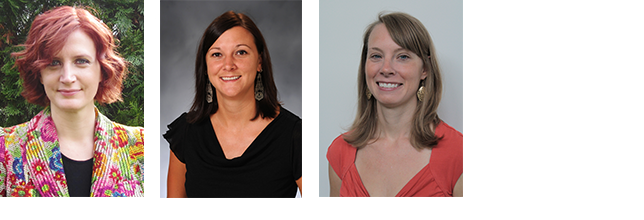
At the close of the second volume, the TPC editorial board committee studied the published articles from 2012 to identify the most outstanding article of the year. They selected the articles fitting the following criteria: elite scholarly style, innovative and inventive material, and the utmost relevance to the counseling profession. A number of articles surfaced; however, there was a clear leader among the committee’s selection. The recipient of the 2012 TPC Outstanding Scholar Award was “Globalization and Counseling: Professional Issues for Counselors,” written by Sonya Lorelle, Rebekah Byrd, and Stephanie Crockett. The article highlights the need for the counseling profession to go beyond the current practices of multiculturalism “toward a global vision for the field.” The award was announced at the 2013 American Counseling Association conference and included a certificate. In an interview, Dr. Lorelle was both appreciative of the honor and grateful that the topic of globalization was acknowledged. She went on to recount the experiences that motivated the authors to write the article. Several years ago, they attended a noncounseling course on gender and globalization that profoundly broadened their worldview. The shift in perspective led Dr. Lorelle to travel Italy and Bhutan to learn more about counseling and globalization firsthand. Similarly, Dr. Byrd and Dr. Crockett attended a counseling institute in Ireland while at Old Dominion University.
During the interview, Dr. Lorelle reflected on her counseling experiences in a Bhutanese school. The students were exposed to the individualistic culture of the United States through television and the Internet, which created curiosity among the adolescents. The traditional Bhutanese culture and the Western culture collide and create an intense internal struggle affecting the process of personal identity development. Dr. Lorelle pointed out the utility of the counseling profession in providing a space for individuals to manage this internal struggle. She also noted that this is an important awareness for counselors in the United States because many individuals living here are faced with reconciling the interaction of multiple cultural influences. Dr. Lorelle will begin as an assistant professor in counseling at Governors State University in the fall of 2013. Dr. Byrd is assistant professor of counseling at East Tennessee State University. Dr. Crockett is assistant professor of counseling and the director of the Adult Career Counseling Center at Oakland University. These authors have made a lasting contribution to the literature of the counseling profession.