Sep 16, 2016 | Article, Volume 6 - Issue 3
Christopher A. Sink and Melissa S. Ockerman
Designed to improve preK–12 student academic and behavioral outcomes, a Multi-Tiered System of Supports (MTSS), such as Positive Behavioral Intervention and Supports (PBIS) or Response to Intervention (RTI), is a broadly applied framework being implemented in countless schools across the United States. Such educational restructuring and system changes require school counselors to adjust their activities and interventions to fully realize the aims of MTSS. In this special issue of The Professional Counselor, the roles and functions of school counselors in MTSS frameworks are examined from various angles. This introductory article summarizes the key issues and the basic themes explored by the special issue contributors.
Keywords: school counselors, multi-tiered system of supports, Positive Behavioral Intervention and Supports, Response to Intervention, implementation
School counselors must proactively adapt to the varied mandates of school reform and educational innovations. Similarly, with new federal and state legislation, they must align their roles and functions in accordance with their changing requirements (Baker & Gerler, 2008; Dahir, 2004; Gysbers, 2001; Herr, 2002; Leuwerke, Walker & Shi, 2009; Paisley & Borders, 1995). One such initiative, the Multi-Tiered System of Supports (MTSS), requires educators to revise their assessment strategies, curriculum, pedagogy and interventions to best serve the academic, behavioral, and post-secondary education and career goals of all students (Lewis, Mitchell, Bruntmeyer, & Sugai, 2016). Specifically, MTSS is an umbrella term for a variety of school-wide approaches to improve student learning and behavior. The most familiar MTSS frameworks are Response to Intervention (RTI) and Positive Behavioral Interventions and Supports (PBIS; also referred to as Culturally Responsive or CR PBIS). The latter model has been implemented throughout the U.S., spanning all 50 states and approximately 22,000 schools (H. Choi, personal communication, December 15, 2014). Moreover, 45 states have issued guidelines for RTI implementation and 17 states require RTI to be used in the identification of students with specific learning disabilities (Hauerwas, Brown, & Scott, 2013). Research indicates that when these frameworks are implemented with fidelity over several years, they are best practice for addressing students at risk for academic or behavioral problems (Lane, Menzies, Ennis, & Bezdek, 2013; Lewis et al., 2016).
In 2014, the American School Counselor Association (ASCA) revised its RTI position statement to encompass MTSS, including both RTI and CR PBIS (ASCA, 2014). Although there is little evidence to support this assumption, the writers averred that MTSS seamlessly aligns with the ASCA National Model (2012a) in the three developmental domains (academic, social-emotional, and college/career). Nevertheless, school counselors should view MTSS frameworks as an opportunity to enhance their school counseling programs through the implementation of a data-driven, multi-tiered intervention system. Doing so allows school counselors to utilize and showcase their leadership skills with key stakeholders (e.g., parents, caregivers, teachers, administrators) and to create systemic changes in their schools and thus foster equitable outcomes for all children.
The implementation of MTSS and its alignment with comprehensive school counseling programs (CSCPs) position school counselors to advance culturally responsive preventions and interventions to serve students and their families more effectively (Goodman-Scott, Betters-Bubon, & Donohue, 2016). By working collaboratively with school personnel to tap students’ strengths and create common goals, school counselors can build capacity and thereby broaden their scope of practice and accountability. Politically astute school counselors are wise to leverage their school’s MTSS framework as a way to access necessary resources, obtain additional training and further impact student outcomes.
The research is scant on school counselor involvement with—and effectiveness in—MTSS implementation. The available publications, including those presented in this special issue, suggest that the level of MTSS education and training for pre-service and in-service school counselors is insufficient (Cressey, Whitcomb, McGilvray-Rivet, Morrison, & Shandler-Reynolds, 2014; Goodman-Scott, 2013, 2015; Goodman-Scott, Doyle, & Brott, 2014; Ockerman, Mason, & Hollenbeck, 2012; Ockerman, Patrikakou, & Feiker Hollenbeck, 2015). There are legitimate reasons for counselor reluctance and apprehension. For example, not only must school counselors add new and perhaps unfamiliar duties to an already harried work day, some evidence indicates that they are not well prepared for their MTSS responsibilities. Consequently, it is essential for both in-service professional development opportunities and pre-service preparation programs to focus on best practices for aligning CSCPs with MTSS frameworks (Goodman-Scott et al., 2016).
To address the gaps in the counseling literature on successful school counselor MTSS training, implementation, and collaboration with other school personnel, this special issue of The Professional Counselor was conceived. Moreover, the articles consider various facets of MTSS and their intersection with school counseling research and practice. Overall, the contributors hope to provide much needed MTSS assistance and support to nascent and practicing school counselors.
Summary of Contributions
Sink’s lead article in this special issue situates the contributions that follow by offering a general overview of foundational MTSS theory and research, including PBIS and RTI frameworks. Subsequently, literature-based suggestions for incorporating MTSS into school counselor preparation curriculum and pedagogy are provided. MTSS roles and functions summarized in previous research are aligned to ASCA’s (2012b) School Counselor Competencies, the 2016 Council for Accreditation of Counseling and Related Educational Programs (CACREP) Standards for School Counselors (2016) and the ASCA (2012a) National Model.
The next two articles report on MTSS-related studies and specifically discuss new school counselor responsibilities associated with MTSS implementation. Ziomek-Daigle, Goodman-Scott, Cavin, and Donohue reveal through a case study the various ways MTSS and CSCPs reflect comparable features (e.g., school counselor roles, advocacy, accountability). The participating case study counselors were actively engaged in MTSS implementation at their school, suggesting that they had a relatively good idea of their responsibilities in this capacity. Addressing RTI in particular, Patrikakou, Ockerman, and Hollenbeck’s investigation reported that while most school counselors expressed positive opinions about this MTSS framework, they lacked the self-assurance to adequately perform key RTI tasks (e.g., accountability and collaboration). Perceived counselor deficiencies in RTI implementation also point to a potential disconnect between the ASCA (2012a) National Model’s program components and themes and current RTI training of pre-service and practicing school counselors, thus suggesting a need for improved pre-service and in-service education.
School counselors are called upon to be culturally responsive and competent. They are advocates for social justice and equity for all students (Ratts, Singh, Nassar-McMillan, Butler, & McCullough, 2016; Singh, Urbano, Haston, & McMahan, 2010). Two articles speak to this issue within the educational context of MTSS. Belser and colleagues maintain that the ASCA (2012a) National Model and MTSS are beneficial operational frameworks to support all students, including marginalized and so-called problem learners (e.g., at-risk students). An integrated model is then proffered as a way to improve the educational outcomes of disadvantaged students. Positive and culturally sensitive alternatives to punishment-oriented school discipline methods are discussed as well. Similarly, Betters-Bubon, Brunner, and Kansteiner address school counselor roles in devising and sustaining culturally responsive PBIS programs that meet student social, behavioral and emotional needs. In particular, they report on an action research case study showing how an elementary school counselor partnered with other stakeholders (i.e., school administrator, psychologist, teachers) to achieve this goal.
The final article by Harrington, Griffith, Gray, and Greenspan overviews a recent grant project intended to establish a quality data-driven MTSS model in an elementary school. The manuscript spotlights the role of the school counselor who collaborated with other project leaders and educators to use social-emotional data to inform and improve practice. Specifics are provided so other practitioners can replicate the project in their schools. In brief, this contribution emphasizes the importance of data-based decision-making in MTSS implementation.
Conclusion
School counselors are faced with a myriad of responsibilities that severely tax their energy and time. Competing demands from internal and external stakeholders as well as legislative changes and educational innovations stretch these practitioners to be more efficient and effective in their services to students and families. Regrettably, MTSS implementation adds to counselors’ “accountability stress.” Some counselors anticipate that PBIS and RTI frameworks will go the way of other short-lived educational trends, relieving them of the responsibility to take action. However, anecdotal and empirical evidence reported in this special issue and elsewhere suggests these professionals are in the minority. School counselors largely perceive the potential and real value of MTSS programs. They desire to partner with other school educators to help all children and youth succeed. As contributors to this issue indicate, the ASCA (2012a) National Model and PBIS and RTI frameworks can be integrated to achieve higher student academic and social-emotional outcomes. With these articles, school counselors-in-training and practitioners have additional support to successfully address their MTSS duties and advocate for increased education in this area. Continued research is needed to guide efficacious MTSS practice designed to foster equitable educational outcomes for all students.
Conflict of Interest and Funding Disclosure
The authors reported no conflict of interest
or funding contributions for the development
of this manuscript.
References
American School Counselor Association. (2012a). The ASCA national model: A framework for school counseling programs (3rd ed.). Alexandria, VA: Author.
American School Counselor Association. (2012b). ASCA school counselor competencies. Retrieved from https://www.schoolcounselor.org/asca/media/asca/home/SCCompetencies.pdf
American School Counselor Association. (2014). Position statement: Multi-tiered systems of support. Alexandria, VA: Author. Retrieved from https://www.schoolcounselor.org/asca/media/asca/PositionStatements/PS_MultitieredSupportSystem.pdf
Baker, S. B., & Gerler, E. R., Jr. (2008). School counseling in the twenty-first century (5th ed.). Columbus, OH: Merrill Prentice Hall.
Council for Accreditation of Counseling and Related Educational Programs. (2016). 2016 CACREP standards. Retrieved from http://www.cacrep.org/for-programs/2016-cacrep-standards
Cressey, J. M., Whitcomb, S. A., McGilvray-Rivet, S. J., Morrison, R. J., & Shander-Reynolds, K. J. (2014). Handling PBIS with care: Scaling up to school-wide implementation. Professional School Counseling, 18, 90–99. doi:10.5330/prsc.18.1.g1307kql2457q668
Dahir, C. A. (2004). Supporting a nation of learners: The role of school counseling in educational reform. Journal of Counseling & Development, 82, 344–353. doi:10.1002/j.1556-6678.2004.tb00320.x
Goodman-Scott, E. (2013). Maximizing school counselors’ efforts by implementing school-wide positive behavioral interventions and supports: A case study from the field. Professional School Counseling, 17, 111–119.
Goodman-Scott, E. (2015). School counselors’ perceptions of their academic preparedness and job activities. Counselor Education and Supervision, 54, 57–67.
Goodman-Scott, E., Betters-Bubon, J., & Donohue, P. (2016). Aligning comprehensive school counseling programs and positive behavioral interventions and supports to maximize school counselors’ efforts. Professional School Counseling, 19, 57–67.
Goodman-Scott, E., Doyle, B., & Brott, P. (2014). An action research project to determine the utility of bully prevention in positive behavior support for elementary school bullying prevention. Professional School Counseling, 17, 120–129
Gysbers, N. C. (2001). School guidance and counseling in the 21st century: Remember the past into the future. Professional School Counseling, 5(2), 96–105.
Hauerwas, L. B., Brown, R., & Scott, A. N. (2013). Specific learning disability and response to intervention: State-level guidance. Exceptional Children, 80, 101–120. doi:10.1177/001440291308000105
Herr, E. L. (2002). School reform and perspectives on the role of school counselors: A century of proposals for change. Professional School Counseling, 5, 220–234.
Lane, K. L., Menzies, H. M., Ennis, R. P., & Bezdek, J. (2013). School-wide systems to promote positive behaviors and facilitate instruction. Journal of Curriculum and Instruction, 7, 6–31.
doi:10.3776/joci.2013.v7n1pp6-31
Leuwerke, W. C., Walker, J., & Shi, Q. (2009). Informing principals: The impact of different types of information on principals’ perceptions of professional school counselors. Professional School Counseling, 12, 263–271. doi:10.5330/PSC.n.2010-12.263
Lewis, T. J., Mitchell, B. S., Bruntmeyer, D. T., & Sugai, G. (2016). School-wide positive behavior support and response to intervention: System similarities, distinctions, and research to date at the universal level of support. In S. R. Jimerson, M. K. Burns, & A. M. VanDerHeyden (Eds.), Handbook of response to intervention: The science and practice of multi-tiered systems of support (2nd ed.; pp. 703–717). New York, NY: Springer.
Ockerman, M. S., Mason, E. C. M., & Hollenbeck, A. F. (2012). Integrating RTI with school counseling programs: Being a proactive professional school counselor. Journal of School Counseling, 10(15), 1–37. Retrieved from http://jsc.montana.edu/articles/v10n15.pdf
Ockerman, M. S., Patrikakou, E., & Feiker Hollenbeck, A. (2015). Preparation of school counselors and response to intervention: A profession at the crossroads. The Journal of Counselor Preparation and Supervision, 7, 161–184. doi:10.7729/73.1106
Paisley, P. O., & Borders, L. D. (1995). School counseling: An evolving specialty. Journal of Counseling and Development, 74, 150–153. Retrieved from https://www.researchgate.net/publication/232543894_School_Counseling_An_Evolving_Specialty
Ratts, M. J., Singh, A. A., Nassar-McMillan, S., Butler, S. K., & McCullough, J. R. (2016). Multicultural and social justice counseling competencies: Guidelines for the counseling profession. Journal of Multicultural Counseling and Development, 44, 28–48. doi:10.1002/jmcd.12035
Singh, A. A., Urbano, A., Haston, M., & McMahan, E. (2010). School counselors’ strategies for social justice change: A grounded theory of what works in the real world. Professional School Counseling, 13(3), 135–145.
Christopher A. Sink, NCC, is a Professor and Batten Chair of Counseling at Old Dominion University and can be reached at Darden College of Education, Norfolk, VA 23508, csink@odu.edu. Melissa S. Ockerman is an Associate Professor in the Counseling Program at DePaul University and can be reached at College of Education, Chicago, IL 60614, melissa.ockerman@depaul.edu.
Sep 16, 2016 | Article, Volume 6 - Issue 3
Christopher A. Sink
With the advent of a multi-tiered system of supports (MTSS) in schools, counselor preparation programs are once again challenged to further extend the education and training of pre-service and in-service school counselors. To introduce and contextualize this special issue, an MTSS’s intent and foci, as well as its theoretical and research underpinnings, are elucidated. Next, this article aligns MTSS with current professional school counselor standards of the American School Counselor Association’s (ASCA) School Counselor Competencies, the 2016 Council for Accreditation of Counseling and Related Educational Programs (CACREP) Standards for School Counselors and the ASCA National Model. Using Positive Behavioral Interventions and Supports (PBIS) and Response to Intervention (RTI) models as exemplars, recommendations for integrating MTSS into school counselor preparation curriculum and pedagogy are discussed.
Keywords:multi-tiered system of supports, school counselor, counselor education, American School Counselor Association, Positive Behavioral Interventions and Supports, Response to Intervention
When new educational models are introduced into the school system that affect school counseling practice, the training of pre-service and in-service school counselors needs to be updated. A multi-tiered system of supports (MTSS) is one such innovation requiring school counselors to further refine their skill set. In fact, during the school counseling profession’s relatively short history, counselors have experienced several major shifts in foci and best practices (Gysbers & Henderson, 2012). The latest movement surfaced in the 1980s, when school counselors were encouraged to revisit their largely reactive, inefficient and ineffective practices. Specifically, rather than supporting a relatively small proportion of students with their vocational, educational and personal-social goals and concerns, pre-service and in-school practitioners, under the aegis of a comprehensive school counseling program (CSCP) orientation, were called to operate in a more proactive and preventative fashion.
Although there are complementary frameworks to choose from, the American School Counselor Association’s (ASCA; 2012a) National Model: A Framework for School Counseling Programs emerged as the standard for professional practice, offering K–12 counselors an operational scaffold to guide their activities, interventions and services. Preliminary survey research suggests that counselors are performing their duties in a more systemic and collaborative fashion to more effectively serve students and their families (Goodman-Scott, 2013, 2015). Other rigorous accountability research examining the efficacy of CSCP practices supports this transformation of counselors’ roles and functions (Martin & Carey, 2014; Sink, Cooney, & Adkins, in press; Wilkerson, Pérusse, & Hughes, 2013). As a consequence of the increased demand for retraining, university-level counselor preparation programs and professional counseling organizations (e.g., American Counseling Association, ASCA, National Board for Certified Counselors) have generally responded in kind. Over the last few decades, K–12 school counselors have been instructed to move from a positional approach to their professional work to one that is programmatic and systemic in nature.
As mentioned above, the implementation of MTSS (e.g., Positive Behavioral Supports and Responses [PBIS] and Response to Intervention [RTI] frameworks) in the nation’s schools requires in-service counselors to augment their collaboration and coordination skills (Shepard, Shahidullah, & Carlson, 2013). Essentially, MTSS programs are evidence-based, holistic, and systemic approaches to improve student learning and social-emotional-behavioral functioning. They are largely implemented in educational settings using three tiers or levels of intervention. In theory, all educators are involved at differing levels of intensity. For example, classroom teachers and teacher aides are the first line (Tier 1) of support for struggling students. As the need might arise, other more “specialized” staff (e.g., school psychologists, special education teachers, school counselors, addictions counselors) may be enlisted to provide additional and more targeted student interventions and support (Tiers 2 or 3). Even though ASCA (2014) released a position statement broadly addressing school counselors’ roles and functions within MTSS schools, research is equivocal as to whether these practitioners are implementing these directives with any depth and fidelity (Goodman-Scott, 2015; Goodman-Scott, Betters-Bubon, & Donahue, 2016; Ockerman, Mason, & Hollenbeck, 2012; Ockerman, Patrikakou, & Feiker Hollenbeck, 2015). Moreover, school counselor effectiveness with MTSS-related responsibilities is an open question.
To sufficiently answer these accountability questions, there is a pressing need for university preparation programs to better educate nascent school counselors on MTSS, particularly on the fundamentals and effective ways PBIS and RTI can be accommodated within the purposes and practices of CSCPs (Goodman-Scott et al., 2016). While educational resources and research are plentiful, they are chiefly aimed at pre-service and in-service teachers and support staff working closely with special education students, such as school psychologists (Forman & Crystal, 2015; Owen, 2012; Turnbull, Bohanon, Griggs, Wickham, & Salior, 2002). Albeit informative, nearly all school counselor MTSS research and application publications are focused on in-service practitioners (ASCA, 2014; de Barona & Barona, 2006; Donohue, 2014; Goodman-Scott, 2013; Martens & Andreen, 2013; Ockerman et al., 2012; Ryan, Kaffenberger, & Carroll, 2011; Shepard et al., 2013; Zambrano, Castro-Villarreal, & Sullivan, 2012). With perhaps the exception of Goodman-Scott et al. (2016), who provided a useful alignment of the ASCA National Model (2012a) with PBIS practices, there are few evidence-based resources for school counselor educators to draw upon in order to rework their pre-service courses to include MTSS curriculum and instruction. To successfully prepare counselors to work within PBIS or RTI schools, students must understand the ways MTSS foci are aligned with professional counseling standards for practice. Such a document is noticeably absent from the literature.
The primary intent of this article is to offer school counselor educators functional and literature-based recommendations to enhance their MTSS training of pre-service counselors. To do so, MTSS programs are first contextualized by summarizing their major foci, operationalization, theoretical underpinnings and research support. Next, the objectives of MTSS models are aligned with the ASCA (2012b) School Counselor Competencies and the 2016 CACREP Standards for School Counselors. Finally, using PBIS and RTI models as exemplars, recommendations for school counselor preparation curriculum and pedagogy are offered.
Foundational Considerations
Since MTSS programs are extensively described in numerous publications (e.g., Bradley, Danielson, & Doolittle, 2007; Carter & Van Norman, 2010; Forman & Crystal, 2015; R. Freeman, Miller, & Newcomer, 2015; Fuchs & Fuchs, 2006; Horner, Sugai, & Lewis, 2015; McIntosh, Filter, Bennett, Ryan, & Sugai, 2010; Sandomierski, Kincaid, & Algozzine, 2007; Sugai & Simonsen, 2012), including articles in this special issue, there is little need to reiterate the details here. However, for those school counselor educators and practitioners who are less conversant with MTSS’s theoretical grounding, research evidence and operational characteristics supporting implementation, these topics are overviewed.
MTSS programs by definition are comprehensive and schoolwide in design, accentuating the importance of graduated levels of student support. In other words, the amount of instructional and behavioral support gradually increases as the student’s assessed needs become more serious. Although the most prominent and well-researched MTSS approaches, PBIS and RTI, are considered disparate frameworks to address student deficits (Schulte, 2016), the extent of their overlap in theoretical principles, foci, processes and practices allows for an abbreviated synthesis (R. Freeman, et al., 2015; Sandomierski et al., 2007; Stoiber & Gettinger, 2016).
Initially, RTI and PBIS programming and services emerged from special education literature and best practices. Over time these evidence-based approaches extended their reach, and the entire student population is now served. Specifically, PBIS aims to increase students’ prosocial behaviors and decrease their problem behaviors as well as promote positive and safe school climates, benefitting all learners (Bradley et al., 2007; Carter & Van Norman, 2010; Klingner & Edwards, 2006). Although RTI programs also address students’ behavioral issues, they largely focus on improving the academic development and performance of all children and youth through high-quality instruction (Turse & Albrecht, 2015; Warren & Robinson, 2015). RTI staff are particularly concerned with those students who are academically underperforming (Greenwood et al., 2011; Johnsen, Parker, & Farah, 2015; Ockerman et al., 2015; Sprague et al., 2013). Curiously, the potential roles and functions of school counselors within these programs were not delineated until many years after they were first introduced (Warren & Robinson, 2015). Even at this juncture, often cited MTSS publications neglect discussing school counselors’ contributions to full and effective implementation (Carter & Van Norman, 2010). Instead they frequently refer to behavior specialists as key members of the MTSS team (Horner, Sugai, & Anderson, 2010).
MTSS Theory and Research
PBIS and RTI model authors and scholars consistently implicate a range of conceptual orientations, including behaviorism, organizational behavior management, scientific problem-solving, systems thinking and implementation science (Eber, Weist, & Barrett, n.d.; Forman & Crystal, 2015; Horner et al., 2010; Kozleski & Huber, 2010; Sugai & Simonsen, 2012; Sugai et al., 2000; Turnbull et al., 2002). It appears, however, that behavioral principles and systems theory are most often credited as MTSS cornerstones (Reschly & Cooloong-Chaffin, 2016). Since PBIS and RTI are essentially special education frameworks, it is not surprising that behaviorist constructs and applications (e.g., reinforcement, applied experimental behavior analysis, behavior management and planning, progress monitoring) are regularly cited (Stoiber & Gettinger, 2016). Furthermore, MTSS frameworks are in concept and practice system-wide structures (i.e., student-centered services, processes and procedures that are instituted across a school or district), and as such, holistic terminology consistent with Bronfrenbrenner’s bioecological systems theory and other related systems orientations (e.g., Bertalanffy general systems theory and Henggeler and colleagues’ multi-systemic treatment approach) are commonly cited (see Reschly & Cooloong-Chaffin, 2016, and Shepard et al., 2013, for examples of extensive discussions).
MTSS research largely demonstrates the efficacy of PBIS and RTI models. For instance, Horner et al. (2015) conducted an extensive analysis of numerous K–12 PBIS studies, concluding that this systems approach is evidence-based. Other related literature reviews indicated that PBIS frameworks are at least modestly serviceable in preschools (Carter & Van Norman, 2010), K–12 schools (Horner et al., 2010; Molloy, Moore, Trail, Van Epps, & Hopfer, 2013), and juvenile justice settings (Jolivette & Nelson, 2010; Sprague et al., 2013). Across most studies, PBIS programming yields weak to moderately positive outcomes for PK–12 students from diverse backgrounds (e.g., African American and Latino) and varying social and academic skill levels (Childs, Kincaid, George, & Gage, 2015; J. Freeman et al., 2015, 2016). Similarly, evaluations of RTI interventions are promising for underachieving learners (Bradley et al., 2007; Fuchs & Fuchs, 2006; Greenwood et al., 2011; Proctor, Graves, & Esch, 2012; Ryan et al., 2011). Students tend to especially benefit from Tier 2 and 3 interventions. In their entirety, PBIS and RTI models are modestly successful frameworks to identify students at risk for school-related problems and ameliorate social-behavioral and academic deficiencies. It should be noted, however, that the long-term impact of MTSS on students’ social-emotional outcomes remains equivocal (Saeki et al., 2011). As mentioned previously, there is a paucity of evidence demonstrating that school counselors indirectly or directly contribute to positive MTSS outcomes. As with any relatively new educational innovation, research is needed to further clarify the specific impacts of MTSS on student, family, classroom and school outcome variables. The next section summarizes the ways MTSS frameworks are viewed and instituted in school settings.
Operational Features
For school counselors to be effective MTSS leaders and educational partners, they must understand the conceptual underpinnings and operational components and functions of PBIS and RTI frameworks. Given the introductory nature of this article, we limit our discussion to essential characteristics of these frameworks. Extensive practical explanations of MTSS models abound in the education (R. Freeman et al. 2015; Preston, Wood, & Stecker, 2016; Turse & Albrecht 2015) and school counseling literature (Goodman-Scott et al., 2016; Ockerman et al., 2012, 2015). To reiterate, MTSS frameworks are designed to be systems or ecological approaches to assisting students with their educational development and improving academic and behavioral outcomes. As described below, they attempt to serve all students through graduated layers of more intensive interventions. School counselors deliver, for example, evidence-based services to students, ranging from classroom and large group interventions to those provided to individual students in the counseling office (Forman & Crystal, 2015). By utilizing systematic problem-solving strategies and behavioral analysis tools to guide effective practice (Sandomierski et al., 2007), students who are most at risk for school failure and behavioral challenges are provided with more individualized interventions (Horner et al., 2015).
Practically speaking, MTSS processes and procedures vary from school to school, district to district. To understand how these frameworks are operationalized, there are numerous online school-based case studies to review. For instance, at the PBIS.org Web site, Ross (n.d.), the principal at McNabb Elementary (KY), overviewed the ways a PBIS framework was effectively implemented at his school. Most importantly, the reach of PBIS programming was expanded to all students, requiring a higher level of educator collaboration and “buy in.” Other pivotal changes were made, including (a) faculty and staff visits to students’ homes (i.e., making closer “positive connections”); (b) the implementation of summer programs for student behavioral and academic skill enrichment; (c) additional school community engagement activities (e.g., movie nights, Black History Month Extravaganza); and, (d) further PBIS training to improve school discipline and classroom management strategies. Other MTSS schools stress the importance of carefully identifying students in need of supplemental services and interventions using research-based assessment procedures (e.g., functional behavioral analysis or functional behavioral assessment [FBA]). Most schools emphasize these key elements to successful schoolwide PBIS implementation: (a) data-based decision making, (b) a clear and measurable set of behavioral expectations for students, (c) ongoing instruction on behavioral expectations, and (d) consistent reinforcement of appropriate behavior (PBIS.org, 2016).
Furthermore, MTSS frameworks, such as PBIS and RTI, have two main functions. First, they offer an array of activities and services (prevention- and intervention-oriented) that are systematically introduced to students based on an established level of need. Second, educators carefully consider the learning milieu, particularly as it may influence the development and improvement of student behavior (social and emotional learning [SEL] and academic performances). MTSS staff must be well educated on the signs of student distress, including those indicators that suggest students are at risk for school-related difficulties (e.g., below grade level academic achievement, social and emotional challenges, mental health disorders, long-term school failure). Moreover, educators should be provided appropriate training on various assessment tools to determine which set of students require more intensive care.
Within a triadic support system, all students (Tier 1: primary or universal prevention) are at least monitored and assisted by classroom staff. Teachers are encouraged to document student progress (or lack thereof) toward academic and behavioral goals. At the first level, school counselors partner with other building educators to conduct classroom activities and guidance to promote academic success, SEL (e.g., prosocial behaviors), and appropriate school behavior (Donohue, 2014). Counselors also may assist with setting behavioral expectations for students, suggest differentiated instruction for academic issues, collect data for program decision making, and conduct universal screening of students in need of additional behavior support (Horner et al., 2015). In short, the aim of Tier 1 is to (a) support all student learning and (b) proactively recognize individuals displaying the warning signs of learning or social and behavioral challenges.
Once the signals of educational or behavioral distress become more pronounced, relevant staff may initiate a formal MTSS process. For example, in many states and school districts, within the context of an MTSS, the struggling learner becomes a “focus of concern” and a multidisciplinary or school support team is convened (Kansas MTSS, 2011). Panel members are generally comprised of the school psychologist, administrator, counselor and relevant teachers. Counselors may be asked to collaborate with other educators to appraise the student’s learning environments. If potential hindrances are detected, these must be sufficiently attended to before further educational intervention is provided. Once the determination is made that the “targeted” learner received high-quality academic and behavioral instruction, and yet continues to exhibit deficiencies, the student is considered for Tier 2 services (Horner et al., 2015). School counselor tasks at this level may include providing evidence-based classroom interventions, short-term individual or group counseling, progress monitoring and regular school–home communication. Other sample interventions might involve the application of a behavior modification plan, the assignment of a peer mentor and tutoring system, and the utilization of “Check and Connect” (Maynard, Kjellstrand, & Thompson, 2013) or Student Success Skills (Lemberger, Selig, Bowers & Rogers, 2015) programs.
In most cases, identified students make at least modest progress at Tier 2 and do not require tertiary intervention. Even so, a small percentage of students receive Tier 3 services involving, for example, a comprehensive FBA, additional linking of academic and behavioral supports, and more specialized attention (Horner et al., 2015). School counselor support at this level commonly incorporates and extends beyond Tier 2 services. Ongoing consultation with and referrals to community-based professionals (e.g., learning experts, marriage and family counselors, child psychiatrists, and clinical psychologists) and out- or in-patient treatment facilities may be necessary.
In summary, the essential focus of collaborative MTSS programming is to improve student performance by first carefully assessing student strengths and weaknesses. Once these characteristics are identified, the MTSS team, with input from the school counseling staff, develops learning outcomes and, as required, may institute whole-school, classroom, or individual activities and services to best address lingering student deficiencies. As such, counselors should be significant partners with other appropriate staff to deliver the needed assistance and support (e.g., assign a peer mentor, provide individual or group counseling, institute a behavior management plan) to address students’ underdeveloped academic or social-emotional and behavioral skills. To close the MTSS loop, follow-up assessment of student progress toward designated learning and behavioral targets is regularly conducted by teachers with assistance from counselors and other related specialists. Based on the evaluation results, further interventions may be prescribed. School counselors therefore contribute essential MTSS services at each tier, promoting through their classroom work, group counseling and individualized services a higher level of student functioning. Regrettably, anecdotal evidence and survey research suggest that many are ill-equipped to conduct the requisite prevention and intervention activities (Ockerman et al., 2015). The following sections attempt, in part, to rectify this situation.
Alignment of MTSS With Professional School Counselor Standards and Practice
Before considering the implications for pre-service school counselor preparation, school counselors and university-level counselor educators should benefit from understanding the ways in which MTSS school counselor-related roles and functions are consistent with the preponderance of the ASCA (2012b) School Counselor Competencies and CACREP (2016) School Counseling Standards. Because there are so few publications documenting school counselor roles and functions within MTSS frameworks, a standards crosswalk, or matrix, was developed to fill this need (see Table 1). It should be noted that the ASCA standards and CACREP competencies are largely consistent with the National Board for Professional Teaching Standards’ (National Board; 2012) School Counseling Standards for School Counselors of Students Ages 3–18+. As such, they were not included in the table.
Table 1
Crosswalk of Sample School Counselor MTSS Roles and Functions, ASCA (2012b) School Counselor Competencies, and CACREP (2016) School Counseling Standards
| MTSS School Counselor Roles and Functions* |
ASCA School Counselor
Competencies
|
CACREP Section 5: Entry-Level Specialty Areas – School Counseling
|
|
I. School Counseling Programs
B: Abilities & Skills
|
1. Foundations 2. Contextual Dimensions
3. Practice
|
Shows strong school
leadership |
I-B-1c. Applies the school counseling themes of leadership, advocacy, collaboration and systemic change, which are critical to a successful school counseling program |
2.d. school counselor roles in school leadership and multidisciplinary teams |
|
I-B-2. Serves as a leader in the school and community to promote and support student success |
|
| Collaborates and consults with relevant stakeholders |
I-B-4. Collaborates with parents, teachers, administrators, community leaders and other stakeholders to promote and support student success |
3.l. techniques to foster collaboration and teamwork within schools |
Collaborates as needed to provide integration of
services |
I-B-4b. Identifies and applies models of collaboration for effective use in a school counseling program and understands the similarities and differences between consultation, collaboration and counseling and coordination strategies |
1.d. models of school-based collaboration and consultation |
|
I-B-4d. Understands and knows how to apply a consensus-building process to foster agreement in a group |
Provides staff development related to positive
discipline, behavior and mental health |
I-B-4e. Understands how to facilitate group meetings to effectively and efficiently meet group goals |
| Leads with systems change to provide safe school |
I-B-5. Acts as a systems change agent to create an environment promoting and supporting student success |
2.a. school counselor roles as leaders, advocates and systems change agents in PK–12 schools |
Intervention planning for SEL and academic skill
improvementProvides risk and threat
assessments |
I-B-5b. Develops a plan to deal with personal (emotional and cognitive) and institutional resistance impeding the change process |
2.g. characteristics, risk factors, and warning signs of students at risk for mental health and behavioral disorders;2.h. common medications that affect learning, behavior and mood in children and adolescents;2.i. signs and symptoms of substance abuse in children and adolescents as well as the signs and symptoms of living in a home where substance use occurs;3.h. skills to critically examine the connections between social, familial, emotional and behavior problems and academic achievement |
|
II. Foundations B: Abilities and Skills |
|
II-B-4. Applies the ethical standards and principles of the school counseling profession and adheres to the legal aspects of the role of the school counselor |
2.n. legal and ethical considerations specific to school counseling |
|
II-B-4c. Understands and practices in accordance with school district policy and local, state and federal statutory requirements |
2.m. legislation and government policy relevant to school counseling |
|
III. Management B: Abilities and Skills |
| Effective collection, evaluation, interpretation and use of data to improve availability of services |
III-B-3. Accesses or collects relevant data, including process, perception and outcome data, to monitor and improve student behavior and achievement |
1.e. assessments specific to PK–12 education |
| Assists with schoolwide data management for documentation and decision making |
III-B-3a. Reviews and disaggregates student achievement, attendance and behavior data to identify and implement interventions as needed |
| Collects needs assessment data to better inform culturally relevant practices |
III-B-3b. Uses data to identify policies, practices and procedures leading to successes, systemic barriers and areas of weakness |
|
III-B-3c. Uses student data to demonstrate a need for systemic change in areas such as course enrollment patterns; equity and access; and achievement, opportunity and/or information gaps |
3.k. strategies to promote equity in student achievement and college access |
|
III-B-3d. Understands and uses data to establish goals and activities to close the achievement, opportunity and/or information gap |
|
III-B-3e. Knows how to use data to identify gaps between and among different groups of students |
| Measures student progress of schoolwide interventions with pre/post testing |
III-B-3f. Uses school data to identify and assist individual students who do not perform at grade level and do not have opportunities and resources to be successful in school |
|
Promotes early intervention Designs and implements
interventions to meet the behavioral and mental health needs of students |
III-B-6a. Uses appropriate academic and behavioral data to develop school counseling core curriculum, small-group and closing-the-gap action plans and determines appropriate students for the target group or interventions |
3.c. core curriculum design, lesson plan development, classroom management strategies and differentiated instructional strategies |
|
III-B-6c. Creates lesson plans related to the school counseling core curriculum identifying what will be delivered, to whom it will be delivered, how it will be delivered and how student attainment of competencies will be evaluated |
Provides academic
interventions directly to students |
III-B-6d. Determines the intended impact on academics, attendance and behavior |
3.d. interventions to promote academic development |
|
III-B-6g. Identifies data collection strategies to gather process, perception and outcome data |
|
| Coordinates efforts and ensures proper communication between MTSS staff, students and family members |
III-B-6h. Shares results of action plans with staff, parents and community |
|
|
III-B-7b. Coordinates activities that establish, maintain and enhance the school counseling program as well as other educational programs |
|
|
IV. Delivery B: Abilities and Skills |
|
Provides specialized
instructional support |
IV-B-1d. Develops materials and instructional strategies to meet student needs and school goals |
3.c. core curriculum design, lesson plan development, classroom management strategies and differentiated instructional strategies |
|
IV-B-1g. Understands multicultural and pluralistic trends when developing and choosing school counseling core curriculum |
|
IV-B-1h. Understands and is able to build effective, high-quality peer helper programs |
3.m. strategies for implementing and coordinating peer intervention programs |
| Engages in case management to assist with social-emotional and academic concerns |
IV-B-2b. Develops strategies to implement individual student planning, such as strategies for appraisal, advisement, goal-setting, decision making, social skills, transition or post-secondary planning |
3.g. strategies to facilitate school and postsecondary transitions |
| Understands social skills development |
IV-B-2g. Understands methods for helping students monitor and direct their own learning and personal/social and career development |
3.f. techniques of personal/social counseling in school settings |
| Provides interventions at three levels |
IV-B-3. Provides responsive services |
|
IV-B-3c. Demonstrates an ability to provide counseling for students during times of transition, separation, heightened stress and critical change |
| Coordinating with community service providers and integrating intensive interventions into the schooling process |
IV-B-4a. Understands how to make referrals to appropriate professionals when necessary |
2.k. community resources and referral sources |
Train/present information to school staff on data
collection and analysis |
IV-B-5a. Shares strategies that support student achievement with parents, teachers, other educators and community organizations |
2.b. school counselor roles in consultation with families, PK–12 and postsecondary school personnel, and community agencies |
Implements appropriate
interventions at each tier |
IV-B-5b. Applies appropriate counseling approaches to promoting change among consultees within a consultation approach |
|
|
V. Accountability B: Abilities and Skills |
| Collects, analyzes, and interprets school-level data to improve availability and effectiveness of services and interventions Uses progress monitoring data to inform counseling interventions |
V-B-1g. Analyzes and interprets process, perception and outcome data |
3.n. use of accountability data to inform decision making3.o. use of data to advocate for programs and students |
| Understands history, rationale, and benefits of MTSS |
|
|
Note. *Primary sources: ASCA (2012b, 2014); CACREP (2016); Cowan, Vaillancourt, Rossen, & Pollitt, (2013);
Ockerman et al. (2015).
The MTSS School Counselor Roles and Functions column was generated from several sources, including a recent study examining school counselors’ RTI perspectives (Ockerman et al., 2015), ASCA’s (2014) RTI position statement, and a lengthy school psychology publication that specifically addresses school counselor roles in creating safe MTSS schools (Cowan, Vaillancourt, Rossen, & Pollitt, 2013). Essentially, the crosswalk reveals that K–12 school counselor MTSS roles and functions correspond substantially with the ASCA (2012b) School Counselor Competencies and CACREP (2016) Standards. Similarly, MTSS school counselor tasks fit well within the broad and longstanding role categories traditionally associated with counseling services: (a) coordination of CSCP services, interventions and activities; (b) collaboration with school staff and other stakeholders; (c) provision of responsive services (e.g., individual and group counseling, classroom interventions, peer helper and support services, crisis intervention); (d) consultation within school constituencies and external resource personnel; and (e) classroom lessons (i.e., MTSS Tier 1 services; Burnham & Jackson, 2000; Goodman-Scott et al., 2016; Gysbers & Henderson, 2012; Schmidt, 2014; Sink, 2005). Since the ASCA (2012a) National Model also is a systemic and structural model aimed at whole-school prevention and intervention of student issues, school counselor MTSS roles (direct and indirect services) also align reasonably well with the model’s components (e.g., foundation, management, delivery and accountability; Goodman-Scott et al., 2016). In short, including MTSS into the pre-service training of school counselors is professionally defensible as well as best practice.
Implications for School Counselor Preparation
PBIS and RTI frameworks are now firmly established in a majority of U.S. schools. As documented above, research, particularly within the context of special education, largely demonstrates their positive impact on student academic achievement and SEL skill development, as well as on school climate (Horner et al., 2010, 2015; McDaniel, Albritton, & Roach, 2013). However, school counselors in the field report a lack of MTSS knowledge and their roles and functions within at least RTI schools are somewhat inconsistently and ambiguously defined (Ockerman et al., 2015). In some circumstances, school counselors’ MTSS duties may not fully complement their CSCP responsibilities (Goodman-Scott et al., 2016). Given these realities, many school counselor preparation programs need to be revised to effectively account for these limitations. To accomplish this end, the following literature-based action steps are offered. First, counselor educators should conduct a program audit, looking for MTSS curricular and instructional gaps in their school counseling preparation courses. Curriculum mapping (Jacobs, 1997) is a useful tool to recognize program content deficiencies (Howard, 2007). Essentially, the process involves
the identification of the content and skills taught in each course at each level. A calendar-based chart, or “map,” is created for each course so that it is easy to see not only what is taught in a course, but when it is taught. Examination of these maps can reveal both gaps in what is taught and repetition among courses, but its value lies in identifying areas for integration and concepts for spiraling. (Howard, 2007, p. 7)
Second, the various options for program revision should be weighed. The two most obvious alternatives are to either add a separate school counseling-based MTSS course or to augment existing courses and their content. Classes already focusing on topics associated with MTSS theory, research and practice (e.g., special education, at-risk children and adolescents, comprehensive school counseling, strengths-based counseling and advocacy) are perhaps the easiest to modify. Certainly, accreditation standards and requirements, funding implications, and logistical concerns must be considered.
Third, specific MTSS content and related skills should be reviewed and syllabi revised accordingly. To inform decision making and planning, Table 2 provides sample core MTSS content areas associated with school counselor roles and functions. Curriculum changes might involve strengthening these four broad areas: (a) assessment, data usage and research, (b) general knowledge and practices, (c) specific interventions, and (d) systems work. To alleviate potential redundancies in pre-service education, it is imperative that any proposed modifications be aligned with current CSCP training (e.g., ASCA’s [2012a] National Model; see Goodman-Scott et al., 2016 for details). Consult the crosswalk provided in Table 1 to ensure that any course changes are consonant with ASCA’s (2012b) School Counselor Competencies and CACREP (2016) standards.
Table 2
Core MTSS Content Areas Aligned With School Counselor Roles and Functions
|
Content Areas
|
| Assessment, Data Usage and ResearchAcademic and SEL skill assessment and progress monitoringApplied experimental analysis of behavior/functional behavior analysis (FBA)Behavioral consultation assessmentEvidence-based (data-based) decision making and intervention planning (academic and social-behavioral issues)Research methods (e.g., survey, pre/posttest comparison, single subject designs)Student and classroom assessment/testingUse of student assessment and schoolwide data to improve MTSS services and interventions |
| General Knowledge and PracticesBest practices in support of academic and social-behavioral developmentIntegration with comprehensive school counseling programs (e.g., ASCA National Model)Ethical and legal issuesEducational, developmental and psychological theories (e.g., behaviorism, social learning theory, ecological systems theory, cognitive, psychosocial, identity)Effective communicationStudents at risk and resiliency issues (i.e., knowledge of early warning signs of school and social-behavioral problems)Leadership and advocacyMental health issues and associated community servicesModels of consultation
Multicultural/diversity (student, family, school, community) and social justice issues
Referral
Special education (e.g., relevant policies, identification procedures, categories of disability) |
| Specific InterventionsCheck and Connect (Check In, Check Out)Individualized positive behavior support (e.g., behavior change plans, individualized education plans)Peer mentoring/tutoringSchoolwide classroom guidance (academic and SEL skill related)Short-term goal-oriented individual and group counseling |
| Systems WorkCollaboration and coordination of services with counseling staff, MTSS constituents, external resources and familiesConsultation with caregivers, educational staff and external resourcesStaff coaching/liaison work (e.g., conducting workshops and training events to improve conceptual knowledge and understanding as well as skill development)MTSS (PBIS & RTI) structure and components and associated practicesResource providers (in-school and out-of-school options)Policy development addressing improved school environments and barriers to learning for all studentsSystems/interdisciplinary collaboration and leadership within context of comprehensive school counseling programs |
Note. Primary sources: Cowan et al. (2013); Forman & Crystal (2015); R. Freeman et al. (2015); Gibbons & Coulter
(2016); Goodman-Scott et al. (2016); Horner et al. (2015); Ockerman et al. (2015); Reschly & Coolong-Chaffin (2016).
Finally, course syllabi need to be updated to integrate desired curricular changes and appropriate instructional techniques instituted. It is recommended that counselor educators design the MTSS course using a spiral curriculum (Bruner, 1960; Howard, 2007). This theory- and research-based strategy rearranges the course material curriculum and content in such a way that knowledge and skill development and content build upon each another while gradually increasing in complexity and depth. Research informed pedagogy suggests that MTSS course content be taught using a variety of methods, including direct instruction for learning foundational materials and student-centered approaches, such as case studies and problem-based learning (PBL), for the application component (Dumbrigue, Moxley, & Najor-Durack, 2013; Ramsden, 2003; Savery, 2006). Specifically, given that scientific (systematic problem-solving) and data-driven decision making are indispensable educator practices within MTSS frameworks, these skills should be nurtured through “hands on” and highly engaging didactic methods rather than relying on conventional college-level teaching strategies (e.g., recitation, questioning and lecture; Stanford University Center for Teaching and Learning, 2001). Specific activities could be readily implemented during practicum and internship. PBL invites students to tackle complex and authentic (real world) issues that promote understanding of content knowledge as well as interpretation, analytical reasoning, interpersonal communication and self-assessment skills (Amador, Miles, & Peters, 2006; Loyens, Jones, Mikkers, & van Gog, 2015). Problems can take the form of genuine case studies (e.g., a sixth-grader at risk for severe depression), encouraging pre-service counselors to reflect on issues they will face in MTSS schools. Succinctly stated, when developing a new course or refining existing courses to include MTSS elements, counselor educators are encouraged to use research-based methods of curriculum design and student-centered pedagogy.
Conclusion
School counselor roles and functions must be responsive to societal changes and educational reforms. These shifts require university-level counselor preparation programs to be adaptable and open to new practices. K–12 schools around the nation are committed to instituting MTSS (PBIS and RTI) to better educate all students as well as to reduce the number of learners at risk for academic and social and emotional problems. School counselors largely indicate that they require further training on these MTSS frameworks and best practice (Goodman-Scott et al., 2016; Ockerman et al., 2015). It is therefore incumbent upon counselor education programs to revise their curriculum and instruction to meet this growing need. This article provides a clear rationale for instituting pre-service program changes, as well as summarizes MTSS’s theoretical and research foundation. Literature-based recommendations for pre-service course and curricular modifications have been offered. Preparation courses are encouraged to align their MTSS curriculum and content with ASCA’s (2012b) and CACREP’s (2016) school counseling standards, and the role requirements of comprehensive school counseling programs. Subsequent research is needed to determine whether this added level of pre-service education support actually impacts school counselor MTSS competency perceptions, and more importantly, whether schoolchildren and youth are positively impacted by better trained professional school counselors.
Conflict of Interest and Funding Disclosure
The authors reported no conflict of interestor funding contributions for the development of this manuscript.
References
Amador, J. A., Miles, L., & Peters, C. B. (2006). The practice of problem-based learning: A guide to implementing PBL in the college classroom. Boston, MA: Anker Publishing.
American School Counselor Association. (2012a). The ASCA national model: A framework for school counseling programs (3rd ed.). Alexandria, VA: Author.
American School Counselor Association. (2012b). ASCA school counselor competencies. Retrieved from
https://www.schoolcounselor.org/asca/media/asca/home/SCCompetencies.pdf
American School Counselor Association. (2014). The school counselor and multitiered system of supports. American School Counselor Association Position Statement. Retrieved from http://schoolcounselor.org/asca/
media/asca/PositionStatements/PS_MultitieredSupportSystem.pdf
Bradley, R., Danielson, L., & Doolittle, J. (2007). Responsiveness to intervention: 1997 to 2007. Teaching Exceptional Children, 39(5), 8–12. doi:10.1177/004005990703900502
Bruner, J. (1960). The process of education. Cambridge, MA: Harvard University Press.
Burnham, J. J., & Jackson, C. M. (2000). School counselor roles: Discrepancies between actual practice and exist-
ing models. Professional School Counseling, 4, 41–49.
Carter, D. R., & Van Norman, R. K. (2010). Class-wide positive behavior support in preschool: Improving teacher implementation through consultation. Early Childhood Education Journal, 38, 279–288.
Childs, K. E., Kincaid, D., George, H. P., & Gage, N. A. (2015). The relationship between school-wide imple- mentation of positive behavior intervention and supports and student discipline outcomes. Journal of Positive Behavior Interventions, 18(2), 89–99. doi:10.1177/1098300715590398
Council for Accreditation of Counseling and Related Educational Programs. (2016). 2016 CACREP standards. Retrieved from http://www.cacrep.org/for-programs/2016-cacrep-standards
Cowan, K. C., Vaillancourt, K., Rossen, E., & Pollitt, K. (2013). A framework for safe and successful schools [Brief]. Bethesda, MD: National Association of School Psychologists. Retrieved from https://www.nasponline.
org/Documents/Research%20and%20Policy/Advocacy%20Resources/Framework_for_Safe_and_Suc
cessful_School_Environments.pdf
Donohue, M. D. (2014). Implementing positive behavioral interventions and supports: School counselors’ perceptions of student outcomes, school climate and professional effectiveness. Retrieved from http://works.bepress.com/ margaret_donohue/1
Dumbrigue, C., Moxley, D., & Najor-Durack, A. (2013). Keeping students in higher education: Successful practices and strategies for retention. New York, NY: Routledge.
Eber, L., Weist, M., & Barrett, S. (n.d.). An introduction to the interconnected systems framework. In S. Barrett, L. Eber, & M. West (Eds.), Advancing education effectiveness: Interconnecting school mental health and school-wide positive behavior support (pp. 3–17). [Monograph]. Retrieved from https://www.pbis.org/common/cms/files/Current%20Topics/Final-Monograph.pdf
Forman, S. G., & Crystal, C. D. (2015). Systems consultation for multitiered systems of supports (MTSS): Imple- mentation issues. Journal of Educational and Psychological Consultation, 25, 276–285.
doi:10.1080/10474412.2014.963226
Freeman, J., Simonsen, B., McCoach, D. B., Sugai, G. M., Lombardi, A., & Horner, R. (2015). An analysis of the relationship between implementation of school-wide positive behavior interventions and support and high school dropout rates. High School Journal, 98, 290–315.
Freeman, J., Simonsen, B., McCoach, D. B., Sugai, G. M., Lombardi, A., & Horner, R. (2016). Relationship
between school-wide positive behavior interventions and supports and academic, attendance, and
behavior outcomes in high schools. Journal of Positive Behavior Interventions, 18, 41–51.
Freeman, R., Miller, D., & Newcomer, L. (2015). Integration of academic and behavioral MTSS at the district level using implementation science. Learning Disabilities: A Contemporary Journal, 13, 59–72.
Fuchs, D., & Fuchs, L. S. (2006). Introduction to response to intervention: What, why, and how valid is it?
Reading Research Quarterly, 41, 93–99. doi:10.1598/RRQ.41.1.4
Gibbons, K., & Coulter, W. (2016). Making response to intervention stick: Sustaining implementation past your retirement. In S. R. Jimerson, M. K. Burns, & A. M. VanDerHeyden (Eds.), Handbook of response to inter-
vention: The science and practice of multi-tiered systems of support (2nd ed.; pp. 641–660). New York, NY: Springer.
Goodman-Scott, E. (2013). Maximizing school counselors’ efforts by implementing school-wide positive
behavioral interventions and supports: A case study from the field. Professional School Counseling, 17, 111–119.
Goodman-Scott, E. (2015). School counselors’ perceptions of their academic preparedness and job activities. Counselor Education and Supervision, 54, 57–67.
Goodman-Scott, E., Betters-Bubon, J., & Donohue, P. (2016). Aligning comprehensive school counseling pro-
grams and positive behavioral interventions and supports to maximize school counselors’ efforts.
Professional School Counseling, 19, 57–67.
Greenwood, C. R., Bradfield, T., Kaminski, R. A., Linas, M., Carta, J. J., & Nylander, D. (2011). The response to intervention (RTI) approach in early childhood. Focus on Exceptional Children, 43(9), 1–22.
Gysbers, N. C., & Henderson, P. (2012). Developing & managing your school guidance & counseling programs (5th ed.). Alexandria, VA: American Counseling Association.
Horner, R. H., Sugai, G. M., & Anderson, C. M. (2010). Examining the evidence base for school-wide positive behavior support. Focus on Exceptional Children, 42(8), 1–14.
Horner, R. H., Sugai, G. M., & Lewis, T. (2015). Is school-wide positive behavior support an evidence-based practice? Retrieved from http://www.pbis.org/research
Howard, J. (2007). Curriculum development. Retrieved from http://www.pdx.edu/sites/www.pdx.edu.cae/files/
media_assets/Howard.pdf
Jacobs, H. H. (1997). Mapping the big picture: Integrating curriculum and assessment K-12. Alexandria, VA:
Association for Supervision and Curriculum Development.
Johnsen, S. K., Parker, S. L., & Farah, Y. N. (2015). Providing services for students with gifts and talents within a Response-to-Intervention framework. Teaching Exceptional Children, 47, 226–233.
Jolivette, K., & Nelson, C. M. (2010). Adapting positive behavioral interventions and supports for secure juve- nile justice settings: Improving facility-wide behavior. Behavioral Disorders, 36, 28–42.
Kansas MTSS. (2011). Kansas multi-tier system of supports student improvement teams and the multi-tier system of supports. Retrieved from http://www.kansasmtss.org/pdf/briefs/SIT_and_MTSS.pdf
Klingner, J. K., & Edwards, P. A. (2006). Cultural considerations with response to intervention models. Reading Research Quarterly, 41, 108–117.
Kozleski, E. B., & Huber, J. J. (2010). Systemic change for RTI: Key shifts for practice. Theory Into Practice, 49, 258–264. doi:10.1080/00405841.2010.510696
Lemberger, M. E., Selig, J. P., Bowers, H., & Rogers, J. E. (2015). Effects of the Student Success Skills Program on
executive functioning skills, feelings of connectedness, and academic achievement in a predominantly Hispanic, low-income middle school district. Journal of Counseling & Development, 93, 25–37. doi:10.1002/j.1556-6676.2015.00178.x
Loyens, S. M. M., Jones, S. H., Mikkers, J., & van Gog, T. (2015). Problem-based learning as a facilitator of
conceptual change. Learning and Instruction, 38, 34–42.
Martens, K., & Andreen, K. (2013). School counselors’ involvement with a school-wide positive behavior support system: Addressing student behavior issues in a proactive and positive manner. Professional School Counseling, 16, 313–322. doi:10.5330/PSC.n.2013-16.313
Martin, I., & Carey, J. C. (2014). Key findings and international implications of policy research on school coun-
seling models in the United States. Journal of Asia Pacific Counseling, 4, 87–102.
Maynard, B. R., Kjellstrand, E. K., & Thompson, A. M. (2013). Effects of Check and Connect on attendance, behavior, and academics: A randomized effectiveness trial. Research on Social Work Practice, 24, 296–309. doi:10.1177/1049731513497804
McDaniel, S., Albritton, K., & Roach, A. (2013). Highlighting the need for further response to intervention research in general education. Research in Higher Education Journal, 20, 1–14. Retrieved from http:// jupapadoc.startlogic.com/manuscripts/131467.pdf
McIntosh, K., Filter, K. J., Bennett, J. L., Ryan, C., & Sugai, G. (2010). Principles of sustainable prevention: Designing scale-up of school-wide positive behavior support to promote durable systems. Psychology in the
Schools, 47, 5–21. doi:10.1002/pits.20448
Molloy, L. E., Moore, J. E., Trail, J., Van Epps, J. J., & Hopfer, S. (2013). Understanding real-world implementa-
tion quality and “active ingredients” of PBIS. Prevention Science, 14, 593–605.
National Board for Professional Teaching Standards. (2012). School counseling standards for school counselors of students ages 3–18+. Retrieved from http://boardcertifiedteachers.org/sites/default/files/ECYA-SC.pdf
Ockerman, M. S., Mason, E. C. M., & Hollenbeck, A. F. (2012). Integrating RTI with school counseling programs: Being a proactive professional school counselor. Journal of School Counseling, 10(15), 1–37. Retrieved from http://jsc.montana.edu/articles/v10n15.pdf
Ockerman, M. S., Patrikakou, E., & Feiker Hollenbeck, A. (2015). Preparation of school counselors and
response to intervention: A profession at the crossroads. The Journal of Counselor Preparation and Supervision, 7, 161–184. doi:10.7729/73.1106
Owen, J. (2012). The educational efficiency of employing a three-tier model of academic supports: Providing early, effective assistance to students who struggle. The International Journal of Knowledge, Culture and Change Management, 11(6), 95–106.
PBIS.org. (2016). Tier 1 case examples. Retrieved from https://www.pbis.org/school/primary-level/case-examples
Preston A. I., Wood, C. L, & Stecker, P. M. (2016). Response to intervention: Where it came from and where it’s going. Preventing School Failure: Alternative Education for Children and Youth, 60, 173–182.
Proctor, S. L., Graves, S. L., Jr., & Esch, R. C. (2012). Assessing African American students for specific learning disabilities: The promises and perils of Response to Intervention. Journal of Negro Education, 81, 268–282.
Ramsden, P. (2003). Learning to teach in higher education (2nd ed.). New York, NY: Routledge.
Reschly, A. L., & Cooloong-Chaffin, M. (2016). Contextual influences and response to intervention. In S. R. Jimerson, M. K. Burns, & A. M. VanDerHeyden (Eds.), Handbook of response to intervention: The science and practice of multi-tiered systems of support (2nd ed.; pp. 441–453). New York, NY: Springer.
Ross, G. (n.d.). The community is McNabb Elementary. Retrieved from http://www.pbis.org/common/cms
/files/pbisresources/201_08_03_McNabbPBIS.pdf
Ryan, T., Kaffenberger, C. J, & Carroll, A. G. (2011). Response to intervention: An opportunity for school counselor leadership. Professional School Counseling, 14, 211–221.
Saeki, E., Jimerson, S. R., Earhart, J., Hart, S. R., Renshaw, T., Singh, R. D., & Stewart, K. (2011). Response to intervention (RTI) in the social, emotional, and behavioral domains: Current challenges and emerging possibilities. Contemporary School Psychology, 15, 43–52.
Sandomierski, T., Kincaid, D., & Algozzine, B. (2007). Response to Intervention and Positive Behavior Support: Broth- ers from different mothers or sisters with different misters? Retrieved from http://www.pbis.org/common/cms/ files/Newsletter/Volume4%20Issue2.pdf
Santos de Barona, M., & Barona, A. (2006). School counselors and school psychologists: Collaborating to ensure minority students receive appropriate consideration for special educational programs. Professional School Counseling, 10, 3–13.
Savery, J. R. (2006). Overview of problem-based learning: Definitions and distinctions. Interdisciplinary Journal of Problem-Based Learning, 1. doi:10.7771/1541-5015.1002
Schmidt, J. J. (2014). Counseling in schools: Comprehensive programs of responsive services for all students (6th ed.). Boston, MA: Pearson Higher Education.
Schulte, A. C. (2016). Prevention and response to intervention: Past, present, and future. In S. R. Jimerson, M. K. Burns, & A. M. VanDerHeyden (Eds.), Handbook of response to intervention: The science and practice of multi-tiered systems of support (2nd ed.; pp. 59–71). New York, NY: Springer.
Shepard, J. M., Shahidullah, J. D., & Carlson, J. S. (2013). Counseling students in levels 2 and 3: A PBIS/RTI guide. Thousand Oaks, CA: Corwin/Sage.
Sink, C. A. (2005). Contemporary school counseling: Theory, research, and practice. Boston, MA: Houghton-Mifflin/ Cengage
Sink, C. A., Cooney, M., & Adkins, C. (in press). Conducting large-scale evaluation studies to identify charac- teristics of effective comprehensive school counseling programs. In J. C. Carey, B. Harris, S. M. Lee, & J. Mushaandja (Eds.), International handbook for policy research on school-based counseling. New York, NY: Springer.
Sprague, J. R., Scheuermann, B., Wang, E. W., Nelson, C. M., Jolivette, K., & Vincent, C. (2013). Adopting and adapting PBIS for secure juvenile justice settings: Lessons learned. Education and Treatment of Children, 36, 121–134.
Stanford University Center for Teaching and Learning. (2001). Problem-based learning. Speaking of Teaching, 11, 1–7.
Stoiber, K. C., & Gettinger, M. (2016). Multi-tiered systems of support and evidence-based practices. In S. R. Jimerson, M. K. Burns, & A. M. VanDerHeyden (Eds.), Handbook of response to intervention: The science and practice of multi-tiered systems of support (2nd ed.; pp. 121–141). New York, NY: Springer.
Sugai, G., Horner, R. H., Dunlap, G., Hieneman, M., Lewis, T. J., Nelsen C. M., . . . Turnbull, R. H. (2000). Applying positive behavior support and functional behavioral assessments in schools. Journal of Positive Behavior Interventions, 2(3), 131–143. Retrieved from http://digitalcommons.calpoly.edu/cgi/viewcontent.cgi?article=1031&context=gse_fac
Sugai, G., & Simonsen, B. (2012). Positive behavioral interventions and supports: History, defining features, and misconceptions. Center for PBIS & Center for Positive Behavioral Interventions and Supports, 1–8. Retrieved from http://idahotc.com/Portals/6/Docs/2015/Tier_1/articles/PBIS_history.features.miscon
ceptions.pdf
Turnbull, A., Bohanon, H., Griggs, P., Wickham, D., Salior, W., Freeman, R., . . . Warren, J. (2002). A blueprint for schoolwide positive behavior support: Implementation of three components. Exceptional Children, 68, 377–402. Retrieved from http://ecommons.luc.edu/cgi/viewcontent.cgi?article=1023&context=
education_facpubs
Turse, K. A., & Albrecht, S. F. (2015). The ABCs of RTI: An introduction to the building blocks of Response to Intervention. Preventing School Failure: Alternative Education for Children and Youth, 59(2), 83–89.
Warren, J. M., & Robinson, G. (2015). Addressing barriers to effective RTI through school counselor consulta- tion: A social justice approach. Electronic Journal for Inclusive Education, 3(4), 1–27. Retrieved from http:// libres.uncg.edu/ir/uncp/f/Addressing%20Barriers%20to%20Effective%20RTI%20
through%20School%20Counselor%20Consultation.pdf
Wilkerson, K. A., Pérusse, R., & Hughes, A. (2013). Comprehensive school counseling programs and student achievement outcomes: A comparative analysis of RAMP versus non-RAMP schools. Professional School Counseling, 16, 172–184.
Zambrano, E., Castro-Villarreal, F., & Sullivan, J. (2012). School counselors and school psychologists: Partners in collaboration for student success within RTI and CDCGP frameworks. Journal of School Counseling, 10(24). Retrieved from http://jsc.montana.edu/articles/v10n24.pdf
Christopher A. Sink, NCC, is a Professor at Old Dominion University. Correspondence can be addressed to Christopher Sink, Darden College of Education, 5115 Hampton Blvd, Norfolk, VA 23529, csink@odu.edu.
Sep 16, 2016 | Article, Volume 6 - Issue 3
Jolie Ziomek-Daigle, Emily Goodman-Scott, Jason Cavin, Peg Donohue
A multi-tiered system of supports, including Response to Intervention and Positive Behavioral Interventions and Supports, is a widely utilized framework implemented in K–12 schools to address the academic and behavioral needs of all students. School counselors are leaders who facilitate comprehensive school counseling programs and demonstrate their relevance to school initiatives and centrality to the school’s mission. The purpose of this article is to discuss both a multi-tiered system of supports and comprehensive school counseling programs, demonstrating the overlap between the two frameworks. Specific similarities include: leadership team and collaboration, coordinated services, school counselor roles, data collection, evidence-based practices, equity, cultural responsiveness, advocacy, prevention, positive school climate, and systemic change. A case study is included to illustrate a school counseling department integrating a multi-tiered system of supports with their comprehensive school counseling program. In the case study, school counselors are described as interveners, facilitators and supporters regarding the implementation of a multi-tiered system of supports.
Keywords: multi-tiered system of supports, Positive Behavioral Interventions and Supports, Response to Intervention, comprehensive school counseling programs, coordinated services
A multi-tiered system of supports (MTSS), including Response to Intervention (RTI) and Positive Behavioral Interventions and Supports (PBIS), has been embedded in many public schools for the last decade. Specifically, these data-driven frameworks promote positive student academic and behavioral outcomes, as well as safe and favorable school climates (Ockerman, Mason, & Hollenbeck, 2012; Sugai & Horner, 2009). School counselors design and implement comprehensive school counseling programs that promote students’ academic, career, social, and emotional success as well as equitable student outcomes and systemic changes (American School Counselor Association [ASCA], 2012). As school leaders, school counselors should understand MTSS and play a leadership role in the development and implementation of such frameworks (ASCA, 2014; Goodman-Scott, 2014; Goodman-Scott, Betters-Bubon, & Donohue, 2016).
In a 2014 position statement on MTSS, ASCA described school counselors as important stakeholders in its implementation plan, stating “professional school counselors align their work with MTSS through the implementation of a comprehensive school counseling program designed to improve student achievement and behavior” (p. 38). Several scholars have discussed the alignment of RTI and comprehensive school counseling programs (Gruman & Hoelzen, 2011; Ockerman et al., 2012; Ryan, Kaffenberger, & Carroll, 2011; Ziomek-Daigle & Heckman, under review) as well as PBIS and comprehensive school counseling programs (Donohue, 2014; Goodman-Scott, 2014; Goodman-Scott et al., 2016; Shepard, Shahidullah, & Carlson, 2013), including school counselors’ roles in both. However, there remains a need to examine MTSS as an overarching construct and its overlap with comprehensive school counseling programs. In this article, we present information on MTSS, including RTI and PBIS, discuss comprehensive school counseling programs and the overlap of the two frameworks, and culminate with a case study illustrating the role of school counselors as interveners, facilitators, and supporters integrating MTSS and comprehensive school counseling programs in a middle school.
Multi-Tiered System of Supports
The use of MTSS offers school counselors opportunities to have a lasting impact on student academic success and behavior development while integrating these frameworks with comprehensive school counseling programs. MTSS, often used as an overarching construct for PBIS and RTI, is a schoolwide, three-tiered approach for providing academic, behavioral and social supports to all students based on their needs and skills (Cook, Lyon, Kubergovic, Wright, & Zhang, 2015; Harlacher, Sakelaris, & Kattelman, 2014; Sugai & Horner, 2009; Sugai & Simonsen, 2012). Harlacher et al. (2014) described six key tenets of the MTSS framework: (a) all students are capable of grade-level learning with adequate support; (b) MTSS is rooted in proactivity and prevention; (c) the system utilizes evidence-based practices; (d) decisions and procedures are driven by school and student data; (e) the degree of support given to each student is based on their needs; and (f) implementation occurs schoolwide and requires stakeholder collaboration.
MTSS consists of a continuum of three tiers of prevention: primary, secondary, and tertiary (Harlacher et al., 2014; Sugai & Horner, 2009). In Tier 1, or primary prevention, all students receive academic and behavioral support (Harlacher et al., 2014). Approximately 80% of students in a school are successful while receiving only primary prevention, or the general education academic and behavioral curriculum for all students. Examples include teaching expected behaviors schoolwide and the use of evidence-based academic strategies and curriculums. Students with elevated needs receive more specialized secondary and tertiary prevention, typically 15% and 5% of students, respectively (Harlacher et al., 2014; Sugai & Horner, 2009). Educators provide increasing degrees of interventions and supports in order for each student to be successful academically and behaviorally.
In regards to prevention, students are usually screened using academic benchmark assessments and behavioral data to determine their level of need (Harlacher et al., 2014; Sugai & Horner, 2009; Sugai & Simonsen, 2012). Some schools have moved to the use of universal screening to identify students with emerging mental health needs such as anxiety and depression (Lane, Oakes, & Menzies, 2010). Those with elevated needs receive interventions and are monitored to determine their progress and the interventions’ effectiveness. Further, the prevention activities in all three tiers are evidence-based practices (e.g., scientifically-based interventions; Harlacher et al., 2014; Sugai & Horner, 2009) and data-driven. Specifically, data is used to determine students’ needs and to measure progress. In the next section, two examples of MTSS will be discussed: RTI and PBIS.
Response to Intervention
The No Child Left Behind Act (2002) clearly emphasized that educators have unique opportunities to provide early intervention, quality instruction and data-driven decisions for all students. RTI, an outcome of the accountability movement, is “a systematic and structured approach to increase the efficiency, accountability, and impact of effective practices” (Crockett & Gillespie, 2007, p. 2). This framework was designed in 2004 as an alternative to states’ use of the discrepancy model of special education assessment, which compared children’s current ability and achievement levels (Ryan et al., 2011). By using only the discrepancy model to identify students in need of special education services, inconsistencies prevailed among school districts and states. Concerns about the discrepancy model included: (a) students of color were being over-identified as being in need of special education services as compared to White peers; (b) difficulty determining if low achievement was due to a possible learning disability or inadequate teacher performance; (c) educators waiting for students to fail instead of proactively identifying discrete literacy and numeracy skills that merited remediation (Fuchs & Fuchs, 2006). As RTI has evolved over the years, educators expanded the model to include behavioral and social interventions that are universal (e.g., whole-school) as well as intensive services (e.g., individual or small group), more fully responding to students with varied development.
RTI is currently used in school systems as a way to decrease referrals for special education services (Gersten & Dimino, 2006). The framework and the use of tiered supports ensure that students receive the appropriate level of intervention needed (Fuchs & Fuchs, 2006). Previously, students who exhibited difficulties in a single academic area would be referred to special education services, potentially removing them from the general education classroom. With RTI implementation, students now receive supports that allow them to remain in the general education classroom and reduce the rate of unnecessary referrals for special education services (Gersten & Dimino, 2006). RTI can be further described as instructional and behavioral.
Instructional RTI
Most educators report having a thorough knowledge of RTI to establish early literacy and math fluency and to provide additional supports in academic areas where needed (Shepard et al., 2013). Instructional RTI often is used to describe the process in which teachers work with students to mitigate the labeling and negative effects often associated with learning disabilities (Johnston, 2010). The teacher tailors the instruction to address the perceived deficit the student is exhibiting. Most often this delivery is used in the context of reading instruction (Shinn, 2010). The focus on instructional practice can take place on the first tier with whole class instruction, on the second tier with a small reading group, or on the third tier with intensive one-on-one instruction (Fuchs & Fuchs, 2006).
Behavioral RTI
Students may not only struggle with academic challenges, but behavioral, social and emotional challenges as well. Many students experience a host of challenging situations occurring in their homes and communities, such as poverty, homelessness, immigration and residency barriers, and the lack of fulfillment of basic needs such as adequate nutrition, transportation, and medical care (Shepard et al., 2013). Supporting social behavior is central for students to achieve academic gains, although this area is not often represented in traditional RTI implementation that may focus primarily on learning and instruction. More recent RTI frameworks reveal pyramids split in half showing both the academic and behavioral domains, more fully recognizing the complex entanglement between academic, social and emotional learning (Stormont, Reinke, & Herman, 2010). Behavioral RTI emphasizes a continuum of services that can be provided to students by school counselors and integrated into comprehensive school counseling programs.
A hallmark of both the instructional and behavioral RTI models is the focus on differentiation among the three tiers of intervention. Each approach delimits critical factors and components at the primary levels; interventions become more intense and personalized as students are provided more individualized supports. As with any type of intervention, data tracking is necessary to the success of the outcome (Utley & Obiakor, 2015). Both instructional and behavioral RTI use a system of data tracking known as continuous regeneration, in which the data is analyzed on an ongoing basis and interventions are evaluated based on recorded outcomes (McIntosh, Filter, Bennett, Ryan, & Sugai, 2010). The use of continuous regeneration means students receive the most applicable form of intervention throughout the course of their academic career. The following section will discuss the use of the RTI within school counseling programs.
School Counseling and RTI
Researchers have discussed the school counselor’s role and involvement in the RTI process (Ockerman et al., 2012; Ryan et al., 2011). Studies reveal that school counseling interventions using tiered approaches, such as universal instruction via classroom guidance programming and subsequent small group follow-up, have increased student achievement and motivation (Luck & Webb, 2009; Ryan et al., 2011). Ziomek-Daigle and Cavin (2015) discussed that positive behavior support strategies, which can be designed for students with behavioral issues in classrooms or at home, can be taught to teachers and parents for children who need more individualized support and monitoring. Additionally, school counselors have been identified as integral members to RTI teams by using behavioral observations to determine the responsiveness and effectiveness of services (Gruman & Hoelzen, 2011).
Positive Behavioral Interventions and Supports
PBIS, a multi-tiered system of supports, is grounded in the principles of applied behavior analysis (Johnston, Foxx, Jacobson, Green, & Mulick, 2006) and implemented in over 21,000 schools across the United States (Sugai, 2016). Further, PBIS is often described as a function of RTI, including the “application of RTI principles to the improvement of social behavior outcomes for all students” (Sugai & Simonsen, 2012, p. 4). Thus, PBIS uses the three-tiered preventative continuum of data-driven and evidence-based practices to improve students’ academics and social behaviors (Sugai & Horner, 2009; Sugai & Simonsen, 2012). PBIS is implemented schoolwide, including evidence-based primary prevention for all students, and secondary and tertiary prevention for students with elevated needs (Shepard et al., 2013). Examples of primary prevention include universal behavioral expectations, discipline procedures, and acknowledgements, also known as positive reinforcement. Secondary and tertiary prevention can include behavioral contracts, social skill instruction and wraparound services.
One appealing aspect of PBIS is the use of systematic data collection for monitoring student referrals as well as PBIS implementation and fidelity (Simonsen & Sugai, 2013). Thus, data is used to continually determine student and school needs and related progress, and to guide future decisions in an iterative cycle. Examples of student data utilized include suspensions and office discipline referrals, grades, attendance, and other student outcomes (Sugai & Horner, 2009). Student data is often analyzed for patterns in office discipline referrals, such as frequency, location and time of year. Patterns can be analyzed using tools such as the School Wide Information System, a web-based tool for organizing and analyzing office discipline referral trends (May et al., 2006). Standardized assessments can be used to determine schoolwide data trends, including the School Wide Evaluation Tool, a research-validated instrument that measures the degree of PBIS implementation (Todd et al., 2012).
A plethora of researchers have demonstrated the positive impact of PBIS implementation as related to a number of school, student and staff benefits. Schools implementing PBIS have demonstrated better student academic outcomes (Horner et al., 2009; Simonsen et al., 2012), a decrease in student discipline incidences (Bradshaw, Mitchell, & Leaf, 2010; Bradshaw, Waasdorp, & Leaf, 2012; Curtis, Van Horne, Robertson, & Karvonen, 2010; Sherrod, Getch, & Ziomek-Daigle, 2009; Simonsen et al., 2012), and a more positive and safer school climate and work environment (Bradshaw, Koth, Bevans, Ialongo, & Leaf, 2008; Horner et al., 2009; Waasdorp, Bradshaw, & Leaf, 2012).
School Counseling and PBIS
Several scholars have discussed school counselors’ roles in PBIS implementation. Goodman-Scott et al. (2016) described the alignment between comprehensive school counseling programs and PBIS, particularly the use of data-driven, evidence-based practices and a tiered continuum of supports: prevention for all students and intervention for students with elevated needs. Further, through case studies, several researchers have demonstrated school counselors’ roles in PBIS implementation in their schools. Specifically, Sherrod et al. (2009) found a decrease in schoolwide and small group office discipline referrals and described school counselors’ roles in creating and implementing schoolwide interventions addressing student behaviors. Further, school counselors utilized student outcome data generated by the PBIS team to determine students’ needs for and progress in school counselor interventions such as small group counseling (Goodman-Scott, Hays, & Cholewa, under review). While in PBIS leadership roles, school counselors have demonstrated collaboration and consultation with stakeholders, contributed to a safe school environment and schoolwide systems of reinforcement, utilized student outcome data, implemented universal screening, facilitated PBIS-specific bullying prevention and conducted small group interventions (Curtis et al., 2010; Donohue, 2014; Donohue, Goodman-Scott & Betters-Bubon, 2016; Goodman-Scott, 2014; Goodman-Scott, Doyle, & Brott, 2014; Martens & Andreen, 2013).
PBIS and Behavioral RTI
Behavioral RTI and PBIS, although similar in their focus on schoolwide behaviors within a three-tiered framework, are remarkably different. First, all students are exposed to behavioral RTI, but only students who attend schools implementing PBIS receive the behavioral supports of the latter. The implementation and mandate of RTI is a direct outcome of the No Child Left Behind Act (2002). On the other hand, PBIS, a manualized approach, requires ongoing training and a specific evaluation process. PBIS fidelity is necessary for successful implementation and requires ongoing data collection and analysis. The behavioral RTI approach allows schools to design and develop their own frameworks in a contextual manner to best support their students, and the method and training for implementation remains flexible. School counselors can be active in both RTI and PBIS implementation in their schools, as several of these roles overlap with comprehensive school counseling programs.
Comprehensive School Counseling Programs
Comprehensive school counseling programs were initially conceptualized in the 1960s and 1970s, have evolved over time, are tied to the school’s academic mission, and are based on student competencies in the academic, career, social and emotional domains (Gysbers & Henderson, 2012). One well-known and widely used comprehensive school counseling framework is the ASCA National Model (ASCA, 2012; Gysbers & Henderson, 2012). The model was based on (a) the ASCA National Standards for School Counseling Programs, which defined student standards and competencies regarding academic, career, personal and social development (Campbell & Dahir, 1997), and (b) the Education Trust’s Transforming School Counseling Initiative, which emphasized school counselors’ roles in closing the achievement gap for low-income and minority students, and performing leadership, advocacy, systemic change, and collaboration and teaming (Martin, 2015). The model was created in 2003, was updated in both 2005 and 2012, and has provided the school counseling professional with a unified vision, voice, and identity in regards to the school counselors’ roles (ASCA, 2012; Gysbers & Henderson, 2012).
Many scholars have reported positive outcomes related to comprehensive school counseling program implementation. For example, Wilkerson, Pérusse, and Hughes (2013) found that elementary schools designated as fully implemented ASCA Model Programs had higher standardized English and Language Arts and Math scores than those schools without the designation. Similarly, other scholars have associated comprehensive school counseling program implementation with higher student achievement scores (Sink, Akos, Turnbull, & Mvududu, 2008; Sink & Stroh, 2003). In a similar vein, Hatch, Poynton, and Pérusse (2015) reported that the increased national emphasis on comprehensive school counseling programs over the last decade has positively impacted school counselors’ related beliefs and priorities.
The ASCA National Model and a Multi-Tiered System of Supports
School counselors are crucial in students’ learning and social development and are invested in early interventions that are at the root of comprehensive school counseling programs (Ryan et al., 2011). MTSS aligns with the ASCA National Model’s chief inputs of advocacy, collaboration, systemic change, prevention, intervention and the use of data. Thus, both the ASCA National Model (2012) and MTSS are inherently connected given their overlapping foci (see Figure 1).
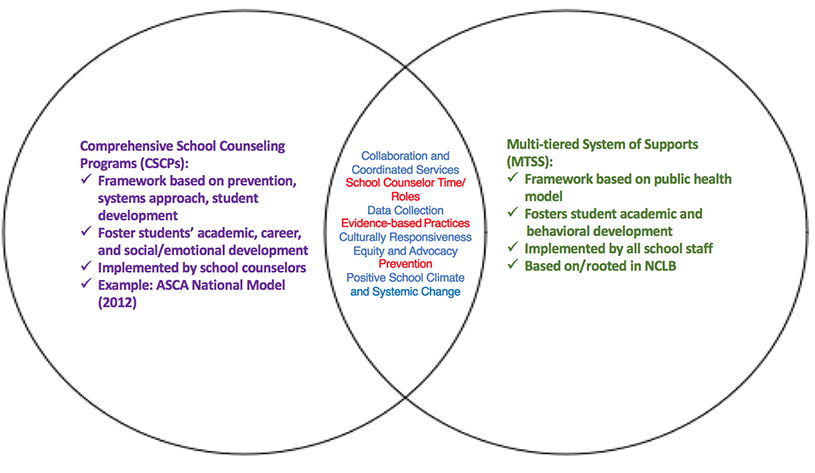
Figure 1. Overlap and similarities between a multi-tiered system of supports and comprehensive school counseling programs
Overlap exists between these two frameworks, especially prominent when school counselors take on roles as supporters, interveners and facilitators in offering indirect as well as direct services (Ockerman et al., 2012; Ziomek-Daigle & Heckman, under review). In the role as supporters, school counselors share data related to interventions, discuss needs assessment data and increase awareness regarding equity gaps that may be present at the school (Ockerman et al., 2012). School counselors are interveners and facilitators as active members of RTI teams who provide behavioral interventions and services and, through progress monitoring, collect and review data and make recommendations (Ockerman et al., 2012; Ziomek-Daigle & Heckman, under review).
The ASCA National Model (2012) provides the necessary components for comprehensive school counseling programs grounded in student data and based on student academic, career, social and emotional development. The model includes four components: foundation, delivery, management, and accountability. Next, we discuss the integration of a multi-tiered system of supports into the four components of the model.
Foundation. Establishing the program’s foundation is the initial step in building a comprehensive school counseling program (ASCA, 2012). As programs are developed, school counselors should examine their own personal beliefs about their role with students. Program mission and vision statements should also be created, using measurable language. Additionally, student competencies in the academic, career, social and emotional domains are reflected in comprehensive programs along with school counselors’ ethical decision making and professional practice. School counselors’ program visions and goals should reflect priorities also highlighted in the school’s multi-tiered framework (Goodman-Scott et al., 2016). For example, Goodman-Scott et al. (2016) suggested school counselors’ vision and mission statements should represent school and district current trends and goals, such as PBIS delivery and implementation.
Delivery. The delivery component of the framework identifies the types of services that school counselors directly offer students such as classroom guidance programming and core curriculum (Ziomek-Daigle, 2015), individual student planning, small group and individual counseling, consultation, and referral (ASCA, 2012). Many approaches used within a multi-tiered system of supports also can be utilized within the delivery system of school counseling programs, such as prevention activities (e.g., teaching schoolwide expectations in classroom guidance programming) and interventions (e.g., check in/check out; Goodman-Scott et al., 2016; Goodman-Scott et al., under review; Ziomek-Daigle & Heckman, under review). Further, school counselors can integrate more intensive interventions for students with multiple, complex needs, including wraparound services (Shepard et al., 2013).
Accountability and Management. Accountability and management are at the root of any comprehensive school counseling program, as data is collected, analyzed and reported, identifying how students are different as a result of the program (ASCA, 2012). Further, school counselors utilize a variety of tools and assessments to gather evidence of program and school counselor effectiveness (ASCA, 2012). Data generated from a multi-tiered system of supports, such as student achievement and behavior, are continuously collected and reviewed to determine student needs and intervention effectiveness. School counselors can use this data from a multi-tiered system of supports to determine student and school needs and create curriculum, small group and closing-the-gap action plans accordingly (Goodman-Scott et al., 2016). After implementing interventions, school counselors can measure the impact of their interventions on the desired student outcomes including attendance, office referrals and grades, thus determining their effectiveness and impact through the use of result reports. MTSS overlaps with comprehensive school counseling programs; thus, the two can be integrated to strengthen both. The following section discusses the commonalities between MTSS and comprehensive school counseling programs.
Commonalities Between a Multi-Tiered System of Supports and Comprehensive School Counseling Programs
Several similarities exist between MTSS and comprehensive school counseling programs (see Figure 1). Similarities include utilizing collaboration and coordinated services; efficiently using the school counselors’ time through tiered supports; collecting and reviewing student and school data; using evidence-based practices; developing culturally responsive interventions that close achievement gaps; promoting prevention and intervention for students through a tiered continuum; and facilitating schoolwide systemic change and a positive school climate. First, both frameworks have established leadership teams that guide program design and implementation, represent the stakeholders within the building and offer support in program development and accessing resources. Next, tiered approaches provide school counselors time to address whole-school needs while also providing services to and advocating on behalf of students in crisis or with significant needs. Thus, using tiered approaches may assist school counselors directly and indirectly serve students. Ongoing progress monitoring through continuous data collection keeps MTSS and comprehensive school counseling programs focused and stakeholders informed, which may lead to greater stakeholder awareness and support for school counseling initiatives. Similarly, the use of evidence-based practices, recommended by MTSS and comprehensive school counseling, offers students quality, empirically-backed academic and behavioral services across all three tiers. A successful MTSS also allows school counselors to address achievement gaps and increase equitable practices by strengthening social supports for students in the classroom, school building and community who present with challenging behavior. A case study illustrating the role of school counselors as interveners, facilitators and supporters of integrating both MTSS and comprehensive school counseling programs follows.
Case Study
Example Middle School (EMS) is located in a suburban setting with approximately 700 students across sixth, seventh and eighth grades; 25% of students come from households considered economically disadvantaged. The majority of students identify as Caucasian (45%) or African American (30%). RTI has been implemented in EMS for approximately seven years, while PBIS has been implemented for four years. The school administration consists of one principal and three assistant principals (APs), and the school counseling department includes three school counselors with a school counselor to student ratio of 1:233. Each grade level is assigned one AP and one school counselor.
The grade levels each meet bi-weekly to discuss academic planning and share information regarding students (both concerns and accomplishments). The EMS student support team is an interdisciplinary team that meets to create and discuss academic and behavioral interventions and related progress for students demonstrating consistent academic and behavioral challenges that were not successfully addressed by the grade-level Tier 1 meetings. The student support team is facilitated by a teacher and attended by the grade-level AP and school counselor as well as the school psychologists. Parents of the reviewed student also are invited. In addition, EMS has a PBIS team comprised of representatives from all grade levels and specialties, including one school counselor; parents and students are represented on the PBIS team. The school counselor and AP together oversee the PBIS data collection and analysis. Lastly, the school counseling team meets weekly and over the last seven years has developed a comprehensive school counseling program based on the ASCA National Model. All school counselors at EMS have essential roles in the program implementation.
Tier One
The school counselors act as supporters, interveners and facilitators in Tier 1. As supporters, EMS school counselors attend all regular grade-level meetings and provide background information on students as appropriate. As interveners, school counselors collaborate and consult with teachers on their instruction and curriculum as well as teachers’ monitoring and screening of all students to identify those with elevated academic and behavioral needs. For example, at the most recent seventh-grade-level meeting, the school counselor reviewed grade-level office discipline referrals, attendance records and teachers’ anecdotal feedback. The grade-level team expressed concern about a student, Elena, who had several absences and office discipline referrals in the last month. The seventh-grade school counselor provided non-confidential background information on Elena to the grade-level team members.
The school counselor on the PBIS team holds a number of additional roles as supporter. First, the counselor provides information on school climate generated by the comprehensive school counseling program, including both anecdotal observations and data-driven findings. The school counselor also assists the PBIS team in developing a common school language and protocols (i.e., school expectations: Be Responsible, Be Respectful, Be Safe), schoolwide and individual acknowledgements for students and staff, and discipline procedures (i.e., the office discipline referral process). In the role as facilitator, the school counselors assist the PBIS team as they plan schoolwide pep rallies to further teach the school expectations, acknowledge students, classes and staff with certain achievements (e.g., the homeroom with the lowest office discipline referrals per quarter; staff who distributed the highest number of school tickets). As an intervener, all school counselors teach the PBIS-generated school expectations during their regular monthly classroom lessons and engage in student acknowledgements (e.g., distributing EMS tickets for positive behaviors). Intervener roles also include school counselors engaging in student advising and schoolwide programming, such as teaching students and staff the bullying prevention strategies from Expect Respect, an evidence-based bully prevention program (Stiller, Nese, Tomlanovich, Horner, & Ross, 2013). Additionally, in roles as interveners, school counselors deliver a social skills curriculum to students during weekly homeroom advisory periods or through regular guidance lessons (Ziomek-Daigle, 2015). Further, school counselors collaborate with school psychologists to engage in universal mental health screening for student depression and anxiety and provide evidence-based classroom lessons to all students to promote positive mental health, as interveners (Donohue et al., 2016).
The school counseling program holds advisory team meetings quarterly. Members include all school counselors, a student and parent representative, a general education teacher from all grade levels, the PBIS coach, the AP who reviews PBIS data and one special education teacher. At the end of each year, the advisory team reviews a number of data points, including the comprehensive school counseling program goals from the previous year and related outcomes and results reports, schoolwide PBIS behavioral data, RTI instructional and behavioral data, and the school data profile. Next, the advisory team makes goals for the subsequent year based on data-determined needs. Then, based on the advisory team’s recommendations, the school counselors create closing-the-gap action plans and goals for the next year (i.e., SMART goals,). School counselors present the results of their advisory team meetings, action plans, SMART goals, and results reports to the administrative team (principal and APs), as well as the PBIS team, RTI team and whole school faculty.
Tiers Two and Three
When providing Tier 2 and 3 supports and services, the EMS school counselors engage in supporter, interventionist and facilitator roles. To follow up from the grade-level meetings, the EMS school counselors act as interveners by consulting and collaborating with teachers individually regarding evidence-based academic and behavioral interventions for struggling students as well as teachers’ classroom management. As part of the PBIS team, the school counselor acts as a supporter by discussing schoolwide behavioral trends, students with elevated office discipline referrals, and students who are otherwise considered at risk (e.g., absences, class failures, poor standardized and benchmark tests) and recommending interventions. One intervention may be referral to the student support team.
In a role as supporter, school counselors attend the student support team meetings and, along with this team, recommend increasingly individualized evidence-based student academic and behavioral interventions and monitor students’ progress at subsequent meetings. Tier 3 interventions are greater in duration and intensity than Tier 2 and have greater individualization. The student support team works together to identify students in need of Tier 2 or Tier 3 interventions, facilitates service implementation and decides to decrease and end interventions due to students maintaining positive progress. The student support team recommends interventions which may include individual or small group counseling and function-based behavioral mentoring interventions such as Check In, Check Out and Check & Connect (Baker & Ryan, 2014). As interveners, school counselors often provide counseling and mentoring or coordinate other staff and community members’ involvement in mentoring programs. In addition, the school counselor may be trained to use the Check & Connect program and continuously review attendance, behavioral and academic data (i.e., check) and provide interventions (i.e., connect) to a small caseload of students who are being served through Tier 2 and 3 services. As facilitators, school counselors also may develop and access a list of health care providers so that students and families participate in a seamless referral process. In this role, counselors also may coordinate quarterly interdisciplinary meetings for a few students whose needs are complex and who receive community-based agency assistance. Some examples of interdisciplinary collaborative team members include: school counselors, mental health counselors, psychologists, nurses, probation officers and case workers. Lastly, the EMS school counselors, acting as interveners and facilitators, analyze the results of the universal mental health screener for depression and anxiety.
In regards to student Elena, the seventh-grade school counselor and grade-level team agreed that the school counselor would meet with Elena individually to gather additional background information on her absences and office discipline referrals. When Elena did not improve over the subsequent two-week period, more intensive and continued interventions were discussed with the grade-level team, including a referral to the student support team. After review by the student support team, Elena began Check & Connect with the school counselor, and the school counselor maintained communication with Elena’s mother and stepfather, teachers and members of the student support team.
Conclusion
ASCA (2014) recommends that school counselors can implement MTSS in alignment with facilitating a comprehensive school counseling program. Further, several scholars have contended that school counselors can be leaders in MTSS, incorporating these duties into aspects of a comprehensive school counseling program (Cressey, Whitcomb, McGilvray-Rivet, Morrison, & Shander-Reynolds, 2014; Goodman-Scott et al., 2016). As described in this article, MTSS and comprehensive school counseling programs share many overlapping characteristics, and school counselors may act as leaders in both, vacillating between the roles of supporter, intervener and facilitator (Ockerman et al., 2012; Ziomek-Daigle & Heckman, under review). In implementing both frameworks, school counselors are able to focus on student achievement and behavior, as well as collaboration, data collection, evidence-based practices and social justice advocacy, to close achievement and equity gaps. Additionally, school counselors can utilize the existing MTSS in the schools to enhance, expand and challenge their own comprehensive programs and present new, relevant and critical research and practical implications to the field. Goodman-Scott et al. (2016) suggested that aligning both frameworks may be a strategy to advocate at local and national levels for the school counseling field and comprehensive school counseling program implementation. Presenting school counseling programs in this manner also can increase stakeholder involvement, access additional resources and increase job stability. Focusing on the overlap between MTSS and comprehensive school counseling programs leads to a data-driven, evidence-based focus on improving school climate, as well as student equity, access, and academic and behavioral success, meeting the needs of students across all three tiers.
Conflict of Interest and Funding Disclosure
The authors reported no conflict of interest
or funding contributions for the development
of this manuscript.
References
American School Counselor Association. (2012). The ASCA national model: A framework for school counseling programs (3rd ed.). Alexandria, VA: Author.
American School Counselor Association. (2014). The professional school counselor and multitiered system of supports. American School Counselor Association Position Statement. Retrieved from https://www.schoolcounselor.org/asca/media/asca/PositionStatements/PS_MultitieredSupportSystem.pdf
Baker, B., & Ryan, C. (2014). The PBIS team handbook: Setting expectations and building positive behavior. Minneapolis, MN: Free Spirit Publishing.
Bradshaw, C. P., Koth, C. W., Bevans, K. B., Ialongo, N., & Leaf, P. J. (2008). The impact of school-wide positive behavioral interventions and supports (PBIS) on the organizational health of elementary schools. School Psychology Quarterly, 23, 462–473. doi:10.1037/a0012883
Bradshaw, C. P., Mitchell, M. M., & Leaf, P. J. (2010). Examining the effects of schoolwide positive behavioral interventions and supports on study outcomes: Results from a randomized controlled effectiveness trial in elementary schools. Journal of Positive Behavior Interventions, 12, 133–148. doi:10.1177/1098300709334798
Bradshaw, C. P., Waasdorp, T. E., & Leaf, P. J. (2012). Effects of school-wide positive behavioral interventions and supports on child behavior problems. Pediatrics, 130, 1136–1145. doi:10.1542/peds.2012-0243
Campbell, C. A., & Dahir, C. A. (1997). Sharing the vision: The national standards for school counseling programs.
Alexandria, VA: American School Counselor Association.
Cook, C. R., Lyon, A. R., Kubergovic, D., Wright, D. B., & Zhang, Y. (2015). A supportive beliefs intervention to facilitate the implementation of evidence-based practices within a multi-tiered system of supports. School Mental Health, 7, 49–60. doi:10.1007/s12310-014-9139-3
Cressey, J. M., Whitcomb, S. A., McGilvray-Rivet, S. J., Morrison, R. J., & Shander-Reynolds, K. J. (2014). Handling PBIS with care: Scaling up to school-wide implementation. Professional School Counseling, 18, 90–99. doi:10.5330/prsc.18.1.g1307kql2457q668
Crockett, J. B., & Gillespie, D. N. (2007, Fall). Getting ready for RTI: A principal’s guide to response to intervention. ERS Spectrum, 25(4), 1–9.
Curtis, R., Van Horne, J. W., Robertson, P., & Karvonen, M. (2010). Outcomes of a school-wide positive behavioral support program. Professional School Counseling, 13, 159–164. doi:10.5330/PSC.n.2010-13.159
Donohue, M. D. (2014). Implementing school wide positive behavioral supports (SWPBIS): School counselors’ perceptions of student outcomes, school climate, and professional effectiveness. Retrieved from http://digitalcommons.uconn.edu/cgi/viewcontent.cgi?article=6616&context=dissertations
Donohue, P., Goodman-Scott, E., & Betters-Bubon, J. (2016). Using universal screening for early identification of students at risk: A case example from the field. Professional School Counseling, 19, 133–143. doi:10.5330/1096-2409-19.1.133
Fuchs, D., & Fuchs, L. S. (2006). Introduction to response to intervention: What, why, and how valid is it? Reading Research Quarterly, 41, 93–99.
Gersten, R., & Dimino, J. A. (2006). RTI (Response to Intervention): Rethinking special education for students with reading difficulties (yet again). Reading Research Quarterly, 41, 99–108. doi:10.1598/RRQ.41.1.5
Goodman-Scott, E. (2014). Maximizing school counselors’ efforts by implementing school-wide positive behavioral interventions and supports: A case study from the field. Professional School Counseling, 17, 111–119. doi:10.5330/prsc.17.1.518021r2x6821660
Goodman-Scott, E., Betters-Bubon, J., & Donohue, P. (2016). Aligning comprehensive school counseling programs and positive behavioral interventions and supports to maximize school counselors’ efforts. Professional School Counseling, 19, 57–67. doi:10.5330/1096-2409-19.1.57
Goodman-Scott, E., Doyle, B., & Brott, P. (2014). An action research project to determine the utility of bully prevention in positive behavior support for elementary school bullying prevention. Professional School Counseling, 17, 120–129. doi:10.5330/prsc.17.1.53346473u5052044
Goodman-Scott, E., Hays, D. G., & Cholewa, B. (under review). “It takes a village:” A case study of positive behavioral interventions and supports implementation in an exemplary middle school.
Gruman, D. H., & Hoelzen, B. (2011). Determining responsiveness to school counseling interventions using behavioral observations. Professional School Counseling, 14(3), 183–190. doi:10.5330/PSC.n.2011-14.183
Gysbers, N. C., & Henderson, P. (2012). Developing and managing your school guidance and counseling program (5th ed.). Alexandria, VA: American Counseling Association.
Harlacher, J. E., Sakelaris, T. L., & Kattelman, N. M. (2014). Practitioner’s guide to curriculum-based evaluation in reading. New York, NY: Springer.
Hatch, T., Poynton, T., & Pérusse, R. (2015). Comparison findings of school counselor beliefs about ASCA National Model school counseling program components using the SCPCS. SAGE Open, 1–10. doi:10.1177/2158244015579071
Horner, R. H., Sugai, G. M., Smolkowski, K., Eber, L., Nakasato, J., Todd, A. W., & Esperanza, J. (2009). A
randomized, wait-list controlled effectiveness trial assessing school-wide positive behavior support in elementary schools. Journal of Positive Behavior Interventions, 11(3), 133–144. doi:10.1177/1098300709332067
Johnston, P. (2010). An instructional frame for RTI. The Reading Teacher, 63, 602–604. doi:10.1598/RT.63.7.8
Johnston, J. M., Foxx, R. M., Jacobson, J. W., Green, G., & Mulick, J. A. (2006). Positive behavior support and applied behavior analysis. The Behavior Analyst, 29, 51–74.
Lane, K. L., Oakes, W., & Menzies, H. (2010). Systematic screenings to prevent the development of learning and behavior problems: Considerations for practitioners, researchers, and policy makers. Journal of Disability Policy Studies, 21(3), 160–172. doi:10.1177/1044207310379123
Luck, L., & Webb, L. (2009). School counselor action research: A case example. Professional School Counseling, 12, 408–412.
Martens, K., & Andreen, K. (2013). School counselors’ involvement with a school-wide positive behavior support intervention: Addressing student behavior issues in a proactive and positive manner. Professional School Counseling, 16, 313–322.
Martin, P. J. (2015). Transformational thinking in today’s schools. In B. T. Erford (Ed.), Transforming the school counseling profession (4th ed., pp. 45–65). Boston, MA: Pearson.
May, S., Ard, W., Todd, A. W., Horner, R. H., Glasgow, A., Sugai, G., & Sprague, J. R. (2006). School wide information system. Eugene: Educational and Community Supports, University of Oregon.
McIntosh, K., Filter, K. J., Bennet, J. L., Ryan, C., & Sugai, G. (2010). Principles of sustainable prevention: Designing scale-up of schoolwide positive behavior support to promote durable systems. Psychology in the Schools, 47, 5–21. doi:10.1002/pits.20448
No Child Left Behind Act of 2001, P.L. No. 107–110. 115, Stat. 1425 (2002).
Ockerman, M. S., Mason, E. C. M., & Hollenbeck, A. F. (2012). Integrating RTI with school counseling programs: Being a proactive professional school counselor. Journal of School Counseling, 10(15), 1–37.
Ryan, T., Kaffenberger, C. J., & Carroll, A. G. (2011). Response to intervention: An opportunity for school counselor leadership. Professional School Counseling, 14, 211–221. doi:10.5330/PSC.n.2011-14.211
Shepard, J. M., Shahidullah, J. D., & Carlson, J. S. (2013). Counseling students in levels 2 and 3: A PBIS/RTI Guide. Thousand Oaks, CA: Corwin Press.
Sherrod, M. D., Getch, Y. Q., & Ziomek-Daigle, J. (2009). The impact of positive behavior support to decrease discipline referrals with elementary students. Professional School Counseling, 12, 421–427.
doi:10.5330/PSC.n.2010-12.421
Shinn, M. R. (2010). Building a scientifically based data system for progress monitoring and universal screening across three tiers including RTI using Curriculum-Based Measurement. In M. R. Shinn & H. M. Walker (Eds.), Interventions for achievement and behavior problems in a three-tier model, including RTI (pp. 259–292).Bethesda, MD: National Association of School Psychologists.
Simonsen, B., Eber, L., Black, A. C., Sugai, G., Lewandowski, H., Sims, B., & Myers, D. (2012). Illinois statewide positive behavioral interventions and supports: Evolution and impact on student outcomes across years. Journal of Positive Behavior Interventions, 14, 5–16. doi:10.1177.1098300711412601
Simonsen, B., & Sugai, G. (2013). PBIS in alternative educational settings: Positive support for youth with high-risk behavior. Education and Treatment of Children, 36, 3–14.
Sink, C. A., Akos, P., Turnbull, R. J., & Mvududu, N. (2008). An investigation of comprehensive school counseling programs and academic achievement in Washington state middle schools. Professional School Counseling, 12, 43–53. doi:10.5330/PSC.n.2010-12.43
Sink, C. A., & Stroh, H. R. (2003). Raising achievement test scores of early elementary school students through comprehensive school counseling programs. Professional School Counseling, 6, 350–364.
Stiller, B. C., Nese, R. N. T., Tomlanovich, A. K., Horner, R. H., & Ross, S. W. (2013). Bullying and harassment prevention in positive behavior support: Expect respect. Eugene: Educational and Community Supports, University of Oregon.
Stormont, M., Reinke, W. M., & Herman, K. C. (2010). Introduction to the special issue: Using prevention science to address mental health issues in schools. Psychology in the Schools, 47, 1–4.
Sugai, G. (2016). Positive behavioral interventions and supports [Powerpoint slides]. Retrieved from http://www.pbis.org/
Common/Cms/files/pbisresources/3%20Feb%202016%20SAfrica%20PBIS%20HAND%20gsugai.pdf
Sugai, G., & Horner, R. H. (2009). Responsiveness-to-intervention and school-wide positive behavior supports: Integration of multi-tiered system approaches. Exceptionality, 17, 223–237. doi:10.1080/09362830903235375
Sugai, G., & Simonsen, B. (2012). Positive behavioral interventions and supports: History, defining features, and misconceptions. Retrieved from http://www.pbis.org/common/cms/files/pbisresources/PBIS_revisited_
June19r_2012.pdf
Todd, A. W., Lewis-Palmer, T., Horner, R. H., Sugai, G., Sampson, N. K., & Phillips, D. (2012). School wide evaluation (SET) implementation manual. Retrieved from http://www.pbis.org/common/cms/files/pbisresources/SET_Manual_02282012.pdf
Utley, C. A., & Obiakor, F. E. (2015). Special issue: Research perspectives on multi-tiered system of support. Learning Disabilities: A Contemporary Journal, 12, 1–2.
Waasdorp, T. E., Bradshaw, C. P., & Leaf, P. J. (2012). The impact of schoolwide positive behavioral interven-tions and supports on bullying and peer rejection. Archives of Pediatrics and Adolescent Medicine, 166, 149–156. doi:10.1001/archpediatrics.2011.755
Wilkerson, K., Pérusse, R., & Hughes, A. (2013). Comprehensive school counseling programs and student achievement outcomes: A comparative analysis of RAMP Versus Non-RAMP Schools. Professional School Counseling, 16, 172–184. doi:10.5330/PSC.n.2013-16.172.
Ziomek-Daigle, J. (Ed.). (2015). School counseling classroom guidance: Prevention, accountability, and outcomes. Thousand Oaks, CA: SAGE Publications.
Ziomek-Daigle, J., & Cavin, J. (2015). Shaping youth and families through positive behavior support: A call for counselors. The Family Journal, 23, 386–373. doi:10.1177/1066480715601106
Ziomek-Daigle, J., & Heckman, B. (under review). Unpacking the behavioral Response to Intervention model for school counseling: Evidence-based practices across the tiers.
Jolie Ziomek-Daigle is an Associate Professor at the University of Georgia. Emily Goodman-Scott, NCC, is an Assistant Professor at Old Dominion University. Jason Cavin is the Director of Behavior Support and Consultation at the School of Public Health at Georgia State University and a doctoral candidate at the University of Georgia. Peg Donohue is an Assistant Professor at Central Connecticut State University. Correspondence can be addressed to Jolie Ziomek-Daigle, 402 Aderhold Hall, Athens, GA 30602, jdaigle@uga.edu.
Sep 16, 2016 | Article, Volume 6 - Issue 3
Eva Patrikakou, Melissa S. Ockerman, Amy Feiker Hollenbeck
As a result of the Response to Intervention (RTI) mandate in schools across many states, school counselors are well-positioned to take a leadership role. The present research study examines how school counselors across the nation perceived their training and knowledge of RTI, as well as their confidence in its implementation. Results indicate that while the majority of school counselors reported positive beliefs about RTI, they had limited confidence in their preparedness to perform certain RTI-related responsibilities, including collecting and analyzing data to determine intervention effectiveness and collaboration through teamwork. These perceived areas of deficiency point to a significant discrepancy with the American School Counselor Association National Model’s components and themes. Through building skills and capacity for leadership, school counselors can spearhead schoolwide teams to create and evaluate the effectiveness of culturally relevant and evidence-based interventions. School counselors and school counselor educators must use a multi-tiered system of supports as an opportunity to advance the field.
Keywords: collaboration, multi-tiered system of supports, Response to Intervention, school counselors, school counselor educators
The climate of accountability in today’s public schools requires all professionals to utilize data to inform decisions in the context of their practice, and the school counselor is no exception. Broader, statewide mandates such as Response to Intervention (RTI) have put additional pressure on school professionals, raising questions regarding practitioners’ preparedness to effectively utilize data to inform practice and collaborate with peers to support the needs of struggling students. The aim of this study is to examine school counselors’ beliefs, perceived level of preparedness and practices regarding RTI nationwide, specifically in states where this model has been implemented.
The reauthorization of the Individuals with Disabilities Education Act (IDEA) in 2004 and the subsequent 2008 regulations incentivized RTI, a multi-tiered system of academic and behavioral supports for struggling students (Zirkel & Thomas, 2010). In each tier of instruction, student needs and interventions are determined through ongoing data collection and analysis. To explicate, the general education environment comprises Tier 1 of RTI, with the integration of research-based practices, universal screening and differentiated small group instruction. If a child is not successful in this environment, he or she is targeted for Tier 2 intervention, small group instruction paired with ongoing progress monitoring. A continued lack of responsiveness moves the student to Tier 3, a more intensive level of intervention and progress monitoring, with possible referral for special education services (Fuchs, Mock, Morgan, & Young, 2003; National Joint Committee on Learning Disabilities, 2005; Vaughn & Fuchs, 2003). Thus, when determining whether a student has a specific learning disability (SLD) in an RTI framework, there should be a significant body of data in regards to a child’s response to intervention to inform the eligibility process (Hauerwas, Brown, & Scott, 2013; Zirkel & Thomas, 2010).
RTI has become increasingly commonplace in states across the nation since the 2004 IDEA reauthorization (Individuals with Disabilities Education Improvement Act of 2004). Review of the Web sites of 50 state departments of education indicated that 17 states require RTI in the process of identifying whether a student has an SLD, and 45 states have guidance documents to support the implementation of RTI (Hauerwas et al., 2013). In addition, Berkeley, Bender, Peaster, and Saunders (2009) found that 14 of 15 states required RTI to address both academic and behavioral domains. In a 2010 review of state laws and special education guidelines, Zirkel and Thomas noted that eight states required universal screening for academic and behavioral needs, while 23 recommended academic and behavioral screening. Thus, in some states the academic supports of RTI are specifically linked with the behavioral supports and interventions of Positive Behavioral Intervention Supports (PBIS).
PBIS is a multi-tiered, data-based system of support for students with emotional and behavioral needs that incorporates ongoing assessments and data-based decision making, professional development in research-based practices, and provision of tiered intervention for students who need additional assistance (Sugai & Horner, 2006). Both RTI and PBIS share the premise that educational outcomes can be improved for all by integrating research-based practices in the general education environment (Fairbanks, Sugai, Guardino, & Lathrop, 2007; Hollenbeck, 2007; Sadler & Sugai, 2009; Sugai & Horner, 2009), and thus they are commonly combined in schoolwide frameworks. A multi-tiered system of supports (MTSS) is a comprehensive academic and behavioral model that integrates both RTI and PBIS (Averill & Rinaldi, 2011).
As with any significant educational reform, RTI/MTSS has a high likelihood to change professional practices. For example, social workers have been urged to recognize the importance of evidence-based decisions and data collection when working with the social-emotional concerns of students (Harrison & Harrison, 2014) and to increase their collaborative practices (Avant, 2014). General educators, special educators and reading specialists in Pennsylvania indicated an increase in collaborative practices after RTI implementation (Bean & Lillenstein, 2012). Sullivan and Long (2010) reported that a survey of school psychologists found those who were actively involved with RTI spent a higher percentage of time (25%) implementing academic interventions, in comparison to those practitioners who were not actively involved and reported less than 5% of their time spent on academic interventions. While there is an emerging body of research into the effects of RTI on the professional practice of school counselors within a handful of states (Betters-Bubon & Ratas, 2015; Luck & Webb, 2009; Miller, 2008; Ockerman, Patrikakou, & Hollenbeck, 2015; Ryan, Kaffenberger & Caroll, 2011), there has yet to be a study of school counselors’ beliefs and perceptions of readiness to implement RTI across a national stage, or the impact of RTI upon school counselors’ professional practice.
In this article, we first review relevant literature focused on the changing role of the school counselor in relation to RTI/MTSS. Second, we present a nationwide study regarding school counselor perceptions, preparedness and professional practice in states mandating RTI or MTSS. Finally, we discuss implications for school counselor training and preparation and provide recommendations for future research and practice.
The Changing Role of the School Counselor in Multi-Tiered Frameworks
The American School Counselor Association (ASCA) recently revised its position statement on RTI, adding MTSS (2014). ASCA specifically outlined how all components of a comprehensive developmental school counseling program (foundation, delivery, management and accountability) align with a multi-tiered continuum and underscored school counselors’ pivotal role with data. To that end, school counselors must aid in data analysis to help identify students in need, evaluate counseling interventions to determine efficacy, and assist school staff in selecting evidence-based academic and behavioral strategies for students (ASCA, 2014; Ockerman, Mason, & Hollenbeck, 2012).
There were some notable efforts to promote school counselor involvement in this educational mandate prior to the publication of the ASCA MTSS position statement, including research conducted by the RTI Action Network (2009), which highlighted how innovative school counselors in three Western states (i.e., Colorado, Oklahoma and Wyoming) integrated their counseling services within an RTI framework. Zambrano, Castro-Villarreal, and Sullivan (2012) noted synergies between school counselors and school psychologists and called for increased collaboration to optimize services for students. Moreover, Ockerman and colleagues (2012) suggested the pairing of comprehensive developmental school counseling programs with RTI has the potential to effectively serve all students, particularly those historically underserved, and to advance the position of the school counselor as a transformational leader. Moreover, the authors called for more robust research regarding the role of the school counselor and evidence-based practices using MTSS.
As such, Ockerman et al. (2015) investigated how school counselors in a Midwestern state perceived their training and knowledge of RTI and thus their confidence in implementation. Results indicated that the majority of school counselors had little confidence in their ability to employ essential roles, including the following: increasing parental involvement, engaging in collaborative practices, and using data to make decisions about student interventions. Overall, having knowledgeable, positive building leaders such as school principal, assistant principals, and deans, in conjunction with a firm understanding of specific school counselor roles and responsibilities, predicted having favorable views of RTI as a means to improve students’ academic and behavioral outcomes. Concomitant with these findings, Betters-Bubon and Ratas (2015) reported that school counselors in a neighboring Midwestern state experienced both positive outcomes (e.g., positive school climate, enhanced perception of the school counselor and increased teacher involvement) and barriers to success (e.g., increased record keeping, lack of training and buy-in, and lack of time to use data effectively) as a result of MTSS implementation. The authors also found that strong administrative support was associated with affirmative perceptions of MTSS, corroborating the findings of Ockerman et al. (2015). Finally, Bookard (2015) surveyed 35 elementary school counselors in North Carolina, all of whom were designated as RTI chairperson within their schools. School counselors reported a decreased amount of time to complete core school counseling responsibilities due to an increased demand to organize, communicate and coordinate logistics on behalf of the RTI team. However, these counselors reported increases in their self-efficacy to perform multiple counseling duties and perceived RTI as having a positive impact on student achievement.
While these efforts at understanding the impact of RTI/MTSS on the roles and responsibilities of school counselors should be lauded, they remain focused on the state level and therefore may be generalizable only to a particular state or region. Thus, there is an urgent need for research examining school counselors’ preparedness and experiences with RTI/MTSS nationwide, especially in states where this model has been implemented. The present study investigates school counselors’ beliefs, perceived level of preparedness, and practice regarding RTI. Specifically, the following research questions were investigated: (1) What are school counselors’ beliefs regarding RTI? (2) How prepared do school counselors feel regarding their training on the various implementation aspects of RTI?
(3) What roles and responsibilities of school counselors changed due to the RTI implementation?
(4) Is attitude toward RTI predicted by factors including demographics, as well as perceived confidence with various aspects of RTI?
Method
Participants
Members of ASCA participated in this study by completing a survey. Participants were randomly selected from each of the 15 states that were reported as implementing RTI fully or partly at the time of this study’s construction (Zirkel, 2014). Specifically, participants were targeted in the following states: Colorado, Connecticut, Delaware, Florida, Georgia, Idaho, Illinois, Iowa, Louisiana, Maine, New Mexico, New York, Rhode Island, West Virginia and Wisconsin.
In looking at the characteristics of survey respondents, 99% indicated they were currently practicing, with 96% employed full-time. Eighty-two percent were between 31 and 60 years old, and 85% were female. Ninety-two percent reported working in public school settings. Twenty-seven percent indicated working in an elementary setting, 14% in an elementary-middle school, 19% in a middle school, and 35% in a high school. A total of 81% indicated six years or more of practice as a school counselor, with 73% indicating six years or more since their last degree conferral (see Table 1 for demographic information).
Table 1
Participant Demographics
|
Percent
|
| Currently Practicing |
99
|
| Full-time employment |
96
|
| Age |
|
| 25 or under |
1
|
| 26–30 |
8
|
| 31–40 |
33
|
| 41–60 |
49
|
| Over 60 |
9
|
| Sex |
|
| Female |
85
|
| Male |
15
|
| School Setting |
|
| Public |
92 |
| Charter |
3 |
| Private |
5 |
| School Population |
|
| Elementary |
27 |
| Elementary/Middle |
14 |
| Middle School |
19 |
| Middle/High School |
4 |
| High School |
35 |
| K–12 |
1 |
| Years in Practice |
|
| 1–5 years |
19
|
| 6–10 years |
36
|
| 11–15 years |
19
|
| 16+ years |
26
|
| Years Since Final Degree |
|
| 1–5 years |
27
|
| 6–10 years |
34
|
| 11–15 years |
17
|
| 16+ years |
22
|
Measures
The survey was originally developed for a statewide investigation of school-based professionals in response to RTI (Hollenbeck & Patrikakou, 2014), which was then adapted specifically for school counselors and administered in the same Midwestern state (Ockerman et al., 2015). It is important to note that survey items align with the ASCA National Model (2003, 2005, 2012). Specifically, questions paralleled the four ASCA model quadrants (foundation, delivery, management and accountability) and their four surrounding themes (advocacy, collaboration, leadership and systemic change). For example, survey questions, such as perceived preparedness for counseling interventions at each tier, represented the delivery component, and items about data collection and data management systems were representative of the accountability component. Themes also were assessed through survey questions, including items addressing leadership responsibilities and effective teamwork within the RTI framework (see Table 2 for scales and specific ASCA quadrants and themes). The purpose of the survey was to illuminate school counselors’ participation in RTI, as well as their underlying beliefs and attitudes, with the goal of providing insight into changing professional practices and future preparation needs.
The survey was comprised of five parts. The first section addressed demographics (e.g., age, employment status, years in the field). The second section involved questions regarding RTI training and implementation (e.g., How many professional development sessions have you received in relation to RTI? What year did your school implement an RTI framework?). The third section contained 14 Likert-type items asking participants about their perceived level of preparation toward specific aspects of RTI (e.g., underlying rationale, counseling interventions for Tier 1, schoolwide data management systems for documentation and tier decision making). The fourth part included 14 Likert-type questions measuring participants’ beliefs and practices (e.g., RTI is the best option to support struggling learners; RTI is a vehicle for promoting culturally responsive practices). Lastly, the fifth section addressed changes to school counselors’ responsibilities due to RTI via seven yes-no questions, such as I am now involved in data collection and/or data management in support of RTI decisions. In addition, an open-ended question encouraged participants to share any additional thoughts on RTI and its implementation.
Procedure
The authors obtained a list of members from ASCA who had noted that they wished to receive ASCA-approved, research-related mailings. Participants were then randomly selected from each of the 15 states that were reported as implementing RTI fully or partly (Zirkel, 2014). Surveys were mailed to those randomly selected participants along with a self-addressed, prepaid return envelope. No incentives were provided for returned surveys. From 2,477 surveys mailed, 528 were returned, for a 21.3% return rate, higher than other online surveys (Cochrane & Laux, 2008; Sullivan, Long, & Kucera, 2011).
Scales
For the purpose of this study’s analyses, eight scales were used. These scales were constructed and tested in two previous research studies, and tests of internal consistency have yielded consistently robust results with high reliability coefficients (Hollenbeck & Patrikakou, 2014; Ockerman et al., 2015). The scales’ original construction was based on an extensive literature review of RTI and its implementation to incorporate all pertinent aspects of MTSS. The survey underwent a piloting phase prior to being utilized in prior research studies to address construct and content validity. During the pilot phase, in addition to experts in the field, items also were reviewed by 80 school-based professionals who provided specific feedback (Hollenbeck & Patrikakou, 2014).
As a measure of internal consistency, Cronbach’s Alpha (α) was computed for each of the eight scales (scale items and reliability coefficients are reported in Table 2). For scales with more than two items, Cronbach’s α was calculated with and without each of the scale’s items to determine whether dropping an item would increase the scale’s internal consistency. There was no occasion in which the deletion of an item increased the α coefficient; therefore, no changes were made to the scales. Alpha coefficients ranged from .75 to .94. The use of a similar survey on a different population also obtained strong coefficients (Ockerman et al., 2015), indicating the robustness of the instrument across populations.
Table 2
Scale Items and Cronbach’s Alpha Coefficients
| Variables |
Items |
Cronbach’s α
|
| RTI Background Information (2)* |
– Historical overview- Underlying rationale |
.80 |
| Responsibilities and benefits (2) |
– Anticipated benefits- Roles and responsibilities within the tiered model |
.75 |
| Tier service delivery model (2)(ASCA Model – Delivery Component) |
– Tier service delivery model (general)- Tier service delivery model (specific to one’s school) |
.87 |
| Counseling interventions (3)(ASCA Model – Delivery Component) |
– for Tier 1- for Tier 2- for Tier 3 |
.94 |
| Data collection, management, and implementation (3)(ASCA Model – Accountability Component) |
– Collecting and analyzing outcome data to determine effectiveness of RTI interventions- Schoolwide data management systems for documentation and decision making about students who need supportive services within RTI- Assuming leadership in RTI implementation |
.89 |
Collaborative practices (2)
(ASCA Model – Collaboration Component) |
– Effective teamwork in RTI implementation- Informing and involving parents within an RTI framework |
.86 |
|
|
|
School building leadership and RTI competence (4)
(ASCA Model – Leadership Theme) |
– Principal describes RTI in a positive manner- Principal seems highly knowledgeable about RTI- Other building-level leaders highlyknowledgeable about RTI- RTI concerns and challenges are addressed in a positive manner within my school |
.86 |
| RTI viewed as beneficial (7) |
– RTI is the best option to support struggling learners and students with social-emotional concerns- RTI is the best option to support students with social-emotional concerns- RTI can improve the outcomes for all students- RTI can improve the behavior outcomes for all students
– RTI can inform the process of identifying students with learning disabilities (LD)
– RTI data are sufficient in determining whether or not a student has an LD
– RTI is a vehicle of promoting culturally responsive practices within my school |
.84
|
|
|
|
|
* Number of items
Data Analysis
Descriptive statistics were generated to address the first three research questions, while a simultaneous liner least squares regression model was tested to address the fourth question. Variance Inflation Factors (VIF) were calculated to test for multicollinearity in relation to the regression model. All VIFs were under 4, well below the 10 threshold that is used as a rule of thumb to raise concerns regarding multicollinearity (O’Brien, 2007; Stevens, 1992). Additionally, White’s (1980) heteroscedasticity test was performed to determine whether the error term in the regression model had constant variance, to avoid using biased standard errors that would lead to invalid inference. Since White’s test indicated the existence of heteroscedasticity (χ2 = 164.13; p < .01), the regression model was estimated with White’s correction for the standard errors.
Results
Descriptive Statistics
Research question 1: What are school counselors’ beliefs regarding RTI? Sixty-three percent of the respondents agreed and 13% strongly agreed with the statement that RTI can improve the academic outcomes of all students. Fewer participants indicated that RTI can improve the behavioral outcomes for all students (53% agreed and 9% strongly agreed). Seventy-five percent of participants agreed or strongly agreed that RTI is the best option to support struggling learners, while only 49% agreed or strongly agreed that RTI is the best option to support students with social and emotional concerns. Only half of the respondents (54%) agreed or strongly agreed that RTI is a vehicle of promoting culturally responsive practices. The majority of participants agreed or strongly agreed that their school principal described RTI in a positive manner, but only 57% reported that they viewed their principal as highly knowledgeable about RTI. The same percentage of respondents (57%) agreed or strongly agreed with the statement that building leaders in general seemed knowledgeable, whereas only 46% agreed with the statement that the majority of their colleagues were in favor of RTI. While the striking majority of participants viewed RTI as informing the process of identifying students with learning disabilities (88%), only 26% agreed with the statement that RTI data are sufficient in determining whether or not a student has a learning disability (see Table 3).
Table 3
RTI Beliefs and Practices
|
Strongly Disagree
|
Disagree
|
Agree
|
Strongly Agree
|
|
Percent
|
RTI is the best option to support
struggling learners |
3
|
22
|
66
|
9
|
RTI is the best option to support
students with social-emotional concerns |
6
|
45
|
44
|
5
|
RTI can improve academic outcomes
for all students |
2
|
22
|
63
|
13
|
RTI can improve behavioral outcomes
for all students |
3
|
35
|
53
|
9
|
| RTI can inform the process of identifying students with learning disabilities |
3
|
9
|
71
|
17
|
| RTI data are sufficient in determining whether or not a student has a learning disability |
16
|
58
|
23
|
3
|
| RTI is a vehicle for promoting culturally responsive practices |
5
|
41
|
49
|
5
|
My principal describes RTI in a
positive manner |
5
|
18
|
62
|
15
|
My principal seems highly
knowledgeable about RTI |
12
|
31
|
43
|
14
|
Our building-level leaders seem highly
knowledgeable about RTI |
10
|
33
|
45
|
12
|
| RTI concerns and challenges are addressed in a positive manner |
8
|
30
|
55
|
7
|
| The majority of colleagues are in favor of an RTI framework |
9
|
45
|
43
|
3
|
| RTI is viewed as a collaborative endeavor among school professionals in my school |
8
|
33
|
51
|
8
|
There are building-wide supports for
collaboration within my school (e.g., common planning time, teams, etc.) |
11
|
21
|
51
|
17
|
Research question 2: How prepared do school counselors feel regarding their training on the various implementation aspects of RTI? The top three aspects in which participants felt either adequately or expertly prepared are as follows: understanding the tiered service delivery model in general (69%), counseling interventions for Tier 1 (68%), and the anticipated benefits of RTI (66%). The bottom three aspects of RTI in which respondents felt adequately or expertly prepared include the following: the historical background of RTI (29%), schoolwide data management systems for documentation and decisions (36%), and collecting and analyzing data to determine effectiveness of RTI interventions (42%; see Table 4 for detailed percentages).
Table 4
Perceived Preparedness on Different Aspects of RTI
|
Not
Prepared
|
Somewhat Prepared
|
Adequately
Prepared
|
Expertly
Prepared
|
| Historical overview of RTI |
36
|
35
|
26
|
3
|
| Underlying rationale of RTI |
9
|
30
|
53
|
8
|
| Anticipated benefits of RTI |
8
|
27
|
56
|
10
|
| Tiered service delivery model – general |
6
|
25
|
54
|
15
|
| Tiered service delivery model – school specific |
11
|
30
|
44
|
15
|
| Role and responsibilities within the tiered model |
14
|
29
|
41
|
16
|
| Counseling interventions for Tier 1 |
12
|
20
|
44
|
24
|
| Counseling interventions for Tier 2 |
13
|
25
|
43
|
19
|
| Counseling interventions for Tier 3 |
13
|
26
|
41
|
21
|
Collecting and analyzing data to determine
effectiveness of RTI interventions |
23
|
35
|
34
|
8
|
Schoolwide data management systems for
documentation & decision making |
26
|
38
|
27
|
9
|
Informing and involving parents within an
RTI framework |
21
|
34
|
34
|
11
|
| Effective teamwork in RTI framework |
16
|
33
|
38
|
13
|
| Assuming leadership in RTI implementation |
27
|
30
|
30
|
13
|
Research question 3: What roles and responsibilities of school counselors changed due to the RTI implementation? The majority of respondents (55%) reported that their responsibilities have changed due to RTI. The top two new roles and responsibilities in which respondents identified as now being directly involved are as follows: collaborate with colleagues as part of an RTI team (52%) and involvement in data collection and data management in support of RTI (41%). The two responsibilities reported as least changed were directly providing Tier 1 academic services (14%) and assuming increased special education responsibilities (3%; Table 5 includes reported changes in various roles and responsibilities).
Table 5
Changes in Roles and Responsibilities
|
Percent
|
| Directly provide Tier 1 academic services |
14
|
| Directly provide Tier 1 behavioral services |
23
|
| Directly provide Tier 2 and/or Tier 3 academic interventions |
19
|
| Directly provide Tier 2 and/or Tier 3 behavioral interventions |
30
|
| Involved in data collection and/or data management in support of RTI |
41
|
| Collaborate with colleagues as part of an RTI team |
52
|
| Train others about RTI practices within my school or district |
21
|
| Increased special education responsibilities |
3
|
Regression Analysis
Research question 4: Is attitude toward RTI predicted by factors including demographics, as well as perceived confidence with various aspects of RTI? The full regression model accounted for 26% of the variance in perception of RTI as a beneficial change. In order to estimate the effect size for this analysis, Cohen’s f2was calculated . The effect size was found to be equal to Cohen’s (1988) convention for a large effect (f2 = .35). As Cohen (1988) noted, effect size indicates “the degree to which the phenomenon is present in the population” (p. 9). In addition to the effect size, the Precision Efficacy Analysis for Regression method was used to test the appropriateness of the sample size, since regression analysis is used for prediction (Brooks & Barcikowski, 1999). The minimum size required was calculated at 101; therefore, with 528 observations, the sample size is appropriate for this analysis.
Two variables were statistically significant at the p <. 001 level: perceived leadership competence (β = .26) and understanding the specific roles, responsibilities and benefits of RTI (β = .25). In other words, if school counselors (a) perceived building-level leaders as knowledgeable and positively predisposed to RTI, and (b) were confident about understanding their roles and responsibilities within an RTI model, as well as the anticipated benefits of the RTI framework, they were more likely to view RTI as a vehicle to drive improvements in academic and behavioral outcomes for all students. Table 6 includes standardized coefficients (β), unstandardized coefficients (B), and standard errors (SE) for all variables in the model.
Table 6
Estimated Coefficients of Full Model With White’s Correction for Standard Errors
| Variable Name |
B
|
SE B
|
β
|
| Age |
-.081
|
.033 |
-.138 |
| Sex |
-.064
|
.058 |
-.052 |
| Ethnicity |
-.133
|
.063 |
-.096 |
| Total years in practice |
-.020
|
.029 |
-.046 |
| Years since final degree conferral |
.219
|
.026 |
.045 |
| Number of RTI trainings received |
-.029
|
.026 |
-.061 |
| Year of RTI implementation |
-.044
|
.035 |
-.060 |
| Leadership competence |
.183 |
.035 |
.261** |
| RTI background information |
.012 |
.023 |
.028 |
| Data collection and management |
.080
|
.050 |
.145 |
| Tier service model delivery |
-.069
|
.050 |
-.107 |
| Counseling interventions |
-.006
|
.034 |
-.012 |
| Collaborative practices |
.042
|
.050 |
.075 |
| Responsibilities and benefits |
.165 |
.056 |
.253* |
| F 9.056**R2 .26 Adjusted R2 .23 |
|
|
|
| * p < .01; ** p < .001 |
|
|
|
These results provided a descriptive picture of school counselors’ beliefs and practices regarding RTI/MTSS, as well as their level of perceived preparedness to complete tasks inherent in a multi-tiered framework of student support. For example, school counselors indicated they were directly involved in schoolwide data management systems for documentation and decisions; however, the majority (64%) reported they were either not prepared or somewhat prepared (26% and 38%, respectively) to fulfill such a role. Likewise, although 52% of practitioners reported that they are now required to collaborate with colleagues as part of an RTI team, 49% of them indicated that they were either not prepared (16%) or somewhat prepared (33%) to engage in effective teamwork within an RTI model. In addition, results from the regression analysis indicated the importance of role clarity and educational leadership, with school counselors having a more positive view of RTI if they themselves had a clear understanding of their roles and responsibilities within the RTI framework, and also when they considered school leaders to be positive and knowledgeable about this initiative.
Discussion
The integration of RTI into districts and schools has influenced professional practices, including the work of the school counselor. Study participants indicated the ways in which their roles and responsibilities have changed under RTI, as well as their beliefs and perceptions of preparedness to work in a multi-tiered framework. Data analysis highlights a number of needs and incongruities for the field of school counseling. We address these contradictions and highlight their represented needs in relation to pre-service and in-service preparation.
Contradictions: Disability Identification
The results of this study suggest noteworthy contradictions that merit further exploration. First, many school counselors believe that RTI is the best option to support struggling learners and that RTI is a vehicle for identifying students with SLD. Yet, only a quarter of participants agreed that data garnered through RTI is sufficient for learning disability determination. We postulate this incongruence may be the result of an ongoing debate between school professionals regarding the process of identifying students with SLD (McKenzie, 2009; Reschly, 2003; Scruggs & Mastropieri, 2002). Historically, the process of SLD identification involved standardized testing to determine if there was a significant discrepancy between a student’s intelligence (as measured by standardized IQ tests) and levels of achievement (as measured by standardized achievement tests). However, many researchers and practitioners have objected to this method, citing the rapid increase in the identification of SLD since 1975 (Vaughn, Linan-Thompson, & Hickman, 2003) and the cultural and racial biases still inherent in IQ testing, leading to the over-representation of minorities in special education classrooms (Francis, Fletcher, & Morris, 2003). In addition, this method is perceived as “wait to fail” diagnostics, since a significant discrepancy between IQ and achievement is not typically established until grade three or higher, past the crucial early intervention window (Mellard, Deshler, & Barth, 2004). This contentious discourse is reflected in varying state regulations, with some allowing for discrepancy testing (e.g., Illinois and Idaho) while others legally forbid its use (e.g., Colorado and Indiana; Zirkel & Thomas, 2010). Thus, participants’ responses might be reflective of the lack of consensus in relation to best practice in identifying students with SLD.
Furthermore, the majority of surveyed school counselors believed RTI can improve academic outcomes, but were less inclined to believe that RTI can improve behavioral outcomes, and were even less convinced that RTI is the best option to support students with social-emotional concerns. When RTI was originally referenced in the 2004 IDEA reauthorization (Individuals with Disabilities Education Improvement Act of 2004), it was promoted with an academic focus as an alternative or supportive means of identifying students with learning disabilities. There was no reference in the law to identifying students with emotional or behavioral disabilities, nor was there reference to a system of supports for social-emotional and behavioral needs. However, the natural alignment of the tiered frameworks of RTI with PBIS encouraged some states to mandate a multi-tiered system of supports (Averill & Rinaldi, 2011). It is important to note that while some states, such as Wisconsin, require a comprehensive MTSS framework, this is not true of all states (Berkeley et al., 2009). Therefore, school counselors’ unease with the use of RTI in support of students with social-emotional concerns is again reflective of a greater debate in the field in regards to the role of RTI or MTSS in supporting all students and informing disability identification. These contradictions point to a need for increased awareness and dialogue about the processes of disability identification within the profession of school counseling. With clear understanding and background knowledge, school counselors will be better prepared to advocate for fair and unbiased methods of disability identification, thereby helping to reduce the disproportionate disability identification of students of color.
Contradictions: Changing Responsibilities and Levels of Preparation
Two significant gaps were apparent in relation to school counselors’ RTI-related roles and their levels of confidence in regards to these changing responsibilities: School counselors felt underprepared to foster collaboration, as well as to use data to inform their practices and make decisions about students.
Collaborative practices. Beginning with collaboration, as aligned with Ockerman and colleagues’ (2015) statewide findings, an overwhelming majority of participants reported they are now required to engage more in collaborative practices as a result of RTI implementation. However, many respondents did not believe other school professionals viewed RTI as favorable or as a collaborative endeavor, and over a third of respondents believed there were not building-wide supports for collaborative efforts (e.g., common planning time, teams). Additionally, about half of the respondents reported that they were not adequately prepared for teamwork. Yet, collaboration is at the core of the school counseling profession. Specifically, the ASCA National Model (2012) emphasized the importance of collaboration by including it as one of its four main themes, and several components of the ASCA National Model (e.g., advisory council, annual agreements) are only achievable through collaborative relationships. Moreover, the Transformed School Counseling Initiative (TSCI) cited teaming and collaboration as necessary components for a school counselor’s ability to create sustained systemic change (Martin, 2002; Sears, 1999). Thus, school counselors need to find pathways to build community and create a culture of shared responsibility, not only to benefit students but to be efficient and effective in their jobs.
This finding also signals counselor educators to better prepare pre-service school counselors to work in school climates viewed as divisive or individualistic and to cultivate the requisite skill sets to do so. Bolstering communication, facilitation and conflict-resolution skills, school counselors can be trained to help school teams unite around the broader goals of ensuring the academic, emotional and behavioral success of all students. Leveraging these unique skill sets, they can improve the efficacy of RTI teams and ensure they remain integral to the process.
Schoolwide data management systems for documentation and decision making. Although scholars within the school counseling profession have emphasized the importance of evidence-based research for over a decade (Dimmitt, Carey & Hatch, 2007; Whiston, 2001, 2002) and the need for school counselor accountability was discussed as early as the 1920s (Gysbers, 2004), school counselors still indicated they felt inadequately prepared to work with data to drive decisions or analyze data in meaningful ways. Similarly, an overwhelming majority of respondents in this survey indicated a lack of preparedness for schoolwide data management and reported not feeling adequately trained to analyze outcome data to determine effectiveness of RTI interventions. Yet, many reported that their roles have changed to involve data collection and data management in support of RTI. This discrepancy points to an urgent need for both pre-service and in-service professional training around the use of data, as it is central to RTI and many educational reforms. School counselors must be well-prepared to understand the utility of data rather than be stymied by it. If school counselors are to play a pivotal role in dismantling the achievement gap, which is now an ethical obligation (ASCA, 2010) rather than a laudable goal, they must be able to critically analyze data to ensure all students are served equitably. Moreover, if school counselors are active members of the RTI team, as many indicated in this survey that they are, they must be able to determine how their efforts are helping or thwarting a young person’s ability to succeed. While RTI may or may not be a welcome mandate in schools, school counselors can leverage its emphasis on data collection and management to ensure students are receiving evidence-based interventions (Ockerman et al., 2012). The inability to do so not only jeopardizes school counselors’ job security, but also shortchanges their students.
Fortunately, there are several resources that school counselors and counselor educators can employ to meet this dire need. Hatch’s recent text, The Use of Data in School Counseling (2014), centers on this subject and complements other publications including Kaffenberger and Young’s Making Data Work (2013), and Dimmitt et al.’s seminal text, Evidence-Based School Counseling: Making a Difference With Data-Driven Practices (2007). School counselors also can advocate for evidence-based small and large group counseling interventions, including Second Step: Skills for Social and Academic Success (Committee for Children, 2010) and Student Success Skills (Brigman & Webb, 2007). School counselors and counselor educators can hone and refine their data skills by attending the annual Evidence-Based National School Counseling Conference and becoming familiar with the burgeoning research conducted at the Ronald H. Frederickson Center for School Counseling Outcome Research and Evaluation. Moreover, counselor educators need to ensure this topic is discussed and evaluated in both their core school counseling and clinical courses so as to best prepare future school counselors to be accountable and data savvy (Hatch, 2014; Studer & Diambra, 2016).
Needs: Defining Roles and Leadership Opportunities
School counselors were most likely to view RTI as a means of positively impacting academic and behavioral outcomes for all students when they (a) had leaders who were knowledgeable and positive about RTI; and (b) were clear about their own roles and responsibilities, as well as the anticipated benefits of the model. These results support findings from state-level surveys of RTI preparedness and beliefs across both school counselors and school psychologists (Hollenbeck & Patrikakou, 2014; Ockerman et al., 2015). Thus, school counselors should work to ensure role clarity and consider how best to utilize their skills and knowledge in support of change.
There are several ways in which school counselors can leverage their unique skill sets to optimize their collaborative relationships with school administration and staff. This may involve meeting with the principal to discuss roles and responsibilities, advocating for a leadership role in relation to collaborative practices or data-based decision making, and working with parents to ensure they are engaged and informed. School counselors also can better define their roles in relation to RTI by documenting these duties in their annual agreement (ASCA, 2012). By working collaboratively with school personnel to harness their strengths and create common goals, school counselors can build capacity and thereby increase their ability to reach more students. Additionally, school counselors should work with their building leaders to create professional development aimed at increasing staff knowledge about RTI in positive, proactive ways. As such, school staff can begin to view school counselors as leaders within this area and collaborative partners for creating systemic change.
School counselor educators also must infuse leadership competence and role clarity within their coursework and evaluate pre-service students’ understanding and aptitudes as requisites for advancing into the profession (Chen-Hayes, Ockerman, & Mason, 2014). Introductory and foundational school counseling courses should emphasize the school counselors’ role, including appropriate and inappropriate tasks (ASCA, 2012). Moreover, field-based practicum and internship courses should require practically-based experiential activities that build leadership and advocacy capacity through data collection and analysis. All graduating school counselors should be required to measure the impact of their work and its contributions to the betterment of students, schools and communities. In such, state standards for the preparation of school counselors should reflect an emphasis on this pivotal skill set.
Limitations and Future Directions
The aim of the present study was to examine school counselors’ beliefs, perceived levels of preparedness and practices regarding RTI in states where this model has been implemented. Inherent in the self-reporting through survey research is the credibility of such reports. As Paulhus and Vazire (2007) noted, “even when respondents are doing their best to be forthright and insightful, their self-reports are subject to various sources of inaccuracy” (p. 228). Participants may have exaggerated or under-reported their lack of preparedness and confidence. In addition, respondents also might have inaccurately remembered their trainings and preparation, therefore imprecisely reporting it in their responses.
While results provided a descriptive picture of perceived preparedness and its impact on the degree to which school counselors viewed RTI as beneficial, this study did not investigate possible indirect and total effects that can offer a fuller picture of influences. Future studies should apply structural equation modeling to explore direct, indirect and total effects, and therefore provide further implications for practice. Additionally, given the developmental differences between elementary, middle and high school students, the focus of school counselors’ involvement in RTI implementation may vary at the different grades. Future studies should examine whether differences exist in the way RTI is viewed by practitioners serving at various school levels so that training can be customized based on specific needs. Lastly, data for this study were collected by surveying school counselors in the 15 states that were reported as implementing RTI fully or partly. It would be beneficial to survey practitioners in states where future implementation of MTSS has been planned so that proactive and well-informed steps can be taken to better prepare school counselors for the effective implementation of such frameworks.
There are significant areas of opportunity in MTSS for school counselors. School counselors have the cultivated abilities to lead, advocate and partner with their peers, which can be foundational in the design, implementation and evaluation of MTSS systems. The school counselor is positioned to lead with a vision of creating culturally relevant and evidence-based interventions aimed at reducing the achievement gap. Therefore, school counselor educators must be producers (not just consumers) of data to assist their students in making informed, culturally responsive decisions to support academic, social and emotional learning for all students. Major educational reforms such as RTI should serve as a welcome motivation for improved practice and professional advancement. Politically aware and comprehensively trained school counselors can leverage such educational mandates to access necessary resources and become the innovators and path-charters of their profession.
Conflict of Interest and Funding Disclosure
The authors reported no conflict of interest or funding contributions for the development of this manuscript.
References
American School Counselor Association. (2003). The ASCA national model: A framework for school counseling programs. Alexandria, VA: Author.
American School Counselor Association. (2005). The ASCA national model: A framework for school counseling programs (2nd ed.). Alexandria, VA: Author.
American School Counselor Association. (2010). Ethical standards for school counselors. Retrieved from http://www.schoolcounselor.org/asca/media/asca/Resource Center/Legal and Ethical Issues/Sample Documents/EthicalStandards2010.pdf
American School Counselor Association. (2012). The ASCA national model: A framework for school counseling programs (3rd ed.). Alexandria, VA: Author.
American School Counselor Association. (2014). Position statement: Multi-tiered system of supports. Alexandria, VA: Author. Retrieved from https://www.schoolcounselor.org/asca/media/asca/PositionStatements/PositionStatements.pdf
Avant, D. W. (2014). The role of school social workers in implementation of response to intervention. School Social Work Journal, 38(2), 11–31.
Averill, O. H., & Rinaldi, C. (2011). Multi-tier system of supports. District Administration, 47(8), 91–94. Retrieved from https://www.districtadministration.com/article/multi-tier-system-supports
Bean, R., & Lillenstein, J. (2012). Response to intervention and the changing roles of schoolwide personnel. The Reading Teacher, 65, 491–501. doi:10.1002/TRTR.01073
Berkeley, S., Bender, W. N., Peaster, L. G., & Saunders, L. (2009). Implementation of response to intervention: A snapshot of progress. Journal of Learning Disabilities, 42, 85–95. doi:10.1177/0022219408326214
Betters-Bubon, J., & Ratas, L. (2015, April). The impact of multi-tiered systems of support on school counselors. Poster presented at the American Educational Research Association (AERA) Annual Meeting, Chicago, IL.
Bookard, K. L. (2015). Perceived effects of North Carolina’s response to intervention process on school counselor’s professional duties and responsibilities: A correlational study. Dissertation Abstracts International Section A, 75.
Brigman, G., & Webb, L. (2007). Student success skills: Impacting achievement through large and small group work. Group Dynamics: Theory, Practice and Research, 11, 283–292.
Brooks, G. P., & Barcikowski, R. S. (1999, April). The precision efficacy analysis for regression sample size method. Paper presented at the meeting of the American Educational Research Association, Montreal, Quebec, Canada. (ERIC Document Reproduction Service No. ED449177)
Chen-Hayes, S. F., Ockerman, M. S., & Mason, E. C. M. (2014). 101 solutions for school counselors and leaders in challenging times. Thousand Oaks, CA: Corwin Press.
Cochrane, W. S., & Laux, J. M. (2008). A survey investigating school psychologists’ measurement of treatment integrity in school-based interventions and their beliefs about its importance. Psychology in the Schools, 45, 499–507. doi:10.1002/pits.20319
Cohen, J. (1988). Statistical power analysis for the behavioral sciences (2nd ed.). Hillsdale, NJ: Lawrence Earlbaum Associates.
Committee for Children. (2010). Second step program and SEL research. Retrieved from http://www.cfchildren.org/second-step/research
Dimmitt, C., Carey, J. C., & Hatch, T. (2007). Evidence-based school counseling: Making a difference with data-driven practices. Thousand Oaks, CA: Corwin Press.
Fairbanks, S., Sugai, G. M., Guardino, D., & Lathrop, M. (2007). Response to intervention: Examining classroom behavior support in second grade. Exceptional Children, 73, 288–310. doi:10.1177/001440290707300302
Francis, D. J., Fletcher, J. M., & Morris, R. D. (2003, December). Response to intervention (RTI): A conceptually and statistically superior alternative to discrepancy. Paper presented at the National Research Center on Learning Disabilities Responsiveness-to-Intervention Symposium, Kansas City, MO.
Fuchs, D., Mock, D., Morgan, P. L., & Young, C. L. (2003). Responsiveness-to-intervention: Definitions, evidence, and implications for the learning disabilities construct. Learning Disabilities Research & Practice, 18, 157–171. doi:10.1111/1540-5826.00072
Gysbers, N. C. (2004). Comprehensive guidance and counseling programs: The evolution of accountability. Professional School Counseling, 8, 1–14. Retrieved from http://www.counseling.org/docs/default-source/vistas/comprehensive-guidance-and-counseling-program-evaluation-program-personnel-results.pdf?sfvrsn=10
Harrison, K., & Harrison, R. (2014). Utilizing direct observation methods to measure social-emotional behaviors in school social work practice. School Social Work Journal, 39, 17–33.
Hatch, T. (2014). The use of data in school counseling: Hatching results for students, programs and the profession. Thousand Oaks, CA: Corwin Press.
Hauerwas, L. B., Brown, R., & Scott, A. N. (2013). Specific learning disability and response to intervention: State-level guidance. Exceptional Children, 80, 101–120. doi:10.1177/001440291308000105
Hollenbeck, A. F. (2007). From IDEA to implementation: A discussion of foundational and future responsiveness-to-intervention research. Learning Disabilities Research & Practice, 22, 137–146. doi:10.1111/j.1540-5826.2007.00238.x
Hollenbeck, A. F., & Patrikakou, E. (2014). Response to intervention in Illinois: An exploration of school professionals’ attitudes and beliefs. Mid-Western Educational Researcher, 26, 58–82.
Individuals with Disabilities Education Improvement Act (IDEA) of 2004, PL 108–446, 20 USC §§ 1400 et seq.
Kaffenberger, C., & Young, A. (2013). Making data work (3rd ed.). Alexandria, VA: American School Counseling Association.
Luck, L., & Webb, L. (2009). School counselor action research: A case example. Professional School Counseling, 12, 408–412.
Martin, P. J. (2002). Transforming school counseling: A national perspective. Theory into Practice, 41, 148–153.
McKenzie, R. G. (2009). Obscuring vital distinctions: The oversimplification of learning disabilities within RTI. Learning Disability Quarterly, 32, 203–215.
Mellard, D. F., Deshler, D. D., & Barth, A. (2004). Learning disabilities identification: It’s not simply a matter of building a better mousetrap. Learning Disability Quarterly, 27, 229–242.
Miller, B. (2008). Jefferson intermediate school: Pella, Iowa. Retrieved from http://www.rtinetwork.org/voices-from-the-field/entry/2/84
National Joint Committee on Learning Disabilities. (2005). Responsiveness to intervention and learning disabilities. Learning Disability Quarterly, 28, 249–260. Retrieved from http://ldq.sagepub.com/content/28/4/249.full.pdf+html
O’Brien, R. M. (2007). A caution regarding rules of thumb for variance inflation factors. Quality and Quantity, 41, 673–690. doi:10.1007/s11135-006-9018-6
Ockerman, M. S., Mason, E. C. M., & Hollenbeck, A. F. (2012). Integrating RTI with school counseling programs: Being a proactive professional school counselor. Journal of School Counseling, 10. Retrieved from http://jsc.montana.edu/articles/v10n15.pdf
Ockerman, M. S., Patrikakou, E., & Hollenbeck, A. F. (2015). Preparation of school counselors and response to intervention: A profession at the crossroads. Journal of Counselor Preparation & Supervision, 7(3). doi:10.7729/73.1106 Retrieved from http://repository.wcsu.edu/jcps/vol7/iss3/7
Paulhus, D. L., & Vazire, S. (2007). The self-report method. In R. W. Robins, R. C. Fraley, & R. Krueger (Eds.), Handbook of research methods in personality psychology (pp. 224–239). New York, NY: Guilford Press.
Reschly, D. J. (2003, December). What if learning disabilities identification changed to reflect research findings? Paper presented at the National Research Center on Learning Disabilities Responsiveness-to-Intervention Symposium, Kansas City, MO.
RTI Action Network. (2009). Voices from the field. Retrieved from http://rtinetwork.org/voices-from-the-field
Ryan, T., Kaffenberger, C. J., & Caroll, A.G. (2011). Response to intervention: An opportunity for school counselor leadership. Professional School Counseling, 14, 211–221.
doi:10.5330/PSC.n.2011-14.211
Sadler, C., & Sugai, G. M. (2009). Effective behavior and instructional support: A district model for early identification and prevention of reading and behavior problems. Journal of Positive Behavior Interventions, 11, 35–46. doi:10.1177/1098300708322444
Scruggs, T. E., & Mastropieri, M. A. (2002). On babies and bathwater: Addressing the problems of identification of learning disabilities. Learning Disability Quarterly, 25, 155–168.
Sears, S. J. (1999). Transforming school counseling: Making a difference for students. NASSP Bulletin, 83(603), 47–53.
Stevens, J. P. (1992). Applied multivariate statistics for the social sciences. Hillsdale, NJ: Lawrence Erlbaum Associates.
Studer, J. R., & Diambra, J. F. (Eds.). (2016). A guide to practicum and internship for school counselors-in-training. New York, NY: Routledge.
Sugai G. M., & Horner, R. H. (2006). A promising approach for expanding and sustaining school-wide positive behavior support. School Psychology Review, 35, 245–259.
Sugai G. M., & Horner, R. H. (2009). Responsiveness-to-intervention and school-wide positive behavioral supports: Integration of multi-tiered system approaches. Exceptionality, 17, 223–237. doi:10.1080/09362830903235375
Sullivan, A. L. & Long, L. (2010). Examining the changing landscape of school psychology practice: A survey of school-based practitioners’ training and involvement in RTI. Psychology in the Schools, 47, 1059–1079. doi:10.1002/pits.20524
Sullivan, A. L., Long, L., & Kucera, M. (2011). A survey of school psychologists’ preparation, participation, and perceptions related to positive behavior interventions and supports. Psychology in the Schools, 48, 971–985. doi:10.1002/pits.20605
Vaughn, S., & Fuchs, L. S. (2003). Redefining learning disabilities as inadequate response to instruction: The promise and potential problems. Learning Disabilities Research & Practice, 18, 137–146. doi:10.1111/1540-5826.000070
Vaughn, S., Linan-Thompson, S., & Hickman, P. (2003). Response to instruction as a means of identifying students with reading/learning disabilities. Exceptional Children, 69, 391–409.
Whiston, S. C. (2001). Selecting career outcome assessments: An organizational scheme. Journal of Career Assessment, 9, 215–228. doi:10.1177/106907270100900301
Whiston, S. C. (2002). Response to the past, present and future of school counseling: Raising some issues. Professional School Counseling, 5, 148–157.
White, H. (1980). A heteroskedasticity-consistent covariance matrix estimator and a direct test for heteroskedasticity. Econometrica, 48, 817–838.
Zambrano, E., Castro-Villarreal, F., & Sullivan, J. (2012). School counselors and school psychologists: Partners in collaboration for student success within RTI and CDCGP Frameworks. Journal of School Counseling, 10(24). Retrieved from http://jsc.montana.edu/articles/v10n24.pdf
Zirkel, P. A. (2014). State laws and guidelines for RTI: Additional implementation features. Commun-iqué, 39 (7), 30–32.
Zirkel, P. A., & Thomas, L. B. (2010). State laws and guidelines for implementing RTI. Teaching
Exceptional Children, 43, 60–73.
Eva Patrikakou is an Associate Professor at DePaul University. Melissa S. Ockerman is an Associate Professor at DePaul University. Amy Feiker Hollenbeck is an Associate Professor at DePaul University. Correspondence can be addressed to Eva Patrikakou, DePaul University, 2247 North Halsted Street, Chicago, IL 60614–3624, epatrika@depaul.edu.
Sep 16, 2016 | Article, Volume 6 - Issue 3
Christopher T. Belser, M. Ann Shillingford, J. Richelle Joe
The American School Counselor Association (ASCA) National Model and a multi-tiered system of supports (MTSS) both provide frameworks for systematically solving problems in schools, including student behavior concerns. The authors outline a model that integrates overlapping elements of the National Model and MTSS as a support for marginalized students of color exhibiting problem behaviors. Individually, the frameworks employ data-driven decision making as well as prevention services for all students and intervention services for at-risk students. Thus, the integrated model allows schools to provide objective alternatives to exclusionary disciplinary actions (e.g., suspensions and expulsions) that are being assigned to students of color at a disproportionate rate. The manuscript outlines the steps within the integrated model and provides implications for school counselors and counselor educators.
Keywords: ASCA National Model, multi-tiered system of supports, school counselors, marginalized students, students of color
Educational disparities are well documented for students of color in the United States (Delpit, 2006; Ford & Moore, 2013; U.S. Department of Education [USDOE], 2014). Today’s students of color are facing lower graduation rates, overuse of exclusionary disciplinary action, overrepresentation in exceptional education programming and school policies that negatively impact students of color rather than support them (Moore, Henfield, & Owens, 2008; USDOE, 2014; R. Palmer & Maramba, 2010; Toldson & Lewis, 2012). School discipline policies based on a framework of zero tolerance have not reduced suspensions or expulsions as initially intended. Instead, these policies have resulted in more students being excluded from the classroom due to reactive disciplinary action (Skiba, 2014). Bernstein (2014) posited that these policies are increasing the educational achievement gap and negatively impacting the development of students of color. What then can be done as an alternative to or as a measure to prevent exclusionary disciplinary actions such as suspensions and expulsions?
A multi-tiered system of supports (MTSS) is a systematic data-driven program designed to address academic concerns and problem behavior by utilizing both prevention and intervention strategies (Sugai & Horner, 2009). Specific to behavior-related concerns, MTSS programs offer a structured method for providing both universal and individual support for students and present data-driven alternatives to suspension and expulsion. School counselors are uniquely positioned to play a critical role in the implementation of such programs due to their training in data analysis, program development and direct service delivery. Moreover, MTSS programs align well with the American School Counselor Association (ASCA) National Model (2012a).
The ASCA National Model has themes of social justice, advocacy and systemic change infused throughout, as comprehensive school counseling programs are designed to remove barriers to student success and help students reach their potential in the areas of academic, career, social and emotional development (ASCA, 2012a). With these themes in mind, integrating the National Model with the objective and data-driven framework of MTSS may offer one solution for systemic educational disparities such as the school-to-prison pipeline. The purpose of this article is to describe a model for integrating elements of the ASCA National Model within the MTSS framework. The authors will describe steps involved in the process and will provide context for how such an intervention can specifically benefit students of color.
The School-to-Prison Pipeline
More than 6.8 million individuals were under supervision of the adult correctional system in the United States at the end of 2014, a rate of 1 in 36 adults (Kaeble, Glaze, Tsoutis, & Minton, 2015). Of those under correctional supervision, over 1.5 million were held in state and federal correctional facilities (Carson, 2015). Although these numbers mark a slight decrease in the correctional population since 2007 (Kaeble et al., 2015), the American incarceration rate has quadrupled since the 1970s (Travis, Western, & Redburn, 2014). The growth of incarceration in the United States over the past four decades has largely affected the Black and Latino communities, both of which are disproportionately represented among individuals involved with the correctional system (Carson, 2015). Scholars in multiple academic disciplines have linked American drug policy and enforcement with mass incarceration of primarily individuals of color (Alexander, 2010; Travis et al., 2014). In education, however, a parallel cause has contributed to the expansion of the correctional system in the United States. Increasingly punitive discipline policies marked by zero tolerance approaches have created a pipeline from schools to prisons where exclusion from the educational environment and criminalization of student misbehavior contribute to school dropout and involvement with the juvenile justice system (Fowler, 2011).
The effects of this school-to-prison pipeline have been particularly detrimental for students of color, who are disproportionately suspended, expelled or otherwise excluded from the academic setting. Starting in preschool, Black children are suspended at a higher rate than their White counterparts (USDOE, 2014). Whereas 5% of White students are suspended, three times as many Black students are suspended on average (USDOE, 2014). Additionally, American Indian and Native-Alaskan students, who are less than 1% of the population in American schools, account for 2% of out-of-school suspensions and 3% of expulsions. Both gender and disability intersect with race and ethnicity, resulting in disproportionate suspensions of boys and girls of color and students with disabilities (USDOE, 2014). Among students with disabilities, those with emotional-behavioral disorders are most likely to experience academic exclusion and to experience such exclusion multiple times (Bowman-Perrott et al., 2011). Double minority status can increase the likelihood of exclusion, such as with Black males who are consistently over-identified in special education (Artiles, Harry, Reschly, & Chinn, 2002; Bowman-Perrott et al., 2011; Ferri & Connor, 2005).
Similar disparities exist among the rates of arrests and referrals to law enforcement for Black students and students with disabilities. Although only 16% of the student population, Black students account for 31% of school-related arrests and 27% of referrals to law enforcement (USDOE, 2014). Similarly, students with disabilities, which comprise about 12% of the student population, represent 25% of students arrested or referred to law enforcement (USDOE, 2014). School-related arrests and referrals to law enforcement can place students at risk for future involvement with the juvenile justice system and ultimately prison. Carmichael, Whitten, and Voloudakis’s (2005) investigation of minority overrepresentation in the juvenile justice system of Texas indicated that students with a disciplinary history were more likely to be involved with juvenile justice. Although this was the case for youth in all categories of race and ethnicity, both Latino and Black youth had more frequent contact with the justice system than White youth (Carmichael et al., 2005). Demonstrating the cumulative effect of involvement with the juvenile system, Natsuaki, Ge, and Wenk’s (2008) longitudinal study of young male offenders identified age of first arrest as an indicator of criminal trajectory with a younger age producing a steeper cumulative trajectory. Additionally, for those first arrested early during their adolescent years, the pace at which they committed criminal offenses was not slowed by completion of high school (Natsuaki et al., 2008). Hence, when school discipline policies result in the exclusion of students from the educational setting and involvement with law enforcement, students are likely to be involved with the justice system as juveniles and adults (Natsuaki et al., 2008; USDOE, 2014; Wiesner, Kim, & Capaldi, 2010).
The American School Counselor Association National Model
ASCA developed a National Model (2012a) in order to provide school counselors with clear guidelines on how to meet the needs of all students. The ASCA National Model boasts a comprehensive, data-driven approach to meeting the needs of students and focuses on addressing students’ academic, personal, social and career needs. The model is driven by a key question: “How are students different as a result of what school counselors do?” Considering the data presented on the school-to-prison pipeline, this question is significant in ensuring that school counselors are providing students of color with the necessary support systems in order to foster more positive academic and social outcomes.
The National Model highlighted a collaborative approach centered on incorporating the efforts of teachers, administrators, families and other stakeholders in developing a comprehensive school counseling program. With school counselors at the helm, the model provided a new vision for the profession and emphasized school counselor accountability, leadership, advocacy, collaboration and systemic change (ASCA, 2012a). That is, the focus shifted to elevating the function of the school counseling program to align more readily with the mission of the school at large.
As a result of this new vision, school counseling programs have been able to observe significant improvements in students’ academic as well as social performance. For instance, L. Palmer and Erford (2012) found increases in high school attendance and graduation trends as the school counseling program implementation was increased. L. Palmer and Erford also reported positive changes in the academic performance of high school students, particularly improvements on Maryland State Assessment English and algebra scores. These results suggested optimistic influences of utilizing a comprehensive school counseling program as promoted by the National Model. Similarly, Carey and Dimmitt (2012) reported positive associations between the delivery of the comprehensive school counseling program and student performance; most specifically, rates of student suspensions and other disciplinary actions decreased, attendance increased, and math and reading proficiency improved. Dimmit and Wilkerson (2012) found that minority students were less likely to have access to comprehensive school counseling programs in their schools but noted correlations between an increase in counseling services and improved attendance, a decrease in suspensions, and a drop in reports of bullying. Similarly, Lapan, Whitcomb, and Aleman (2012) noted that schools with low counselor-to-student ratios and fully implemented ASCA Model programming had lower rates of suspension and fewer discipline issues.
Although much has been written on the benefits of school counselors addressing academic, personal, social and career development of students, there appears to be a paucity of research studies focused on the topic of college and career readiness of students of color. In terms of recommendations for school counselors and career development, Mayes and Hines (2014) discussed the need for more culturally sensitive and gendered approaches to college and career readiness for gifted Black females, including assisting these students in navigating through systemic and even social challenges that they may face. Similarly, Belser (2015) highlighted the impact that the school-to-prison pipeline has on career opportunities later in life for adolescent males of color. Considering the challenges that students face, especially those from marginalized populations, as well as the significant benefits of data-driven comprehensive school counseling programs, it seems appropriate that school counselors utilize the National Model as the foundation for stimulating more positive student outcomes.
Multi-Tiered System of Supports (MTSS)
Initially framed as Response to Intervention (RTI), the implementation of MTSS resulted from federal education initiatives after the 2004 reauthorization of the Individuals with Disabilities Education Improvement Act (IDEA), which called for more alignment between this policy and the No Child Left Behind Act (NCLB) of 2001 (Sugai & Horner, 2009). MTSS programs in schools are designed to provide a more systematic, data-driven and equitable approach to solving academic and behavioral issues with students. Within such programs, students are divided into three tiered categories based on the level of risk and need: (a) Tier 1 represents students who are in the general education population and who are thriving, (b) Tier 2 represents students who need slightly more intensive intervention that can be delivered both individually or in a small group setting, and (c) Tier 3 represents students who need intensive individualized interventions (Ockerman, Mason, & Hollenbeck, 2012). The process involves universal screening or testing, intervention implementation and progress monitoring.
To combat problem behaviors, MTSS is often linked to Positive Behavioral Interventions and Supports (PBIS) as an additional source of support for students. These programs have shown to reduce office disciplinary referrals and increase attendance (Freeman et al., 2016). Moreover, Horner, Sugai, and Anderson (2010) determined that PBIS programs are associated with reductions in problem behaviors, improved perception of school safety and improved academic results. Banks and Obiakor (2015) provided strategies for implementing culturally responsive positive behavior supports in schools, noting that doing so can reduce the marginalization of minority students and foster a safe and supportive school climate. With outcomes such as these, PBIS and MTSS programs have become known as best practices (Horner et al., 2010).
Several authors have noted the overlapping elements of MTSS and the ASCA National Model (ASCA, 2012a; Martens & Andreen, 2013; Ockerman et al., 2012). As both frameworks have yielded positive outcomes with the general population and minority students, it would appear that a coordinated approach would be beneficial for schools. However, existing discussions of how to integrate the two have not been comprehensive in their discussion or have not addressed the potential impact on students of color. In this manuscript, the authors have sought to provide a solution to this problem.
Putting MTSS and Comprehensive School Counseling Programs Into Practice
Integrating the ASCA National Model with MTSS involves strategic data-driven planning and decision making. The process begins with collecting baseline data on students via screening scales and surveys and then analyzing this data to group students into tiers based on indicated level of risk. A more objective approach driven by data could especially benefit students of color, who have historically been subject to disproportionate and—at times—unfair discipline policies (Hoffman, 2012). Once students have been placed in one of three MTSS tier groups, the decision-making team and school counselors can generate appropriate prevention and intervention strategies that fit with each tier and with students’ needs. The process is cyclical, as progress-monitoring data is collected periodically to determine future steps. Figure 1 outlines the process from start to finish, and the sections that follow will further highlight the phases of the process. In addition, the authors will address how these steps can affect students of color.

Figure 1. The MTSS Cycle for Behavior Intervention
Team Development and Planning
The process of providing MTSS services is not a job for a single person; rather, a team of stakeholders (e.g., school counselors, administrators, teachers) must be involved in planning, enacting and evaluating the services and interventions utilized. With the integration of the ASCA National Model within MTSS, school counselors can utilize elements of the model, such as the Advisory Council and the Annual Agreement, to aid in the planning process (ASCA, 2012a). Each member of the team provides a unique role, from direct service delivery to data management. School counselors should be mindful of their numerous other duties within the school and only take the lead on program components that are appropriate and directly relate to the role of school counselors in schools (ASCA, 2014; Ockerman et al., 2012).
In the planning phase, the team should examine preliminary discipline-related data to gauge what types of universal supports might be necessary; within this conversation, understanding the school’s demographic data is crucial so the team can account for potential culture-bound concerns that may need to be addressed during the MTSS process. Additionally, the team should determine what instrument will be used for universal screening, a process that will be discussed in more detail in the next section. Once the team has a preliminary plan of action, including a timeline of key events, this information should be presented to the entire school faculty to provide a rationale for the services and procedural information to boost fidelity of implementation, especially with program elements implemented schoolwide like universal screening.
Universal Screening
Data collection through universal assessment is a necessary step to the MTSS process (Harn, Basaraba, Chard, & Fritz, 2015; von der Embse, Pendergast, Kilgus, & Eklund, 2015). School counselors often rely on referrals from teachers, parents and students to match students with interventions; however, integrating a universal screening approach to comprehensive school counseling programs can help mitigate students falling through the cracks (Ockerman et al., 2012). Universal screening involves all students being evaluated using one instrument, such as the Student Risk Screening Scale (SRSS; Drummond, 1994), which allows a decision-making team to categorize students based on level of risk for the respective issue. Cheney and Yong (2014) noted that a universal screening instrument should be time efficient for teachers to complete and should be both valid and reliable; they further noted that the purpose of such a screening tool is to identify which students warrant interventions beyond Tier 1 supports (i.e., Tier 2 and 3 interventions).
Various instruments exist for universal screening of behavior or emotional risk (Lane, Kalberg, et al., 2011). The SRSS (Drummond, 1994) is one freely available screening instrument that allows teachers to rate an entire class of students quickly on seven behavioral or social subscales. This tool fits well into an MTSS framework as the scoring places students into a category of low, moderate, or high levels of risk (Lane et al., 2015); in addition, researchers have established validity and reliability for the SRSS at the elementary (Lane et al., 2012), middle (Lane, Oakes, Carter, Lambert, & Jenkins, 2013), and high school levels (Lane, Oakes, et al., 2011), as well as in urban elementary schools (Ennis, Lane, & Oakes, 2012). Other universal screening instruments that support the MTSS framework for behavior-related concerns include the Behavioral and Emotional Screening System (BESS; Kamphaus & Reynolds, 2007), the Systematic Screening for Behavioral Disorders (SSBD; Walker & Severson, 1992), and the Social, Academic, and Emotional Behavioral Risk Screener (SAEBRS; von der Embse et al., 2015).
Procedurally, the process of conducting a universal screening at a school would need to be driven by a collaborative faculty team with heavy administrative support. Carter, Carter, Johnson, and Pool (2012) described steps that educators took at one school to identify students for Tier 2 and 3 interventions and beyond. Within their process, faculty members would complete the screening instrument on a class of students whom they see regularly (e.g., a homeroom class). Ideally, multiple faculty members would complete the instrument on a single class to provide multiple data points on each student as a means of reducing teacher bias; in such an instance, the scores could be averaged together. Once the screening process is complete, the MTSS team (or whatever team has been assembled for this purpose) can view the compiled data to identify at-risk students. The faculty team can then sort and view this data easily by students’ scores on the instrument to reveal which students are most at risk based on the assessment. The final step in this process is to place students within one of the three MTSS tiers based on the results of the universal screening instrument. After this process is complete, the school counselors and the team can design interventions for students at each level. The faculty team may find it useful to consult other school discipline data points (e.g., office disciplinary referrals and suspensions) as additional baseline measures for students identified as needing Tier 2 or Tier 3 interventions. However, the team should keep in mind that these disciplinary actions have historically been applied to students of color, particularly Black males, at a disproportionate rate; thus, these data points may not be in line with the goal of using a more objective measurement strategy (Hoffman, 2012).
Tiering and Intervention
Whereas school counselors can be an integral part of the universal screening process, they can also be a driving force with direct service delivery for students at all three MTSS tiers (Ockerman et al., 2012). The ASCA National Model (2012a) highlighted the overlapping nature of the model’s direct student services component to the three tiers of the MTSS model. The following sections will highlight the connections between the three MTSS tiers and the levels of service delivery within comprehensive school counseling programs; moreover, the authors will convey strategies and interventions that may be especially helpful for students of color facing social and behavioral concerns.
Tier 1. Tier 1 instruction or intervention takes place in the general education environment and is presented universally to students (Harn et al., 2015). Two programs commonly used at this level are PBIS and Social-Emotional Learning (Cook et al., 2015). However, Ockerman et al. (2012) noted that some elements of comprehensive school counseling programs (e.g., schoolwide interventions, large group interventions and the counseling core curriculum) fall within the first tier, as they are designed to target all or most students. For example, school counselors can partner with administrators and teachers to develop or adopt a data-driven PBIS program that integrates classroom lessons (e.g., character education) and schoolwide programming (e.g., an anti-bullying rally or positive behavior reward events). Additionally, school counselors can align their counseling curriculum with the goals of the MTSS or PBIS program and create lessons or units that support these goals. Potential topics for these lessons or units include social skills, conflict resolution, respecting diversity and differences in others, and managing one’s anger. School counselors can gather needs assessment data from students, teachers, parents and other stakeholders to determine which topics may be of most benefit to students. Tier 1 interventions are designed to effectively serve approximately 80–85% of students (Martens & Andreen, 2013).
Tier 2. Tier 2 interventions are enacted for students whose needs are not being met by Tier 1 services and may include a variety of interventions such as the following: (a) targeted interventions, (b) group interventions, and (c) individualized interventions for less problematic behaviors (Newcomer, Freeman, & Barrett, 2013). School counselors may be involved with any or all of these types of interventions but are more likely to provide direct services to students through small group interventions and individualized interventions for minor problem behaviors. The MTSS decision-making team should evaluate data from the universal screening process to determine which students may need a Tier 2 support and what type of intervention that should be. For example, after the first author compiled data from the SRSS at his middle school, he and his team evaluated the scores of students who fell in the moderate risk range to determine what interventions (e.g., small group counseling, behavior contract, Check-in/Check-out) would be appropriate for each student. Unlike Tier 1 supports, Tier 2 interventions should not be one-size-fits-all, but driven by the needs of each unique student.
Small group counseling. As students of color have been subject to disproportionate use of exclusionary disciplinary actions (e.g., in-school or out-of-school suspensions), school counselors and the decision-making team should utilize Tier 2 interventions that promote alternatives to suspension and help re-engage students with prosocial behaviors. Group counseling interventions can be more psychoeducational in nature (e.g., anger management, social skills development, conflict resolution, problem solving) or can be geared more toward personal growth and exploration of students’ feelings and concerns about everyday problems (Gladding, 2016). Regardless of the type of group, school counselors should foster an environment where students can openly express themselves and simultaneously work on an individual goal. Safety, trust and universality within the group may be especially helpful for marginalized students, as they can often feel disenfranchised from the school environment because of exclusionary discipline practices (Caton, 2012; Gladding, 2016).
Individualized interventions. Some students are not appropriate for counseling groups or their presenting issues do not warrant a group intervention. For these students, an individual approach to Tier 2 interventions is necessary. Two commonly used strategies are Check-in/Check-out and behavior contracts. Check-in/Check-out is a structured method for providing students with feedback regarding their behavior with higher frequency (Crone, Hawken, & Horner, 2010). With this strategy, students “check-in” with a designated faculty member in the morning as a source of encouragement and non-contingent attention, receive a behavior report card that is carried with them throughout their day for teachers to record feedback, and “check-out” with the same faculty member at the end of the day to evaluate progress and possibly receive a reward. The report card can then be taken home to parents as a form of home–school collaboration (Maggin, Zurheide, Pickett, & Baillie, 2015). Check-in/check-out has been shown to be an intervention that successfully prevents escalation of student behavior and reduces disciplinary referrals (Maggin et al., 2015; Martens & Andreen, 2013). Moreover, it also helps students build a positive relationship with school staff members.
Behavior contracts have a similar approach but also take the form of a less intensive behavior intervention plan (BIP). With both approaches, the report card or behavior tracking form should be modified based on the developmental and behavioral needs of the student. The first author utilized an approach that integrated both of these interventions, and each identified student was matched with an adult with whom they had a trusting relationship who acted as their designated check-in/check-out person. Students receiving an individual intervention also may benefit from small group counseling as an additional support. If Tier 2 interventions are unsuccessful in mitigating students’ problem behaviors, the team’s attention should shift to Tier 3 interventions.
Tier 3. Tier 3 interventions are appropriate for students identified as highly at risk by the universal screening and students who have not responded positively to Tier 2 interventions. As with Tier 2 interventions, school counselors’ roles with Tier 3 interventions may vary, ranging from a supporting or consultative role to directly delivering interventions. Counseling interventions at this level include individual counseling, one-on-one mentoring, or referrals to community agencies for more intensive services (Ockerman et al., 2012). School counselors should keep in mind that ASCA has identified providing long-term individual counseling as an inappropriate role for school counselors (ASCA, 2012a) due to time constraints and lack of resources. As such, referrals to community agencies may be most helpful in supporting students in need of more intensive one-on-one counseling services.
Behavior intervention plans are another Tier 3 strategy to mitigate more severe problem behaviors (Bohanon, McIntosh, & Goodman, 2015). Lo and Cartledge (2006) found that conducting functional behavioral assessments (FBAs) and creating BIPs was a successful intervention for reducing problem behaviors and increasing replacement behaviors in elementary-aged Black males. Whether through counseling intervention or intensive behavior support, structured Tier 3 interventions can provide alternatives to suspensions, which is especially helpful for students of color as previously discussed.
Progress Monitoring
The MTSS process does not end with universal screening or service delivery; the decision-making team must have a clear and systematic plan for monitoring student outcomes. Carter et al. (2012) recommended administering the universal screening tool at least twice during the school year to evaluate progress. By taking such action, the decision-making team can determine which students are responding well to interventions and which students are not. Those students responding well to Tier 2 or 3 interventions may be moved down to Tier 1, whereas those not responding well to Tier 1 or 2 may be moved up a tier. Students not responding to Tier 3 interventions may warrant additional behavioral or psychological assessment to determine if further services are more appropriate (Ockerman et al., 2012). Progress monitoring also can provide clues about the efficacy of an intervention or the fidelity of its implementation. For example, if only one student in a class is responding to a Tier 1 intervention, the team may want to evaluate the delivery of that intervention for that class or consider an alternative intervention. A primary benefit of utilizing a data-driven progress monitoring approach is that it allows for objective decision making based on data, rather than subjective decision making that may be influenced by bias.
Implications for School Counselors
In line with the ASCA National Model (2012a), school counselors are called to be advocates and agents of systemic change in their schools. Part of this calling includes implementing comprehensive school counseling programs that address inequities within the school and provide programming to address the achievement gap. As has been discussed previously, integrating MTSS and the National Model can be especially helpful for students of color who have historically been subject to bias within discipline policies and procedures, resulting in disproportionate rates of disciplinary action. School counselors acting as advocates and agents of change should be proactive in analyzing school data to determine whether these inequities are at play and must be vocal about the need to solve these problems if they do exist at their schools (ASCA, 2012b).
As such, school counselors should ensure that they are versed in best practices such as MTSS that have been shown to positively impact racial and cultural inequities. However, school counselors cannot solve the problem alone. The other two themes of the ASCA National Model (2012a)—leadership, and collaboration and teaming—are also critically important if school counselors are to implement such programs. With training in data analysis, program development and direct service implementation, school counselors are uniquely positioned to take on leadership roles with regard to MTSS programming. However, they also should recognize their roles as collaborators and team members for program elements that do not directly fall within the role of school counselors (Ockerman et al., 2012).
Implications for Counselor Educators and Researchers
As stakeholders charged with training the next generation of school counselors, counselor educators must remain versed in newer topics within school counseling and education. Although PBIS has been around since 1997, MTSS is still a relatively new concept, especially when integrated with the ASCA National Model. School counselor educators should ensure that coursework prepares future school counselors to engage in such programming. More specifically, school counselor preparation courses should include discussion and application of MTSS, data analysis, program evaluation, behavior interventions and other concepts that are vital to coordinating ASCA Model programming. At the same time, counselor educators also must empower graduate students to become advocates for marginalized students at their future schools and for themselves as professionals. Because there is little research available that evaluates the integration of MTSS and ASCA Model programming, it is imperative that school counselors and counselor educators collaborate to conduct such research.
Conclusion
Research on the school-to-prison pipeline has demonstrated an unfortunate link between the criminal justice system and K–12 disproportionate disciplinary practices faced by students of color. An integrated system including a multi-tiered system of supports and the ASCA (2012a) National Model has been introduced in this manuscript to address disciplinary concerns in a more systemically balanced manner. MTSS and the ASCA National Model utilize a similar data-driven structured approach to solving issues related to academic and behavioral concerns. When integrated, the overlapping elements of each framework can provide an avenue for addressing key concerns for students of color exhibiting problem behaviors. Rather than relying on disciplinary procedures that may result in students being excluded from class, an approach integrating frameworks of prevention and intervention can provide a much-needed alternative. The framework provided herein details steps that school counselors and other educators can take to address the school-to-prison pipeline. In order to best support marginalized students, school counselors must heed the call to leadership, advocacy, collaboration and systemic change given by the National Model; moreover, joining forces with other educators through collaborative efforts such as MTSS can only strengthen the effort to best support the success of all students.
Conflict of Interest and Funding Disclosure
The authors reported no conflict of interest or funding contributions for the development of this manuscript.
References
Alexander, M. (2010). The new Jim Crow: Mass incarceration in the age of colorblindness. New York, NY: The New Press.
American School Counselor Association. (2012a). The ASCA national model: A framework for school counseling programs (3rd ed.). Alexandria, VA: Author.
American School Counselor Association. (2012b). ASCA school counselor competencies. Retrieved from https://www.schoolcounselor.org/asca/media/asca/home/SCCompetencies.pdf
American School Counselor Association. (2014). The school counselor and multitiered system of supports. Retrieved from http://www.schoolcounselor.org/asca/media/asca/PositionStatements/
PS_MultitieredSupportSystem.pdf
Artiles, A. J., Harry, B., Reschly, D. J., & Chinn, P. C. (2002). Over-identification of students of color in special education: A critical overview. Multicultural Perspectives, 4, 3–10. doi:10.1207/s15327892mcp0401_2
Banks, T., & Obiakor, F. E. (2015). Culturally responsive positive behavior supports: Considerations for practice. Journal of Education and Training Studies, 3(2), 83–90. doi:10.11114/jets.v3i2.636
Belser, C. T. (2015). African American males: A career and college readiness crisis. In J. R. Curry & M. A. Shillingford (Eds), African American students’ career and college readiness: The journey unraveled (pp. 279–307). Washington, DC: Lexington Books.
Bernstein, N. (2014). Burning down the house: The end of juvenile prison. New York, NY: The New Press.
Bohanon, H., McIntosh, K., & Goodman, S. (2015). Integrating academic and behavior supports within an RtI framework, part 4: Tertiary supports. Retrieved from http://www.rtinetwork.org/learn/behavior-supports/integrating-academic-and-behavior-supports-tertiary-supports
Bowman-Perrott, L., Benz, M. R., Hsu, H.-Y., Kwok, O.-M., Eisterhold, L. A., & Zhang, D. (2011). Patterns and predictors of disciplinary exclusion over time: An analysis of the SEELS national data set. Journal of Emotional and Behavioral Disorders, 21(2), 83–96. doi:10.1177/1063426611407501
Carey, J., & Dimmitt, C. (2012). School counseling and student outcomes: Summary of six statewide studies. Professional School Counseling, 16, 146–153. doi:10.5330/PSC.n.2012-16.146
Carmichael, D., Whitten, G., & Voloudakis, M. (2005). Study of minority over-representation in the Texas juvenile justice system: Final report. College Station, TX: Public Policy Research Institute at Texas A&M University.
Carson, E. A. (2015). Prisoners in 2014. Retrieved from http://www.bjs.gov/index.cfm?ty=pbdetail
&iid=5387
Carter, D. R., Carter, G. M., Johnson, E. S., & Pool, J. L. (2012). Systematic implementation of a Tier 2
behavior intervention. Intervention in School and Clinic, 48, 223–231. doi:10.1177/1053451212462879
Caton, M. T. (2012). Black male perspectives on their educational experiences in high school. Urban Education, 47, 1055–1085. doi:10.1177/0042085912454442
Cheney, D. A., & Yong, M. (2014). RE-AIM checklist for integrating and sustaining Tier 2 social-behavioral interventions. Intervention in School and Clinic, 50, 39–44. doi:10.1177/1053451214532343
Cook, C. R., Frye, M., Slemrod, T., Lyon, A. R., Renshaw, T. L., & Zhang, Y. (2015). An integrated approach to universal prevention: Independent and combined effects of PBIS and SEL on youths’ mental health. School Psychology Quarterly, 30, 166–183. doi:10.1037/spq0000102
Crone, D. A., Hawken, L. S., & Horner, R. H. (2010). Responding to problem behavior in schools: The behavior education program (2nd ed.). New York, NY: Guilford Press.
Delpit, L. (2006). Other people’s children: Cultural conflict in the classroom. New York, NY: Norton.
Dimmitt, C., & Wilkerson, B. (2012). Comprehensive school counseling in Rhode Island: Access to services and student outcomes. Professional School Counseling, 16, 125–135. doi:10.5330/PSC.n.2012-16.125
Drummond, T. (1994). The Student Risk Screening Scale (SRSS). Grants Pass, OR: Josephine County Mental Health Program.
Ennis, R. P., Lane, K. L., & Oakes, W. P. (2012). Score reliability and validity of the student risk screening scale: A psychometrically sound, feasible tool for use in urban elementary schools. Journal of Emotional and Behavioral Disorders, 20, 241–259. doi:10.1177/1063426611400082
Ferri, B. A., & Connor, D. J. (2005). In the shadow of Brown: Special education and overrepre-sentation of students of color. Remedial and Special Education, 26, 93–100. doi:10.1177/07419325050260020401
Ford, D. Y., & Moore, J. L., III. (2013). Understanding and reversing underachievement, low achievement, and achievement gaps among high-ability African American males in urban school contexts. Urban Review, 45, 399–415. doi:10.1007/s11256-013-0256-3
Fowler, D. (2011). School discipline feeds the pipeline to prison. Phi Delta Kappan, 93(2), 14–19. doi:10.1177/003172171109300204
Freeman, J., Simonsen, B., McCoach, D. B., Sugai, G., Lombardi, A., & Horner, R. (2016). Relationship between school-wide positive behavior interventions and supports and academic, attendance, and behavior outcomes in high schools. Journal of Positive Behavior Intervention, 18, 41–51. doi:10.1177/1098300715580992
Gladding, S. (2016). Groups: A counseling specialty (7th ed.). Upper Saddle River, NJ: Prentice-Hall.
Harn, B., Basaraba, D., Chard, D., & Fritz, R. (2015). The impact of schoolwide prevention efforts: Lessons learned from implementing independent academic and behavior support systems. Learning Disabilities: A Contemporary Journal, 13, 3–20. doi:10.1177/0022219407313588
Hoffman, S. (2012). Zero benefit: Estimating the effect of zero tolerance discipline policies on racial disparities in school discipline. Education Policy, 28, 69–95. doi:10.1177/0895904812453999
Horner, R. H., Sugai, G. M., & Anderson, C. M. (2010). Examining the evidence base for school-wide positive behavior support. Focus on Exceptional Children, 42(8), 1–14.
Kaeble, D., Glaze, L. E., Tsoutis, A., & Minton, T. D. (2015). Correctional populations in the United States, 2014. Retrieved from http://www.bjs.gov/index.cfm?ty=pbdetail&iid=5519
Kamphaus, R. W., & Reynolds, C. R. (2007). BASC-2 Behavioral and emotional screening system (BASC-2 BESS). Minneapolis, MN: Pearson.
Lane, K. L., Kalberg, J. R., Menzies, H., Bruhn, A., Eisner, S., & Crnobori, M. (2011). Using systematic screening data to assess risk and identify students for targeted supports: Illustrations across the K-12 continuum. Remedial and Special Education, 32, 39–54. doi:10.1177/0741932510361263
Lane, K. L., Oakes, W. P., Carter, E. W., Lambert, W. E., & Jenkins, A. B. (2013). Initial evidence for the reliability and validity of the student risk screening scale for internalizing and externalizing behaviors at the middle school level. Assessment for Effective Intervention, 39, 24–38. doi:10.1177/1534508413489336
Lane, K. L., Oakes, W. P., Ennis, R. P., Cox, M. L., Schatschneider, C., & Lambert, W. (2011). Additional evidence for the reliability and validity of the student risk screening scale at the high school level: A replication and extension. Journal of Emotional and Behavioral Disorders, 21(2), 97–115. doi:10.1177/1063426611407339
Lane, K. L., Oakes, W. P., Harris, P. J., Menzies, H. M., Cox, M., & Lambert, W. (2012). Initial evidence for the reliability and validity of the student risk screening scale for internalizing and externalizing behaviors at the elementary level. Behavioral Disorders, 37, 99–122.
Lane, K. L., Oakes, W. P., Swogger, E. D., Schatschneider, C., Menzies, H. M., & Sanchez, J. (2015). Student risk screening scale for internalizing and externalizing behaviors: Preliminary cut scores to support data-informed decision making. Behavioral Disorders, 40, 159–170.
doi:10.17988/0198-7429-40.3.159
Lapan, R. T., Whitcomb, S. A., & Aleman, N. M. (2012). Connecticut professional school counselors: College and career counseling services and smaller ratios benefit students. Professional School Counseling, 16, 117–124. doi:10.5330/PSC.n.2012-16.124
Lo, Y.-Y., & Cartledge, G. (2006). FBA and BIP: Increasing the behavior adjustment of African American boys in schools. Behavioral Disorders, 31, 147–161.
Maggin, D. M., Zurheide, J., Pickett, K. C., & Baillie, S. J. (2015). A systematic evidence review of the check-in/check-out program for reducing student challenging behaviors. Journal of Positive Behavior Interventions, 17, 197–208. doi:10.1177/1098300715573630
Martens, K., & Andreen, K. (2013). School counselors’ involvement with a school-wide positive behavior support system: Addressing student behavior issues in a proactive and positive manner. Professional School Counseling, 16, 313–322. doi:10.5330/PSC.n.2013-16.313
Mayes, R. D., & Hines, E. M. (2014). College and career readiness for gifted African American girls: A call to school counselors. Interdisciplinary Journal of Teaching and Learning, 4, 31–42.
Moore, J. L., Henfield, M. S., & Owens, D. (2008). African American males in special education: Their attitudes and perceptions toward high school counselors and school counseling services. American Behavioral Scientist, 51, 907–927. doi:10.1177/0002764207311997
Natsuaki, M. N., Ge, X., & Wenk, E. (2008). Continuity and changes in the developmental trajectories of criminal career: Examining the roles of timing of first arrest and high school graduation. Journal of Youth and Adolescence, 37, 431–444. doi:10.1007/s10964-006-9156-0
Newcomer, L. L., Freeman, R., & Barrett, S. (2013). Essential systems for sustainable implementation of Tier 2 supports. Journal of Applied School Psychology, 29, 126–147. doi:10.1080/15377903.2013.778770
Ockerman, M. S., Mason, E. C. M., & Hollenbeck, A. F. (2012). Integrating RTI with school counseling programs: Being a proactive professional school counselor. Journal of School Counseling, 10(15), 1–37. Retrieved from http://files.eric.ed.gov/fulltext/EJ978870.pdf
Palmer, L. E., & Erford, B. T. (2012). Predicting student outcome measures using the ASCA National Model program audit. The Professional Counselor, 2, 152–159. doi:10.15241/lep.2.2.152
Palmer, R. T., & Maramba, D. C. (2010). African American male achievement: Using a tenet of Critical Theory to explain the African American male achievement disparity. Education and Urban Society, 43, 431–450. doi:10.1177/0013124510380715
Skiba, R. J. (2014). The failure of zero tolerance. Reclaiming Children and Youth, 22(4), 27–33.
Sugai, G., & Horner, R. H. (2009). Responsiveness-to-intervention and school-wide positive behavior supports: Integration of multi-tiered system approaches. Exceptionality, 17, 223–237. doi:10.1080/09362830903235375
Toldson, I. A., & Lewis, C. W. (2012). Challenge the status quo: Academic success among school-age African American males. Retrieved from http://www.cbcfinc.org/oUploadedFiles/CTSQ.pdf
Travis, J., Western, B., & Redburn, S. (2014). The growth of incarceration in the United States: Exploring causes and consequences. Committee on Causes and Consequences of High Rates of Incarceration, Committee on Law and Justice, Division of Behavioral and Social Sciences and Education. Washington, DC: The National Academic Press.
U.S. Department of Education, Office of Civil Rights. (2014). Data snapshot: School discipline (Issue Brief No. 1). Retrieved from http://www2.ed.gov/about/offices/list/ocr/docs/crdc-discipline-snapshot.pdf
Von der Embse, N. P., Pendergast, L. L., Kilgus, S. P., & Eklund, K. R. (2015). Evaluating the applied use of a mental health screener: Structural validity of the social, academic, and emotional behavior risk screener. Psychological Assessment. Advance online publication. doi:10.1037/pas0000253
Walker, H. M., & Severson, H. H. (1992). Systematic Screening for Behavior Disorders (SSBD): User’s guide and administration manual. Longmont, CO: Sopris West.
Wiesner, M., Kim, H. K., & Capaldi, D. M. (2010). History of juvenile arrests and vocational career
outcomes for at-risk young men. Journal of Research in Crime & Delinquency, 47, 91–117. doi:10.1177/0022427809348908
Christopher T. Belser, NCC, is a doctoral candidate at the University of Central Florida. M. Ann Shillingford is an Associate Professor at the University of Central Florida. J. Richelle Joe, NCC, is an Assistant Professor at the University of Central Florida. Correspondence can be addressed to Christopher Belser, 231B Mathematical Sciences Building, University of Central Florida, Orlando, FL 32816, christopher.belser@ucf.edu.