Oct 21, 2013 | TPC Outstanding Scholar
Sonya Lorelle, Rebekah Byrd, and Stephanie Crockett

At the close of the second volume, the TPC editorial board committee studied the published articles from 2012 to identify the most outstanding article of the year. They selected the articles fitting the following criteria: elite scholarly style, innovative and inventive material, and the utmost relevance to the counseling profession. A number of articles surfaced; however, there was a clear leader among the committee’s selection. The recipient of the 2012 TPC Outstanding Scholar Award was “Globalization and Counseling: Professional Issues for Counselors,” written by Sonya Lorelle, Rebekah Byrd, and Stephanie Crockett. The article highlights the need for the counseling profession to go beyond the current practices of multiculturalism “toward a global vision for the field.” The award was announced at the 2013 American Counseling Association conference and included a certificate. In an interview, Dr. Lorelle was both appreciative of the honor and grateful that the topic of globalization was acknowledged. She went on to recount the experiences that motivated the authors to write the article. Several years ago, they attended a noncounseling course on gender and globalization that profoundly broadened their worldview. The shift in perspective led Dr. Lorelle to travel Italy and Bhutan to learn more about counseling and globalization firsthand. Similarly, Dr. Byrd and Dr. Crockett attended a counseling institute in Ireland while at Old Dominion University.
During the interview, Dr. Lorelle reflected on her counseling experiences in a Bhutanese school. The students were exposed to the individualistic culture of the United States through television and the Internet, which created curiosity among the adolescents. The traditional Bhutanese culture and the Western culture collide and create an intense internal struggle affecting the process of personal identity development. Dr. Lorelle pointed out the utility of the counseling profession in providing a space for individuals to manage this internal struggle. She also noted that this is an important awareness for counselors in the United States because many individuals living here are faced with reconciling the interaction of multiple cultural influences. Dr. Lorelle will begin as an assistant professor in counseling at Governors State University in the fall of 2013. Dr. Byrd is assistant professor of counseling at East Tennessee State University. Dr. Crockett is assistant professor of counseling and the director of the Adult Career Counseling Center at Oakland University. These authors have made a lasting contribution to the literature of the counseling profession.
Read more about the TPC scholarship awards here.
Sep 17, 2013 | Book Reviews
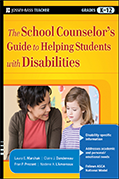 The insight, information and strategies provided in the book, The School Counselor’s Guide to Helping Students with Disabilities, are valuable resources for practicing school counselors and counselor educators. The book offers strategies for meeting the needs of students with disabilities more effectively.
The School Counselor’s Guide to Helping Students with Disabilities is divided into three parts. Part 1 provides foundational knowledge for school counselors and helps readers integrate information about disabilities into their counseling programs. Chapter 1 highlights school counselors’ roles regarding students with disabilities and explains the specialized developmental needs of such students as compared to their peers. Chapter 2 discusses common assumptions about students with disabilities and provides tools to help counselors interact with the students’ families more effectively. Chapter 3 explains how to transform a traditional school counseling program into one that facilitates competency development for students with disabilities. This chapter also provides information on including students with disabilities in school counseling programs and offers leadership and advocacy guidelines for school counselors. Chapter 4 explains the school counselor’s role in the individualized education program (IEP), Section 504, Plans and Transition Plans. Chapter 5 provides ways for school counselors to form effective partnerships with parents and highlights frequent experiences, feelings and realities of parents of children with disabilities, based on the authors’ experiences and knowledge.
Part 2 of the book focuses on the academic, personal/social and career domains from the American School Counselor Association (ASCA). Chapter 6 discusses ways in which school counselors play a crucial role in addressing the academic needs of students with disabilities, and it includes methods that help teachers create positive learning environments for students. Chapters 7 and 8 examine students’ social and personal needs, focusing on the effects of peer relationships. These chapters also include strategies for school counselors that promote social integration within schools. While describing the central needs and challenges of children with disabilities, Chapter 9 concentrates on the importance of career education and development. It also gives guidelines on preparing students for the transition from school to work, training or higher education.
Part 3 delivers practical information about disabilities, as detailed within each category of the Individuals with Disabilities Education Act (IDEA). For each disability, the authors provide general information; what students and parents with the disability wish teachers and school counselors knew; practical applications in each of the ASCA domains; and resources containing more information about the specific disability.
The collective knowledge and experience of the authors, who are expert school counselors, make this book rich in valuable content. As a future school counselor, I find that this book provides fundamental resources for assisting students with disabilities. The information in this book soundly represents the ASCA domains for future school counselors. Reading this book would benefit educators, parents and anyone interested in working alongside students with disabilities.
Marshak, L. E., Dandeneau, C. J., Prezant, F. P., & L’Amoreaux, N. A. (2010). The School Counselor’s Guide to Helping Students with Disabilities. New York, NY: Springer Publishing Company.
Reviewed by: Estefanía Riveros, Miami, Florida.
The Professional Counselor Journal
HOME PAGE
May 30, 2013 | Article
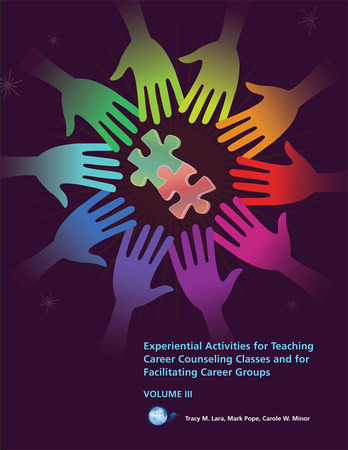 The experiential activities in Experiential Activities for Teaching Career Counseling Classes and for Facilitating Career Groups are an invaluable tool in the counseling field. It is a comprehensive and didactic approach to career counseling for the counselor educator.
Each chapter is well organized in clearly stating purpose, learning objectives, application of theory, target population, setting, materials needed and instructions. The content identifies key areas in career counseling consisting of theoretical orientations in counselor education development, assessment tools, pragmatic exercises and technological resources. The self-knowledge exercises help the counselor educator in resolving one’s ambivalence in making sound career choices.
Lara, Pope and Minor incorporate practical lessons that make learning interesting and educational. Important aspects of counselor education have been covered in the book through group activities that enhance self-awareness, knowledge and broaden one’s worldview. The ‘Order in Chaos’ exercise allows an opportunity for counselor educators to perceive the complexities and patterns in career development. The assessments help identify values that counselor educators could incorporate into their training. The importance of networking is highlighted to help future employees in their job search. The exercises focus on preparing future employees in obtaining gainful employment and a successful career path. The book lists various technologies available to counselors to provide vital information and update their knowledge of current research trends in the field of career counseling.
This pragmatic guide for counselor educators reaches out to a diverse population. With an emphasis on career development, the book plays a significant role in helping future counselors with job readiness, which is very vital in today’s fast paced world. Gaining knowledge from the book, counselors can become self-confident and motivated in performing effectively in their profession.
Throughout the book, the authors accentuate core competencies of counselor education. In the reflections and evaluations, the reader can discern several significant concepts in counselor education. Thought provoking objectives, case scenarios and discussion questions throughout the book give the reader a better understanding of each topic rather than learning the material by rote. With limited research available on group counseling, the book guides counselors from all related fields to help clients resolve their problems. The counselor-client relationship is fostered in mutual learning of acceptance, empathy and respect in their interaction. I think this well-written and easily comprehensible book will help educators utilize a hands-on approach in teaching without undermining the theoretical element in counseling. Using assessment tools and practical exercises help in determining the individual’s strength and interests.
Experiential Activities for Teaching Career Counseling and For Facilitating Career Groups is a must read book for every counselor educator. The book aims at teaching the material in an interesting manner, while educating counselors to be better clinicians and well-rounded individuals. It is designed in a universally structured educational framework with the objective of producing creative and ethical individuals that value integrity in a progressive world.
Lara, T., Pope, M., & Minor, C. (2011). Experiential Activities for Teaching Career Counseling Classes and for Facilitating Career Groups: Volume 3. Broken Arrow, OK: National Career Development Association.
Reviewed by: Shanti Nair, doctoral counseling student, Barry University, Miami Shores, Florida.
The Professional Counselor Journal
HTTP://tpcwordpress.azurewebsites.net
May 20, 2013 | Book Reviews
 The experiential activities in Experiential Activities for Teaching Career Counseling Classes and for Facilitating Career Groups are an invaluable tool in the counseling field. It is a comprehensive and didactic approach to career counseling for the counselor educator.
Each chapter is well organized in clearly stating purpose, learning objectives, application of theory, target population, setting, materials needed and instructions. The content identifies key areas in career counseling consisting of theoretical orientations in counselor education development, assessment tools, pragmatic exercises and technological resources. The self-knowledge exercises help the counselor educator in resolving one’s ambivalence in making sound career choices.
Lara, Pope and Minor incorporate practical lessons that make learning interesting and educational. Important aspects of counselor education have been covered in the book through group activities that enhance self-awareness, knowledge and broaden one’s worldview. The ‘Order in Chaos’ exercise allows an opportunity for counselor educators to perceive the complexities and patterns in career development. The assessments help identify values that counselor educators could incorporate into their training. The importance of networking is highlighted to help future employees in their job search. The exercises focus on preparing future employees in obtaining gainful employment and a successful career path. The book lists various technologies available to counselors to provide vital information and update their knowledge of current research trends in the field of career counseling.
This pragmatic guide for counselor educators reaches out to a diverse population. With an emphasis on career development, the book plays a significant role in helping future counselors with job readiness, which is very vital in today’s fast paced world. Gaining knowledge from the book, counselors can become self-confident and motivated in performing effectively in their profession.
Throughout the book, the authors accentuate core competencies of counselor education. In the reflections and evaluations, the reader can discern several significant concepts in counselor education. Thought provoking objectives, case scenarios and discussion questions throughout the book give the reader a better understanding of each topic rather than learning the material by rote. With limited research available on group counseling, the book guides counselors from all related fields to help clients resolve their problems. The counselor-client relationship is fostered in mutual learning of acceptance, empathy and respect in their interaction. I think this well-written and easily comprehensible book will help educators utilize a hands-on approach in teaching without undermining the theoretical element in counseling. Using assessment tools and practical exercises help in determining the individual’s strength and interests.
Experiential Activities for Teaching Career Counseling and For Facilitating Career Groups is a must read book for every counselor educator. The book aims at teaching the material in an interesting manner, while educating counselors to be better clinicians and well-rounded individuals. It is designed in a universally structured educational framework with the objective of producing creative and ethical individuals that value integrity in a progressive world.
Lara, T., Pope, M., & Minor, C. (2011). Title . Broken Arrow, OK: National Career Development Association.
Reviewed by: Shanti Nair, doctoral counseling student, Barry University, Miami Shores, Florida.
The Professional Counselor Journal
https://tpcwordpress.azurewebsites.net
Apr 19, 2013 | Book Reviews
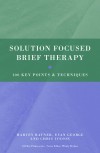 Ratner, George, and Iveson’s Solution Focused Brief Therapy: 100 Key Points Techniques, direct BRIEF, a coaching, therapy, training, and consulting center in London which currently happens to be the largest brief therapy training center in the world. The authors’ vast Solution Focused Brief Therapy (SFBT) experience is highlighted throughout the text.
Supplied in an easy to read format, Solution Focused Brief Therapy: 100 Key Points & Techniques offers multiple relevant clinical case vignettes to guide the reader through the 100 points and techniques. The case examples are highly nuanced, further demonstrating the authors’ mastering of solution focused brief therapy and increasing the value and utility of the book. Solution focused practitioners search for instances of success in client’s lives, whereby creating new dialog outside of problem focused talk. In solution focused practice, common questions are those of difference: ‘What has worked in the past?’, ‘What difference are you hoping that will make?’, and ‘Who else would notice that coming here has been useful for you?’. Point 66 of 100 is a direct example; under the part on conducting follow-up sessions, subtitled, When the client says things are worse , the authors write: “There will be a time when every solution focused brief therapist asks [the client(s)], ‘so what has been better’ and the client will answer ‘you’re joking surely, it’s been worse, ten times worse. This week has been the worst week of my life’. While it can be tempting for the panicky counselor to try to trick the client out of his position [by responding] ‘but you got yourself here – how did you manage that?’. This statement from the practitioner contains the underlying logic of ‘if things were really so bad you wouldn’t be here, but you are here so it cannot be that bad’. The authors suggest this approach is always worth avoiding, because it does not validate the client’s difficulty before redirecting the conversation. This short clinical example is one of many housed within the 100 points in this text.
Solution Focused Brief Therapy: 100 Key Points & Techniques contains 16 parts which are further subdivided by the 100 key points and techniques. The authors begin Part I with the background of SFBT by discussing the Mental Research Institute in Milwaukee, social construction by Ken Gergen, Wittgenstein and his famous language games, and collaborative approaches to counseling. Part I ends with the assumptions of the client-counselor relationship, change processes, key assumptions, and an outline of first session goals. Part II describes compliments, taking turns in speech and acknowledging possibility. Part III, subtitled ‘Getting Started’ describes the beginning of therapy, techniques, and vital information to begin SFBT including a ‘resource audit.’
Part IV focuses on establishing a contract, or the joint project. The joint project function is finding the client’s best hopes from counseling, with guidelines for establishing a contract with involuntary clients and young clients. The authors describe the difference between outcome and process wherein the contract must contain a true ‘in-life’ difference versus working with a goal of ‘I just want to get things off my chest’. Part V describes broadening and detailing the client’s preferred future by the tomorrow question a derivative of the miracle question, and five key points to help the practitioner in defining and detailing preferred futures. Part VI describes exceptions, no exceptions and creating resource lists.
Part VII details the scaling techniques to measure progress, and practitioners helping clients to move up the scale. Part VIII outlines coping questions during difficult client stories and what to do during difficult sessions with issues such as bereavement. Part IX describes the role of the SFBT therapist during the termination process with Part X examining the follow-up sessions. Part XI is tailored to ending the work with clients, while XII is dedicated to assessment within SFBT. The next two sections are handling specific populations such as children, families, group work and adults. Part XV is dedicated to supervision, coaching, and organizational uses, with the last subtitle Part XVI answering frequently asked questions. This book is a worthy addition to any counselor’s bookshelf.
Ratner, H., George, E., & Iveson, C. (2012) . Solution focused brief therapy: 100 key points and techniques. New York, NY: Routledge.
Reviewed by: George E. Harrington III, doctoral counseling student, Barry University, Miami Shores, Florida.
The Professional Counselor Journal
HOME PAGE