May 10, 2023 | Volume 13 - Issue 1
Claudette Brown-Smythe, Shirin Sultana
We examined the extent to which anxious attachment and avoidant attachment predicted loneliness and social self-efficacy among 863 college students. Further, we investigated whether social self-efficacy mediated the relationships between the two insecure attachment styles and loneliness. Pearson correlations and regression analysis showed that anxious and avoidant attachment styles were significant predictors of loneliness and social self-efficacy. Mediation analysis revealed that social self-efficacy fully mediated the relationship between avoidant attachment and loneliness and partially mediated the relationship between anxious attachment and loneliness. Implications for college counseling are discussed, and we propose recommendations for counselors to enhance social self-efficacy and attachment security to decrease loneliness.
Keywords: social self-efficacy, anxious attachment, avoidant attachment, loneliness, attachment security
Existential philosophers, as well as counseling theorists, have alluded to loneliness as a common human condition, one that can lead to mental health challenges like depression and anxiety (Sharf, 2012). Researchers began calling attention to the increase in loneliness across the life span (Cacioppo et al., 2015; Diehl et al., 2018; Mushtaq et al., 2014) prior to the outbreak of the novel coronavirus disease (COVID-19), and the subsequent declaration by the World Health Organization (WHO) that the outbreak was a public health emergency of international concern (Pan American Health Organization, 2020). In 2015, Vivek Murthy (2020), then surgeon general of the United States, identified loneliness as a public health issue, endemic across all ages and socioeconomic groups. As of 2019, three out of every five people, or 61% of the U.S. population, reported feeling lonely, which was a 7% increase from 2018 (Cigna, 2020). Isolation then surged during the COVID-19 pandemic, which contributed to loneliness (Dahlberg, 2021; Holt-Lunstad, 2020).
The Cigna (2020) report noted that 49.9% of emerging adults 18–22 years old and 47.7% of adults 23–37 years old reported feeling lonely. Moreover, the American College Health Association (2017) reported that 64% of college students experienced loneliness, which aligns with the Healthy Minds Study results indicating that 66% of college students struggled with loneliness (Eisenberg et al., 2020). Again, these figures predate the 2020 coronavirus pandemic, and rates of loneliness experienced because of the lockdown and restrictions during that time are projected to increase (Dahlberg, 2021; Holt-Lunstad, 2020).
As the preceding data demonstrate, loneliness is a special concern for the college-age population. Moreover, loneliness is a human challenge that if left unattended can lead to and exacerbate mental health issues. Like Bandura (1977), we believe that individuals who possess strong social self-efficacy can motivate themselves to build connections and engage with others and reduce feelings of loneliness. This study sought to examine the extent to which social self-efficacy serves as a mediator of the two insecure attachment styles on loneliness.
Literature Review
Loneliness
Loneliness is viewed as a complex multidimensional and subjective psychological construct that is seen from an individual’s perspective. DiTommaso et al. (2015) described loneliness as a temporary psychological response to changes in one’s social environment or a stable dissatisfaction with one’s personal network, while Perlman and Peplau (1981) viewed it as a negative feeling that occurs when individuals do not perceive the quality or quantity of their social relationships as satisfying.
Early researchers like Perlman and Peplau (1981) identified three types of loneliness: (a) chronic loneliness, or a long-term experience of feelings of separation and isolation over several years; (b) situation loneliness, or a disruption of one’s social relationship patterns; and (c) transient loneliness, described as the occasional feelings of loneliness experienced at different times when one is making changes throughout the life span. Yanguas et al. (2018) highlighted a dichotomous view of loneliness, identifying social loneliness (lacking a sense of community and connection to social network) and emotional loneliness (lacking attachment figures and companionship), and noting that an individual can experience loneliness in both areas simultaneously.
Loneliness as a developmental issue can occur at different periods in people’s lives. For example, for emerging adults (i.e.,18–25 years old) this period is marked by transitions that can predispose them to experiencing loneliness (Moeller & Seehuus, 2019). Emerging adults overlap two critical stages in Erikson’s (1980) psychosocial development theory. The first stage of identity versus role confusion (12–19 age range) is marked by a sense of ego identity in which the individual seeks balance and congruence between their self-perception and how others perceive them. The second stage is intimacy versus isolation (20–25 age range), in which the goal is to establish committed relationships with friends and develop intimate romantic relationships. Erikson posited that individuals who were unsuccessful at the earlier stages, and were lacking a strong sense of identity, may struggle in building healthy relationships. This in turn can result in emotional distress and isolations, as they will be unable to establish the committed relationships that are needed to resolve this stage and experience loneliness. There are normative transitions many emerging adults make that can precipitate feelings of loneliness, like leaving home, beginning college, or starting a full-time job. Additionally, the maturation changes from adolescence to emerging adulthood (Chickering & Reisser, 1993), along with the psychosocial development crisis of intimacy versus isolation, can impact emerging adults’ self-perception of loneliness (Qualter et al., 2015).
At the beginning of college, students may not have relationships with peers at their institutions and will need to establish connections in this new social context (Thurber & Walton, 2012). This new context may be bigger or smaller than home, or it may be less diverse or more diverse from their home communities, thereby decreasing students’ feelings of connection. Colleges often give much attention to transition issues experienced at the beginning of college (Bruffaerts et al., 2018); however, these experiences can persist throughout the college years. Moeller and Seehuus (2019) noted that students are challenged to build and sustain relationships in this social context while also navigating and balancing a more demanding academic workload, new expectations around academic productivity and engagement, and developmental changes as they transition from adolescence to adulthood. This period of transition and competing priorities can be challenging for students as they attempt new things, try to integrate, and adjust to the changes to their personal and academic lives and make decisions about what is important to them. For some, this can be overwhelming, and their inability to cope with these challenges and form meaningful relationships in this social context can precipitate students’ mental health struggles and loneliness (Thomas et al., 2020). Students’ struggles during this period are linked to attrition, college withdrawal, and dropout rates (Diehl et al., 2018; Fink, 2014).
Social Self-Efficacy
Bandura (1977) defined social self-efficacy as an individual’s beliefs about their skills for success in interpersonal interactions and social situations. He noted that individuals with high social self-efficacy had greater cognitive resourcefulness and flexibility to effectively manage their environment and motivate themselves to achieve a desired goal, which is the opposite for individuals with insecure attachment. Social self-efficacy, then, is about the individual’s perceived confidence in their ability to engage in social interactions and to take the initiative to maintain these interpersonal relationships. Consequently, higher social self-efficacy is important for building and maintaining interpersonal relationships and for engaging in social gatherings (Kim et al., 2020). These engagements can then help in staving off loneliness. People who are lonely are assumed to possess less interpersonal competence than individuals who are not lonely, and research often points to a positive correlation between poor social skills and loneliness (Moeller & Seehuus, 2019).
Attachment Theory
Attachment theory is an established framework that describes the impact of early bonding with caregivers as a foundation for subsequent close relationships across the life span (Ainsworth, 1985; Bowlby, 1973). These theorists posited two major attachment types: secure and insecure attachment. Available, sensitive, and supportive bonding experiences with caregivers contribute to a sense of connectedness and security resulting in the development of secure attachment and a healthy internal model of self and others (Mikulincer & Shaver, 2014). That is, these experiences create a positive view of self and others.
On the other hand, individuals who experienced unsupportive, frustrated, and fractured caregiving emerge with insecure attachment styles, which lead to difficulties with relationships in later life. Insecure attachment is characterized in two dimensions—avoidant and anxious attachment styles. Individuals with high anxious attachment style tend to be fearful of being rejected or abandoned by others and have a negative working model of self; that is, they may hold a negative perception of their worthiness. Those with avoidant attachment fear intimacy and being dependent on others and hold a negative working model of others (Mikulincer & Shaver, 2014; Zhu et al., 2016).
Individuals with insecure attachment styles may lack prosocial skills and engage in negative coping strategies (Mikulincer & Shaver, 2014, 2019). For example, individuals with high anxious attachment may “rely on hyperactivating strategies . . . to achieve support and love,” and when the support and love are not provided, individuals may then experience anger and despair (Mikulincer & Shaver, 2014, p. 36). Conversely, those with high avoidant attachment may use detachment and deactivated strategies to protect themselves; they tend to push others away, “avoiding closeness and interdependence in relationship” (p. 36). These maladaptive behaviors may result in greater feelings of loneliness, as these individuals may experience lower satisfaction in their relationships.
Loneliness, Attachment, and Social Self-Efficacy
The relationship between attachment styles established in early childhood and feelings of loneliness in early adulthood is well documented (Akdoğan, 2017; Benoit & DiTommaso, 2020; Klausli & Caudill, 2021). Higher levels of attachment security correlated with lower levels of loneliness in undergraduate students (Benoit & DiTommaso, 2020). As young adults transition to college life, their social network shifts from the family domain to peers. An individual’s ability to cope with this transition and form meaningful relationships may depend on the adaptiveness of their attachment style. Individuals with a secure attachment style report a stronger sense of self and social competence (Akdoğan, 2017; Klausli & Caudill, 2021), which may counteract feelings of loneliness.
Research on loneliness has frequently pointed to a lack of prosocial skills and social competency to initiate and maintain friendships when addressing the connection between insecure attachment and loneliness (Akdoğan, 2017). Individuals with secure attachment demonstrate strong social skills and social competency and can be said to possess social self-efficacy. “Adult attachment research revealed that attachment insecurities tended to negatively bias cognitions, emotions, and behavior during interpersonal interactions” (Mikulincer & Shaver, 2014, p. 37); therefore, it could be concluded that individuals with attachment insecurities are likely to exhibit low social self-efficacy.
Earlier researchers found conflicting effects of social self-efficacy on loneliness (Mallinckrodt & Wei, 2005; Wei et al., 2005). The results of a longitudinal study of 308 freshmen examining social self-efficacy and self-disclosure as mediators for insecure attachment, loneliness, and depression revealed that a lack of social self-efficacy mediated the relationship between anxious attachment and loneliness after controlling for depression (Wei et al., 2005). However, social self-efficacy was not found to mediate avoidant attachment. In another study with 430 students investigating social self-efficacy as a mediator for insecure attachment, social support, and psychological distress, researchers found that high levels of avoidant attachment were correlated with lower levels of social self-efficacy and perceived social support (Mallinckrodt & Wei, 2005). These competing findings influenced us to further explore the extent to which social self-efficacy would affect loneliness.
The Current Study
For this study, we focused on social and emotional loneliness (Yanguas et al., 2018), holding the view that loneliness is a temporary psychological state due to circumstances (DiTommaso et al., 2015). These two dimensions are considered more salient for college students given their psychosocial developmental levels and societal expectations. Researchers (Akdoğan, 2017; Benoit & DiTommaso, 2020; Mikulincer & Shaver, 2014, 2019) have indicated that primary attachment style impacts social competency, sense of self, and one’s ability to form a supportive network. All of these can affect whether college students experience loneliness and to what degree they experience it.
To date, few researchers have examined how the detrimental effects of loneliness in people with avoidant and anxious attachment styles can be mediated by social self-efficacy. In this study, we examined the triadic relationship between the dimensions of insecure attachment (i.e., anxious attachment and avoidant attachment), loneliness, and social self-efficacy. Three research questions and hypotheses guided this study:
- What is the relationship between social self-efficacy, loneliness, and the types of insecure attachment?
- Do anxious attachment and avoidant attachment predict the levels of social self-efficacy?
- How does social self-efficacy mediate the relationship between loneliness and anxious attachment and avoidant attachment styles?
We hypothesized that a) social self-efficacy, loneliness, and anxiety are correlated; b) anxious attachment and avoidant attachment will predict the levels of social self-efficacy; and c) social self-efficacy will mediate the relationship between loneliness and anxious attachment and avoidant attachment styles.
Methods
Procedure
Upon receiving IRB approval, we collected data during the last 2 months of the fall 2020 semester. At this mid-size comprehensive college in the Northeast, students were on campus until the week before Thanksgiving. After the Thanksgiving break, students were not permitted to return, and all classes transitioned to virtual platforms because of the uptick in the number of cases and deaths as a result of COVID-19. Data collection spanned both class formats. All students 18 years and older who were enrolled in classes for the fall 2020 semester were eligible to participate in this study. Data were collected through the Qualtrics online survey platform. The university enrollment management office distributed the recruitment email inviting students to volunteer to participate in the research. The students who volunteered completed the informed consent with the screening statement, “I am 18 years or older, currently enrolled in classes for the fall 2020 semester.”
Participants
Participants were drawn from 5,838 full-time students attending a medium-sized public college in the northeastern United States. After eliminating participants with more than 10% of missing values throughout the questionnaire (n = 28; Tabachnick & Fidell, 2007) the final sample was N = 863 students. The participants’ ages ranged between 18 and over 40 years, with the majority (n = 79.9%) being between 18 and 25 years old. Of these 863 participants, 153 (17.7%) participants were first-year students, 105 (12.2%) participants were second-year students, 205 (23.8%) were in their third year, 182 (21.1%) were fourth-year students, 43 (4.9%) were fifth-year students (those who added one more year to complete the degree), 163 (18.9%) were graduate students, and 12 (1.4%) were non–degree-seeking students.
Regarding their cultural background, most participants (n = 689; 79.8%) were White European, whereas 51 (5.9%) were African American, 44 (5.1%) were Hispanic/Latinx, 20 (2.3%) were Asian, 17 (2.0%) were Caribbean/West Indian, 11 (1.3%) were Native American or Alaska Native, and two (0.2%) were Native Hawaiian or Pacific Islander. Regarding gender, 647 (75%) identified as women, 197 (22.8%) as men, 6 (0.7%) as transgender, and 13 (1.5%) as other gender. Most of the participants identified as heterosexual (n = 611, 70.8%), whereas 117 (13.6%) identified as bisexual, 37 (4.3%) identified as asexual, 29 (3.4%) identified as lesbian, 12 (1.4%) identified as queer, and 11 (1.3%) identified as homosexual. The relationship status of the participants varied. Most of the participants were single (n = 375, 43.5%), whereas 361 (41.9%) were dating, 80 (9.3%) were married, 37 (4.3%) were engaged, and seven (0.8%) were divorced.
In terms of living arrangements, many participants (n = 204, 23.7%) lived on campus with suitemates, 201 (23.3%) lived with their parents/guardians, 190 (22.0%) lived with their partners or spouses, 102 (11.8%) lived alone, and 36 (4.2%) lived with a non-student roommate. Regarding religious affiliation, 336 (39.3%) of the participants identified as Christian, 250 (29.2%) identified as spiritual/not religious, 129 (15.1%) identified as agnostic, 103 (11.9%) identified as atheist, 11 (1.3%) identified as Buddhist, 11 (1.3%) identified as Jewish, 8 (0.9%) identified as Muslim, and 1 (0.1%) identified as Mormon.
Instruments
Demographic Questionnaire
The demographic questionnaire consisted of 13 questions. These questions addressed age, gender, sexual orientation, class standing, enrollment status, race/ethnicity, and living arrangements. Additional questions asked about marital status, income, religion/spiritual practice, and employment.
UCLA Loneliness Scale
The UCLA Loneliness Scale (Version 3) is a 20-item scale measure of subjective feelings of loneliness and feelings of social isolation (Russell, 1996). Participants are asked to rate how often each of the positively and negatively worded statements describes them on a 4-point Likert scale from 1 (never) to 4 (often). Sample items included, “How often do you feel that there are people that you can talk to?” and “How often do you feel that people are around you but not with you?” Scoring is done by reversing the positively worded items and then summing the scores on each item for a composite score ranging from 20 to 80, with higher scores (> 40) indicating greater degrees of loneliness. Version 3 has been widely used and validated with the college population as well as other adults in the United States and has yielded high reliability with alpha coefficient values ranging from .89 to .94 and test-retest reliability of .73 (Russell, 1996). In the current study, we followed Kalkbrenner’s (2023) recommendation and computed both Cronbach’s alpha value and coefficient omega, as the latter is a robust measure to alpha’s statistical assumptions. For the UCLA Loneliness Scale, both were the same value of .94, indicating strong reliability.
Social Self-Efficacy Scale
The Social Self-Efficacy Scale (SSES) is a 6-item measure subscale from the Self-Efficacy Scale (Sherer et al., 1982) that assesses students’ beliefs in their social competence. Items ask participants to respond on a 5-point Likert scale ranging from 1 (strongly disagree) to 5 (strongly agree) to statements like “It is difficult for me to make new friends” and “I do not handle myself well in social gatherings.” Reverse scoring is done for the negatively worded items followed by summing the scores of all the items. A higher score indicates higher social self-efficacy. Researchers have indicated coefficient alpha values of .76 and .71 (Sherer et al., 1982; Wei et al., 2005). Construct validity for this measure has demonstrated correlations with measures of ego strength, interpersonal competency, and self-esteem (Sherer et al., 1982). In the current study, Cronbach’s alpha value for the SSES was .60, while the coefficient omega value was .57. Because we used a subscale of the Self-Efficacy Scale, the poor internal consistency reliability estimates of the SSES might, in part, be due to the low number of questions (Tavakoli & Dennick, 2011). Nonetheless, this instrument was chosen because it is a widely used instrument for assessing social self-efficacy and has reported construct validity (Sherer et al., 1982).
The Experiences in Close Relationships—Relationship Structures Questionnaire
The Experiences in Close Relationships—Relationship Structures Questionnaire (ECR-RS; Fraley et al., 2011) is a 9-item measure used to assess attachment patterns with a variety of familiar relationships. For the current study, participants were asked to respond on the basis of close relationships in general as opposed to thinking about a specific person/relationship. The ECR-RS has two fundamental dimensions of underlying attachment patterns: anxious attachment and avoidant attachment. Sample items include “I usually discuss my concerns and problems with this person,” “I find it easy to depend on this person,” and “I worry this person may abandon me.” Participants rate the extent to which they believe each of the nine statements describes their feelings about their close relationships on a 7-point Likert scale from 1 (strongly disagree) to 7 (strongly agree). Items 1, 2, 3, and 4 are reverse scored. Items 1 to 6 make up the Avoidance Attachment scale, and items 7 to 9 comprise the Anxiety Attachment scale (Fraley et al., 2011). Scores for each scale are derived from finding the average of the items.
Researchers noted Cronbach’s alpha reliabilities ranging between .83 and .87 for the Anxiety Attachment scale and .81 to .92 for the Avoidance Attachment scale across multiple domains (Fraley et al., 2011; Klausli & Caudill, 2021). Our study yielded a Cronbach’s alpha score of .88 and a coefficient omega score of .87 on the Avoidance Attachment scale and alpha .76 and omega .82 for the Anxiety Attachment scale. The ECR-RS has been normed on the college-age population, and Varghese and Pistole (2017) demonstrated the usefulness of this instrument with college students.
Data Analyses
SPSS (Version 27) was used to analyze the data. We first examined the data for missing values that are common in survey research and utilized D. A. Bennett’s (2001) recommendation for deleting cases that had 10% of the data missing. For data that were missing at random, these data were replaced using group means for any item that had 15% or less of the cases missing as a way of maintaining the sample size without threatening the validity of the results (George & Mallery, 2010). Descriptive statistics and reliability estimates for all the scales of the sample were calculated to check for errors, statistical assumptions, and violations, and to describe the data distribution. We utilized the guide that a distribution could be approximated to normal if the skewness value was less than or equal to plus or minus two [≤ ±2] (Garson, 2012).
The skewness and kurtosis values for all but the UCLA Loneliness Scale were less than plus or minus two (< ±2), indicating approximately normal distribution (George & Mallery, 2010). It should be noted that the mean, median, and mode for the loneliness measure were similar (47.46), suggesting a fairly normal distribution. Scores were, however, negatively skewed. The data revealed that 15.8% of students scored in the high range for loneliness levels (40–60) and 53.8% were in the very high range (≥ 61). Collinearity statistics were in the acceptable range and met the assumptions for multicollinearity. The means and standard deviation, as well as correlations for the main variables from the SSES, UCLA Loneliness Scale, and Anxiety Attachment and Avoidance Attachment subscales, are presented in Table 1. We used Pearson’s correlation to answer the first research question and regression analyses were used for the other research questions and hypothesis.
Table 1
Pearson Correlations of Study Variables With Means and Standard Deviation
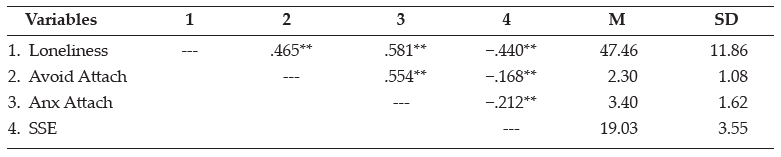
Note. Avoid Attach = Avoidant Attachment, Anx Attach = Anxious Attachment, SSE = Social Self-Efficacy.
**p < .01.
Results
Correlational Analysis
Pearson correlations were computed to answer the first research question: What is the relationship between social self-efficacy, loneliness, and the types of insecure attachment? The results of the Pearson correlation showed a statistically significant positive correlation between loneliness and avoidant attachment (r = .47, p < .001) and loneliness and anxious attachment (r = .58, p < .001), indicating that participants who had higher levels of avoidant attachment and anxious attachment experienced higher levels of loneliness. The results of Pearson correlation analysis showed a statistically significant negative correlation between loneliness and social self-efficacy (r = −.44, p < .001). The findings indicated that participants who experienced higher levels of social self-efficacy experienced lower levels of loneliness. Additionally, the results of Pearson correlation analysis showed a statistically significant, albeit weak, negative correlation between social self-efficacy and anxious attachment (r = −.21, p < .001), as well as avoidant attachment (r = −.17, p < .001).
Both anxious attachment and avoidant attachment explained 34% and 22% of the variances in loneliness, respectively. Additionally, we found that anxious attachment accounted for 4% of the variance, and avoidant attachment explained 3% of the variance in social self-efficacy. When we analyzed the relationship between loneliness, social self-efficacy, avoidant attachment, and anxious attachment, we found that avoidant attachment was significantly negatively associated with loneliness, while all the other variables showed a significant positive (p < .001) association.
Multiple Regression Analysis
Multiple regression was used to answer the second research question: Do anxious attachment and avoidant attachment predict the levels of social self-efficacy? The results indicated that anxious attachment was a statistically significant predictor of social self-efficacy (F = 40.68, p < .001) with a β of .04 (p < .001), accounting for 5% of the variance in social self-efficacy (see Table 2). These results indicate that among students who participated in this study, higher levels of social self-efficacy were a result of lower levels of both anxious attachment and avoidant attachment styles. Overall, the model explains 5% of the variance of anxious attachment in social self-efficacy (r = .39).
Table 2
Multiple Regression Analysis Predictor of Social Self-Efficacy
Factor R R2* β t p F P
Anxious attachment .21 .05 .04 −6.38 < .001 40.68 < .001
*Adjusted R2 = .04
Finally, we examined the third research question and the corresponding hypothesis: How does social self-efficacy mediate the relationship between loneliness and anxious attachment and avoidant attachment styles? In support of our hypothesis that social self-efficacy would mediate the relationship between avoidant attachment and anxious attachment and loneliness, we conducted two regression analyses using Baron and Kenny’s model (1986) for each. In the first model (Figure 1a), in Step 1 the predictor avoidant attachment was regressed on the outcome loneliness. This path provided the coefficient for path c = 5.13 as identified in Figure 1a and was statistically significant {t (861) = 15.42, p = < .001}. In Step 2, the mediator social self-efficacy was regressed against the outcome and provided the path coefficient, denoted a = −.55, with t (862) = −.55, p = < .001. In Step 3, social self-efficacy was regressed on loneliness and the mediator. The significance of the mediation was determined using the Sobel test and was found to be statistically significant at z = −13.54, p = < .001.
Figure 1a
Mediation Path Model for Social Self-Efficacy on Avoidant Attachment on Loneliness
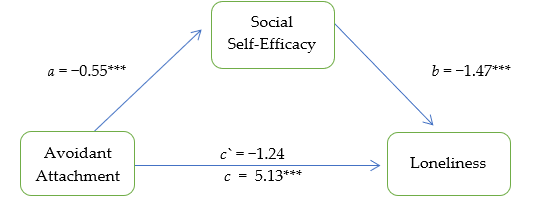
Note. Mediation model testing social self-efficacy as mediator for avoidant attachment and loneliness.
***p < .001
The second path model (Figure 1b) was conducted to ascertain the extent to which social self-efficacy mediated the relationship between anxious attachment and loneliness. Step 1 of the mediation provided the coefficient for path c = 4.25. This was statistically significant {t (861) = 20.945, p = .001}. The mediation path was also statistically significant, signaling partial mediation: c` = 3.73 {t (860) = 19.59, p < .001} with R2 = .442 and adjusted R2 = .441.
Figure 1b
Mediation Path Model for Social Self-Efficacy on Anxious Attachment on Loneliness
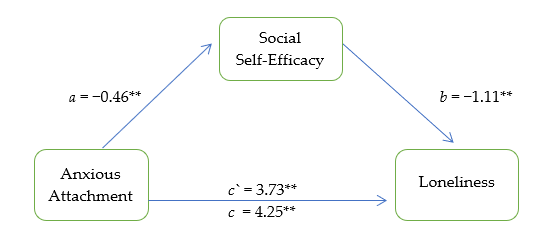
Note. Mediation model testing social self-efficacy as mediator for anxious attachment and loneliness.
**p < .001
Discussion
In the current study, we found statistically significant relationships among anxious attachment, avoidant attachment, social self-efficacy, and loneliness. Higher levels of anxious attachment and avoidant attachment were correlated to higher levels of loneliness, which is consistent with prior studies (Benoit & DiTommaso, 2020; Mikulincer & Shaver, 2014). Individuals with insecure attachment styles are predisposed to feeling lonely and may not be motivated to seek out others and engage in social activities. Conversely, those with secure attachment styles are more likely to engage with others because of their healthy view of themselves and their interpersonal ability to build and maintain relationships (Akdoğan, 2017; DiTommaso et al., 2015; Mikulincer & Shaver, 2019). Additionally, the results indicate that social self-efficacy was negatively associated with both anxious attachment and avoidant attachment, as well as loneliness. Students with higher levels of social self-efficacy did not score as having anxious or avoidant attachment styles. Although the weak correlations mean that the findings should be considered with caution, the negative relationship between insecure attachment styles and social self-efficacy reflects the expectations outlined by attachment theory. Specifically, individuals who demonstrate anxious and avoidant attachments will theoretically experience more social interaction challenges, as they may likely possess less social efficacy.
In college, many young adults struggle to adjust to their new social networks and make meaningful relationships. This can be especially challenging for students with an insecure attachment style and can result in them experiencing both emotional and social loneliness as described by DiTommaso et al. (2015) and Yanguas et al. (2018). The current study findings of a negative association between social self-efficacy and insecure attachment support the notion that students with insecure attachment styles may have deficits in their prosocial skills and their ability to initiate and maintain interactions with others, in part explaining their loneliness (Akdoğan, 2017). Negative social self-efficacy stems from internalized negative views about self-worth and competence, as well as a fear of rejection and distrust of others, which can contribute to feelings of loneliness (Akdoğan, 2017; DiTommaso et al., 2015).
In support of the mediation hypothesis, the relationship between avoidant attachment and loneliness was mediated by social self-efficacy, with high social self-efficacy explaining decreased loneliness in those with avoidant attachment. Interestingly, the relationship between anxious attachment and loneliness was only partially mediated by social self-efficacy. Through the lens of attachment theory, this partial mediation makes sense in that individuals with high anxious attachment tend to be fearful of rejection and abandonment. They tend to be overly self-focused and critical; therefore, they may be more likely to perceive themselves as lonely because these worries undermine the quality of their interpersonal relationships (Akdoğan, 2017; Mikulincer & Shaver, 2014). These individuals may hold a negative working model of self and may be more likely to perceive themselves as low in social self-efficacy, which could account for the partial mediation.
Conversely, individuals with an avoidant attachment style typically have low expectations of others and tend to push people away. However, the findings indicate that when individuals also have strong social self-efficacy, this seems to mediate the desire for detachment and help them in building relationships with others. Social self-efficacy strengthens one’s interpersonal competency and social skills, thereby enhancing coping strategies and self-regulation during relationship challenges. Thus, our findings support the existing literature that social self-efficacy mediates the relationship between anxious attachment and avoidant attachment on loneliness.
Although this study supports the established relationship of insecure attachment styles and high levels of loneliness, as well as the mediation effect of social self-efficacy on insecure attachment and loneliness, we recognize that existing research has examined the mediating effect after controlling for some psychological distress like depression (Wei et al., 2005). As a result, we reviewed the mediating effects of other constructs that are comparable to social self-efficacy. Our study provides support for mediating effects of feelings of inferiority on insecure attachment and loneliness (Akdoğan, 2017), as well as for mediating effects of social support (Benoit & DiTommaso, 2020). We posit that feelings of inferiority and lack of social support are very similar to lack of social self-efficacy and have significant clinical implications.
Implications for Counseling
Our findings suggest that attachment style greatly influences loneliness and the propensity for how one makes and maintains relationships (Akdoğan, 2017; Helm et al., 2020). For emerging adults who are at Erikson’s stage of intimacy versus isolation, loneliness can be understood as a developmental struggle that some students may need help resolving, particularly if they have avoidant or anxious attachment styles (Erikson, 1980). Counselors should therefore broach the subject of loneliness and assess for loneliness and low self-efficacy with clients as well as examine interpersonal difficulties on campus.
College counselors could utilize the Diagnostic and Statistical Manual of Mental Disorders (5th ed.; American Psychiatric Association, 2013) Level 1 and Level 2 cross-cutting symptom measures for adults or the widely used Counseling Center Assessment of Psychological Symptoms (CCAPS; Locke et al., 2011), as well as readily available assessments for depression and anxiety, to collect data on students’ levels of psychological stress. Psychological stress, depression, and anxiety are identified as contributors to and symptoms of loneliness (Cacioppo et al., 2015; Fink, 2014; Moeller & Seehuus, 2019) and can further provide information on social self-efficacy. Additionally, during the normal intake session and risk assessments, counselors should assess for social support, thereby gathering qualitative data on students’ social networks and the quality of their interpersonal relationships.
Because social self-efficacy mediated the relationship between attachment and loneliness, it could prove helpful for counselors to help clients bolster their prosocial skills and interpersonal confidence. This could be done through individual and group counseling interventions based on clients’ assessed needs related to psychological stress and interpersonal difficulties. Furthermore, because counseling promotes a strength-based and wellness philosophy, counselors can work with all students to enhance prosocial skills and interpersonal confidence and resiliency. Bandura (2000) noted that high social self-efficacy requires greater cognitive resourcefulness and flexibility to not only manage the environment but as motivation to achieve a desired goal. For college students, bolstering social self-efficacy might help to build interpersonal confidence, enhance motivation, and give them social capital (Thomas et al., 2020). Our hope is that through these processes, students’ intra- and interpersonal development regarding increased social self-efficacy will translate to academic success, personal success, and a decrease in perceived loneliness.
Because of the interactive nature of group counseling, it may be useful as a therapeutic approach to reducing loneliness in college students. Group counseling may also reveal how those with loneliness approach developing relationships with others in the group. Group work is known to be highly effective and superior to individual therapy, as it provides opportunities for social learning, developing social supports, and improving social networks (Yalom & Leszcz, 2020). For example, personal growth groups (e.g., social support groups or interpersonal process groups) are focused on both the personal and social development of members and can be used as interventions to address insecure attachment and loneliness. Additionally, these groups help members to develop self-awareness and insight while also learning new skills to enhance their interpersonal attractiveness. In short, groups like these have the potential to address members’ interpersonal challenges and disrupt behaviors that impede the building and maintaining of healthy relationships while also enhancing group members’ social self-efficacy. Ultimately, the focus is on relationship building and helping members to feel more connected with each other (Reese, 2011).
Additional ways in which counselors could support students experiencing loneliness is through collaboration with residence life, other social clubs, and groups to help students find connections and learn how to foster and maintain healthy relationships. These approaches support the work of Moeller and Seehuus (2019), reiterating the need to build and enhance college students’ social skills (thereby enhancing social self-efficacy) and facilitating opportunities for greater engagement to reduce loneliness and increase retention (Thomas et al., 2020).
It is noteworthy, but not surprising, that higher anxious and avoidant attachments correlated to higher levels of loneliness in our study. Given this knowledge that students may have negative working models of self and/or others, counselors may need to expand the ways in which they develop rapport and provide supportive spaces for risk-taking where clients may be more willing to explore issues surrounding their insecure attachment. Exploring the impact of the insecure attachment on their sense of self and how it presents as a barrier to initiating and/or maintaining quality social connections could be helpful, in addition to teaching strategies and skills to increase their sense of safety and self-efficacy.
Having conversations about initiating and maintaining meaningful relationships can also allow the counselor to address the risk of rejection and vulnerability inherent in relationships and help the clients develop coping skills to deal with these experiences rather than internalizing negative results. The counseling relationship can serve as a model and as evidence to the students that they have the ability to connect with others. Wei et al. (2005) noted that counselors could help students with high avoidant attachment understand how their reluctance to self-disclose prevents them from developing deeper or emotionally fulfilling relationships. Counselors can help clients with high anxious attachment examine how self-doubts may contribute to their perceptions of loneliness and other mental health challenges and learn strategies to increase self-confidence.
Moreover, the counseling relationship can serve as a model to evaluate the impact of self-doubt and lack of self-disclosure on the relationship and help with insight and self-awareness. As counseling progresses and students begin to address the self-doubt or begin to self-disclose, they will also be able to see how these changes shift the dynamics of the relationship and can lead to a more satisfying relationship. Counselors can incorporate strategies from different modalities, including using cognitive behavioral therapy and narrative therapy to address maladaptive thinking, and can help students explore unique outcomes congruent with their goals. E. D. Bennett et al. (2017) recommended some creative strategies that could be employed (e.g., talk meter, the paper bag story, using music, or modeling interventions using social media models). It is hoped that as students increase their self-awareness and social self-efficacy, they will transfer and integrate these new behaviors in establishing and maintaining relationships outside of the counseling room, thereby strengthening their social networks and decreasing loneliness.
Limitations and Future Research
Though a robust study in terms of the number of participants, this study has several limitations that should be considered. Some of the data collection took place when the college pivoted to online learning and students had to stay home as a result of COVID-19. This time of forced social isolation could have impacted students’ responses. The cross-sectional design of this study is a limitation. Social self-efficacy and perception of loneliness were assessed at one point in time. Social self-efficacy and loneliness are complex constructs that can vary at different time points, so a longitudinal research design is an important next step. Furthermore, a longitudinal design would allow researchers to track changes over time and throughout students’ college experiences, noting changes as a student progresses developmentally.
The self-report nature of the measurements and response bias are limitations that weaken the construct validity of the study. Self-report measures, though used extensively in research, are subject to respondent biases and social desirability (Crowne & Marlowe, 1964), which can limit self-awareness, self-knowledge, and self-report. The poor internal consistency reliability estimates of the SSES in this study is another limitation that might indicate that the SSES failed to capture stability of test scores within our sample. Future researchers may consider using other measures of social self-efficacy.
Although the mediation model provides explanatory effect of social self-efficacy on attachment and loneliness, future studies should examine other related factors such as self-esteem, empathy, or personality traits like Myers-Briggs or the Big Five personality traits. Additionally, the attachment measure was retrospective in nature, and participants were instructed to consider their feelings about close relationships in general rather than on a specific relationship on the Experiences in Close Relationships—Relationship Structures Questionnaire. In retrospect, it might have been more beneficial to have them consider specific relationships at college.
Conclusion
This study further expanded the research on the impact of insecure attachment as a contributor to feelings of loneliness. Further, our study pointed to social self-efficacy as a possible mediator for this relationship. Although attachment styles may be difficult to change, enhancing mediators like social self-efficacy might help individuals with insecure attachment styles to reduce loneliness (Thomas et al., 2020). Helping individuals with insecure attachment styles learn new skills to enhance their interpersonal and intrapersonal skills might enhance their beliefs in others and possibly bolster their self-confidence and competence. In the college setting, enhancing insecure attachment styles may have long-term consequences on reducing feelings of loneliness and may contribute to a sense of belonging and increase retention rates and academic success.
Conflict of Interest and Funding Disclosure
The authors reported no conflict of interest
or funding contributions for the development
of this manuscript.
References
Ainsworth, M. D. (1985). Patterns of infant-mother attachments: Antecedents and effects on development. Bulletin of the New York Academy of Medicine, 61(9), 771–791. https://www.ncbi.nlm.nih.gov/pmc/articles/PMC1911899/pdf/bullnyacadmed00065-0005.pdf
Akdoğan, R. (2017). A model proposal on the relationships between loneliness, insecure attachment, and inferiority feelings. Personality and Individual Differences, 111, 19–24. https://doi.org/10.1016/j.paid.2017.01.048
American College Health Association. (2017). American College Health Association – National College Health Assessment II: Fall 2017 Reference Group Executive Summary. https://www.acha.org/documents/ncha/NCHA-II_FALL_2017_REFERENCE_GROUP_EXECUTIVE_SUMMARY.pdf
American Psychiatric Association. (2013). Diagnostic and statistical manual of mental disorders (5th ed.). https://doi.org/10.1176/appi.books.9780890425596
Bandura, A. (1977). Self-efficacy: Toward a unifying theory of behavioral change. Psychological Review, 84(2), 191–215. https://doi.org./10.1037/0033-295X.84.2.191
Bandura, A. (2000). Self-efficacy. In A. E. Kazdin (Ed.), Encyclopedia of psychology (Vol. 7, pp. 212–213). Oxford University Press. https://doi.org/10.1037/10522-094
Baron, R. M., & Kenny, D. A. (1986). The moderator-mediator variable distinction in social psychological research: Conceptual, strategic, and statistical considerations. Journal of Personality and Social Psychology, 51(6), 1173–1182. https://doi.org/10.1037//0022-3514.51.6.1173
Bennett, D. A. (2001). How can I deal with missing data in my study? Australian and New Zealand Journal of Public Health, 25(5), 464–469.
Bennett, E. D., Le, K., Lindahl, K., Spencer, W., & Mak, T. W. (2017). Five out of the box techniques for encouraging teenagers to engage in counseling. In Ideas and Research You Can Use: VISTAS 2017, Article 3, 1–17. https://www.counseling.org/docs/default-source/vistas/encouraging-teenagers.pdf
Benoit, A., & DiTommaso, E. (2020). Attachment, loneliness, and online perceived social support. Personality and Individual Differences, 167, 110230. https://doi.org/10.1016/j.paid.2020.110230
Bowlby, J. (1973). Attachment and loss: Separation anxiety and anger. Basic Books.
Bruffaerts, R., Mortier, P., Kiekens, G., Auerbach, R. P., Cuijpers, P., Demyttenaere, K., Green, J. G., Nock, M. K., & Kessler, R. C. (2018). Mental health problems in college freshmen: Prevalence and academic functioning. Journal of Affective Disorders, 225, 97–103. https://doi.org/10.1016/j.jad.2017.07.044
Cacioppo, S., Grippo, A. J., London, S., Goossens, L., & Cacioppo, J. T. (2015). Loneliness: Clinical import and interventions. Perspectives on Psychological Science, 10(2), 238–249. https://doi.org/10.1177/1745691615570616
Chickering, A. W., & Reisser, L. (1993). Education and identity (2nd ed.). Jossey-Bass.
Cigna. (2020). Loneliness and the workplace: 2020 U.S. Report. https://www.cigna.com/static/www-cigna-com/docs/about-us/newsroom/studies-and-reports/combatting-loneliness/cigna-2020-loneliness-report.pdf
Crowne, D. P. and Marlowe, D. (1964). The approval motive: Studies in evaluation dependence. Wiley.
Dahlberg, L. (2021). Loneliness during the COVID-19 pandemic. Aging & Mental Health, 25(7), 1161–1164. https://doi.org/10.1080/13607863.2021.1875195
Diehl, K., Jansen, C., Ishchanova, K., & Hilger-Kolb, J. (2018). Loneliness at universities: Determinants of emotional and social loneliness among students. International Journal of Environmental Research and Public Health, 15(9), 1865. https://doi.org/10.3390/ijerph15091865
DiTommaso, E., Fizell, S. R., & Robinson, B. A. (2015). Chronic loneliness within an attachment framework: Processes and interventions. In A. Sha´ked & A. Rokach (Eds.), Addressing loneliness: Coping prevention and clinical interventions (pp. 241–253). Routledge.
Eisenberg, D., Lipson, S. K., & Heinze, J. (2020). The healthy minds study: Fall 2020 data report. https://healthymindsnetwork.org/wp-content/uploads/2021/02/HMS-Fall-2020-National-Data-Report.pdf
Erikson, E. H. (1980). Identity and the life cycle. W. W. Norton.
Fink, J. E. (2014). Flourishing: Exploring predictors of mental health within the college environment. Journal of American College Health, 62(6), 380–388. https://doi.org/10.1080/07448481.2014.917647
Fraley, R. C., Heffernan, M. E., Vicary, A. M., & Brumbaugh, C. C. (2011). Experiences in Close Relationships—Relationship Structures Questionnaire. APA PsycTests. https://doi.org/10.1037/t08412-000
Garson, G. (2012). Testing statistical assumptions. Statistical Associates Publishing.
George, D., & Mallery, P. (2010). SPSS for Windows step by step: A simple study guide and reference, 17.0 update (10th ed.). Allyn & Bacon.
Helm, P. J., Jimenez, T., Bultmann, M., Lifshin, U., Greenberg, J., & Arndt, J. (2020). Existential isolation, loneliness, and attachment in young adults. Personality and Individual Differences, 159, 109890.
https://doi.org/10.1016/j.paid.2020.109890
Holt-Lunstad, J. (2020, June 22). The double pandemic of social isolation and COVID-19: Cross-sector policy must address both. Health Affairs Forefront. https://doi.org/10.1377/hblog20200609.53823
Kalkbrenner, M. T. (2023). Alpha, omega, and H internal consistency reliability estimates: Reviewing these options and when to use them. Counseling Outcome Research and Evaluation, 14(1), 77–88.
https://doi.org/10.1080/21501378.2021.1940118
Kim, Y., Kim, B., Hwang, H.-S., & Lee, D. (2020). Social media and life satisfaction among college students: A moderated mediation model of SNS communication network heterogeneity and social self-efficacy on satisfaction with campus life. The Social Science Journal, 57(1), 85–100.
https://doi.org/10.1016/j.soscij.2018.12.001
Klausli, J. F., & Caudill, C. (2021). Discerning student depression: Religious coping and social support mediating attachment. Counseling and Values, 66(2), 179–198. https://doi.org/10.1002/cvj.12156
Locke, B. D., Buzolitz, J. S., Lei, P.-W., Boswell, J. F., McAleavey, A. A., Sevig, T. D., Dowis, J. D., & Hayes, J. A. (2011). Development of the Counseling Center Assessment of Psychological Symptoms-62 (CCAPS-62). Journal of Counseling Psychology, 58(1), 97–109. https://doi.org/10.1037/a0021282
Mallinckrodt, B., & Wei, M. (2005). Attachment, social competencies, social support, and psychological distress. Journal of Counseling Psychology, 52(3), 358–367. https://doi.org/10.1037/0022-0167.52.3.358
Mikulincer, M., & Shaver, P. R. (2014). An attachment perspective on loneliness. In R. J. Coplan & J. C. Bowker (Eds), The handbook of solitude: Psychological perspectives on social isolation, social withdrawal, and being alone (pp. 34–50). Wiley.
Mikulincer, M., & Shaver, P. R. (2019). Attachment orientations and emotion regulation. Current Opinion in Psychology, 25, 6–10. https://doi.org/10.1016/j.copsyc.2018.02.006
Moeller, R. W., & Seehuus, M. (2019). Loneliness as a mediator for college students’ social skills and experiences of depression and anxiety. Journal of Adolescence, 73(1), 1–13.
https://doi.org/10.1016/j.adolescence.2019.03.006
Murthy, V. (2020, March 23). Former surgeon general Vivek Murthy: Loneliness is a public health crisis [Interview]. WBUR On Point. https://www.wbur.org/onpoint/2020/03/23/vivek-murthy-loneliness
Mushtaq, R., Shoib, S., Shah, T., & Mushtaq, S. (2014). Relationship between loneliness, psychiatric disorders and physical health? A review on the psychological aspects of loneliness. Journal of Clinical and Diagnostic Research, 8(9), 1–4. https://doi.org/10.7860/JCDR/2014/10077.4828
Pan American Health Organization. (2020, January 30). WHO declares public health emergency on novel coronavirus [Press release]. https://www.paho.org/en/news/30-1-2020-who-declares-public-health-emergency-novel-coronavirus
Perlman, D., & Peplau, L. A. (1981). Toward a social psychology of loneliness. In R. Gilmour & S. Duck (Eds.), Personal Relationships: 3. Relationships in Disorder (pp. 31–56). Academic Press.
Qualter, P., Vanhalst, J., Harris, R., Van Roekel, E., Lodder, G., Bangee, M., Maes, M., & Verhagen, M. (2015). Loneliness across the life span. Perspectives on Psychological Science, 10(2), 250–264.
https://doi.org/10.1177/1745691615568999
Reese, M. K. (2011). Interpersonal process groups in college and university settings. In T. Fitch & J. L. Marshall (Eds.), Group work and outreach plans for college counselors (pp. 87–92). American Counseling Association.
Russell, D. W. (1996). UCLA Loneliness Scale (Version 3): Reliability, validity, and factor structure. Journal of Personality Assessment, 66(1), 20–40. https://doi.org/10.1207/s15327752jpa6601_2
Sharf, R. S. (2012). Theories of psychotherapy and counseling: Concepts and cases (5th ed.). Cengage.
Sherer, M., Maddux, J. E., Mercandante, B., Prentice-Dunn, S., Jacobs, B., & Rogers, R. W. (1982). The Self-Efficacy Scale: Construction and validation. Psychological Reports, 51(2), 663–671.
https://doi.org/10.2466/pr0.1982.51.2.663
Tabachnick, B. G., & Fidell, L. S. (2007). Using multivariate statistics (5th ed.). Pearson.
Tavakoli, M., & Dennick, R. (2011). Making sense of Cronbach’s alpha. International Journal of Medical Education, 2, 53–55. https://doi.org/10.5116/ijme.4dfb.8dfd
Thomas, L., Orme, E., & Kerrigan, F. (2020). Student loneliness: The role of social media through life transitions. Computers & Education, 146, 103754. https://doi.org/10.1016/j.compedu.2019.103754
Thurber, C. A., & Walton, E. A. (2012). Homesickness and adjustment in university students. Journal of American College Health, 60(5), 415–419. https://doi.org/10.1080/07448481.2012.673520
Varghese, M. E., & Pistole, M. C. (2017). College student cyberbullying: Self-esteem, depression, loneliness, and attachment. Journal of College Counseling, 20(1), 7–21. https://doi.org/10.1002/jocc.12055
Wei, M., Russell, D. W., & Zakalik, R. A. (2005). Adult attachment, social self-efficacy, self-disclosure, loneliness, and subsequent depression for freshman college students: A longitudinal study. Journal of Counseling Psychology, 52(4), 602–614. https://doi.org/10.1037/0022-0167.52.4.602
Yalom, I. D., & Leszcz, M. (2020). The theory and practice of group psychotherapy (6th ed.). Basic Books.
Yanguas, J., Pinazo-Henandis, S., & Tarazona-Santabalbina, F. J. (2018). The complexity of loneliness. Acta Biomedica, 89(2), 302–314. https://doi.org/10.23750/abm.v89i2.7404
Zhu, W., Wang, C. D., & Chong, C. C. (2016). Adult attachment, perceived social support, cultural orientation, and depressive symptoms: A moderated mediation model. Journal of Counseling Psychology, 63(6),
645–655. https://doi.org/10.1037/cou0000161
Claudette Brown-Smythe, PhD, NCC, ACS, LMHC, CRC, is an assistant professor at SUNY Brockport. Shirin Sultana, PhD, MSS, MSSW, is an assistant professor at SUNY Brockport. Correspondence may be addressed to Claudette Brown-Smythe, 350 New Campus Drive, Brockport, NY 14420, cbrownsm@brockport.edu.
May 10, 2023 | Volume 13 - Issue 1
Joshua D. Smith, Neal D. Gray
Each year TPC presents an interview with an influential veteran in counseling as part of its Lifetime Achievement in Counseling series. This year I am honored to introduce Cherylene McClain Tucker, supervisor of a day treatment program and a lifelong learner and advocate. In this interview, she shares how her experiences in criminal justice, addictions counseling, and mental health counseling intersect to support the mental health and wellness of the whole person. I am grateful to Dr. Joshua Smith and Dr. Neal Gray for highlighting the ongoing contributions of leaders in the profession for the TPC readership. —Richelle Joe, Editor
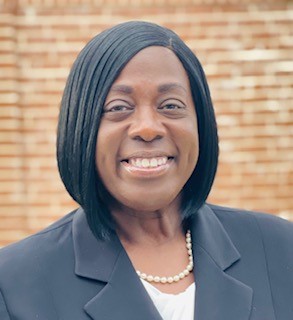 Cherylene McClain Tucker, NCC, MAC, LPC, LCDC, is a Program Supervisor with the Tarrant County Community Supervision and Corrections Department (CSCD) in Fort Worth, Texas. She holds a Bachelor of Science in criminal justice from St. John’s University, and Master of Arts degrees in both professional counseling and marriage and family therapy from Amberton University.
Tucker is an active member of several organizations. She is a board member of the Texas Certification Board of Addiction Professionals, and she is a member of the Tarrant County College Mental Health Advisor Committee. Recently, she has been selected to be a mentor with the NBCC Foundation and the Association for Addiction Professionals (NAADAC) Minority Fellowship Program for Addiction Counselors, where she will be mentoring future addiction counselors.
Tucker has also received several awards: the 2016 Counselor of the Year Award from the local chapter of the Texas Association of Addiction Professionals; the 2016 Elves Smith Counselor of the Year Award from the State Board of the Texas Association of Addiction Professionals; and the 2017 Lora Roe Memorial Addiction Counselor of the Year Award from NAADAC.
Prior to her current position, Tucker has worked with the addicted population as a case manager, as an addiction counselor in a hospital setting, and in the criminal justice system as a parole officer.
In Tucker’s current position, she is the program supervisor over the day treatment program in an intensive treatment program within adult probation. She currently oversees eight different modalities of treatment that address substance use disorders, mental health issues, and cognitive distortions. Tucker also collaborates with stakeholders in the community to assist probationers with gaining autonomy and becoming pro-social members of their community.
- What led you to pursue a degree in counseling compared to other helping professions?
What initially led me to the helping professions was my academic interest in criminal justice. While pursuing my undergraduate degree at St. John’s University, I completed an internship with Nassau County Probation Department. Here I observed the DWI Unit. It was suggested that if I wanted to pursue a career in probation, I needed some work history in social service. It was suggested the best place to do this was working in foster care. I took the suggestion; I obtained a job at Catholic Home Bureau. This is where my passion was awakened.
I began working with adults caught in the grips of addiction in 1987 as a caseworker in New York City for the Catholic Home Bureau Agency. This was the peak of the crack epidemic. This was also the era when HIV was still an unknown disease. Early on I saw how addiction impacted the lives of people and how their families were being destroyed. Working as a caseworker, I felt I was not doing enough to help and desired to help this population more. I returned to school to acquire my substance abuse training at Molloy College in 1991 as a Credentialed Alcoholism Counselor (CAC). In 1993, I began working in the therapeutic field of addiction as an addiction counselor at Kings County Hospital, in Brooklyn, New York. Here I was able to help those caught in the grips of addiction from various areas of life, not just foster care.
Many of my clients had lengthy histories of abuse, neglect, mental health issues, or involvement in the criminal justice or foster care setting. This encouraged me to want to learn more and pursue my graduate studies. In 2009, I returned to school and obtained my master’s degree in professional counseling, and I returned again in 2016 and obtained my master’s degree in marriage and family therapy. I became a Licensed Professional Counselor in 2018.
- Recently, you were awarded the Lora Roe Memorial Addiction Counselor of the Year Award from NAADAC, the Association for Addiction Professionals. What has been your experience working in both mental health and addiction settings? What challenges or barriers have you encountered as a counselor in this area?
As I mentioned before, working with addiction intrigued me. There were so many different facets of addiction. As I began to understand addiction and alcohol and substance use disorders in the DSM, I noticed clients coming into treatment for their addiction had endured long histories of untreated mental health issues. A lot of the referrals from social service agencies were of people who had endured untreated trauma histories. Those mandated to treatment by the criminal justice system many times had untreated and undiagnosed mental health issues.
One of the barriers I encountered early on was not being a dual-licensed counselor and not being able to address those co-occurring disorders because I was only an addiction counselor, licensed to only treat substance use disorders. I knew in order to be effective, I needed to treat the whole person and not just the addiction portion. This gave me the drive to pursue a higher-level education and licensure in order to treat the whole person. A challenge I recognized was that once a person left to pursue a higher level of education, they would pursue a higher level of pay, which many times is not being offered in a substance use disorder treatment setting. I worked many years in a treatment setting, and because I did not have a master’s-level degree or license, my salary did not match my years of experience. This did not deter me from the field. My passion for helping people causes me to stay in this field. Counseling has given me the ability to help people find their hope and develop coping skills to manage their emotions. However, I know that many of my peers have left the field due to the low level of pay.
- In your view, what can be done, or needs to change, to address or overcome these challenges and barriers? Specifically, there has been a push in more recent years for addiction counseling to require graduate-level training. How does this help or hinder the profession and the clients we serve?
I want to start by saying, I am grateful for my formative years I had at Kings County Hospital. Working as an addiction counselor in the trenches gave me my foundation in addiction counseling. This is where I knew I was called to do this career. What I think needs to happen is that there needs to be more incentives for counselors who are working in addiction, especially those who transition from working as a non–master’s-level counselor to a master’s-level counselor. There is a significant difference in pay when working as a non–master’s-level counselor, as opposed to being a master’s-level counselor working in mental health. While in graduate school, there were not as many conversations about working in addiction as there were about working in mental health once you became a fully licensed counselor. I understand that when you complete graduate school, many students have debt and they are eager to become recognizable therapists. Working in the trenches with people is very hard. However, if there was more emphasis on the rewards of working in addiction as opposed to the war stories, there may be more of an interest for clinicians coming into the field. The rewards of working in addiction are helping the families, not just the identified client, and creating safety in communities. When people get sober, they commit fewer crimes and this reduces recidivism. It creates a better economy. When we diminish drug use in communities, those sober individuals return to the work force. I think it would be great if there was more of an emphasis on addiction counseling in graduate-level training. A higher level of course work brings value. I believe this would allow the retention level of staff to be more consistent. Being a master’s-level counselor also allows insurance companies and consumers to invest in treatment that has higher skilled professionals, and this increases that monetary value of the job—another component that supports staff retention.
- You also have a strong background in the field of criminal justice and corrections. In your opinion, how do drug reformation and policy changes to criminalization impact the criminal justice system and addiction counseling? Have you seen any advancements in care and rehabilitation as a result of these changes?
Drug reformation and policy changes for the use of marijuana and the continuing rise of opioids impact the criminal justice system greatly. Drug addiction impacts a myriad of things. It impacts the individual, their family, the community, the judicial system, and health care, just to name a few. The local criminal justice system is designed to protect and serve the community. In the past, professionals in law enforcement and the criminal justice system lacked education and knowledge about addiction and mental health, which has caused many problems, especially in minority communities. I do believe today that many law enforcement agencies and criminal justice agencies are improving. They are hiring more professionals with knowledge of addiction and mental health and establishing collaborative relationships. SAMHSA offers a training for the criminal justice community, “How Being Trauma-Informed Improves Criminal Justice System Responses.” Several community supervision and corrections departments are now training their staff to be trauma informed. On a local judiciary level, because drug reformation has become an issue, many marijuana laws are being reviewed and how these will be managed legally. This continues to be an ongoing concern.
- As counseling professionals, we have a duty to promote social justice and advocate on behalf of our clients and profession. What has been your experience in this area and what shifts have you noticed within the profession and socially to illustrate this commitment?
As a Licensed Professional Counselor working in the criminal justice system for the past 17 years, I have had the opportunity on a regular basis to advocate for clients. In addition to my various duties as a program supervisor over the intensive treatment program at Tarrant County CSCD, I collaborate with two specific courts: FAIP (Felony Alcohol Intervention Project) Court and DWI Misdemeanor Court. In both courts, I am the therapist that offers input during court discussions with the judiciary, attorneys, and officers regarding substance use disorders and mental health as it pertains to clients/probationers. There are other courts within Tarrant County CSCD that collaborate with the judiciary, attorneys, officers, and counselors. What is most rewarding is that the judiciary welcomes the voice of the clinicians in the courtroom, and they value our feedback.
For example, there have been several clients who were experiencing a lot of anxiety. As a result, they were using illicit substances to manage their anxiety. During different court conferences, the judge asked me for my thoughts and feedback. We agreed that I would meet with these clients while they were in treatment in our Intensive Outpatient Program. Upon meeting with these clients, it was evident that they needed to meet with their medical doctor or psychiatrist. The clients were agreeable to this. Once the client was seen by their primary doctor or psychiatrist, we were able to explore the origin of the anxiety and those things that triggered the anxiety. I was able to share with the judge the progress of the clients. The judge was very patient with these clients and allowed these clients to work through some of these issues. Clients were allowed to heal and improve their cognition, causing them to stop using illicit substances and be successful on their probation.
- What has been your experience when interacting with national and local organizations, such as ACA, NAADAC, NBCC, etc.? Do you feel supported by professional organizations or leaders, and has this changed throughout your career?
I am honored to say that I am a member of TCA (Texas Counselors Association), NAADAC (Addiction Professionals) and its local branch (TAAP-Texas Association of Addiction Professionals), and hold certifications from NBCC (National Board for Certified Counselors). Each of these organizations are diligently working on behalf of the counseling profession and for the counselors. The organizations keep us abreast of legislative changes and create policies and implement trainings that support counselors. I feel these organizations are key elements that help to better our profession.
- Throughout your years of practice, what has been your experience when collaborating with other mental health, addiction, and medical professionals? How would you describe coordination of care and treatment options currently as we continue to navigate COVID-19 pandemic–related concerns?
I believe over the years, mental health, addiction, and medical professionals have become more collaborative. Here in North Texas, there are several collaborations that are working together to serve the client. Recently, I was selected to be a stakeholder and to be on the Community Advisor Board with a research project with Texas Christian University (TCU) that is working with our local city hospital, the mental health community, and the criminal justice community to address issues with those who have been infected with HIV and have an opioid use disorder within the criminal justice system. Here the researchers are looking at creating seamless lines for this population of people to receive services. TCU has created a community medical mobile unit to offer services to people in lower socioeconomic communities that are involved in the criminal justice system and those who are receiving mental health services. As a representative in the criminal justice community that offers therapeutic services, they can offer services to our clients. There are other collaborative services that are being offered in the community—connecting the local city hospitals and the mental health community and bridging these gaps in services. The increase of teletherapy has allowed services to go on uninterrupted during the height of the COVID-19 pandemic.
- For future mental health and/or addiction counselors, what advice would you have regarding their involvement in advancement and future development of the profession?
My advice for future clinicians—once you identify your passion, continue to be a forever learner. Our field is ever evolving. Working in addictions, new drugs are always on the rise. We must stay on top of things as changes are coming about. When I started in this profession in 1987 as a caseworker, the DSM-III was the clinical reference. By the time I became an addiction counselor in 1993, the DSM-III-TR was the clinical reference. Here we are in 2023, and the new clinical reference is the DSM-5-TR. Participating with local or national associations allows us to be a part of transitions within and around our profession. Create a voice in our profession that helps to support future clinicians.
This concludes the eighth interview for the annual Lifetime Achievement in Counseling Series. TPC is grateful to Joshua D. Smith, PhD, NCC, LCMHC, and Neal D. Gray, PhD, LCMHC-S, for providing this interview. Joshua D. Smith is an assistant professor at the University of Mount Olive. Neal D. Gray is a professor at Lenoir-Rhyne University. Correspondence can be emailed to Joshua Smith at jsmith@umo.edu.
Dec 22, 2022 | Book Reviews
edited by Derrick A. Paladino, Laura M. Gonzalez, and Joshua C. Watson
 College students today face unique complexity in their world, distinct from the experience of any prior generation—such is the premise of College Counseling and Student Development: Theory, Practice, and Campus Collaboration as it undertakes both to resource and orient today’s college professionals. The text leverages the collective expertise of a diverse group of authors to supply a range and depth of information pertinent to the topic.
Several core chapters set the tone by describing the three waves of student development theory. The contributors provide relevant research and critique, helping developing professionals to consider the multiple possible frameworks from which to conceptualize students. The book appears well-suited to an audience of student counselors who can relate its material to personal experience and their observations of peers’ learning processes in the class environment. The text offers a holistic presentation of college counseling—development of the field, theory, neurobiology, ethics, key diagnostic presentations, and treatment models—reinforcing master’s-level readers’ learning from other courses.
College Counseling and Student Development also ushers developing professionals into the myriad expressions of the college counselor role. Chapters detail university to community college distinctions for each topic; track variance in triage and referral procedures; and spotlight a range of campus initiatives, such as suicide prevention outreach and other population-specific needs. Frequent case examples and application questions enable readers to visualize the differentiation of potential professional roles, for instance, academic advisor vs. career counselor. However, the text also engages the audience of administrators of college counseling centers (CCCs) through targeted resources for effective design of center structure and an organized approach to topics such as crisis policy.
As part of the book’s conceptualization of students, it briefly references a family systems view. A few chapters identify families as key contextual influences on students during their transition into college and young adulthood and consider possible engagement of the parental relationship within student affairs. Even so, the majority of the work frames students individualistically rather than systemically through the highlighted theories and models of treatment. This approach may overlook fully engaging readers of the family systems viewpoint.
However, College Counseling and Student Development appears comprehensive in its content as a whole. A strength of the text across topic areas is its diversity-focused lens, such as examining the distinct experiences of multiheritage students on campus. Similarly, in their presentation of research, the authors prioritize a social justice perspective. They acknowledge areas of possible bias within historic theories, describing how current models seek to supply the gap, including theories specific to college women’s development as learners.
The editors help readers navigate the extensive information innate to the topic through the text’s visual organization, multi-chapter student case studies, and explicit chapter goals. Early chapters on interlocking departments, roles, and resources within the college system establish clear definitions for various terms, though readers may still occasionally find themselves needing to refer back to these initial descriptions for clarity. Although the text format presents as lacking pictures, other than occasional charts, chapters engage readers through self-reflection exercises, transforming a rote perusal of the book into one that integrates reader experience.
College Counseling and Student Development lends itself well to an initial reading, and then as ongoing reference material for new professionals who may review theory frameworks and treatment models as they engage in the hands-on application of their work. The wealth of practical resources includes templates for development of outreach programs, such as student education on eating disorders, hotline numbers for mental health crisis support, and links to articles and webinars for further professional development. Additionally, the book shares free as well as membership-based resources for a variety of CCC demographics and administrative team needs—from behavioral intervention team training and risk evaluation tools to mental health assessments and models of treatment.
The details the authors provide develop readers’ appreciation for the unique niche of, and resources available to, CCCs. This information may encourage professionals to consider what off-campus, outpatient centers can glean from the advances in this micro-community model. Moreover, the text invites counselors on and off campus to conceptualize the students sitting across from them within the college microcosm, considering their challenges, resources, and cultural experiences, distinct from the average community member.
The book underscores the increasing complexity and frequency of mental health issues for the college population. It subsequently challenges the disparity of priority for college counseling in mental health education programs, which lack adequate orientation of counselors for service to this population. The book’s perspective sets a precedent for counselors, administrators, and educators alike to evaluate their respective roles in responding to this discrepancy. As a whole, College Counseling and Student Development: Theory, Practice, and Campus Collaboration represents a comprehensive text, rich with information and resources, orienting and beckoning developing counselors and administrators to the college counseling milieu.
Paladino, D. A., Gonzalez, L. M., & Watson, J. C. (2020). College counseling and student development: Theory, practice, and campus collaboration. American Counseling Association.
Reviewed by: Ellie S. Karle, NCC
Nov 9, 2022 | Volume 12 - Issue 3
Melissa J. Fickling, Matthew Graden, Jodi L. Tangen
The purpose of this phenomenological study was to explore how feminist-identified counselor educators understand and experience power in counselor education. Thirteen feminist women were interviewed. We utilized a loosely structured interview protocol to elicit participant experiences with the phenomenon of power in the context of counselor education. From these data, we identified an essential theme of analysis of power. Within this theme, we identified five categories: (a) definitions and descriptions of power, (b) higher education context and culture, (c) uses and misuses of power, (d) personal development around power, and (e) considerations of potential backlash. These categories and their subcategories are illustrated through narrative synthesis and participant quotations. Findings point to a pressing need for more rigorous self-reflection among counselor educators and counseling leadership, as well as greater accountability for using power ethically.
Keywords: counselor education, power, phenomenological, feminist, women
The American Counseling Association (ACA; 2014) defined counseling, in part, as “a professional relationship that empowers” (p. 20). Empowerment is a process that begins with awareness of power dynamics (McWhirter, 1994). Power is widely recognized in counseling’s professional standards, competencies, and best practices (ACA, 2014; Association for Counselor Education and Supervision [ACES], 2011; Council for the Accreditation of Counseling and Related Educational Programs [CACREP], 2015) as something about which counselors, supervisors, counselor educators, and researchers should be aware (Bernard & Goodyear, 2014). However, little is known about how power is perceived by counselor educators who, by necessity, operate in many different professional roles with their students
(e.g., teacher, supervisor, mentor).
In public discourse, power may carry different meaning when associated with men or women. According to a Pew Research Center poll (K. Walker et al., 2018) of 4,573 Americans, people are much more likely to use the word “powerful” in a positive way to describe men (67% positive) than women (8% positive). It is possible that these associations are also present among counselors-in-training, professional counselors, and counselor educators.
Dickens and colleagues (2016) found that doctoral students in counselor education are aware of power dynamics and the role of power in their relationships with faculty. Marginalized counselor educators, too, experienced a lack of power in certain academic contexts and noted the salience of their intersecting identities as relevant to the experience of power (Thacker et al., 2021). Thus, faculty members in counselor education may have a large role to play in socializing new professional counselors in awareness of power and positive uses of power, and thus could benefit from openly exploring uses of power in their academic lives.
Feminist Theory and Power in Counseling and Counselor Education
The concept of power is explored most consistently in feminist literature (Brown, 1994; Miller, 2008). Although power is understood differently in different feminist spaces and disciplinary contexts (Lloyd, 2013), it is prominent, particularly in intersectional feminist work (Davis, 2008). In addition to examining and challenging hegemonic power structures, feminist theory also centers egalitarianism in relationships, attends to privilege and oppression along multiple axes of identity and culture, and promotes engagement in activism for social justice (Evans et al., 2005).
Most research about power in the helping professions to date has been focused on its use in clinical supervision. Green and Dekkers (2010) found discrepancies between supervisors’ and supervisees’ perceptions of power and the degree to which supervisors attend to power in supervision. Similarly, Mangione and colleagues (2011) found another discrepancy in that power was discussed by all the supervisees they interviewed, but it was mentioned by only half of the supervisors. They noted that supervisors tended to minimize the significance of power or express discomfort with the existence of power in supervision.
Whereas most researchers of power and supervision have acknowledged the supervisor’s power, Murphy and Wright (2005) found that both supervisors and supervisees have power in supervision and that when it is used appropriately and positively, power contributed to clinical growth and enhanced the supervisory relationship. Later, in an examination of self-identified feminist multicultural supervisors, Arczynski and Morrow (2017) found that anticipating and managing power was the core organizing category of their participants’ practice. All other emergent categories in their study were different strategies by which supervisors anticipated and managed power, revealing the centrality of power in feminist supervision practice. Given the utility of these findings, it seems important to extend this line of research from clinical supervision to counselor education more broadly because counselor educators can serve as models to students regarding clinical and professional behavior. Thus, understanding the nuances of power could have implications for both pedagogy and clinical practice.
Purpose of the Present Study
Given the gendered nature of perceptions of power (Rudman & Glick, 2021; K. Walker et al., 2018), and the centrality of power in feminist scholarship (Brown, 1994; Lloyd, 2013; Miller, 2008), we decided to utilize a feminist framework in the design and execution of the present study. Because power appears to be a construct that is widely acknowledged in the helping professions but rarely discussed, we hope to shed light on the meaning and experience of power for counselor educators who identify as feminist. We utilized feminist self-identification as an eligibility criterion with the intention of producing a somewhat homogenous sample of counselor educators who were likely to have thought critically about the construct of power because it figures prominently in feminist theories and models of counseling and pedagogy (Brown, 1994; Lloyd, 2013; Miller, 2008).
Method
We used a descriptive phenomenological methodology to help generate an understanding of feminist faculty members’ lived experiences of power in the context of counselor education (Moustakas, 1994; Padilla-Díaz, 2015). Phenomenological analysis examines the individual experiences of participants and derives from them, via phenomenological reduction, the most meaningful shared elements to paint a portrait of the phenomenon for a group of people (Moustakas, 1994; Starks & Trinidad, 2007). Thus, we share our findings by telling a cohesive narrative derived from the data via themes and subthemes identified by the researchers.
Sample
After receiving IRB approval, we recruited counselor educators via the CESNET listserv who were full-time faculty members (e.g., visiting, clinical, instructor, tenure-track, tenured) in a graduate-level counseling program. We asked for participants of any gender who self-reported that they integrated a feminist framework into their roles as counselor educators. Thirteen full-time counselor educators who self-identified as feminist agreed to be interviewed on the topic of power. All participants were women. Two feminist-identified men expressed initial interest in participating but did not respond to multiple requests to schedule an interview. The researchers did not systematically collect demographic data, relying instead on voluntary participant self-disclosure of relevant demographics during the interviews. All participants were tenured or tenure-track faculty members. Most were at the assistant professor rank (n = 9), a few were associate professors (n = 3), and one was a full professor who also held various administrative roles during her academic career (e.g., department chair, dean). During the interviews, several participants expressed concern over the high potential for their identification by readers due to their unique identities, locations, and experiences. Thus, participants will be described only in aggregate and only with the demographic identifiers volunteered by them during the interviews. The participants who disclosed their race all shared they were White. Nearly all participants disclosed holding at least one marginalized identity along the axes of age, disability, religion, sexual orientation, or geography.
Procedure
Once participants gave informed consent, phone interviews were scheduled. After consent to record was obtained, interviewers began the interviews, which lasted between 45–75 minutes. We utilized an unstructured interview format to avoid biasing the data collection to specific domains of counselor education while also aiming to generate the most personal and nuanced understandings of power directly from the participants’ lived experiences (Englander, 2012). As experienced interviewers, we were confident in our ability to actively and meaningfully engage in discourse with participants via the following prompt: “We are interested in understanding power in counselor education. Specifically, please speak to your personal and/or professional development regarding how you think about and use power, and how you see power being used in counselor education.” After the interviews, we all shared the task of transcribing the recordings verbatim, each transcribing several interviews. All potentially identifying information (e.g., names, institutional affiliations) was excluded from the interview transcripts.
Data Analysis
Data analysis began via horizontalization of two interview transcripts by each author (Moustakas, 1994; Starks & Trinidad, 2007). Next, we began clustering meaning units into potential categories (Moustakas, 1994). This initially revealed 21 potential categories, which we discussed in the first research team meeting. We kept research notes of our meetings, in which we summarized our ongoing data analysis processes (e.g., observations, wonderings, emerging themes). These notes helped us to revisit earlier thinking around thematic clustering and how categories interrelated. The notes did not themselves become raw data from which findings emerged. Through weekly discussions over the course of one year, the primary coders (Melissa Fickling and Matthew Graden) were able to refine the categories through dialoguing until consensus was reached, evidenced by verbal expression of mutual agreement. That is, the primary coders shared power in data analysis and sometimes tabled discussions when consensus was not reached so that each could reflect and rejoin the conversation later. As concepts were refined, early transcripts needed to be re-coded. Our attention was not on the quantification of participants or categories, but on understanding the essence of the experience of power (Englander, 2012; Moustakas, 1994). The themes and subthemes in the findings section below were a fit for all transcripts by the end of data analysis.
Researchers and Trustworthiness
Fickling and Jodi Tangen are White, cis-hetero women, and at the time of data analysis were pre-tenured counselor educators in their thirties who claimed a feminist approach in their work. Graden was a master’s student and research assistant with scholarly interests in student experiences related to gender in counseling and education. We each possess privileged and marginalized identities, which facilitate certain perspectives and blind spots when it comes to recognizing power. Thus, regular meetings before, during, and after data collection and analysis were crucial to the epoche and phenomenological reduction processes (Moustakas, 1994) in which we shared our assumptions and potential biases. Fickling and Graden met weekly throughout data collection, transcription, and analysis. After the initial research design and data collection, Tangen served primarily as auditor to the coding process by comparing raw data to emergent themes at multiple time points, reviewing the research notes written by Fickling and Graden and contributing to consensus-building dialogues when needed.
Besides remaining cognizant of the strengths and limitations of our individual positionalities with the topic and data, we shared questions and concerns with each other as they arose during data analysis. Relevant to the topic of this study, Fickling served as an administrative supervisor to Graden. This required acknowledgement of power dynamics inherent in that relationship. Graden had been a doctoral student in another discipline prior to this study and thus had firsthand context for much of what was learned about power and its presence in academia. Fickling and Graden’s relationship had not extended into the classroom or clinical supervision, providing a sort of boundary around potential complexities related to any dual relationships. To add additional trustworthiness to the findings below, we utilized thick descriptions to describe the phenomenon of interest while staying close to the data via quotations from participants. Finally, we discuss the impact and importance of the findings by highlighting implications for counselor educators.
Findings
Through the analysis process, we concluded that the essence (Moustakas, 1994)—or core theme—of the experience of power for the participants in this study is engagement in a near constant analysis of power—that of their colleagues, peers, students, as well as of their own power. Participants analyzed interactions of power within and between various contexts and roles. They shared many examples of uses of power—both observed and personally enacted—which influenced their development, as well as their teaching and supervision styles. Through the interviews, participants shared the following:
(a) definitions and descriptions of power, (b) higher education context and culture, (c) uses and misuses of power, (d) personal development around power, and (e) considerations of potential backlash. These five categories comprised the overarching theme of analysis of power and are described below with corresponding subcategories where applicable, identified in italics.
Definitions and Descriptions of Power
Participants spent much of their time defining and describing just what they meant when they discussed power. For the feminist counselor educators in this study, power is about helping. One participant, when describing power, captured this sentiment well when she said, “I think of the ability to affect change and the ability to have a meaningful impact.” Several participants shared this same idea by talking about power as the ability to have influence. Participants expressed a desire to use power to do good for others rather than to advance their personal aspirations or improve their positions. Use of power for self-promotion was referenced to a far lesser extent than using power to promote justice and equity, and any self-promotional use was generally in response to perceived personal injustice or exploitation. At times, participants described power by what it is not. One participant said, “I don’t see power as a negative. I think it can be used negatively.” Several others shared this sentiment and described power as a responsibility.
In describing power, participants identified feelings of empowerment/disempowerment (Table 1). Disempowerment was described with feeling words that captured a sense of separation and helplessness. Empowerment, on the other hand, was described as feeling energetic and connected. Not only was the language markedly different, but the shifts in vocal expression were also notable (nonverbals were not visible) when participants discussed empowerment versus disempowerment. Disempowerment sounded like defeat (e.g., breathy, monotone, low energy) whereas empowerment sounded like liveliness (e.g., resonant, full intonation, energetic).
Table 1
Empowered and Disempowered Descriptors
| Descriptors |
| Empowered |
Disempowered |
| Authentic
Free
Good
Heard
Congruent
Genuine
Selfless
Hopeful
Confident
Serene
Connected
Grounded
Energized |
Isolated
Disenfranchised
Anxious
Separated Identity
Not Accepted
Disheartened
Helpless
Small
Weak
Invisible
Wasting Energy
Tired
Powered Down |
Participants identified various types of power, including personal, positional, and institutional power. Personal power was seen as the source of the aspirational kinds of power these participants desired for themselves and others. It can exist regardless of positional or institutional power. Positional power provides the ability to influence decisions, and it is earned over time. The last type of power, institutional, is explored more through the next theme labeled higher education context and culture.
Higher Education Context and Culture
Because the focus of the study was power within counselor educators’ roles, it was impossible for participants not to discuss the context of their work environments. Thus, higher education context and culture became a salient subtheme in our findings. Higher education culture was described as “the way things are done in institutions of higher learning.” Participants referred to written/spoken and unwritten/silent rules, traditions, expectations, norms, and practices of the academic context as barriers to empowerment, though not insurmountable ones. Power was seen as intimately intertwined with difficult departmental relationships as well as the roles of rank and seniority for nearly all participants. Most also acknowledged the influence of broader sociocultural norms (i.e., local, state, national) on higher education in general, noting that institutions themselves are impacted by power dynamics.
One participant who said that untenured professors have much more power than they realize also said that “power in academia comes with rank.” This contradiction highlights the tension inherent in power, at least among those who wish to use it for the “greater good” (as stated by multiple participants) rather than for personal gain, as these participants expressed.
More than one participant described power as a form of currency in higher education. This shared experience of power as currency, either through having it or not having it, demonstrated that to gain power to do good, as described above, one must be willing or able to be seen as acceptable within the system that assigns power. Boldness was seen by participants as something that can happen once power is gained. Among non-tenured participants, this quote captures the common sentiment: “Now, once I get tenure, that can be a different conversation. I think I would feel more emboldened, more safe, if you will, to confront a colleague in that way.” The discussion of context and boldness led to the emergence of a third theme, which we titled uses and misuses of power.
Uses and Misuses of Power
Participants provided many examples of their perceptions of uses and misuses of power and linked these behaviors to their sense of ethics. Because many of the examples of uses of power were personal, unique, and potentially identifiable, participants asked that they not be shared individually in this manuscript. Ethical uses of power were described as specific ways in which participants remembered power being used for good such as intervention in unfair policies on behalf of students. Ethical uses of power shared the characteristics of being collaborative and aligned with the descriptors of “feeling empowered” (Table 1).
In contrast, misuses of power were described in terms of being unethical. These behaviors existed on a spectrum that ranged from a simple lack of awareness to a full-blown abuse of power on the most harmful end of the continuum. Lack of awareness of power, for these participants, was observed quite frequently among their counselor education colleagues and they noted that people can negatively affect others without realizing it. In some cases, they reported seeing colleagues lack cultural awareness, competence, or an awareness of privilege. Although many colleagues cognitively know about privilege and speak about it, the lack of awareness referred to here is in terms of the behavioral use of privilege to the detriment of those with less privilege. One example would be to call oneself an LGBTQ+ ally without actively demonstrating ally behavior like confronting homophobic or cis-sexist language in class. Moving along the spectrum, misuses of power were described as unfairly advantaging oneself, possibly at the expense or disadvantage of another. Misuses of power may or may not be directly or immediately harmful but still function to concentrate power rather than share it. An example shared was when faculty members insist that students behave in ways that are culturally inconsistent for that student. At the other end of the spectrum, abuses of power are those behaviors that directly cause harm. Even though abuses of power can be unintentional, participants emphasized that intentions matter less than effects. One participant described abuses of power she had observed as “people using power to make others feel small.” For example, a professor or instructor minimizing students’ knowledge or experiences serves to silence students and leads to a decreased likelihood the student shares, causing classmates to lose out on that connection and knowledge.
One participant shared a culture of ongoing misuses of power by a colleague: “And then they’re [students] all coming to me crying, you know, surreptitiously coming to me in my office, like, ‘Can I talk to you?’ I’m like, ‘Yeah, shut the door. What’d he do now?’ I’m happy to be a safe person for them, it’s an honor, but this is ridiculous.” The irony of feeling powerless to stop another’s misuses of power was not lost on the participants. One participant expressed that she wished to see more colleagues ask questions about their use of power:
We have to ask the question, “What is the impact? What is happening, what are the patterns?” We have to ask questions about access and participation and equity. . . .
And from my perspective, we have to assume that things are jacked up because we know that any system is a microcosm of the outer world, and the outer world is jacked up. So, we have to ask these questions and understand if there’s an adverse impact. And a lot of time there is on marginalized or minoritized populations. So, what are we going to do about it? It’s all well and good to see it, but what are we doing about it, you know? . . . How are you using your power for good?
Personal Development Around Power
Participants reflected deeply on their own development of their thinking about and use of power. All participants spoke early in the interviews about their training as counselors and counselor educators. Their early training was often where they first fully realized their feminist orientation and recognized a need for greater feminist multicultural dialogue and action in counseling. Participants were all cognizant of their inherent personal power but still not immune to real and perceived attempts to limit their expression of it. In general, participants felt that over time they became more able and willing to use their power in ethical ways. One participant shared the following about her change in understanding power over time:
I’ve never really been a power-focused person, and so I just don’t know that I saw it around me much before that. Which now I realize is a total construct of my privilege—that I’ve never had to see it. Then I started realizing that “Oh, there’s power all around me.” And people obsessed with power all around me. And then once I saw it, I kind of couldn’t un-see it. I think for a long time I went through a process of disillusionment, and I think I still lapse back into that sometimes where I’ll realize like, a lot of the people in positions of power around me are power-hungry or power-obsessed, and they’re using power in all the wrong ways. And maybe they don’t even have an awareness of it. You know, I don’t think everybody who’s obsessed with power knows that about themselves. It almost seems like a compulsion more than anything. And I think that’s super dangerous.
Nearly all participants reflected on their experiences of powerlessness as students and how they now attempt to empower students as a result of their experiences. Working to build a sense of safety in the classroom was a major behavior that they endorsed, often because of their own feelings of a lack of safety in learning contexts at both master’s and doctoral levels. Vulnerability and risk-taking on the part of the counselor educator were seen as evidence that efforts to create safety in the classroom were successful. Speaking about this, one participant said:
I think it’s actually very unethical and irresponsible as a counselor educator to throw students in a situation where you expect them to take all these risks and not have worked to create community and environments that are conducive to that.
Participant feelings toward power varied considerably. One said, “I think overall I feel fairly powerful. But I don’t want a lot of power. I don’t like it.” One participant shared, “I am not shy, I am not afraid to speak and so sometimes maybe I do take up too much space, and there are probably times for whatever reason I don’t take up as much space as I should,” showing both humility and a comfort with her own power. These quotes show the care with which the participants came to think about their own power as they gained it through education, position, and rank. No participants claimed to feel total ease in their relationship with their own power, though most acknowledged that with time, they had become more comfortable with acknowledging and using their power when necessary.
One participant said of her ideal expression of power: “Part of feeling powerful is being able to do what I do reasonably well, not perfect, just reasonably well. But also helping to foster the empowerment of other people is just excellent. That’s where it’s at.” This developmental place with her own power aligns with the aspirational definitions and descriptions of power shared above.
Along with their personal development around power, participants shared how their awareness of privileged and marginalized statuses raised their understanding of power. Gender and age were cited by nearly all participants as being relevant to their personal experiences with power. Namely, participants identified the intersection of their gender and young age as being used as grounds for having their contributions or critiques dismissed by their male colleagues. Older age seemed to afford some participants the confidence and power needed to speak up. One participant said:
We are talking about a profession that is three-quarters women, and we are not socialized to grab power, to take power. And so, I think all of that sometimes is something we need to be mindful of and kind of keep stretching ourselves to address.
Yet when younger participants recalled finding the courage to address power imbalances with their colleagues, the outcome was almost always denial and continued disempowerment. To this point, one participant asked, “How do we get power to matter to people who are already in the positions where they hold power and aren’t interested in doing any self-examination or critical thinking about the subject?”
Finally, power was described as permeating every part of being an educator. To practice her use of power responsibly, one participant said, “I mean every decision I make has to, at some point, consider what my power is with them [the students].” Related to the educator role, in general, participants shared their personal development with gatekeeping, such as:
I think one of the areas that I often feel in my power is around gatekeeping. And I think that is also an area where power can be grossly abused. But I think it’s just such an important part of what we do. And I think one of the ways that I feel in my power around gatekeeping is because it’s something I don’t do alone. I make a point to consult a lot because I don’t want to misuse power, and I think gatekeeping—and, really, like any use of power I think—is stronger when it’s done with others.
Again, this quote reflects the definition of power that emerged in this study as ideally being “done with others.” Gatekeeping is where participants seemed to be most aware of power and to initially have had the most anxiety around power, but also the area in which they held the most conviction about the intentional use of power. The potential cost of not responsibly using their power in gatekeeping was to future clients, so participants pushed through their discomfort to ensure competent and ethical client care. However, in many cases, participants had to seriously weigh the pros and cons of asserting their personal or positional power, as described in the next and final category.
Considerations of Potential Backlash
Participants shared about the energy they spent in weighing the potential backlash to their expressions of power, or their calling out of unethical uses of power. Anticipated backlash often resulted in participants not doing or saying something for fear of “making waves” or being labeled a “troublemaker.” Participants described feeling a need to balance confrontations of perceived misuses of power with their desire not to be seen as combative. Those participants who felt most comfortable confronting problematic behaviors cited an open and respectful workplace and self-efficacy in their ability to influence change effectively. For those who did not describe their workplaces as safe and respectful, fear was a common emotion cited when considering whether to take action to challenge a student or colleague. Many described a lack of support from colleagues when they did speak up. Some described support behind the scenes but an unwillingness of peers to be more vocal and public in their opposition to a perceived wrong. Of this, one participant said, “And so getting those voices . . . to the table seems like an uphill battle. I feel like I’m stuck in middle management, in a way.”
Discussion
For the participants in this study, analysis of power is a process of productive tension and fluidity. Participants acknowledged that power exists and a power differential in student–teacher and supervisee–supervisor relationships will almost certainly always be present. Power seemed to be described as an organizing principle in nearly all contexts—professionally, institutionally, departmentally, in the classroom, in supervision, and in personal relationships. Participants found power to be ever present but rarely named (Miller, 2008). Engaging with these data from these participants, it seems that noticing and naming power and its effects is key to facilitating personal and professional development in ways that are truly grounded in equity, multiculturalism, and social justice. Participants affirmed what is stated in guiding frameworks of counseling (ACA, 2014) and counselor education (ACES, 2011; CACREP, 2015) and went beyond a surface acknowledgement of power to a deeper and ongoing process of analysis, like Bernard and Goodyear’s (2014) treatment of power in the supervisory context.
Contemplating, reflecting on, and working with power are worthwhile efforts according to the participants in this study, which is supported by scholarly literature on the topic (Bernard & Goodyear, 2014). Participants’ personal and professional growth seemed to be catalyzed by their awareness of gender and power dynamics. Participants expressed a desire for a greater recognition of the role of power and the ways in which it is distributed in our professional contexts. For example, although mentioned by only two participants, dissatisfaction in professional associations—national, regional, and state—was shared. Specifically, there was a desire to see counselor educators with positional power make deliberate and visible efforts to bring greater diversity into professional-level decisions and discussions in permanent, rather than tokenizing, ways.
The ongoing process of self-analysis that counselors and educators purport to practice seemed not to be enough to ensure that faculty will not misuse power. Though gender and age were highly salient aspects of perceptions of power for these women, neither were clear predictors of their colleagues’ ethical or unethical use of power. Women and/or self-identified feminist counselor educators can and do use power in problematic ways at times. In fact, most participants expressed disappointment in women colleagues and leaders who were unwilling to question power or critically examine their role in status quo power relations. This is consistent with research that indicates that as individual power and status are gained, awareness of power can diminish (Keltner, 2016).
These feminist counselor educators described feelings of empowerment as those that enhance connection and collaboration rather than positionality. In fact, participants’ reports of frustration with some uses of power seemed to be linked to people in leadership positions engaging in power-over moves (Miller, 2008). Participants reported spending a significant amount of energy in deciding whether and when to challenge perceived misuses of power. Confronting leaders seemed to be the riskiest possibility, but confronting peers was also a challenge for many participants. The acknowledgement of context emerged in these data, including a recognition that power works within and between multiple socioecological levels (e.g., microsystems, mesosystems, macrosystems; Bronfenbrenner, 1979). The culture of academia and higher education also contributed to unique considerations of power in the present study, which aligns with the findings of Thacker and colleagues (2021), who noted counselor educator experiences of entrenched power norms are resistant to change.
Contextualizing these findings in current literature is difficult given the lack of work on this topic in counselor education. However, our themes are similar to those found in the supervision literature (Arczynski & Morrow, 2017; Bernard & Goodyear, 2014). The participants in our study were acutely aware of power in their relationships; however, they appeared to feel it even more when in a power-down position. This finding is similar to research in the supervision context in which supervisees felt as though power was not being addressed by their supervisors (Green & Dekkers, 2010). Further, just as the supervisors researched in Mangione et al.’s (2011) study attended to power analysis, our participants strived to examine their power with students. The distinction between positive and negative uses of power was consistent with Murphy and Wright (2005). Participants conceptualized power on a continuum, attended to the power inherent in gatekeeping decisions, managed the tension between collaboration and direction, engaged in reflection around use and misuse of power, and sought transparency in discussions around power. More than anything, though, our participants seemed to continually wrestle with the inherent complexity of power, similarly to what Arczynski and Morrow (2017) found, and how to address, manage, and work with it in a respectful, ethical manner. As opposed to these studies, though, our research addresses a gap between the profession’s acknowledgement of power as a phenomenon and actual lived experiences of power by counselor educators who claim a feminist lens in their work.
Implications
The implications of our findings are relevant across multiple roles (e.g., faculty, administration, supervision) and levels (e.g., institution, department, program) in counselor education. Power analysis at each level and each role in which counselor educators find themselves could help to uncover issues of power and its uses, both ethical and problematic. The considerable effort that participants described in weighing whether to challenge perceived misuses of power indicates the level of work needed to make power something emotionally and professionally safe to address. Thus, those who find themselves in positions of power or having earned power through tenure and seniority are potentially better situated to invite discussions of power in relatively safe settings such as program meetings or in one-on-one conversations with colleagues. Further, at each hierarchical level, individuals can engage in critical self-reflection while groups can elicit external, independent feedback from people trained to observe and name unjust power structures. Counselor educators should not assume that because they identify as feminist, social justice–oriented, or egalitarian that their professional behavior is always reflective of their aspirations. It is not enough to claim an identity; one must work to let one’s actions and words demonstrate one’s commitment to inclusion through sensitivity to and awareness of power.
Additionally, we encourage counselor educators to ask for feedback from people who will challenge them because self-identification of uses or misuses of power is likely not sufficient to create systemic or even individual change. It is important to acknowledge that power is differentially assigned but can be used well in a culture of collaboration and support. Just as we ask our students to be honest and compassionately critical of their own development, as individuals and as a profession, it seems we could be doing more to foster empowerment through support, collaboration, and honest feedback.
Limitations and Future Directions
Although not all participants disclosed all their demographic identifiers, one limitation to the current study is the relative homogeneity of the sample across racial and gender lines. The predominance of White women in the present study is of concern, and there are a few possible reasons for this. One is that White women are generally overrepresented in the counseling profession. Baggerly and colleagues (2017) found that women comprised 85% of the student body in CACREP-accredited programs but only 60% of the faculty. These numbers indicate both the high representation of women seeking counseling degrees, but also the degree to which men approach, but do not reach, parity with women in holding faculty positions. Further, in Baggerly et al.’s study, about 88% of faculty members in CACREP-accredited programs were White.
Another potential reason for the apparent racial homogeneity in the present sample is that people of color may not identify with a feminist orientation because of the racist history of feminist movements and so would not have volunteered to participate. Thus, findings must be considered in this context. Future researchers should be vocally inclusive of Black feminist thought (Collins, 1990) and Womanism (A. Walker, 1983) in their research design and recruitment processes to communicate to potential participants an awareness of the intersections of race and gender. Further, future research should explicitly invite those underrepresented here—namely, women of color and men faculty members—to share their experiences with and conceptualizations of power. This will be extremely important as counselor educators work to continue to diversify the profession of counseling in ways that are affirming and supportive for all.
Another limitation is that participants may have utilized socially desirable responses when discussing power and their own behavior. Indeed, the participants identified a lack of self-awareness as common among those who misused power. At the same time, however, the participants in this study readily shared their own missteps, lending credibility to their self-assessments. Future research that asks participants to track their interactions with power in real time via journals or repeated quantitative measures could be useful in eliciting more embodied experiences of power as they arise in vivo. Likewise, students’ experiences of power in their interactions with counselor educators would be useful, particularly as they relate to teaching or gatekeeping, because some research already exists examining power in the context of clinical supervision (Arczynski & Morrow, 2017; Green & Dekkers, 2010; Mangione et al., 2011; Murphy & Wright, 2005).
We initially embarked upon this study with a simple inquiry, wondering about others’ invisible experiences around what felt like a formidable topic. More than anything, our discussions with our participants seemed to indicate a critical need for further exploration of power across hierarchical levels and institutions. We are grateful for our participants’ willingness to share their stories, and we hope that this is just the beginning of a greater dialogue.
Conflict of Interest and Funding Disclosure
The authors reported no conflict of interest
or funding contributions for the development
of this manuscript.
References
American Counseling Association. (2014). ACA code of ethics.
Arczynski, A. V., & Morrow, S. L. (2017). The complexities of power in feminist multicultural psychotherapy supervision. Journal of Counseling Psychology, 64(2), 192–205. https://doi.org/10.1037/cou0000179
Association for Counselor Education and Supervision Taskforce on Best Practices in Clinical Supervision. (2011, April). Best practices in clinical supervision. https://acesonline.net/wp-content/uploads/2018/11/ACES-Best-Practices-in-Clinical-Supervision-2011.pdf
Baggerly, J., Tan, T. X., Pichotta, D., & Warner, A. (2017). Race, ethnicity, and gender of faculty members in APA- and CACREP-accredited programs: Changes over five decades. Journal of Multicultural Counseling and Development, 45(4), 292–303. https://doi.org/10.1002/jmcd.12079
Bernard, J. M., & Goodyear, R. K. (2014). Fundamentals of clinical supervision (5th ed.). Pearson.
Bronfenbrenner, U. (1979). The ecology of human development: Experiments by nature and design. Harvard University Press.
Brown, L. S. (1994). Subversive dialogues: Theory in feminist therapy. Basic Books.
Collins, P. H. (2000). Black feminist thought: Knowledge, consciousness, and the politics of empowerment (2nd ed.). Routledge.
Council for Accreditation of Counseling and Related Educational Programs. (2015). 2016 CACREP standards. https://www.cacrep.org/for-programs/2016-cacrep-standards
Davis, K. (2008). Intersectionality as buzzword: A sociology of science perspective on what makes a feminist theory successful. Feminist Theory, 9(1), 67–85. https://doi.org/10.1177/1464700108086364
Dickens, K. N., Ebrahim, C. H., & Herlihy, B. (2016). Counselor education doctoral students’ experiences with multiple roles and relationships. Counselor Education and Supervision, 55(4), 234–249. https://doi.org/10.1002/ceas.12051
Englander, M. (2012). The interview: Data collection in descriptive phenomenological human scientific research. Journal of Phenomenological Psychology, 43(1), 13–35. https://doi.org/10.1163/156916212X632943
Evans, K. M., Kincade, E. A., Marbley, A. F., & Seem, S. R. (2005). Feminism and feminist therapy: Lessons from the past and hopes for the future. Journal of Counseling & Development, 83(3), 269–277. https://doi.org/10.1002/j.1556-6678.2005.tb00342.x
Green, M. S., & Dekkers, T. D. (2010). Attending to power and diversity in supervision: An exploration of supervisee learning outcomes and satisfaction with supervision. Journal of Feminist Family Therapy, 22(4), 293–312. https://doi.org/10.1080/08952833.2010.528703
Keltner, D. (2016). The power paradox: How we gain and lose influence. Penguin.
Lloyd, M. (2013). Power, politics, domination, and oppression. In G. Waylen, K. Celis, J. Kantola, & S. Laurel Weldon (Eds.), The Oxford handbook of gender and politics (pp. 111–134). Oxford University Press.
Mangione, L., Mears, G., Vincent, W., & Hawes, S. (2011). The supervisory relationship when women supervise women: An exploratory study of power, reflexivity, collaboration, and authenticity. The Clinical Supervisor, 30(2), 141–171. https://doi.org/10.1080/07325223.2011.604272
McWhirter, E. H. (1994). Counseling for empowerment. American Counseling Association.
Miller, J. B. (2008). Telling the truth about power. Women & Therapy, 31(2–4), 145–161.
https://doi.org/10.1080/02703140802146282
Moustakas, C. (1994). Phenomenological research methods. SAGE.
Murphy, M. J., & Wright, D. W. (2005). Supervisees’ perspectives of power use in supervision. Journal of Marital and Family Therapy, 31(3), 283–295.
https://doi.org/10.1111/j.1752-0606.2005.tb01569.x
Padilla-Díaz, M. (2015). Phenomenology in educational qualitative research: Philosophy as science or philosophical science? International Journal of Educational Excellence, 1(2), 101–110. https://documento.uagm.edu/cupey/ijee/ijee_padilla_diaz_1_2_101-110.pdf
Rudman, L. A., & Glick, P. (2021). The social psychology of gender: How power and intimacy shape gender relations (2nd ed.). Guilford.
Starks, H., & Trinidad, S. B. (2007). Choose your method: A comparison of phenomenology, discourse analysis, and grounded theory. Qualitative Health Research, 17(10), 1372–1380.
https://doi.org/10.1177%2F1049732307307031
Thacker, N. E., Barrio Minton, C. A., & Riley, K. B. (2021). Marginalized counselor educators’ experiences negotiating identity: A narrative inquiry. Counselor Education and Supervision, 60(2), 94–111. https://doi.org/10.1002/ceas.12198
Walker, A. (1983). In search of our mothers’ gardens: Womanist prose. Harcourt Brace.
Walker, K., Bialik, K., & van Kessel, P. (2018). Strong men, caring women: How Americans describe what society values (and doesn’t) in each gender. https://www.pewsocialtrends.org/interactives/strong-men-caring-women
Melissa J. Fickling, PhD, ACS, BC-TMH, LCPC, is an associate professor at Northern Illinois University. Matthew Graden, MSEd, is a professional school counselor. Jodi L. Tangen is an associate professor at North Dakota State University. Correspondence may be addressed to Melissa J. Fickling, 1425 W. Lincoln Hwy, Gabel 200, DeKalb, IL 60115, mfickling@niu.edu.
Nov 9, 2022 | Volume 12 - Issue 3
Krystle Himmelberger, James Ikonomopoulos, Javier Cavazos Vela
We implemented a single-case research design (SCRD) with a small sample (N = 2) to assess the effectiveness of solution-focused brief therapy (SFBT) for Latine clients experiencing mental health concerns. Analysis of participants’ scores on the Dispositional Hope Scale (DHS) and Outcome Questionnaire (OQ-45.2) using split-middle line of progress visual trend analysis, statistical process control charting, percentage of non-overlapping data points procedure, percent improvement, and Tau-U yielded treatment effects indicating that SFBT may be effective for improving hope and mental health symptoms for Latine clients. Based on these findings, we discuss implications for counselor educators, counselors-in-training, and practitioners, which include integrating SFBT principles into the counselor education curriculum, teaching counselors-in-training how to use SCRDs to evaluate counseling effectiveness, and using the DHS and OQ-45.2 to measure hope and clinical symptoms.
Keywords: solution-focused brief therapy, single-case research design, hope, counselor education, clinical symptoms
Solution-focused brief therapy (SFBT) is a strength-based and evidence-based intervention that helps clients focus on personal strengths, identify exceptions to problems, and highlight small successes (Berg, 1994; Gonzalez Suitt et al., 2016; Schmit et al., 2016). Schmit et al. (2016) conducted a meta-analysis of SFBT for treating symptoms of internalizing disorders and identified that SFBT might be effective in creating short-term changes in clients’ functioning. Other researchers (e.g., Gonzalez Suitt et al., 2016; Novella et al., 2020) also found that SFBT can be helpful with clients from various cultural backgrounds and with different presenting symptoms such as anxiety. Yet, there is scant research evaluating the efficacy of SFBT on subjective well-being with Latine (a gender-neutral term that is more consistent with Spanish language and grammar than Latinx) populations. Additionally, there is not a lot of research that investigates the effectiveness of counseling practices among counselors-in-training (CITs) at community counseling clinics with culturally diverse clients. Although the costs are relatively low, the type of supervision, training, and feedback given to CITs provides community clients with the potential for effective counseling services. However, only a few researchers (e.g., Schuermann et al., 2018) have explored the efficacy of counseling services within a community counseling training clinic. Therefore, empirical research is needed regarding the efficacy of SFBT with Latine populations in a counseling training clinic at a Hispanic Serving Institution.
The Latine population is a fast-growing group in the United States and makes up approximately 19% of the U.S. population (U.S. Census Bureau, 2020). Despite this growth, members of this culturally diverse population continue to face individual, interpersonal, and institutional challenges (Ponciano et al., 2020; Vela, Lu, et al., 2014). Because Latine individuals experience discrimination and negative environments (Cheng & Mallinckrodt, 2015; Ponciano et al., 2020; Ramos et al., 2021), perceive lack of support from counselors and teachers in K–12 school environments (A. G. Cavazos, 2009; Vela-Gude et al., 2009), and experience microaggressions (Sanchez, 2019), they are likely to experience greater mental health challenges. Researchers have identified numerous internalizing and externalizing symptoms that represent Latine individuals’ mental health experiences, likely putting them at greater risk for mental health impairment and poor psychological functioning (Cheng et al., 2016). Researchers also detected that Latine youth had similar or higher prevalence rates of internalizing disorders (e.g., anxiety and depression) when compared with their White counterparts (Merikangas et al., 2010; Ramos et al., 2021). Given that Latine individuals might be at greater risk for psychopathology and their mental health needs are often unaddressed because they do not seek mental health services (Mendoza et al., 2015; Sáenz et al., 2013), further evaluation of the effectiveness of counseling practices for this population is necessary.
Fundamental Principles of Solution-Focused Brief Therapy
Developed from the clinical practice of Steven de Shazer and Insoo Kim Berg, SFBT is a future-focused and goal-directed approach that focuses on searching for solutions and is created on the belief that clients have knowledge and resources to resolve their problems (Kim, 2008). Counselors’ therapeutic task is to help clients imagine how they would like things to be different and what it will take to facilitate small changes. Counselors take active roles by asking questions to help clients look at the situation from different perspectives and use techniques to identify where the solution occurs (de Shazer, 1991; Proudlock & Wellman, 2011).
In SFBT, counselors amplify positive constructs and solutions by using specific strategies and techniques to build on positive factors (Tambling, 2012). Common techniques include the miracle question, scaling questions, exceptions, experiments, and compliments, which are designed to help clients identify personal strengths and cultivate what works (de Shazer, 1991; Proudlock & Wellman, 2011). We agree with Vela, Lerma, et al. (2014) that counselors can use postmodern and strength-based theories (e.g., SFBT) to develop positive psychology constructs such as hope, positive emotions, and subjective well-being. SFBT might be useful to help Latine clients identify strengths, build on what works, and reconstruct a positive future outcome.
Several researchers have indicated the efficacy of SFBT for treating various issues with different populations (Bavelas et al., 2013; Kim, 2008). Schmit et al. (2016) conducted a meta-analysis with 26 studies examining the effectiveness of SFBT for treating symptoms of depression and anxiety. They found that SFBT resulted in moderately successful treatment; however, adults’ treatment effects were 5 times larger when compared to those of youth and adolescents. One possible explanation was that SFBT may require clients’ maturity to integrate and understand SFBT concepts and techniques. Researchers also concluded that the impact of SFBT may be effective in producing short-term changes that will lead to further gains in symptom relief as well as psychological functioning (Schmit et al., 2016).
Brogan et al. (2020) commented that “there are limited studies that demonstrate the effectiveness of this method with the Latine . . . population” (p. 3). However, we postulate that SFBT principles are compatible with Latine cultural and family characteristics (Lerma et al., 2015; Oliver et al., 2011). There are several reasons that make SFBT an appropriate fit for working with the Latine population. For instance, researchers suggest that understanding family dynamics or familismo when evaluating mental health and overall well-being with the Latine population is important (Ayón et al., 2010). Familismo is strong family ties to immediate and extended families in the Latine culture.
In a study investigating Latine families, Priest and Denton (2012) found that family cohesion and family discord were associated with anxiety. Calzada et al. (2013) also highlighted that although family support can positively impact mental health, family can also become a source of conflict and stress, which might result in poor mental health. By using SFBT principles, counselors can help Latine clients identify how familismo is a source of strength through sense of loyalty and cooperation among family members (Oliver et al., 2011).
Another emphasis with SFBT that aligns with the Latine culture is the focus on personal and family resiliency. Because Latine individuals must navigate individual, interpersonal, and institutional challenges (Vela et al., 2015), they have natural resilience and coping skills that align with an SFBT approach. Counselors can use exceptions, scaling questions, and compliments to help Latine individuals discover their inherent resilience and continue to persevere through personal adversity.
Constructs: Hope and Clinical Symptoms
Consistent with a dual-factor model of mental health (Suldo & Shaffer, 2008), we focused on two outcomes: hope and clinical symptoms. First, hope, which has been associated with subjective well-being among Latine populations (Vela, Lu, et al., 2014), refers to a pattern of thinking regarding goals (Snyder et al., 2002). Snyder et al. (1991) proposed Hope Theory with pathways thinking and agency thinking. Pathways thinking refers to individuals’ plans to pursue desired objectives (Feldman & Dreher, 2012), while agency thinking refers to perceptions of ability to make progress toward goals (Snyder et al., 1999). Researchers found that hope was positively related to meaning in life, grit, and subjective happiness among Latine populations (e.g., Vela, Lerma, et al., 2014; Vela et al., 2015). Other researchers (e.g., Vela, Ikonomopoulos, et al., 2016) have explored the impact of counseling interventions on hope among Latine adolescents and survivors of intimate partner violence. Given the association between hope and other positive developmental outcomes among Latine populations, examining this construct as an outcome in clinical mental health counseling services is important.
In addition to hope as an indicator of subjective well-being, we used the Outcome Questionnaire (OQ-45.2; Lambert et al., 1996) to measure clinical symptoms in the current study for several reasons, including its strong psychometric properties, its use in the counseling training clinic where this study took place, and its use in other studies that evaluate the efficacy of counseling or psychotherapy and show evidence based on relation to other variables such as depression and clinical symptoms (Ekroll & Rønnestad, 2017; Ikonomopoulos et al., 2017; Soares et al., 2018). The OQ-45.2 measures three areas that are central to individual psychological functioning: Symptom Distress, Interpersonal Relations, and Social Role Performance.
Purpose of Study and Rationale
The purpose of this study was to evaluate the efficacy of SFBT for increasing hope and decreasing clinical symptoms among Latine clients. We implemented an SCRD (Lenz et al., 2012) to identify and explore changes in hope and clinical symptoms as a result of participation in SFBT. We evaluated the following research question: To what extent is SFBT effective for increasing hope and decreasing clinical symptoms among Latine clients who receive services at a community counseling clinic?
Methodology
We implemented a small-series (N = 2) AB SCRD with Latine clients admitted into treatment at an outpatient community counseling clinic to evaluate the treatment effect associated with SFBT for increasing hope and reducing clinical symptoms. The rationale for using an SCRD was to explore the impact of an intervention that might help Latine clients at a community counseling training clinic. We used criterion sampling to recruit participants who (a) sought counseling services at a community counseling clinic, (b) had internalizing symptoms related to anxiety and depression, and (c) worked with a CIT who was supervised by faculty in a clinical mental health counseling program.
Participants
Participants in this study were two adults admitted into treatment at an outpatient community counseling clinic in the Southern region of the United States. Both participants identified as Hispanic; one identified as a female and the other identified as a male. During informed consent, we explained to participants that they would be assigned pseudonyms to protect their identity. The participants consented to both treatment and inclusion in the research study.
The two participants for this study were selected to participate in this study because of their presenting internalizing symptoms (e.g., depression, anxiety) and fit for SFBT principles. Because we wanted to increase hope among these Latine clients, we felt that SFBT was an appropriate approach. The fundamental principles of SFBT align with attempting to facilitate hope among clients with various symptoms because it helps clients view mental health challenges as opportunities to cultivate strengths, explore solutions, and identify new skills (Bannik, 2008; Joubert & Guse, 2021). SFBT practitioners also posit that clients can recreate their future, cultivate resilience, and construct solutions, which aligns well with tenets of the Latine culture (J. Cavazos et al., 2010). In the first session prior to treatment, both clients indicated that they believed they were in control of their future mental health and that they could construct solutions. We also informed them that SFBT focuses on future solutions as opposed to focusing on problems and the past. Because these clients indicated a willingness to explore their future through co-constructing solutions, they were a good fit for SFBT principles in counseling.
Participant 1
“Mary” was a 31-year-old Latine female with a history of receiving student mental health services at a university counseling clinic. Mary sought individual counseling services because of a recent separation with the father of her three children who was emotionally abusive. Anxiety associated with this separation was compounded by traumatic experiences from 5 years prior. Mary stated that her Latine culture generated greater symptoms of anxiety while recognizing her new role as a single mother. Mary’s therapeutic goals and focus of treatment were to reduce clinical symptoms of anxiety as well as improve self-identity and self-esteem.
Participant 2
“Joel” was a 20-year-old Latine male with a history of receiving mental health services for symptoms of depression. Joel’s therapeutic goals and focus of treatment were to reduce clinical symptoms of anxiety and associated anger as well as improve self-esteem. Joel reported being a victim of domestic violence and child abuse. Additionally, Joel expressed distress with revealing his sexual identity because of patriarchal roles in the Latine culture that may result in rejection.
Measurements
Outcome Questionnaire (OQ-45.2)
The OQ-45.2 is a 45-item self-report outcome questionnaire (Lambert et al., 1996) for adults 18 years of age and older. Each item is associated with a 5-point Likert scale with responses ranging from never (1) to almost always (5). We used the total score for the OQ-45, which was calculated by summing the three subscale scores with a possible total score ranging from 0–180. Higher scores are reflective of more severe distress and impairment. Sample response items include “I feel worthless” and “I have trouble getting along with friends and close acquaintances.” This assessment was designed to include items relevant to three domains central to mental health: Symptom Distress, Interpersonal Relations, and Social Role Performance (Lambert et al., 1996).
Researchers have examined structural validity and reliability. Coco et al. (2008) used a confirmatory factor analysis to test various models of the factorial structure. They found support for the four-factor, bi-level model, which means that each survey item relates to a subscale as well as an overall maladjustment score. Amble et al. (2014) also examined psychometric properties using confirmatory factor analysis, concluding that “the total score of the OQ-45 is a reliable and valid measure for assessing therapy progress” (p. 511). Their findings are like Boswell et al.’s (2013) findings that found support for the validity of the total OQ-45 score. There is also evidence based on relation to other clinical outcomes measured by the General Severity Index from the Symptom Checklist 90-Revised, the Beck Depression Inventory, and Social Adjustment Scale (Lambert et al., 1996). Additionally, previous psychometric evaluations have revealed evidence of reliability through reliability indices such as Cronbach’s alpha (Ikonomopoulos et al., 2017; Kadera et al., 1996; Umphress et al., 1997). Internal consistency estimates through Cronbach’s alpha range from .71 to .92 (Ikonomopoulos et al., 2017; Lambert et al., 1996).
Hope
The Dispositional Hope Scale (DHS; Snyder et al., 1991) is a self-report inventory to measure participants’ attitudes toward goals and objectives. Participants responded to eight statements evaluated on an 8-point Likert scale ranging from definitely false (1) to definitely true (8). We used the total Hope score, which was obtained by summing scores for both Agency and Pathways subscales. Total scores range from 8–64, with higher scores indicating greater levels of hope. Sample response items include “I can think of many ways to get the things in life that are important to me” and “I can think of many ways to get out of a jam.”
Researchers have examined structural validity and reliability. Galiana et al. (2015) used confirmatory factor analysis to identify that a one-factor structure was the best fit. There is also evidence of validity with other theoretically relevant constructs such as meaning in life (Vela et al., 2017) as well as evidence of concurrent and discriminant validity with other measures related to self-esteem, state hope, and state positive and negative affect (Snyder et al., 1996). There is also evidence of factorial invariance (Nel & Boshoff, 2014), suggesting that factor structure is similar across gender and racial ethnic groups. Additionally, there is evidence of reliability (e.g., internal consistency) as indicated through Cronbach’s alpha coefficients ranging from .85 to .86 (Snyder et al., 2002; Vela et al., 2015).
Study Setting
During the present study, each participant was involved in individual counseling at a community counseling clinic. The facility, located in the Southern region of the United States, provides free counseling services to community members. Individual and group sessions are free and last approximately 45 to 50 minutes. The community counseling clinic offers preventive and early treatment for developmental, emotional, and interpersonal difficulties for community members. CITs at the community counseling clinic are graduate counseling students enrolled in practicum or internship.
Interventionists
Krystle Himmelberger, who was the CIT in the current study, adapted strength-based interventions designed to facilitate positive feelings by helping clients set goals, focus on the future, and find solutions rather than problems. She was a CIT in a clinical mental health counseling program. Prior to the study, she selected and designed interventions and activities according to specific guidelines from SFBT manuals and sources (Buchholz Holland, 2013; de Shazer et al., 2007; Trepper et al., 2010).
James Ikonomopoulos and Javier Cavazos Vela were faculty counseling supervisors who monitored sessions and provided weekly supervision to maintain fidelity of SFBT interventions. Bavelas et al. (2013) suggested that live supervision may provide a second set of clinical eyes to help CITs. Himmelberger received weekly supervision to ensure procedural and treatment adherence (Liu et al., 2020). Furthermore, videotaped supervision and transcriptions provided her with the ability to communicate between sessions. These measures were used to enhance treatment fidelity by focusing on quality and competency.
SFBT Principles and Intervention
Participants received six to nine sessions of individual SFBT using the description of techniques and activities in the following resources: More Than Miracles: The State of the Art of Solution-Focused Brief Therapy (de Shazer et al., 2007), Solution-Focused Therapy Treatment Manual for Working With Individuals (Trepper et al., 2010), and “The Lifeline Activity With a ‘Solution-Focused Twist’” (Buchholz Holland, 2013). We used the following SFBT principles to guide the intervention: focus on specific topics, a positive and co-constructed therapeutic relationship, and questioning techniques (Trepper et al., 2010). First, Himmelberger focused on specific topics such as preferred future, strengths, confidence in finding solutions, and exceptions. She used future-specific and solution-focused language in each session to help clients focus on their preferred futures. Second, she developed a positive therapeutic relationship with clients through shared trust and co-construction of counseling experiences. She was positive and helpful, and she helped instill optimism and hope in her clients. A positive therapeutic relationship was evidenced based on her report as well as live supervision and reviews of session recordings. Finally, Himmelberger used questioning techniques that focused on clients’ strengths, exceptions, and coping skills. She used questioning techniques that helped clients focus on progress toward their preferred future and future-oriented solutions.
The techniques she used included looking for previous solutions, exceptions, the miracle question, scaling questions, compliments, future-oriented questions, and “so what is better” questions. Himmelberger used looking for previous solutions to help clients identify their previous coping strategies to cope with the problem. Based on Himmelberger’s report in supervision sessions, both clients commented that they were surprised that they had been successful in the past when the problem did not exist. She also used exceptions to help clients identify what was different when the problem did not exist. Additionally, she used present- and future-oriented questions to help clients focus on future solutions. This was an important technique as clients were not used to ignoring the problem. When clients provided updates on their progress toward their goals, Himmelberger used compliments to validate what clients were doing well. Using compliments helped cultivate a positive therapeutic relationship with these clients.
Finally, with the miracle question, she asked clients to provide details about their preferred future and what that would look like. She followed up with a question about constructing solutions regarding what work it would take to make that preferred future happen. Then in each session, she conducted progress checks toward that preferred future by asking scaling questions (On a scale from 1–10, where are you now with progress toward your preferred future?) and questions about “what is better” (What is better now when compared to last week?). She complimented clients’ progress toward that preferred future.
Procedures
We used AB SCRD to determine the effectiveness of an SFBT treatment program (Lundervold & Belwood, 2000; Sharpley, 2007) using scores on the DHS and OQ-45.2 total scale as outcome measures (Lambert et al., 1996). The two participants who were assigned to Himmelberger did not begin counseling until they consented to treatment and the research study. In other words, they did not receive counseling services prior to participation in this study. After 4 weeks of data collection, the baseline phase of data collection was completed. Participants did not receive counseling services during the baseline period.
The treatment phase began after the fourth baseline measure. At the conclusion of each individual session, participants completed the DHS and OQ-45.2. Himmelberger collected and stored the measures in each participant’s folder in a locked cabinet in the clinic. After the 12th week of data collection, the treatment phase of data collection was completed, at which point the SFBT intervention was withdrawn.
A percentage of non-overlapping data (PND) procedure was used to analyze quantitative data (Scruggs et al., 1987). A visual representation of change over time is graphically represented with a split-middle line of progress visual trend analysis showing data points from each phase (Lenz, 2015). Statistical process control charting was used to determine whether the characteristics of treatment phase data were beyond the realm of random occurrence with 99% confidence (Lenz, 2015). An interpretation of effect size was estimated using Tau-U to complement PND analysis (Lenz, 2015; Sharpley, 2007).
Data Collection and Analysis
We implemented the PND (Scruggs et al., 1987) to analyze scores on the Hope and OQ-45.2 scales across phases of treatment. The PND procedure yields a proportion of data in the treatment phase that overlaps with the most conservative data point in the baseline phase. PND calculations are expressed in a decimal format that ranges between 0 and 1, with higher scores representing greater treatment effects (Lenz, 2013).
Upon considering the percentage of data exceeding the median procedure (Ma, 2006), we selected the PND because it is considered a robust method of calculating treatment effectiveness (Lenz, 2013). This metric is conceptualized as the percentage of treatment phase data that exceeds a single noteworthy point within the baseline phase. Because we aimed for an increase in DHS scores, the highest data point in the baseline phase was used. Finally, given that we aimed for a decrease in OQ-45.2 total scale scores, the lowest data point in the baseline was used (Lenz, 2013). To calculate the PND statistic, data points in the treatment phase on the therapeutic side of the baseline are counted and then divided by the total number of points in the treatment phase (Ikonomopoulos et al., 2016).
Estimates of Effect Size and Clinical Significance
PND values are typically interpreted using the estimation of treatment effect provided by Scruggs and Mastropieri (1998) wherein values of .90 and greater are indicative of very effective treatments, those ranging from .70 to .89 represent moderate effectiveness, those between .50 to .69 are debatably effective, and scores less than .50 are regarded as not effective (Ikonomopoulos et al., 2015, 2016). Tau-U values are typically interpreted using the estimation of treatment effect provided by Vannest and Ninci (2015) wherein Tau-U magnitudes can be interpreted as small (≤ .20), moderate (.20–.60), large (.60–.80), and very large (≥ .80). These procedures were completed for each participant’s scores on the Hope and OQ-45.2 scales.
Clinical significance was determined in accordance with Lenz’s (2020a, 2020b) calculations of percent improvement (PI) values. Percent improvement values greater than 50% were interpreted as representing clinically significant improvement with large effect sizes, 25% to 49% were interpreted as slightly improved without clinical significance, and less than 25% represented no clinical significance. Lenz (2021) also recommended for researchers to provide sufficient context and visual representation when interpreting and reporting clinical significance. As one example, without context and visual representation, researchers could interpret a PI value of 49% as not having clinical significance.
Results
A detailed description of participants’ experiences is provided below. Figure 1 depicts estimates of treatment effect on the DHS; Figure 2 depicts estimates of treatment effect on the OQ-45.2 total scale.
Figure 1
Ratings for Hope by Participants With Split-Middle Line of Progress
Note. PND = Percentage of Non-overlapping Data.
Figure 2
Ratings for Mental Health Symptoms on OQ-45.2 by Participants with Statistical Process Control Charting
Note. PND = Percentage of Non-overlapping Data.
Participant 1
Data for Mary is represented in Figures 1 and 2 as well as Tables 1 and 2. A comparison of level of Hope across baseline (M = 56.00) and intervention phases (M = 63.50) indicated notable changes in participant scores evidenced by an increase in mean DHS scores over time. Variation between scores in baseline (SD = 3.50) and intervention (SD = 0.83) indicated differential range in scores before and after the intervention. Data in the baseline phase trended downward toward a contra-therapeutic effect over time. Dissimilarly, data in the intervention phase trended upward toward a therapeutic effect over time. Comparison of baseline level and trend data with the first three observations in the intervention phase did suggest immediacy of treatment response for the participant. Data in the intervention phase moved into the desired range of effect for scores representing Hope. Overall, visual inspection of Mary’s ratings on the DHS (see Figure 1) indicates that most of her scores in the treatment phase were higher than her scores in the baseline phase.
Mary’s ratings on the DHS illustrate that the treatment effect of SFBT was moderately effective for improving her DHS score. Evaluation of the PND statistic for the DHS score measure (0.83) indicated that five out of six scores were on the therapeutic side above the baseline (DHS score of 63). Mary successfully improved Hope during treatment as evidenced by improved scores on items such as “I can think of many ways to get out of a jam,” “I can think of ways to get the things in life that are important to me,” and “I meet the goals that I set for myself.” Scores above the PND line were within a 1-point range. Trend analysis depicted a consistent level of improvement following the first treatment measure. This finding is corroborated by the associated Tau-U value (τU = 0.92), which suggested a very large degree of change in which the null hypothesis about intervention efficacy for Mary could be rejected (p = .02). Also, interpretation of the clinical significance estimate of PI is that 13.39% improvement is not clinically significant (Lenz, 2020a, 2020b). See Table 1 for information regarding PND, Tau-U, and PI. Although the PI value is considered not clinically significant, it is important to contextualize this finding within visual inspection of Mary’s Hope scores in Figure 1. Because Mary had moderately high levels of Hope in the baseline phase, her room for improvement based on the ceiling effect as related to Hope was not high. In other words, in the context of Mary’s treatment and visual inspection of her scores, the SFBT intervention helped Mary move from good to better. In the context of Mary’s treatment and a visual representation of her scores on the DHS (see Figure 1), the SFBT intervention had some level of convincingness, which means that some amount of change in Hope occurred for Mary (Kendall et al., 1999; Lenz, 2021).
Table 1
Ratings for Hope by Participants
|
Age |
Ethnicity |
Gender |
Baseline Data |
Intervention Data |
PND |
τU (p) |
PI |
|
M |
SD |
M |
SD |
| Mary |
31 |
Latina |
Female |
56.00 |
3.50 |
63.50 |
0.83 |
83% |
0.92 (.02) |
13.39% |
|
|
|
|
|
|
|
|
|
|
|
| Joel |
20 |
Latino |
Male |
27.75 |
2.87 |
34.90 |
5.26 |
60% |
0.70 (.05) |
25.75% |
Note. PND = Percentage of Non-overlapping Data.
Table 2
Ratings for OQ-45.2 Total Scale Score by Participants
|
Age |
Ethnicity |
Gender |
Baseline Data |
Intervention Data |
PND |
τU (p) |
PI |
|
|
M |
SD |
M |
SD |
|
| Mary |
31 |
Latina |
Female |
45.25 |
16.25 |
17.67 |
7.44 |
100% |
−1.00 (.01) |
60.95% |
|
|
|
|
|
|
|
|
|
|
|
|
|
| Joel |
20 |
Latino |
Male |
84.00 |
6.00 |
47.10 |
10.74 |
100% |
−1.00 (.004) |
43.93% |
|
Note. PND = Percentage of Non-overlapping Data.
Before treatment began, one of Mary’s baseline measurements was above the cut-score guideline on the OQ-45.2 of a total scale score of 63, which indicates symptoms of clinical significance. Comparison of level of clinical symptoms across baseline (M = 45.25) and intervention phases (M = 17.67) indicated notable changes in participant scores evidenced by a decrease in mental health symptom scale scores over time. Variation between scores in baseline (SD = 16.25) and intervention (SD = 7.44) indicated differential range in scores before and after the intervention. Data in the baseline phase trended upward toward a contra-therapeutic effect over time. Dissimilarly, data in the intervention phase trended downward toward a therapeutic effect over time. Comparison of baseline level and trend data with the first three observations in the intervention phase did suggest immediacy of treatment response for the participant. Data in the intervention phase moved into the desired range of effect for scores representing mental health symptoms.
Mary’s ratings on the OQ-45.2 illustrate that the treatment effect of SFBT was very effective for decreasing her total scale score measuring mental health symptoms. Evaluation of the PND statistic for the OQ-45.2 total scale score measure (1.00) indicated that all six scores were on the therapeutic side below the baseline (total scale score of 26). Mary successfully reduced clinical symptoms during treatment as evidenced by improved scores on items such as “I am a happy person,” “I feel loved and wanted,” and “I find my work/school satisfying.” This contention became most apparent after the first treatment session when Mary continuously scored lower on a majority of symptom dimensions such as Symptom Distress, Interpersonal Relations, and Social Role Performance. Scores below the PND line were within a 24-point range. Trend analysis depicted a consistent level of improvement following the first treatment measure. This finding is corroborated by the associated Tau-U value (τU = −1.0), which suggested a very large degree of change in which the null hypothesis about intervention efficacy for Mary could be rejected (p = .01). An analysis of statistical process control charting revealed that one data point in the treatment phase was beyond the realm of random occurrence with 99% confidence. This finding also corresponds with interpretation of the clinical significance estimate of PI that 60.95% improvement is clinically significant (Lenz, 2020a, 2020b). See Table 2 for information regarding PND, Tau-U, and PI. In the context of Mary’s treatment and a visual representation of Mary’s scores on the OQ-45.2 (see Figure 2), the SFBT intervention had a high level of convincingness, which means that a considerable amount of change in clinical symptoms occurred for Mary (Kendall et al., 1999; Lenz, 2021).
Participant 2
Data for Joel is represented in Figures 1 and 2 as well as Tables 1 and 2. Comparison of level of Hope across baseline (M = 27.75) and intervention phases (M = 34.90) indicated notable changes in participant scores evidenced by an increase in mean DHS scores over time. Variation between scores in baseline (SD = 2.87) and intervention (SD = 5.26) indicated differential range in scores before and after the intervention. Data in the baseline phase trended downward toward a contra-therapeutic effect over time. Dissimilarly, data in the intervention phase trended upward toward a therapeutic effect over time. Comparison of baseline level and trend data with the first three observations in the intervention phase did suggest immediacy of treatment response for the participant. Data in the intervention phase moved into the desired range of effect for scores representing Hope.
Joel’s ratings on the DHS illustrate that the treatment effect of SFBT was debatably effective for improving his DHS score. Evaluation of the PND statistic for the DHS score measure (0.60) revealed that six out of ten scores were on the therapeutic side above the baseline (DHS score of 31). Joel successfully improved his Hope during treatment as evidenced by improved scores on items such as “I can think of many ways to get out of a jam,” “I can think of ways to get the things in life that are important to me,” and “I meet the goals that I set for myself.” Scores above the PND line were within an 18-point range. Trend analysis depicted a steady level of scores following the first treatment measure, with scores vacillating around the baseline score until the eighth treatment measure. This finding is corroborated by the associated Tau-U value (τU = 0.70), which suggested a large degree of change in which the null hypothesis about intervention efficacy for Joel could be rejected (p = .047). This finding also corresponds with interpretation of the clinical significance estimate of PI that 25.75% is slightly improved but not clinically significant (Lenz, 2020a, 2020b). One explanation for the lack of clinical significance and moderate effect size is the limited nature of the intervention. Based on results from visual depiction of Joel’s levels of Hope across treatment (see Figure 1), we suspect that this trend would have continued if he had received additional sessions of an SFBT intervention. His treatment was trending in a positive trajectory. In the context of Joel’s treatment and a visual representation of his scores on the DHS (see Figure 1), the SFBT intervention had a moderate level of convincingness, which means that a considerable amount of change in Hope occurred for Joel (Kendall et al., 1999; Lenz, 2021).
Before treatment began, all four of Joel’s baseline measurements were above the cut-score guideline on the OQ-45.2 of a total scale score of 63, which indicates symptoms of clinical significance. Comparison of level of clinical symptoms across baseline (M = 84.00) and intervention phases (M = 47.10) indicated notable changes in participant scores evidenced by a decrease in mental health symptom scale scores over time. Variation between scores in baseline (SD = 6.00) and intervention (SD = 10.74) indicated differential range in scores before and after intervention. Data in the baseline phase trended upward toward a contra-therapeutic effect over time. Dissimilarly, data in the intervention phase trended downward toward a therapeutic effect over time. Comparison of baseline level and trend data with the first three observations in the intervention phase did suggest immediacy of treatment response for the participant. Data in the intervention phase moved into the desired range of effect for scores representing mental health symptoms.
Joel’s ratings on the OQ-45.2 illustrate that the treatment effect of SFBT was very effective for decreasing his total scale score measuring clinical symptoms. Evaluation of the PND statistic for the total scale score measure (1.00) indicated that all 10 scores were on the therapeutic side below the baseline (total scale score of 77). Joel successfully reduced clinical symptoms during treatment as evidenced by improved scores on items such as “I am a happy person,” “I feel loved and wanted,” and “I find my work/school satisfying.” This contention became most apparent after the first treatment session when Joel continuously scored lower on a majority of symptom dimensions such as Symptom Distress, Interpersonal Relations, and Social Role Performance. Scores below the PND line were within a 41-point range. Trend analysis depicted a consistent level of improvement following the first treatment measure. This finding is corroborated by the associated Tau-U value (τU = −1.0), which suggested a very large degree of change in which the null hypothesis about intervention efficacy for Joel can be rejected (p = .004). An analysis of statistical process control charting revealed that eight data points in the treatment phase were beyond the realm of random occurrence with 99% confidence. This finding also corresponds with interpretation of the clinical significance estimate that 43.93% of improvement is slightly improved but not clinically significant (Lenz, 2020a, 2020b). Considering contextual evidence from the intervention as well as data visualization of Figure 2, it was clear that Joel experienced a downward trajectory in clinical symptoms. If he had received additional SFBT sessions, we suspect that he would have continued to experience a reduction in clinical symptoms. In the context of Joel’s treatment and a visual representation of his scores on the OQ-45.2 (see Figure 2), the SFBT intervention had a high level of convincingness, which means that a considerable amount of change in Hope occurred for Joel (Kendall et al., 1999; Lenz, 2021).
Discussion
The purpose of this exploratory study was to examine the impact of SFBT on clinical symptoms and hope among Latine clients. The results yield promising findings and preliminary evidence about the efficacy of SFBT as an intervention for promoting positive change across two Latine clients’ clinical symptoms and hope. The scores varied for each outcome variable, and this is likely related to the length and duration of the intervention as well as each participant’s personal characteristics (Callender et al., 2021) and relationship to their counselor (Liu et al., 2020). Findings from the current study also lend further support regarding the efficacy among CITs who aim to impact clients’ psychological functioning at a community counseling training clinic.
The findings for clinical symptoms showed a trend toward reduction in clinical symptoms across 8 weeks of SFBT. Both participants reported statistically significant improvements (p < .05) in reductions of clinical symptoms on the OQ-45.2. In both cases, the SFBT intervention was within the range of very large treatment effectiveness and clinical significance for improving symptoms of psychopathology. Results from the PND and PI confirmed that these participants experienced reduced clinical symptoms. It appears that there was a steady progression of improvement for these participants after their second treatment session. During this phase of treatment, Himmelberger used techniques such as exceptions to the problem and scaling questions to help participants recognize inner resources and personal strengths, analyze current levels of functioning, and visualize their preferred future (de Shazer, 1991).
In review of counseling session recordings and in supervision, Himmelberger commented that both Joel and Mary provided feedback throughout SFBT that they appreciated the opportunity to focus on small successes, personal strengths, and exceptions to their problems, and the use of scaling questions to assess and track their progress. They also commented that they appreciated how they were able to conceptualize family as a source of strength and element of resiliency (J. Cavazos et al., 2010; Oliver et al., 2011). Researchers have found that using SFBT techniques such as miracle and exceptions questions can help clients reduce negative affect (Brogan et al., 2020; Neipp et al., 2021). Our findings also are like those of Schmit et al. (2016), who found that SFBT may be effective for treating symptoms of internalizing disorders, and Oliver et al. (2011), who commented that SFBT can help Mexican Americans cultivate familismo.
The findings for Hope showed a visual trend toward increased levels of Hope across 8 weeks of SFBT. Both participants reported statistically significant improvements (p < .05) in Hope on the DHS. In both cases, the SFBT intervention was within the range of debatable effectiveness and slight improvement without clinical significance for improving symptoms of Hope. Mary’s rating on the DHS indicates the treatment was moderately effective and PI was not clinically significant. When visualizing Mary’s rating on the DHS, we see that Mary had high levels of Hope in the baseline phase, which means that she did not have much room to improve in the treatment phase. Contextualizing Mary’s treatment and using a visual representation of her scores on the DHS (see Figure 1), we infer that the SFBT intervention had some level of convincingness, which means that some amount of change in Hope occurred for Mary (Kendall, 1999; Lenz, 2021). Additionally, Joel’s rating on the DHS indicate that the treatment effect was debatably effective with a PI that is slightly improved but not clinically significant. When looking closely at Joel’s scores, we see that Joel experienced trends in a positive trajectory. In the context of his treatment and a visual representation of his scores on the DHS (see Figure 1), the SFBT intervention had a moderate level of convincingness, which means that a considerable amount of change in Hope occurred (Kendall, 1999; Lenz, 2021).
Suldo and Shaffer (2008) argued that using a dual-factor model of mental health with indicators of subjective well-being (e.g., hope) and illness (e.g., clinical symptoms) allows researchers and practitioners to measure and understand complete mental health. Although a client’s psychopathology might decrease, subjective well-being might not improve with the same effect. Findings from SFBT treatment with Joel and Mary support a dual-factor model that suggests indicators of personal wellness and psychopathology are different parts of mental health and are important to consider in treatment (Vela, Lu, et al., 2016). For Joel and Mary, SFBT appeared to be efficacious for slightly increasing and maintaining scores on the DHS. Our findings support Joubert and Guse (2021), who recommended SFBT to facilitate hope and subjective well-being among clients. When clients can think about solutions, identify exceptions to their problems, and think about their preferred future, they might be more likely to develop hope for their future as well as improve subjective well-being (Joubert & Guse, 2021).
The findings from this study lend further support regarding the effectiveness of counseling services at a community counseling training clinic. Our findings are like Schuermann et al.’s (2018) findings that lend support for the efficacy of counseling services in a Hispanic-serving counselor training clinic and Dorais et al.’s (2020) findings of counseling students’ motivational interviewing techniques at a university addiction training clinic. Faculty supervision, group supervision, and live supervision have all been associated with increases in counseling interns’ self-efficacy to provide quality counseling services. Himmelberger received weekly supervision and consultation on SFBT principles as well as SCRD principles. It is possible that these forms of supervision helped her provide effective counseling services. Our findings also support the need to continue to design research studies to evaluate the impact of counseling services at community counseling training clinics with clients of different cultural backgrounds and different presenting symptoms.
Implications for Counselor Educators and Counselors-in-Training
Based on our findings, we propose a few recommendations for counselor educators, CITs, and practitioners. First, our study provides evidence that CITs at community counseling centers can provide effective treatments with culturally diverse clients with moderate internalized symptoms such as depression and anxiety. As a result, SFBT can be taught and infused into counselor education curricula and can be delivered by future licensed professional counselors, school counselors, or counseling interns.
Community agencies working with this client population should also consider providing counselors with professional development and training related to SFBT. It is important to mention that when two of us were in graduate programs, we did not receive formal SFBT instruction. This might be due to greater emphasis on humanistic and cognitive behavioral therapies in counseling curricula or among some counselor education faculty. As a result, counselor educators must make a cogent effort to promote and discuss postmodern theories such as SFBT. This is important because SFBT can be effective at improving internalizing disorders among clients (Schmit et al., 2016) and Latine populations (Gonzalez & Franklin, 2016).
Another implication for counselor educators is to consider teaching CITs how to use SCRDs to monitor and assess treatment effectiveness. All counseling interns who work in a community counseling clinic need to demonstrate the effectiveness of their services with clients. Therefore, CITs can learn how to use SCRDs or a single-group pretest/posttest with clinical significance (Ikonomopoulos et al., 2021; Lenz, 2020b) to determine the impact of counseling on client outcomes. Finally, community counseling clinics can consider using the DHS and OQ-45.2 to measure indicators of subjective well-being and clinical symptoms. CITs can use these instruments, which have evidence of reliability and validity with culturally diverse populations, to document the impact of their counseling services on clients’ hope and clinical symptoms.
Implications for Practitioners
There also are implications for practitioners. First, counselors can use SFBT principles and techniques to work with Latine clients. By using a positive and future-oriented framework, counselors can build a positive therapeutic relationship and help Latine clients construct a positive future. Counselors can use SFBT to help Latine clients identify how familismo is a source of strength (Oliver et al., 2011) and draw on their inner resiliency (Vela et al., 2015) to create their preferred future outcome. Practitioners can use SFBT techniques, including looking for previous solutions, exceptions, the miracle question, scaling questions, compliments, and future-oriented questions. SFBT principles and techniques can be used to facilitate hope by helping Latine clients view mental health challenges as opportunities to cultivate strengths and explore solutions (Bannik, 2008; Joubert & Guse, 2021).
Practitioners also can use SCRDs to evaluate the impact of their work with clients. Although most practitioners collect pre- and post-counseling intervention data, they typically use a single data point at pre-counseling and a single data point at post-counseling. Using an SCRD in which a baseline phase and weekly treatment points are collected can help analyze trends over time and identify clinical significance. Lenz (2015) described how practitioners can use SCRDs to make inferences—self as control, flexibility and responsiveness, small sample size, ease of data analysis, and type of data yielded from analyses. In other words, counseling practitioners can analyze data over time with a client and use the data collection and analysis methods in this study to evaluate the impact of their counseling services on client outcomes.
Implications and Limitations
There are several implications for future research. First, researchers can evaluate the impact of SFBT on other indicators related to subjective well-being and clinical symptoms among culturally diverse populations, including subjective happiness, resilience, grit, meaning in life, anxiety, and depression (Karaman et al., 2019). More research needs to explore how SFBT might enhance indicators of subjective well-being and decrease clinical symptoms as well as the intersection between recovery and psychopathology. Although researchers have explored the impact of SFBT on internalizing symptoms (Schmit et al., 2016), more research needs to examine the impact on subjective well-being, particularly among Latine populations and Latine adolescents at a community counseling clinic.
Researchers also should consider using qualitative methods to discover which SFBT techniques are most effective. In-depth interviews and focus groups with SFBT participants would provide insight and perspectives with the miracle question, scaling questions, and other SFBT techniques. Counselors could also collect clients’ journal entries to capture the impact of specific techniques on psychopathology or subjective well-being.
Additionally, using between-group designs to compare SFBT interventions with other evidence-based approaches such as cognitive behavior therapy could provide fruitful investigations. It is also possible to explore the impact of SFBT coupled with another approach such as positive psychology or cognitive behavior therapy with Latine populations. Finally, researchers can continue to explore the impact of CITs who work with clients in a community counseling clinic. Counseling interns can use SCRDs or single-group pretest/posttest designs to measure the impact of their counseling services.
The current study was exploratory in nature. Although both participants demonstrated improvement in measures related to subjective well-being and psychopathology, generalization to a larger Latine population is not appropriate. Because of the exploratory nature of this study, we cannot generate causal inferences regarding the relationship between SFBT and Hope as well as clinical symptoms. Second, we did not include withdrawal measures following completion of the treatment phase (Ikonomopoulos et al., 2016, 2017). Although some researchers use AB and ABA SCRDs to measure counseling effectiveness (Callender et al., 2021), we did not use an ABA design that would have provided stronger internal validity to evaluate changes of SFBT (Lenz et al., 2012). Because Himmelberger completed the academic semester and graduated from the clinical mental health counseling program, collecting withdrawal measures was not possible. Therefore, an AB SCRD was a more feasible approach.
Conclusion
To the best of our knowledge, this is one of the first exploratory studies to examine the impact of the effectiveness of SFBT with Latine clients at a community counseling training clinic. This exploratory SCRD serves as a foundation for future data collection and evaluation of CITs who work with culturally diverse clients at community counseling training clinics. Results support the potential of SFBT as an intervention for promoting positive change for Latine clients’ hope and clinical symptoms.
Conflict of Interest and Funding Disclosure
The authors reported no conflict of interest
or funding contributions for the development
of this manuscript.
References
Amble, I., Gude, T., Stubdal, S., Oktedalen, T., Skjorten, A. M., Andersen, B. J., Solbakken, O. A., Brorson, H. H., Arnevik, E., Lambert, M. J., & Wampold, B. E. (2014). Psychometric properties of the Outcome Questionnaire-45.2: The Norwegian version in an international context. Psychotherapy Research, 24(4), 504–513. https://doi.10.1080/10503307.2013.849016
Ayón, C., Marsiglia, F. F., & Bermudez-Parsai, M. (2010). Latino family mental health: Exploring the role of discrimination and familismo. Journal of Community Psychology, 38(6), 742–756.
https://doi.org/10.1002/jcop.20392
Bannik, F. P. (2008). Posttraumatic success: Solution-focused brief therapy. Brief Treatment and Crisis Intervention, 8(3), 215–225. https://doi.org/10.1093/brief-treatment/mhn013
Bavelas, J., De Jong, P., Franklin, C., Froerer, A., Gingerich, W., Kim, J., Korman, H., Langer, S., Lee, M. Y., McCollum, E. E., Jordan, S. S., & Trepper, T. S. (2013). Solution focused therapy treatment manual for working with individuals. Solution Focused Brief Therapy Association, 1–42. https://bit.ly/solutionfocusedtherapy
Berg, I. K. (1994). Family-based services: A solution-focused approach. W. W. Norton.
Boswell, D. L., White, J. K., Sims, W. D., Harrist, R. S., & Romans, J. S. C. (2013). Reliability and validity of the Outcome Questionnaire–45.2. Psychological Reports, 112(3), 689–693.
https://doi.org/10.2466/02.08.PR0.112.3.689-693
Brogan, J., Contreras Bloomdahl, S., Rowlett, W. H., & Dunham, M. (2020). Using SFBC group techniques to increase Latino academic self-esteem. Journal of School Counseling, 18. https://files.eric.ed.gov/fulltext/EJ1251785.pdf
Buchholz Holland, C. E. (2013). The lifeline activity with a “solution-focused twist.” Journal of Family Psychotherapy, 24(4), 306–311. https://doi.org/10.1080/08975353.2013.849552
Callender, K. A., Trustey, C. E., Alton, L., & Hao, Y. (2021). Single case evaluation of a mindfulness-based mobile application with a substance abuse counselor. Counseling Outcome Research and Evaluation, 12(1), 16–29. https://doi.org/10.1080/21501378.2019.1686353
Calzada, E. J., Tamis-LeMonda, C. S., & Yoshikawa, H. (2013). Familismo in Mexican and Dominican families from low-income, urban communities. Journal of Family Issues, 34(12), 1696–1724.
https://doi.org/10.1177/0192513×12460218
Cavazos, A. G. (2009). Reflections of a Latina student-teacher: Refusing low expectations for Latina/o students. American Secondary Education, 37(3), 70–79.
Cavazos, J., Jr., Johnson, M. B., Fielding, C., Cavazos, A. G., Castro, V., & Vela, L. (2010). A qualitative study of resilient Latina/o college students. Journal of Latinos and Education, 9(3), 172–188.
https://doi.org/10.1080/153484431003761166
Cheng, H.-L., Hitter, T. L., Adams, E. M., & Williams, C. (2016). Minority stress and depressive symptoms: Familism, ethnic identity, and gender as moderators. The Counseling Psychologist, 44(6), 841–870.
https://doi.org/10.1177/0011000016660377
Cheng, H.-L., & Mallinckrodt, B. (2015). Racial/ethnic discrimination, posttraumatic stress symptoms, and alcohol problems in a longitudinal study of Hispanic/Latino college students. Journal of Counseling Psychology, 62(1), 38–49. https://doi.org/10.1037/cou0000052
Coco, G. L., Chiappelli, M., Bensi, L., Gullo, S., Prestano, C., & Lambert, M. J. (2008). The factorial structure of the Outcome Questionnaire-45: A study with an Italian sample. Clinical Psychology and Psychotherapy, 15(6), 418–423. https://doi.org/10.1002/cpp.601
de Shazer, S. (1991). Putting differences to work. W. W. Norton.
de Shazer, S., Dolan, Y., Korman, H., Trepper, T., McCollum, E., & Berg, I. K. (2007). More than miracles: The state of the art of solution-focused brief therapy. Hawthorne Press.
Dorais, S., Gutierrez, D., & Gressard, C. R. (2020). An evaluation of motivational interviewing based treatment in a university addiction counseling training clinic. Counseling Outcome Research and Evaluation, 11(1), 19–30. https://doi.org/10.1080/21501378.2019.1704175
Ekroll, V. B., & Rønnestad, M. H. (2017). Pathways towards different long-term outcomes after naturalistic psychotherapy. Clinical Psychology & Psychotherapy, 25(2), 292–301. https://doi.org/10.1002/cpp.2162
Feldman, D. B., & Dreher, D. E. (2012). Can hope be changed in 90 minutes? Testing the efficacy of a single-session goal-pursuit intervention for college students. Journal of Happiness Studies, 13, 745–759.
https://doi.org/10.1007/s10902-011-9292-4
Galiana, L., Oliver, A., Sancho, P., & Tomás, J. M. (2015). Dimensionality and validation of the Dispositional Hope Scale in a Spanish sample. Social Indicators Research, 120, 297–308. https://doi.org/10.1007/s11205-014-0582-1
Gonzalez Suitt, K., Franklin, C., & Kim, J. (2016). Solution-focused brief therapy with Latinos: A systematic review. Journal of Ethnic and Cultural Diversity in Social Work, 25, 50–67.
https://doi.org/10.1080/15313204.2015.1131651
Ikonomopoulos, J., Garza, K., Weiss, R., & Morales, A. (2021). Examination of treatment progress among college students in a university counseling program. Counseling Outcome Research and Evaluation, 12(1), 30–42. https://doi.org/10.1080/21501378.2020.1850175
Ikonomopoulos, J., Lenz, A. S., Guardiola, R., & Aguilar, A. (2017). Evaluation of the Outcome Questionnaire-45.2 with a Mexican-American population. Journal of Professional Counseling: Practice, Theory, & Research, 44(1), 17–32. https://doi.org/10.1080/15566382.2017.12033956
Ikonomopoulos, J., Smith, R. L., & Schmidt, C. (2015). Integrating narrative therapy within rehabilitative programming for incarcerated adolescents. Journal of Counseling & Development, 93(4), 460–470.
https://doi.org/10.1002/jcad.12044
Ikonomopoulos, J., Vela, J. C., Smith, W. D., & Dell’Aquila, J. (2016). Examining the practicum experience to increase counseling students’ self-efficacy. The Professional Counselor, 6(2), 161–173. https://doi.org/10.15241/ji.6.2.161
Joubert, J., & Guse, T. (2021). A solution-focused brief therapy (SFBT) intervention model to facilitate hope and subjective well-being among trauma survivors. Journal of Contemporary Psychotherapy, 51, 303–310. https://doi.org/10.1007/s10879-021-09511-w
Kadera, S. W., Lambert, M. J., & Andrews, A. A. (1996). How much therapy is really enough?: A session-by-session analysis of the psychotherapy dose-effect relationship. Journal of Psychotherapy Practice and Research, 5(2), 132–151.
Karaman, M. A., Vela, J. C., Aguilar, A. A., Saldana, K., & Montenegro, M. C. (2019). Psychometric properties of U.S.-Spanish versions of the grit and resilience scales with a Latinx population. International Journal for the Advancement of Counselling, 41, 125–136. https://doi.org/10.1007/s10447-018-9350-2
Kendall, P. C., Marrs-Garcia, A., Nath, S. R., & Sheldrick, R. C. (1999). Normative comparisons for the evaluation of clinical significance. Journal of Consulting and Clinical Psychology, 67(3), 285–299.
https://doi.org/10.1037/0022-006x.67.3.285
Kim, J. S. (2008). Examining the effectiveness of solution-focused brief therapy: A meta-analysis. Research on Social Work Practice, 18(2), 107–116. https://doi.org/10.1177/1049731507307807
Lambert, M. J., Burlingame, G. M., Umphress, V., Hansen, N. B., Vermeersch, D. A., Clouse, G. C., & Yanchar, S. C. (1996). The reliability and validity of the Outcome Questionnaire. Clinical Psychology & Psychotherapy, 3(4), 249–258. https://doi.org/10/bmwzbf
Lenz, A. S. (2013). Calculating effect size in single-case research: A comparison of nonoverlap methods. Measurement and Evaluation in Counseling and Development, 46(1), 64–73. https://doi.org/10.1177/0748175612456401
Lenz, A. S. (2015). Using single-case research designs to demonstrate evidence for counseling practices. Journal of Counseling & Development, 93(4), 387–393. https://doi.org/10.1002/jcad.12036
Lenz, A. S. (2020a). The future of Counseling Outcome Research and Evaluation. Counseling Outcome Research and Evaluation, 11(1), 1–3. https://doi.org/10.1080/21501378.2020.1712977
Lenz, A. S. (2020b). Estimating and reporting clinical significance in counseling research: Inferences based on percent improvement. Measurement and Evaluation in Counseling and Development, 53(4), 289–296.
https://doi.org/10.1080/07481756.2020.1784758
Lenz, A. S. (2021). Clinical significance in counseling outcome research and program evaluation. Counseling Outcome Research and Evaluation, 12(1), 1–3. https://doi.org/10.1080/21501378.2021.1877097
Lenz, A. S., Speciale, M., & Aguilar, J. V. (2012). Relational-cultural therapy intervention with incarcerated adolescents: A single-case effectiveness design. Counseling Outcome Research and Evaluation, 3(1), 17–29. https://doi.org/10.1177/2150137811435233
Lerma, E., Zamarripa, M. X., Oliver, M., & Vela, J. C. (2015). Making our way through: Voices of Hispanic counselor educators. Counselor Education and Supervision, 54(3), 162–175. https://doi.org/10.1002/ceas.12011
Liu, V. Y., La Guardia, A., & Sullivan, J. M. (2020). A single-case research evaluation of collaborative therapy treatment among adults. Counseling Outcome Research and Evaluation, 11(1), 45–58.
https://doi.org/10.1080/21501378.2018.15311238
Lundervold, D. A., & Belwood, M. F. (2000). The best kept secret in counseling: Single-case (N = 1) experimental designs. Journal of Counseling & Development, 78(1), 92–102. https://doi.org/10.1002/j.1556-6676.2000.tb02565.x
Ma, H.-H. (2006). An alternative method for quantitative synthesis of single-subject researches: Percentage of data points exceeding the median. Behavior Modification, 30(5), 598–617. https://doi.org/10.1177/0145445504272974
Mendoza, H., Masuda, A., & Swartout, K. M. (2015). Mental health stigma and self-concealment as predictors of help-seeking attitudes among Latina/o college students in the United States. International Journal for Advancement of Counselling, 37(3), 207–222. https://doi.org/10.1007/s10447-015-9237-4
Merikangas, K. R., He, J.-P., Burstein, M., Swanson, S. A., Avenevoli, S., Cui, L., Benjet, C., Georgiades, K., & Swendsen, J. (2010). Lifetime prevalence of mental disorders in U.S. adolescents: Results from the National Comorbidity Study Replication—Adolescent Supplement (NCS-A). Journal of Academy Child Adolescent Psychiatry, 49(10), 980–989. https://doi.org/10.1016/j.jaac.2010.05.017
Neipp, M.-C., Beyebach, M., Sanchez-Prada, A., & Álvarez, M. D. C. D. (2021). Solution-focused versus problem-focused questions: Differential effects of miracles, exceptions and scales. Journal of Family Therapy, 43(4), 728–747. https://doi.org/10.1111/1467-6427.12345
Nel, P., & Boshoff, A. (2014). Factorial invariance of the Adult State Hope Scale. SA Journal of Industrial Psychology, 40(1), 1–8.
Novella, J. K., Ng, K.-M., & Samuolis, J. (2020). A comparison of online and in-person counseling outcomes using solution-focused brief therapy for college students with anxiety. Journal of American College Health, 70(4), 1161–1168. https://doi.org/10.1080/07448481.2020.1786101
Oliver, M., Flamez, B., & McNichols, C. (2011). Postmodern applications with Latino/a cultures. Journal of Professional Counseling: Practice, Theory & Research, 38(3), 33–48. https://doi.org/10.1080/15566382.2011.12033875
Ponciano, C., Semma, B., Ali, S. F., Console, K., & Castillo, L. G. (2020). Institutional context of perceived discrimination, acculturative stress, and depressive symptoms among Latina college students. Journal of Latinos and Education, 1–22. https://doi.org/10.1080/15348431.2020.1809418
Priest, J. B., & Denton, W. (2012). Anxiety disorders and Latinos: The role of family cohesion and family discord. Hispanic Journal of Behavioral Sciences, 34(4), 557–575. https://doi.org/10.1177/0739986312459258
Proudlock, S., & Wellman, N. (2011). Solution focused groups: The results look promising. Counselling Psychology Review, 26(3), 45–54.
Ramos, G., Delgadillo, D., Fossum, J., Montoya, A. K., Thamrin, H., Rapp, A., Escovar, E., & Chavira, D. A. (2021). Discrimination and internalizing symptoms in rural Latinx adolescents: An ecological model of etiology. Children and Youth Services Review, 130. https://doi.org/10.1016/j.childyouth.2021.106250
Sáenz, V. B., Lu, C., Bukoski, B. E., & Rodriguez, S. (2013). Latino males in Texas community colleges: A phenomenological study of masculinity constructs and their effect on college experiences. Journal of African American Males in Education, 4(2), 82–102.
Sanchez, M. E. (2019). Perceptions of campus climate and experiences of racial microaggressions for Latinos at Hispanic-Serving Institutions. Journal of Hispanic Higher Education, 18(3), 240–253.
https://doi.org/10.1177/1538192717739
Schmit, E. L., Schmit, M. K., & Lenz, A. S. (2016). Meta-analysis of solution-focused brief therapy for treating symptoms of internalizing disorders. Counseling Outcome Research and Evaluation, 7(1), 21–39.
https://doi.org/10.1177/2150137815623836
Schuermann, H., Borsuk, C., Wong, C., & Somody, C. (2018). Evaluating effectiveness in a Hispanic-serving counselor training clinic. Counseling Outcome Research and Evaluation, 9(2), 67–79.
https://doi.org/10.1080/21501378.2018.1442680
Scruggs, T. E., & Mastropieri, M. A. (1998). Summarizing single-subject research: Issues and applications. Behavior Modification, 22(3), 221–242. https://doi.org/10.1177/01454455980223001
Scruggs, T. E., Mastropieri, M. A, & Casto, G. (1987). The quantitative synthesis of single-subject research: Methodology and validation. Remedial and Special Education, 8(2), 24–33. https://doi.org/10.1177/074193258700800206
Sharpley, C. F. (2007). So why aren’t counselors reporting n = 1 research designs? Journal of Counseling & Development, 85(3), 349–356. https://doi.org/10.1002/j.1556-6678.2007.tb00483.x
Snyder, C. R., Harris, C., Anderson, J. R., Holleran, S. A., Irving, L. M., Sigmon, S. T., Yoshinobu, J., Gibb, J., Langelle, C., & Harney, P. (1991). The will and the ways: Development and validation of an individual-differences measure of hope. Journal of Personality and Social Psychology, 60(4), 570–585.
https://doi.org/10.1037/0022-3514.60.4.570
Snyder, C. R., Michael, S. T., & Cheavens, J. S. (1999). Hope as a psychotherapeutic foundation of common factors, placebos, and expectancies. In M. A. Hubble, B. L. Duncan, & S. D. Miller (Eds.), The heart and soul of change: What works in therapy (pp. 179–200). American Psychological Association.
Snyder, C. R., Shorey, H. S., Cheavens, J., Pulvers, K. M., Adams, V. H., III, & Wiklund, C. (2002). Hope and academic success in college. Journal of Educational Psychology, 94(4), 820–826.
https://doi.org/10.1037/0022-0663.94.4.820
Snyder, C. R., Sympson, S. C., Ybasco, F. C., Borders, T. F., Babyak, M. A., & Higgins, R. L. (1996). Development and validation of the State Hope Scale. Journal of Personal Social Psychology, 70(2), 321–325.
https://doi.org/10.1037//0022-3514.70.2.321
Soares, M. C., Mondon, T. C., da Silva, G. D. G., Barbosa, L. P., Molina, M. L., Jansen, K., Souza, L. D. M., & Silva, R. A. (2018). Comparison of clinical significance of cognitive-behavioral therapy and psychodynamic therapy for major depressive disorder: A randomized clinical trial. The Journal of Nervous and Mental Disease, 206(9), 686–693. https://doi.org/10.1097/NMD.0000000000000872
Suldo, S. M., & Shaffer, E. J. (2008). Looking beyond psychopathology: The dual-factor model of mental health in youth. School Psychology Review, 37(1), 52–68. https://doi.org/10.1080/02796015.2008.12087908
Tambling, R. B. (2012). Solution-oriented therapy for survivors of sexual assault and their partners. Contemporary Family Therapy, 34, 391–401. https://doi.org/10.1007/s10591-012-9200-z
Trepper, T. S., McCollum, E. E., De Jong, P., Korman, H., Gingerich, W., & Franklin, C. (2010). Solution focused therapy treatment manual for working with individuals. Research Committee of the Solution Focused Brief Therapy Association. https://www.andrews.edu/sed/gpc/faculty-research/coffen-research/trepper_2010_solution.pdf
Umphress, V. J., Lambert, M. J., Smart, D. W., Barlow, S. H., & Glenn, C. (1997). Concurrent and construct validity of the Outcome Questionnaire. Journal of Psychoeducational Assessment, 15(1), 40–55.
https://doi.org/10.1177/073428299701500104
U.S. Census Bureau. (2020). Quick facts: United States. https://www.census.gov/quickfacts/fact/table/US/RH1725221
Vannest, K. J., & Ninci, J. (2015). Evaluating intervention effects in single-case research designs. Journal of Counseling & Development, 93(4), 403–411. https://doi.org/10.1002/jcad.12038
Vela, J. C., Ikonomopoulos, J., Dell’Aquila, J., & Vela, P. (2016). Evaluating the impact of creative journal arts therapy for survivors of intimate partner violence. Counseling Outcome Research and Evaluation, 7(2), 86–98. https://doi.org/10.1177/2150137816664781
Vela, J. C., Ikonomopoulos, J., Hinojosa, K., Gonzalez, S. L., Duque, O., & Calvillo, M. (2016). The impact of individual, interpersonal, and institutional factors on Latina/o college students’ life satisfaction. Journal of Hispanic Higher Education, 15(3), 260–276. https://doi.org/10.1177/1538192715592925
Vela, J. C., Ikonomopoulos, J., Lenz, A. S., Hinojosa, Y., & Saldana, K. (2017). Evaluation of the Meaning in Life Questionnaire and Dispositional Hope Scale with Latina/o students. Journal of Humanistic Counseling, 56(3), 166–179. https://doi.org/10.1002/johc.12051
Vela, J. C., Lerma, E., Lenz, A. S., Hinojosa, K., Hernandez-Duque, O., & Gonzalez, S. L. (2014). Positive psychology and familial factors as predictors of Latina/o students’ hope and college performance. Hispanic Journal of Behavioral Sciences, 36(4), 452–469. https://doi.org/10.1177/0739986314550790
Vela, J. C., Lu, M.-T. P., Lenz, A. S., & Hinojosa, K. (2015). Positive psychology and familial factors as predictors of Latina/o students’ psychological grit. Hispanic Journal of Behavioral Sciences, 37(3), 287–303.
https://doi.org/10.1177/0739986315588917
Vela, J. C., Lu, M.-T. P., Lenz, A. S., Savage, M. C., & Guardiola, R. (2016). Positive psychology and Mexican American college students’ subjective well-being and depression. Hispanic Journal of Behavioral Sciences, 38(3), 324–340. https://doi.org/10.1177/0739986316651618
Vela, J. C., Lu, M.-T. P., Veliz, L., Johnson, M. B., & Castro, V. (2014). Future school counselors’ perceptions of challenges that Latina/o students face: An exploratory study. In Ideas and Research You Can Use: VISTAS 2014, Article 39, 1–12. https://www.counseling.org/docs/default-source/vistas/article_39.pdf?sfvrsn=10
Vela-Gude, L., Cavazos, J., Jr., Johnson, M. B., Fielding, C., Cavazos, A. G., Campos, L., & Rodriguez, I. (2009). “My counselors were never there”: Perceptions from Latina college students. Professional School Counseling, 12(4), 272–279. https://doi.org/10.1177/2156759X0901200407
Krystle Himmelberger, MS, LPC, is a doctoral candidate at St. Mary’s University. James Ikonomopoulos, PhD, LPC-S, is an assistant professor at Texas A&M University–Corpus Christi. Javier Cavazos Vela, PhD, LPC, is a professor at the University of Texas Rio Grande Valley. Correspondence may be addressed to James Ikonomopoulos, 6300 Ocean Drive, Unit 5834, Corpus Christi, TX 78412,
james.ikonomopoulos1@tamucc.edu.