Mar 20, 2013 | Book Reviews, Non-English Texts
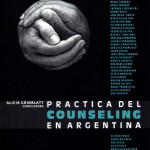 Alicia Grinblatt (2008) ha compilado las experiencias de 48 counselors Argentinos. Siendo ella misma una Counselor, ha logrado capturar el trabajo anónimo que los consejeros realizan día a día (p.11). El libro está dividido en 13 áreas incluyendo adicciones, sexualidad, supervisión, y counseling educacional, entre otros. Andrés Sánchez Bodas (p. 15) remarca que cada texto en el libro emerge de la práctica profesional. Cada capítulo provee la representación del estado del Counseling en el país acorde con las experiencias de su autor; su pasión por la profesión, y sus expectativas para el futuro.
El libro cubre una variedad de áreas, poblaciones y escenarios. Todas las secciones incluyen discusiones sobre el tema, estrategias usadas para abordarlo, y las experiencias de los counselors en el campo. Algunos capítulos enfatizan la descripción de experiencias de campo; Claudia Fernández (p. 57) escribió acerca de los sentimientos y experiencias de personas con esclerosis múltiple; sus dificultades en la búsqueda de ayuda y su necesidad de sentirse apoyados. Fernández proyecta una vida de servicio y la inspiración por hacer la diferencia en la vida de otros. Silvia Perazzo (p. 100) también describe sus experiencia personales; expresa de manera genuina sus dudas, retos, y su recorrido profesional en el trabajo con niños. Su historia es un ejemplo de determinación y crecimiento personal; un camino de auto-descubrimiento profesional, una búsqueda continua de respuestas y recursos, y una vida construyendo relaciones de apoyo. Otros autores comparten estrategias específicas que están siendo usadas en Argentina. María Felisa Díaz (p. 31) describe un proyecto de inclusión social para adolescentes; Mabel Carrera, Rosel Carrere y Federico Elizalde (p. 23) describen un proceso de consejería de grupo ofrecida a personas que han sido liberadas de prisión; Silvia Mount (p.71) presenta una propuesta educativa usada en una institución de educación pre-escolar; y Verónica Peluffo de Apellaniz (p. 122) explica su trabajo con talleres de prevención de adicciones basados en niveles de comunicación y grupos de apoyo. Estos y muchos otros capítulos del libro constituyen un buen recordatorio de la relevancia del Counseling, la necesidad de la profesión y su impacto en la vida de las personas.
Algunos capítulos se refieren a temas más específicos. María Teresa Toscano (p. 112) explica el significado del término familias ensambladas; familias que han surgido de segundos matrimonios o uniones, donde todos los miembros de la familia tienen que conocerse unos a otros y construir un futuro juntos. Graciela B. Francisco (p. 134) discute el tema de adicciones en adolescentes y las necesidades de sus padres; la importancia de la dinámica familiar y estrategias para consejeros que trabajan con esas familias. Raquel Finkelstain (p. 163) introduce el tema de negocios familiares desde una perspectiva del counseling organizacional, y las dificultades que surgen de la dinámica entre las relaciones personales y los roles profesionales establecidos. Todos temas pertine
El libro Practica del Counseling en Argentina incluye una variedad tan amplia de tópicos que se hace imposible incluirlos todos en esta breve revisión. Sin embrago, se espera que los fragmentos seleccionados sirvan como una guía de temas a explorar; como reflexión acerca de los posibles usos del libro; y como un motivador para considerar este recurso bibliográfico. Es además importante mencionar que a pesar de que el libro ha sido escrito con base en el enfoque Centrado en la Persona, incluye además una sección completa que explora otros enfoques tales como Gestalt y Psicodrama; además de un numero de estrategias creativas que incluyen el trabajo con sonidos, expresiones orales, y conciencia corporal entre otros. ntes e innovadores en el campo del Counseling.
El libro Practica del Counseling en Argentina es una inspiración para todo counselor. Profesionales novatos pueden informarse acerca de los sentimientos, expectativas, y retos que todo Counselor tiene al inicio de su carrera profesional; Mientras que Counselors con más experiencia en el campo pueden utilizar este libro como una herramienta para relacionarse con otros e informarse acerca de las nuevas tendencias del Counseling en Argentina. Por otra parte, counselors expertos también pueden hacer uso de esta compilación de conocimientos y experiencias profesionales en el campo, para futuros proyectos de investigación y práctica. La esencia de este trabajo es capturada por Silvia Munt (p.70) con su frase: “Hay tanto por hacer… y yo solo tengo dos manos… que se pueden entrelazar con otras y otras y así formar redes que contengan…”
Grinblatt, A. (Ed.). (2008). Práctica del counseling en Argentina. Buenos Aires, Argentina: Georges Zanun Editores.
Revisado por:, Consejera Certificada en los Estados Unidos (NCC), estudiante de doctorado, Universidad Estatal de Carolina del Norte, Raleigh, Carolina del Norte.
The Professional Counselor
https://tpcwordpress.azurewebsites.net
Feb 25, 2013 | Book Reviews
 The first section of the book, Understanding and Promoting Healthy Development, focuses on the developmental issues affecting males from birth to adulthood. Although the authors briefly mention females in the section, males and their distinctiveness are further explored and explained. Males tend to benefit from therapeutic modalities catered towards action and activity. Furthermore, creating a supportive therapeutic milieu and avoiding interventions detrimental to the client’s progress, is integral. As part of the focus on developmental issues, the book discusses the intellectual range within the male population, from the gifted to persons with learning disabilities. Indubitably, understanding the nuances of the male species provides a greater opportunity to encourage boys and young men towards therapeutic goals.
Seemingly, dyadic relationships are significant in the development of young men. Relationship Development and Relationship Concerns, the second section of the book, examines the complexities of young males’ interpersonal relationships. Family dynamics, romantic involvement, and sexual identity are the topics discussed in the aforementioned section. Accordingly, the authors elucidate the varying degrees of relationship issues and provide practical techniques for assisting males with these issues.
Emotional and Mental Health Concerns and Behavior Disorders and Concerns, the final sections of the text, outline the pervasiveness of mental health issues and the affects of conduct related behavioral disorders among young males. Presumably, young men tend to be commonly diagnosed with inattentive and conduct related disorders. Despite the apparent ubiquitous nature of specific disorders affecting young males, the authors assert specific treatment modalities may alleviate the therapeutic process. Moreover, environmental aspects of an individual’s life are certainly contributory factors to potential disorders. Thus, exploring ancillary aspects of young males’ lives is imperative in examining potential treatment avenues.
Counseling Boys and Young Men provides a plethora of information and counseling techniques essential to the continued development of young men. The counseling nomenclature is accurate and serves as a point of reference for novice and experienced counselors alike. The book offers a chapter on adolescent diversity; however, multicultural issues and the significance of distinctiveness could be further explored. The text serves as a noteworthy manual addressing the myriad of issues affecting young males in today’s society.
Degges-White, S., & Colon, B. (2012). Counseling Boys and Young Men. New York, NY: Springer Publishing Company.
Reviewed by: Jadarius Jackson, graduate student, North Carolina A&T State University, Greensboro, North Carolina.
The Professional Counselor Journal
HOME PAGE
Feb 10, 2013 | Video Reviews

The Leading Groups with Adolescents video presents a fishbowl view of an actual psychoeducational group. The presenters carefully outline each highly structured step in the process and then proceed to facilitate each step before the camera where viewers are vicariously drawn into the process. At times, due to the actual believability of the group experience, I forgot I was a passive observer and not a member.
The participants are not actors– probably second-semester sophomores, who were chosen for training as peer mediators. It is obvious the students are high achieving, articulate and poised teens. As the leaders move the group process forward, the students become more real, more genuine, and more able to present themselves, warts and all, with more comfort and depth. To DeLucia-Waack’s credit, she acknowledges that this group of teens is probably the ideal for a psychoeducational group. Before the actual group begins, midway through the eight-hour group, and at the end, the presenters meet with Dr. Arthur Horne. As the outside moderator, he sets the stage and processes the group encounter. The articulation of counseling foundations and explanations of the authors’ purposes that he provides is certainly a strong addition to skills training.
For learning teen group psychoeducational skills, this DVD may be as valuable, or more so than a college lecture class. It’s of the A+ variety. When promoting the value of groups in comparison to individual therapy for teens, the presenters stress that adolescent groups remove the adult-as-authority impediment. These teens clearly demonstrate honest engagement with one another, and the use of preferential learning modalities to become both students and peer-teachers. The focus on the cognitive behavioral feeling-thinking-acting ABC model is, in itself, praiseworthy. For skills training in leading teen groups, this segment alone provides a vignette gem of CBT in action. In addition, the demonstration of termination is worth the price of the video.
Although the production has top-notch training potential, more cultural diversity would have strengthened the overall believability of the messages. There are only two teen male group members. The presenters, the group members and the moderator are Caucasian. Having a male and a female leader, however, is a stellar plus for modeling in teen groups. DeLucia-Waack’s energized presentation style can be both engaging and somewhat bothersome. Segrist’s restrained, almost somnolent style both negatively magnifies and positively compliments Delucia-Waack’s force. Certainly his role of getting the group physically involved in the process speaks volumes for the need for pacing, body-mind learning and active engagement in working with teen groups. As a tool, Leading Groups with Adolescents, is a worthwhile training DVD. The accompanying handbook further enhances the viewer’s ability to successfully use material from the video and actualize effective teen group work. Even with the absence of some of my personal “wants and needs,” I wholeheartedly recommend Leading Groups with Adolescents. There is icing on the cake – CEU credits are available for this video.
DeLucia-Waack, J., & Segrist, A. (Director). (2011). Leading groups with adolescents [DVD] New York, NY: Springer. Available from https://www.psychotherapy.net/video/psychoeducational-group-adolescents.
Reviewed by: J. Dwaine Phifer, NCC, DonLin Counseling Services, Statesville, NC.
The Professional Counselor
HOME PAGE
Jan 29, 2013 | Book Reviews
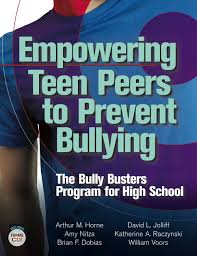 In this manual, the authors provide a research-based model for developing safer and more inviting schools. This well-written manual is logically ordered and based on expertise and experiential success. Teens teaching one another is the cornerstone of this empowerment program. Upperclassmen intensively train to become peer leaders for freshmen, conducting small group sessions during school hours. As the group matures, the leaders focus on building interpersonal and community connections. Teens begin talking about, and honestly listening to individual experiences with bullying, teasing and harassment at school. Trust building becomes the foundation for acceptance and personal growth. Through empathic understanding, students gain courage to confront bullying and avoid passive acceptance. The productive communication training material stresses that “talking at or about” is not communication, whereas listening is the key. Choice-making practice leads students to “stop, think and decide” before acting. Learning about locus of control aids the understanding of how “out there” influences “inside” in decision-making. Practice in conflict resolution helps students center on the STOPP model. Learning about healthy relationships ensures didactic understanding and steers behavioral change.
Developmentally, the last half of the manual infuses power into the groups’ experiential process. The last two chapters lead students into actualization of their new skills through closure and implementation. This text and its accompanying peer leader guide offer schools a potent and effective way to reduce the venomous, terrifying effects of bullying. Whereas bullying is sometimes written off as “kids being kids,” or “a rite of passage,” adults must accept that bullying is a pernicious malevolence that destroys. With archetypal teen sturm and drang and a brain that can no longer think like a child’s and is incapable yet of full rational adult cognition, even a typical “good” adolescent can fall into the trap of bullying. Bullying may be due to peer pressure, an instinct for social survival, a passive “don’t see–don’t tell” approach, or a combination of all three.
Although this model and the authors’ presentation are sound and strong, one must consider that manuals may not generate results. Effective use of this material requires commitment from dedicated school boards, administrators, teachers and parents. Before starting this program, adult leaders must understand it, have full administrative backing, a strong foundation of parent support, and the kind of group leadership skills and experience that foster solid success. Having worked with teens and schools for several decades, I instantly recognize both the value of this program and the accompanying problems that face even the most dedicated adult leader. Through the program manual, the peer leader guide, and an accompanying CD of forms and handouts, all the necessary tools for success are carefully packaged. To truly succeed, however, the adults implementing this program have to be fully dedicated to total S.U.C.C.E.S.S – Sensitivity, Understanding, Caring, Creativity, Energy, Sincerity, and Support.
Horne, A. M., Nitza, A., Dobias, B. F., Jolliff, D. L., Raczynski, K. A., & Voors, W. (2012). Empowering teen peers to prevent bullying: The bully busters program for high school. Champaign, Illinois: Research Press.
Reviewed by: J. Dwaine Phifer, NCC, DonLin Counseling Services, Statesville, North Carolina.
Jan 29, 2013 | Book Reviews
 Trying to tame the rapidly changing information on the World Wide Web is daunting, but the additional variable of sorting through reliable and professional sources can seem insurmountable. The Internet: A Tool for Career Planning (3rd ed.) not only helps the reader sort through resources for professionally reviewed online career guidance, but also provides a broad, yet specific approach to using the Internet in multiple forms of career guidance and planning. Essentially, every aspect of the career planning field has been touched by technology, namely the Internet. The Internet: A Tool for Career Planning removes the uncertainty of how to utilize technology when delivering the best career services to a variety of clients.
The breath of this book is quite impressive. For those who are “Internet challenged,” this text provides a great foundation to gather a baseline of information. Additionally, for those more comfortable with the online environment, this book provides structure for reflective questioning and planning on how to use the Internet in the best way possible for a variety of clients. This book is valuable for traditional colleges and universities wanting to “keep up with the times” by using virtual career centers, and also for private practitioners wanting to provide a variety of easily accessible resources for their clientele. The 100% online education community where I work can benefit from this book as well, when trying to navigate how to complete career counseling via distance modalities.
But what about updating the hundreds of links to career resources and materials included in this book? Happily, the shelf life of this book in this era of the rapid change and flow of information will not become stale because the lists of resources will be updated bi-annually at http://associationdatabase.com/aws/NCDA/pt/sp/resources.
We need to reach students where they are, and these days they are spending a lot of time on their phones and computers with friends and associates. This text provides a guide on how to use social networking, an unfolding service format, to deliver career services.
Perhaps the most useful part of this text for me was the chapter on potential problems and ethical concerns. The authors have taken their expertise and years of experience and shortened the learning curve for their readers. By presenting the potential pitfalls of using the Internet in career planning, they zero in on areas for caution while also providing strategies for avoiding would-be problems. This last chapter certainly made me pause and reflect on specific situations that may arise with my clientele and how I might implement the authors’ strategies for success.
Overall, The Internet: A Tool for Career Planning (3rd ed.) has provided the career planning profession with a go-to guide on how to best utilize the Internet in a wide range of career services with an equally wide range of strategies. This book has a permanent place on my bookshelf and on my Kindle.
Osborn, D. S., Dikel, M. R., & Sampson, J. P. (2011). The Internet: A Tool for Career Planning (3rd ed.). Broken Arrow, OK:National Career Development Association.
Reviewed by: Meagan M. Thrift, Director of Student Services, Centura College, Virginia Beach, Virginia.
The Professional Counselor Journal
HOME PAGE